


Focus keyphrase: senior golfers driver straight
Many golfers assume their driver gets shorter and wilder simply because they are getting older. That idea sounds logical, but it often points you in the wrong direction. In many cases, the real issue is not age. It is the way you have been taught to set up and move in the driver swing.
If you want to help senior golfers driver straight, you need to fix the source of the problem. That means learning how to create a longer turn without strain, how to deliver the club on a better arc, and how to add speed without losing control.
The method here is built around a simple concept called the wrench drill. It gives you an easier way to turn, a better way to hit up on the ball, and a more repeatable route back to impact. If you struggle with weak slices, short backswings, or the feeling that your body just will not move anymore, this can be a game changer.
Table of Contents
- Step 1: Understand why senior golfers struggle to hit driver straight
- Step 2: Use the wrench drill setup to help senior golfers hit driver straight
- Step 3: Learn the pivot that creates a longer backswing without forcing it
- Step 4: Use the setup to reduce a slice and hit up on the driver
- Step 5: Avoid the body lunge that kills power and accuracy
- Step 6: Add speed with the arm swing, not just the torso
- Step 7: Feel the arms swing back to where they came from
- Step 8: Practice the wrench drill in two separate stages
- Step 9: Expect a push draw pattern while you learn
- Step 10: Focus on effortless distance, not chasing huge numbers
- Step 11: Build this senior golfers driver straight move into your practice
- Frequently Asked Questions
Step 1: Understand why senior golfers struggle to hit driver straight
The biggest mistake is believing that less distance and less accuracy must come from less flexibility. That can be part of the picture, but it is rarely the full story. A lot of golfers set up with too much pressure on the trail leg, then try to turn from there. That makes the backswing feel restricted almost immediately.
When your weight sits too far back at address, your turn gets cramped. Your trail hip has less room to work, your backswing gets shorter, and you often end up lifting the club instead of turning around your body. From there, the downswing becomes a scramble. You have to recover in a fraction of a second, and that usually creates either a lunge, an over the top move, or a weak glancing strike.
That is why so many golfers lose both power and direction with the driver. They are not just turning less. They are creating a motion that is hard to repeat.
If you want better results, stop asking, “How can I swing harder?” Start asking, “How can I turn more freely and return the club more simply?”
Step 2: Use the wrench drill setup to help senior golfers hit driver straight
The first part of the wrench drill changes where you pivot from. Instead of loading heavily into the trail side, you begin with more pressure on the lead side. Think roughly 60 to 70 percent of your pressure favoring the lead foot.
This feels unusual at first because many golfers assume weight forward means they will chop down on the ball. With the driver, the opposite can happen when the motion is correct. This setup can actually help the club approach on a better arc so the clubhead travels upward through impact.
Here is the setup:
- Place the ball just inside or just off your lead heel.
- Set a little more flex into the lead leg.
- Allow the trail leg to be a touch straighter.
- Let the trail foot flare out slightly.
- You can also pull the trail foot slightly back to help the turn.
- Feel 60 to 70 percent of your pressure on the lead side.
This creates a preset pivot. Instead of trying to sway away from the target and then recover, you are preparing your body to turn around the lead side more efficiently.

For many older golfers, this is the first breakthrough. The turn no longer feels trapped. It feels supported.
Step 3: Learn the pivot that creates a longer backswing without forcing it
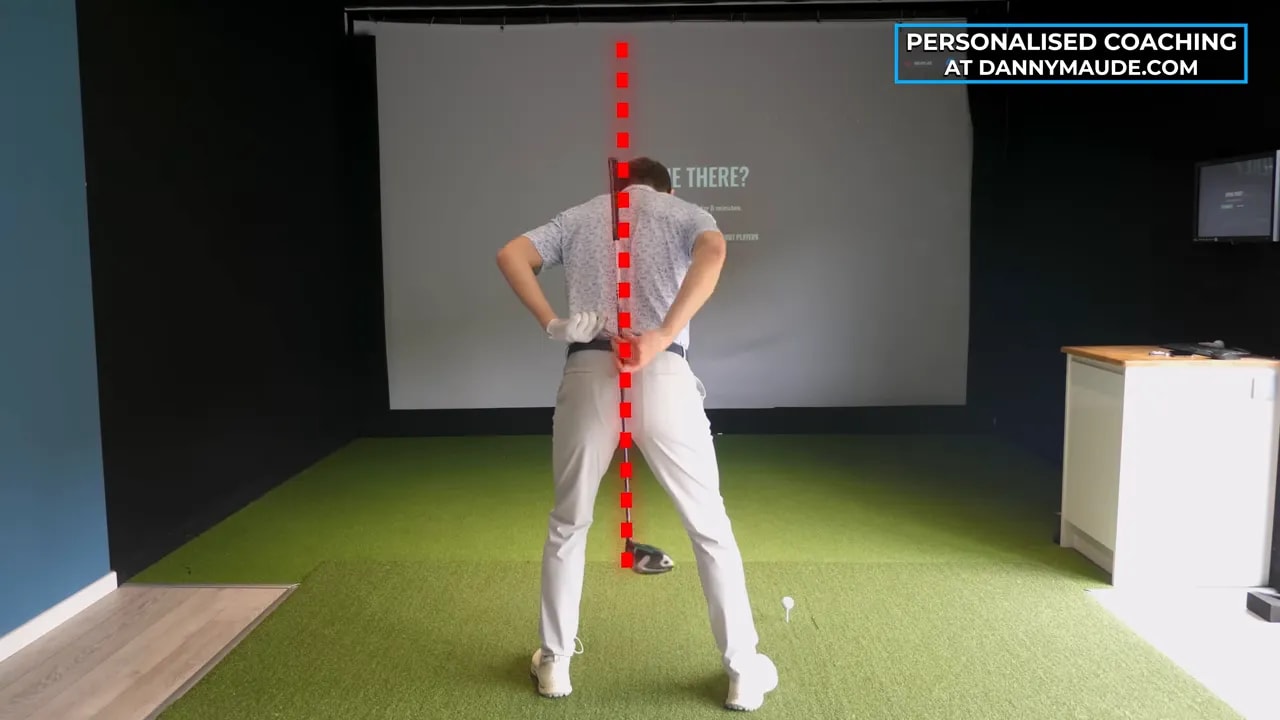
Once the setup is in place, the next job is to turn correctly. The key feeling is that your trail pocket moves around toward a point that lines up with the middle of your back. That motion helps your trail hip work behind you instead of toward the ball.
Why does that matter? Because a proper hip turn gives your upper body room. When your hip works back, your shoulders can turn more fully, your arms can travel farther, and the club can build a wider arc. That is where stored energy begins.
Without this move, the typical pattern looks like this:
- Weight stays back
- Turn gets cut short
- Club lifts too steeply
- Body lunges forward in transition
- Strike becomes inconsistent
With the wrench drill, the pattern becomes much cleaner:
- Pressure favors the lead side
- Trail hip turns back more easily
- Backswing length increases naturally
- You stay more centered
- The return to the ball becomes simpler
This is one of the biggest reasons the drill can help senior golfers driver straight. A longer swing is useful only if it is still under control. This one is.
Step 4: Use the setup to reduce a slice and hit up on the driver
One of the best side benefits of the wrench drill is how friendly it is for slicers. Because the arc improves, the club has a better chance of approaching from the inside rather than cutting across the ball.
That does two helpful things:
- It encourages a start line slightly right of the target for a right handed golfer
- It makes it easier for the ball to curve back gently instead of peeling off to the right
There is also a launch benefit. A better arc can place the low point of the swing a little behind the ball. With the driver, that helps you contact the ball on the upswing. For golfers with moderate or slower clubhead speed, that is a major advantage because it can add distance without extra effort.
That is the beauty of the drill. You are not chasing speed by forcing your body. You are improving geometry, and the club starts behaving better as a result.
Step 5: Avoid the body lunge that kills power and accuracy
After you learn to store energy in the backswing, there is one trap to avoid. Many golfers immediately throw that energy away by spinning their chest open and lunging toward the ball in the downswing.
This is common, especially if you have spent years trying to hit the ball hard with your body. The trouble is that a lunge often moves the swing arc out toward the ball too early. That can lead to weak cuts, heel strikes, and a clubface that is difficult to square.
The better idea is to keep your body from rushing open too soon. The sensation should be that your body stays a little more closed for longer while the arms swing through.
That feeling may seem strange, but it is often exactly what helps golfers stop throwing the club outside the line. It also gives the clubhead a better chance to build speed naturally.
Step 6: Add speed with the arm swing, not just the torso
This is the second big piece of the lesson. Once your pivot improves, you need a better release pattern. The extra speed does not come only from turning harder. It also comes from letting your lead arm and club swing more freely around your body.
The feel is not that the arms lift independently in a loose or floppy way. Instead, picture your lead arm in a stable position, almost as though it is supported and moving around your ribcage. From there, the arm can travel back and through with more range.
That gives you two advantages:
- More length in the overall swing arc
- An extra source of speed through release
Golfers often leave this power source unused because they try to dominate the swing with the torso. The result is a body driven hit that looks forceful but produces very little zip. When the arms are allowed to swing correctly, the club can accelerate far more efficiently.

Step 7: Feel the arms swing back to where they came from
A very useful image for the through swing is this: let the arms swing back to where they came from. In other words, if the backswing traveled around your body properly, the through swing should feel like a natural return on that same kind of circular route.
That is much different from firing your chest open and dragging the handle across your body. The club should feel as if it is being slung through by the combination of your improved pivot and freer arm motion.
The sensation you are looking for includes these pieces:
- Your setup is still favoring the lead side
- Your backswing turn feels full but not forced
- Your body does not rush open in transition
- Your arms swing through with freedom
- The club exits on a balanced arc
That blend is what gives you both speed and control. It is also what makes the move especially useful for golfers who feel they have lost athleticism. You do not need a violent motion. You need a well sequenced one.
Step 8: Practice the wrench drill in two separate stages
Do not try to master everything in one swing. The easiest way to build this into your game is to split the work into two stages.
Stage 1: Practice only the setup and pivot
- Set pressure into the lead side
- Flex the lead leg slightly more
- Straighten the trail leg slightly
- Turn the trail pocket behind you
- Notice how much easier the backswing feels
Stage 2: Practice only the arm release feel
- Make slow rehearsal swings
- Keep your body quieter through impact
- Feel the arms swinging around and through
- Avoid spinning your chest open too early
- Let the clubhead gather speed naturally
After that, combine them. This staged approach is important because the old habit can return quickly. If you rush, you will likely go back to the body lunge. If you build it patiently, the new motion becomes much easier to own.
Step 9: Expect a push draw pattern while you learn
When you start using this setup, a good early ball flight is a shot that begins a little right of target and curves back. That pattern shows the club is working on a healthier path.
If the ball starts right and stays right, you may need more face closure or a better arm release. If the ball dives left, you may be overdoing the release or losing your balance. But in general, a gentle push draw is a very encouraging sign.
It also fits the goal of helping senior golfers driver straight. Straight driving is not always about producing a dead straight ball. Often it means owning a predictable shot shape that starts on a sensible line and curves only slightly.

Step 10: Focus on effortless distance, not chasing huge numbers
Distance matters, but the real win is not trying to hit some massive number. The real win is creating a swing that is longer, freer, and more efficient without adding stress to your body.
That is why this lesson resonates so well with experienced golfers. It respects the reality that you want more distance, but you also want to keep your back happy, your timing simple, and your ball in play.
The foundation is straightforward:
- Turn better by pivoting around the lead side
- Create more room with the trail hip
- Store energy in a longer backswing
- Release that energy with the arms
- Keep the body from lunging open too soon
Do that consistently, and you can pick up speed while improving strike and direction. That is a much better outcome than swinging harder and hoping for the best.
Step 11: Build this senior golfers driver straight move into your practice
If you want this to stick, keep your practice simple. A good session might look like this:
- Make 10 setup rehearsals with pressure on the lead side.
- Make 10 slow motion pivots feeling the trail pocket move behind you.
- Make 10 arm swing rehearsals with the body staying quieter.
- Hit 5 half speed drives combining both pieces.
- Hit 5 normal swings while trying to reproduce the same feel.
Pay attention to whether the ball starts slightly right and curves back. Also notice whether contact feels more upward and more solid. Those are better feedback tools than simply trying to smash every ball.
Over time, the motion should feel less like a drill and more like your normal driver swing.
Frequently Asked Questions
Will this help if you slice the driver?
Yes. The setup can improve the swing arc and encourage the club to approach from a better path. That often helps produce a shot that starts a little right and curves back instead of slicing away.
Does putting weight on the lead side make you hit down on the driver?
Not necessarily. When the pivot and arc improve, the club can actually bottom out earlier and begin moving upward by impact. That can help you hit up on the driver and gain distance.
How much weight should be on the lead side at setup?
A good starting point is about 60 to 70 percent of your pressure on the lead foot. It should feel supportive, not forced or exaggerated.
Why does the backswing feel longer with this drill?
Because the lead side becomes a more stable pivot point, which allows the trail hip to move back more easily. That gives your torso and arms more room to turn without strain.
What is the biggest mistake to avoid?
Do not rush open with your chest and lunge at the ball. That move throws away stored energy and usually hurts both accuracy and strike quality.
Should you practice the full move right away?
It is better to split it into stages. First train the setup and pivot. Then train the arm release. Combine them only after each piece starts to feel familiar.
If you have been trying to help senior golfers driver straight, this is a strong place to start. The fix is not about forcing more mobility or swinging out of your shoes. It is about better structure, better pivot, and a better release. When those pieces improve, longer and straighter drives become much more realistic.
0 Comments