

Golf gets much easier when your driver swing has a clear shape. One of the simplest ways to understand that shape is through the idea of the swing plane. If you have been fighting glancing contact, weak slices, or inconsistent drives, this concept can help you build a more repeatable move.
For many golfers, the problem is not effort. It is that the club, body, and posture are not working together on the same path. When your posture stays stable and your club traces a predictable line back and through, your golf swing becomes simpler, more powerful, and more consistent.
Step 1: Understand what the golf swing plane really is
In golf, the swing plane is the angled path your club travels on as you turn back and through. A useful mental picture is a pane of glass or a tilted window running from the ball area out toward the target line.
At address, you are not standing straight up. You hinge forward from the hips. That forward bend tilts the swing plane down toward the ground. From there, your goal is to rotate while keeping the club moving along that tilted path.
This matters because the plane is not just about where the club goes. It is tied to:
Posture
Rotation
Club delivery
Solid, repeatable contact
If your body stands up too much or your spine tilts the wrong way, the club often gets thrown off plane. That is when golf starts to feel complicated.
Step 2: Picture the target-side window for better golf swing plane awareness
A practical way to train the swing plane in golf is to imagine a window or glass panel tilted toward the ground. Place that imaginary surface starting around the ball and extending a couple of feet outside the ball toward the target.
Your task is simple. As you rotate back and through, the club should keep pointing into that zone.
This image helps because it gives you a clear external reference. Instead of thinking about too many body parts, you focus on where the club should travel.
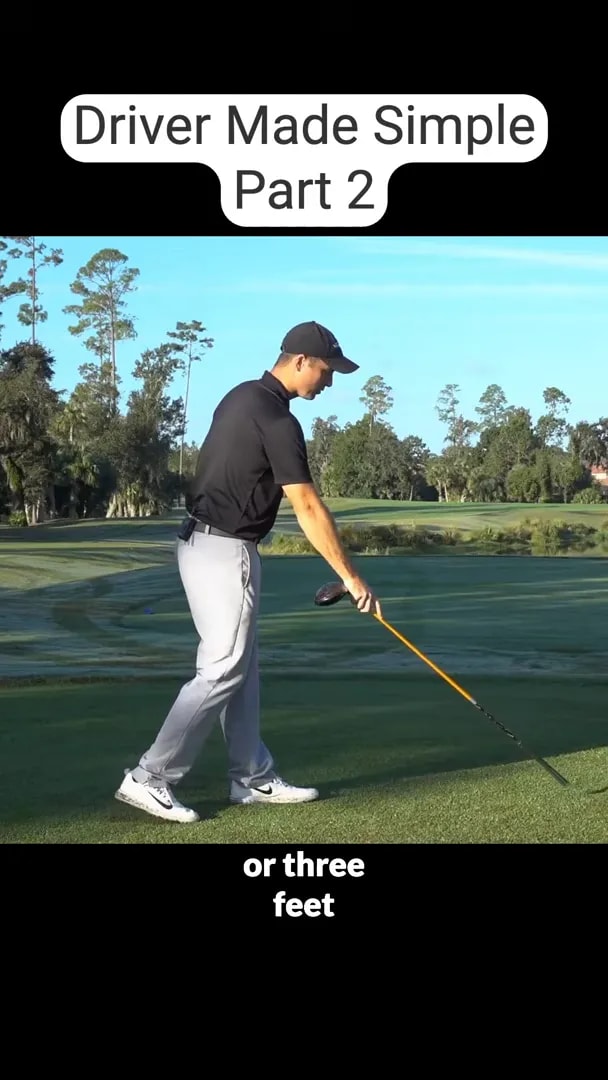
When you rehearse this correctly, it can help you feel:
The club tracing a line rather than chopping across it
Your chest and shoulders turning instead of lifting
Your posture staying steady through the motion
That is a big win for any golfer trying to improve driver control.
Step 3: Build the golf motion with rotation, not hand manipulation
The foundation of a reliable golf driver swing is rotation. The club should move on plane because your body is turning well, not because your hands are making last-second corrections.
A helpful checkpoint is shoulder turn. On the backswing, you want a full turn. Through the hitting area and into the through-swing, you want that rotation to continue rather than stop at impact.
Good rotation often includes:
Your lead side turning back in the backswing
Your trail foot beginning to release as you swing through
Your chest continuing to turn after the strike
In golf, many players stall their body and flip the club instead. That usually ruins the plane and makes timing far harder.
If you rotate properly while staying in posture, the club has a much better chance of returning on a repeating path.
Step 4: Stay in posture instead of jumping out of the golf swing
One of the clearest ideas in this driver lesson is that your body should stay in posture as you move back and through. That does not mean staying frozen. It means keeping your spine angles and body tilt organized while you turn.
A common mistake in golf is standing up through impact. When that happens, the club often gets steep, wipes across the ball, or loses the intended path.
To avoid that, rehearse to a shorter finish at first. Do not rush to a full, high finish position. Instead, rotate through while holding your posture and feeling the club remain on the same tilted plane.
This shorter rehearsal can teach you:
How to rotate without lifting up
How to keep the club moving on the intended path
How to control the bottom and direction of the swing

For a lot of golfers, this is where consistency begins.
Step 5: Trace an imaginary line to simplify your golf driver swing
If the window image does not click right away, use a line on the ground instead. Imagine a line running back and through in the direction of your target. Then feel the club trace that line as you rotate.
This is one of the easiest ways to make golf instruction practical. You are giving your brain a simple path to organize around.
Try this rehearsal sequence:
Set up with your driver and normal posture.
Imagine a line on the ground running toward your target.
Make slow back-and-through swings while keeping the club aimed along that line.
Focus on turning your shoulders and torso, not steering with your hands.
Repeat 4 or 5 times before hitting a ball.
That kind of repetition can help train the movement pattern before you add speed.
Step 6: Add the right spine tilt for better golf driver delivery
Another key piece of the driver setup in golf is spine tilt. If your upper body is straight up and down, or worse, leaning toward the target, it becomes much harder to deliver the club from the inside and stay under your intended plane.
Instead, you want a slight tilt away from the target.
This backward tilt helps create the proper shape for the driver swing. It makes it easier to move the club on a more useful path through the ball.
A simple checkpoint is to feel your upper body angled slightly back at address. Not dramatically. Just enough to avoid getting stacked over the lead side too early.

Why this matters in golf:
It supports a better driver swing plane
It helps the club approach from the inside
It encourages a more upward, sweeping strike with the driver
If you tend to slice or hit weak pulls, setup tilt is worth checking before you rebuild your whole swing.
Step 7: Use alignment to make your golf practice more honest
Even a good swing thought can fail if your alignment is off. In golf, players often think they are swinging badly when they are actually aimed poorly.
Using an alignment stick can help you confirm that your feet are set parallel to your intended target line. This gives your swing plane practice a trustworthy reference.
Before hitting drivers, check:
Feet parallel to the target line
Ball position consistent for the driver
Slight spine tilt away from the target
Posture athletic and balanced

Alignment does not just help direction. It also helps you judge whether your golf swing plane is actually improving.
Step 8: Turn the concept into a simple golf practice drill
If you want to make this part of your regular golf practice, keep it structured and short. A good drill progression looks like this:
Golf swing plane drill progression
Make 4 to 5 slow rehearsals with no ball. Feel the club trace the tilted window or ground line.
Stay in posture and stop short of a full finish if needed.
Add shoulder turn going back and through.
Check your spine tilt at address before each shot.
Hit 5 to 10 drives with the goal of straight, controlled ball flight.
This kind of routine is useful because it connects feel to execution. In golf, improvement usually comes faster when you alternate rehearsals with real shots.
Step 9: Know the common golf mistakes that ruin the swing plane
If this concept is not producing better drives yet, one of these common golf mistakes may be getting in the way.
Standing up through the swing
When your body loses posture and rises, the club can leave the intended plane quickly.
Leaning the spine toward the target
This can make it difficult to deliver the club from a good angle with the driver.
Stopping rotation
If your body stalls, your hands take over. That often leads to wiping across the ball or inconsistent face control.
Overthinking the hands
The plane is usually a product of setup, posture, and body turn. Too much hand steering can make your golf swing less reliable.
Practicing too fast
Slow rehearsals are often where the correct motion gets built. Speed comes later.
If you are working on your driver, fix these first before adding more advanced swing thoughts.
Step 10: Measure success by ball flight and consistency in golf
The goal of better swing plane in golf is not just a prettier motion. It is better ball flight.
Signs you are moving in the right direction include:
More centered contact
Straighter drives
A more repeatable start line
Improved power from better rotation
A controlled draw or a solid straight shot is often a good sign that the club is working on a better path. You do not need every drive to be perfect. In golf, progress usually shows up as tighter patterns and fewer big misses.
Step 11: Use this golf checklist before every driver practice session
Set your feet parallel to the target line
Hinge forward into athletic posture
Add slight spine tilt away from the target
Picture the tilted window or target line
Make 4 to 5 slow back-and-through rehearsals
Stay in posture as you rotate
Hit 5 to 10 drivers with control as the priority
This is a simple, golfer-friendly way to turn one important concept into a reliable pre-shot training habit.
Step 12: Make golf simpler by focusing on one clear idea
The best part about this swing plane idea is that it reduces clutter. Instead of chasing dozens of swing fixes, you can center your golf practice around one clear image: a tilted plane that the club traces as your body rotates in posture.
When you combine that with slight spine tilt, good alignment, and steady rotation, the driver swing becomes far easier to repeat. That can lead to straighter shots, more confidence, and better golf off the tee.
Golf FAQ
What is the swing plane in golf?
In golf, the swing plane is the angled path your club travels on as you turn back and through. With the driver, that path is tilted because you are bent forward in your setup posture.
Why does swing plane matter for driver shots in golf?
A better swing plane can help you stay in posture, rotate more effectively, and deliver the club more consistently. In golf, that often leads to straighter drives and improved power.
How do you practice golf swing plane at home or on the range?
Use slow rehearsals. Picture a tilted pane of glass or an imaginary line on the ground toward the target. Then rotate back and through while keeping the club tracing that path. Add an alignment stick if you want a clearer setup reference.
Should your spine tilt away from the target with the driver in golf?
Yes, a slight tilt away from the target can help create a better driver setup in golf. It supports a more useful path and can make it easier to swing from the inside.
What is the most common golf mistake when working on swing plane?
One of the most common mistakes is standing up out of posture during the swing. Another is leaning the spine toward the target at address, which can make the club path harder to manage.
0 Comments