
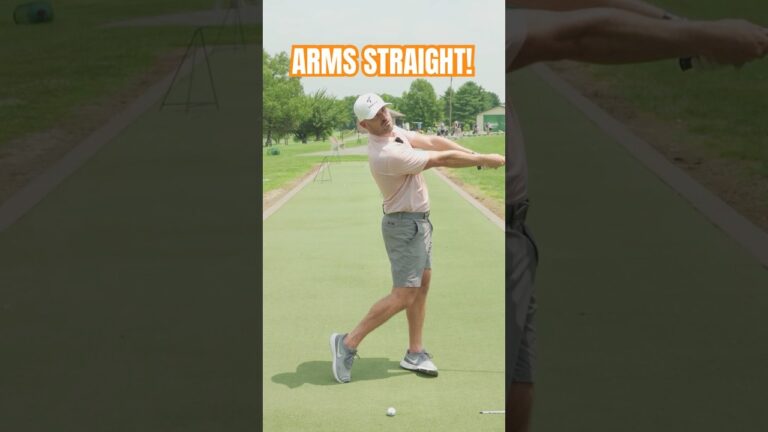

If you want better ball striking, cleaner contact, and a more reliable through swing, one small move can make a huge difference. The key is simple: as you move through impact, you need to push the butt of the club farther away from you.
That might sound technical at first, but it becomes much easier when you understand what controls it. In this golf swing lesson, the big driver is arm structure through impact, especially what your trail arm is doing. When the arms fold too much, the handle stays too close to your body. When the arms extend correctly, the club can move out in front of you and you can strike the ball more solidly.
This move pairs beautifully with solid low point control and the kind of impact pattern that leads to crisp, penetrating shots. If you have been fighting thin strikes, heavy contact, or inconsistent compression, this is a great place to start.
Table of Contents
- Step 1: Understand why pushing the club handle away matters in your golf swing
- Step 2: Use arm structure to create the push the butt of the club away move
- Step 3: Keep the lead arm stable and extend the trail arm through impact
- Step 4: Match the feel to impact instead of the finish
- Step 5: Train the push the butt of the club away feel with punch shots
- Step 6: Build a golfer-friendly rehearsal you can repeat anywhere
- Step 7: Know the ball flight signs that tell you the move is working
- Step 8: Blend this move into your full golf swing without losing it
- Step 9: Use one simple swing thought on the course
- Frequently Asked Questions
- Final thoughts on learning to push the butt of the club away
Step 1: Understand why pushing the club handle away matters in your golf swing
The focus keyphrase here is push the butt of the club away, because that is the feel that organizes the motion. At impact and just after it, the handle should not feel trapped against your body. It should feel as if it is moving outward while the club continues through the ball.
Why does this matter? Because good impact is not only about where the clubhead goes. It is also about how your arms and handle are positioned as the club moves through the strike.
When the handle stays too close to you, a few common problems tend to show up:
- Crowded impact
- Flippy release patterns
- Loss of face and path control
- Weak contact and inconsistent strike
- Shots that launch without that solid, compressed feel
When you learn to push the butt of the club away, the strike tends to look and feel much better. The ball flight often comes out low to mid launch with a strong, compressed sound. That is exactly the type of shot pattern you want while training this movement.
A simple before and after comparison makes the point clear. In a better pattern, the arms are extending and the handle is farther from the body. In the weaker pattern, the arms stay more bent and the club bunches up closer to the torso.
Step 2: Use arm structure to create the push the butt of the club away move
If you want to push the butt of the club away, start with the arms. The amount of bend or extension in your arms has a direct effect on where the club handle sits.
Here is the basic relationship:
- When your arms bend more, the handle comes closer to you.
- When your arms straighten more, the handle moves farther away from you.
That means the feel of sending the handle away is not something you manufacture with your hands alone. It is heavily influenced by how the arms are extending through impact.
This is one of those golf swing ideas that becomes obvious once you feel it. Stand in your setup without making a full swing. Bend both arms and notice how the butt of the club gets pulled inward. Then extend them more and notice how the handle moves away from your body. That is the pattern you want to own during the strike.
For many golfers, this is the missing link. They try to improve contact by thinking only about the clubface or only about the lower body. Those matter, but if the arms are collapsing through impact, your body has a hard time delivering the club the way you want.
Step 3: Keep the lead arm stable and extend the trail arm through impact
Now narrow the focus even further. The lead arm and trail arm do not do the same job through impact.
Your lead arm should already be fairly straight by the time you reach the strike zone. It does not need to lock rigidly, but it should maintain a straight-ish structure rather than folding.
The more important action comes from the trail arm. That arm is bent coming into impact, and then it begins to straighten as you move through the ball. That straightening is what helps you push the butt of the club away.
Think of it this way:
- Lead arm: stays long and supportive
- Trail arm: extends through the strike
- Result: the handle moves outward and the club exits with more structure
This is especially helpful if you tend to chicken wing, stall, or let the club pass your hands too early. In each of those patterns, the trail arm usually stops extending at the right time, and the whole motion gets cramped.
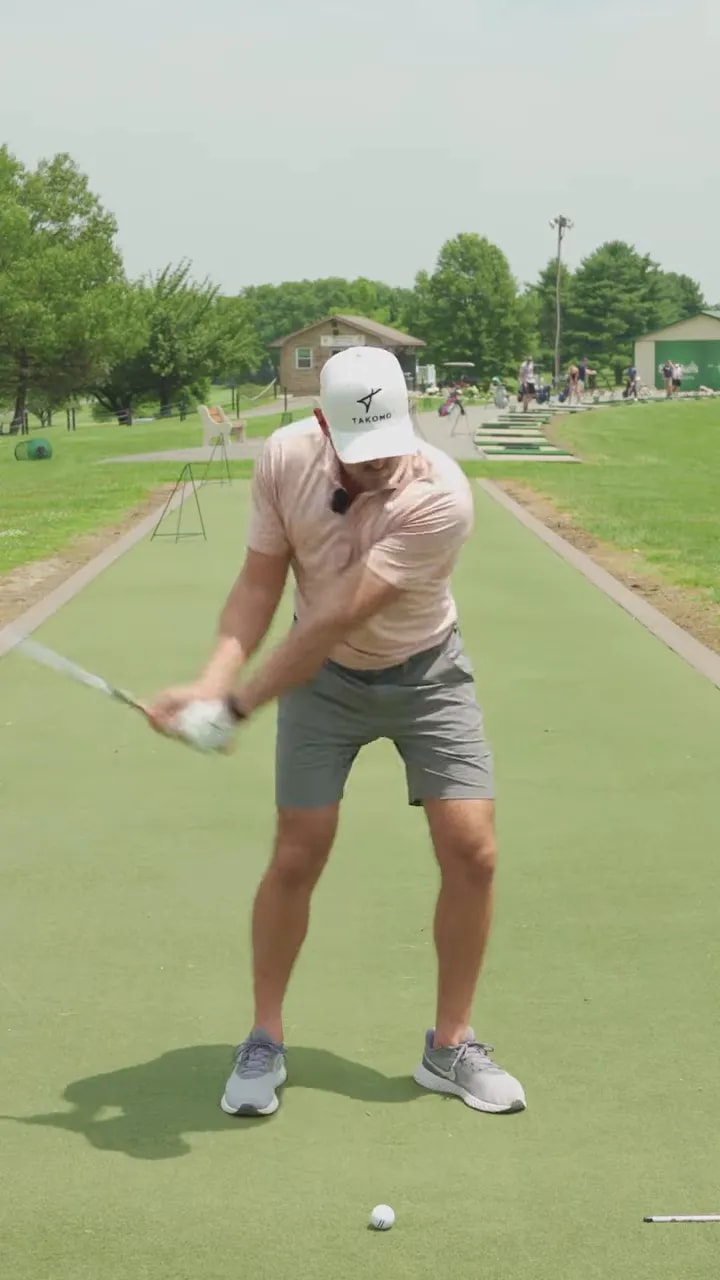
A strong through impact position usually shows the trail arm working toward extension while the lead arm keeps the swing wide. That width is not just for appearance. It gives you room to deliver the club with speed and control.
Step 4: Match the feel to impact instead of the finish
One common mistake is trying to copy a finish position instead of improving the actual impact interval. A nice-looking finish does not automatically mean you moved correctly through the ball.
The important moment is from just before impact to just after impact. That is where the trail arm extends, the handle moves away, and the strike becomes more stable.
Rather than trying to pose after the ball is gone, focus on this mini sequence:
- Approach impact with your lead arm relatively long.
- Allow your trail arm to remain bent as you approach the ball.
- As the club moves through the strike, feel the trail arm extend.
- Let that extension send the handle farther away from your body.
This creates a better exit and a much better sensation of width. Golfers often describe this as feeling more connected and less jammed up through the strike.
If you rehearse this correctly, you should not feel the club being yanked around your body. You should feel it being sent out through the hitting area before it gradually works around to the finish.
Step 5: Train the push the butt of the club away feel with punch shots
The best way to learn this is not with a full speed driver swing. Start with punch shots.
This drill is ideal because it shortens the motion and keeps your attention on impact. It also encourages the exact ball flight you want while training this pattern: a solid low to mid trajectory.
Use this simple practice plan:
- Take a short iron or wedge.
- Make a shorter than normal backswing.
- Swing through to a compact finish.
- Feel your trail arm straighten through the ball.
- Feel the butt of the club move away from your torso as you go through impact.
- Hit shots that come out flighted and controlled, not high and floaty.
These punch shots are not just a warm-up. They are the training ground for a better golf swing impact pattern. If the strike is clean and the ball starts on a strong, boring flight, you are probably doing it well.
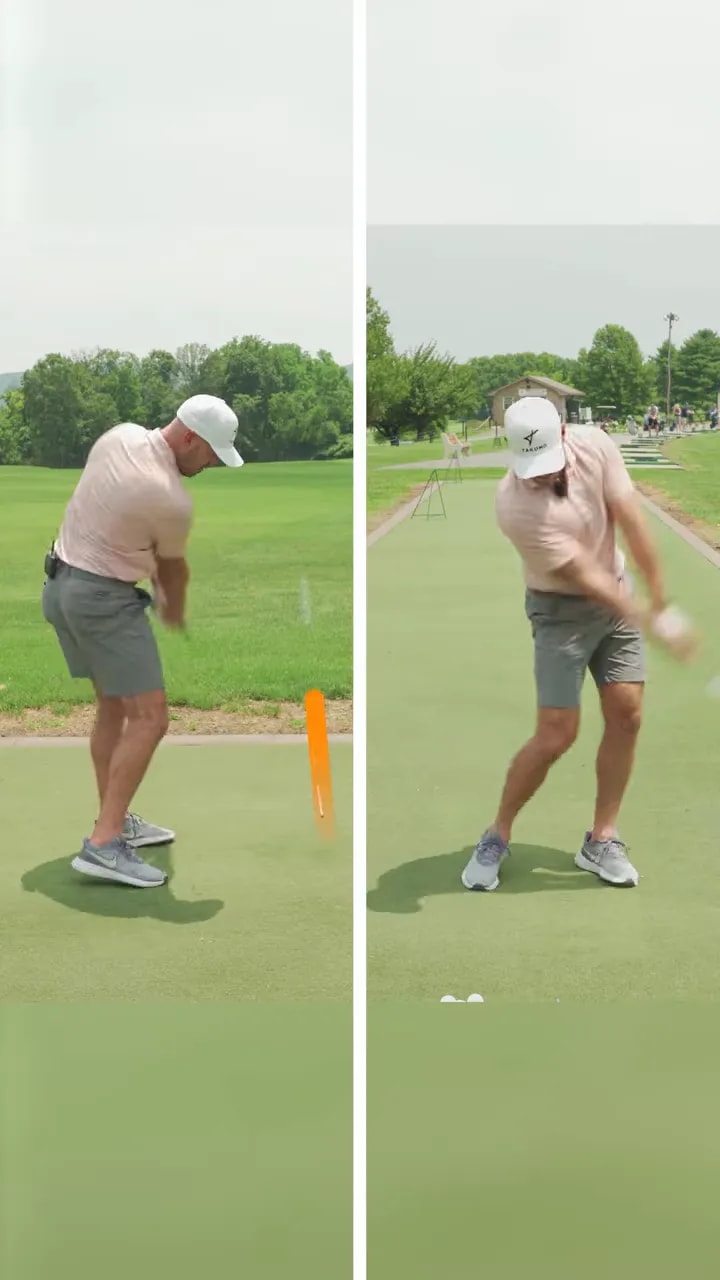
The visual you want is a compact motion paired with a penetrating launch. That kind of flight usually means the club is being delivered with structure, not with a scooping or collapsing action.
Step 6: Build a golfer-friendly rehearsal you can repeat anywhere
You do not need a complicated training aid to improve this. A simple slow motion rehearsal can do a lot.
Try this drill without a ball first:
- Set up in your normal posture.
- Move the club into a small downswing position with your trail arm slightly bent.
- From there, slowly move through where impact would be.
- As you pass that point, feel the trail arm extending.
- Notice the handle moving farther away from your body.
- Finish with your arms longer and your chest continuing through.
Repeat that motion for a few minutes before hitting balls. Then blend it into short punch shots. Only after that should you start lengthening the swing.
If you jump straight to full swings, there is a good chance your old pattern will take over. Short rehearsals make it easier to own the new feel.
Step 7: Know the ball flight signs that tell you the move is working
Good swing changes need feedback. When you train the push the butt of the club away move, the ball flight can tell you whether you are on the right track.
Positive signs include:
- Contact that feels heavy on the ball and light on the turf
- Shots that launch lower than your usual full swing but still have speed
- A tighter start line
- Less flipping through impact
- A finish that looks more extended and less cramped
Warning signs include:
- Thin shots that feel like you pulled up
- Heavy shots from dumping the club too early
- A bent trail arm long after impact
- The handle staying close to your body through the strike
If you see the warning signs, slow down and go back to the rehearsal. Usually the fix is not to swing harder. It is to restore the extension pattern of the arms, especially the trail arm.
Step 8: Blend this move into your full golf swing without losing it
Once the punch shots are solid, gradually make the motion bigger. Keep the same priority. Do not let more speed erase the through impact structure.
A smart progression looks like this:
- Slow motion rehearsals
- Short punch shots
- Three quarter swings
- Full swings with the same through impact feel
As you move up the ladder, keep checking one thing: are you still extending through the ball, or are you returning to a cramped release?
The golfers who improve fastest are the ones who keep the drill feel alive even when the swing gets longer. The move does not change. The speed changes.
This also fits nicely with the bigger goal of better low point control and ball first contact. A better through impact arm structure helps you organize where the club is bottoming out and how the clubhead keeps moving through the strike.
Step 9: Use one simple swing thought on the course
When you take this from practice to play, keep it simple. Do not overload yourself with five mechanics.
Your course-friendly cue can be as simple as:
Through the ball, push the butt of the club away.
That thought tends to clean up a lot of pieces at once. It encourages arm extension, reduces collapse, improves width, and helps you stay organized through impact.
If that phrase feels too mechanical, use this golfer-friendly version instead:
Send the handle out through the strike.
Both cues are trying to create the same motion. Choose the one that gives you the best contact.
Frequently Asked Questions
Should both arms be straight at impact?
No. Your lead arm should be fairly straight by impact, while your trail arm is usually still somewhat bent as it approaches the ball. The key is that the trail arm then extends through the strike.
What does push the butt of the club away actually feel like?
It feels like the handle is moving outward from your body as you move through impact. Usually that comes from better arm extension, not from forcing your hands away on their own.
What kind of shots should I hit while practicing this golf swing move?
Start with low to mid flight punch shots. They make it easier to focus on the strike, train the trail arm extension, and build a more compressed impact feel.
Why do I feel cramped through impact?
You may be keeping your arms too bent, especially the trail arm, which pulls the handle inward. When the arms extend better through the ball, the motion usually feels much less crowded.
Can this help with solid contact and ball first strike?
Yes. A more extended through impact pattern supports cleaner contact and works well with the kind of low point control that produces ball first, then turf.
Final thoughts on learning to push the butt of the club away
Sometimes the biggest breakthroughs in golf come from a very small piece of the swing. This is one of those pieces. If you learn to push the butt of the club away by extending properly through impact, especially with the trail arm, you can clean up strike quality fast.
Keep it simple. Train the arms. Use punch shots. Look for that low to mid flight. Build the feel slowly until it becomes natural.
Better impact does not always require a complete swing rebuild. Sometimes it starts with one clear motion through the ball, and this is a great one to own.
0 Comments