


If you want more consistency in your golf game, your driver is one of the fastest places to find it. A driver that is even slightly out of balance can produce a frustrating mix of pushes, weak fades, heel strikes, and the occasional big miss left. The good news is that better golf with the driver often does not require a full rebuild. Sometimes it comes from understanding why your current pattern exists, then making a few smart changes that work together.
That is exactly what this lesson highlights. The player already had a solid driver and could hit some very good shots. But the pattern was inconsistent. Good drives tended to draw, weaker shots leaked right, and contact was not always centered. By cleaning up setup, takeaway, and release, the driver became straighter, tighter, and longer. These are useful golf ideas for any player who wants more reliable tee shots.
Table of Contents
- Step 1: Identify your real golf ball-flight pattern
- Step 2: Understand how ball position can hide a golf swing problem
- Step 3: Check whether your setup is encouraging the wrong golf path
- Step 4: Neutralize the golf swing circle instead of chasing symptoms
- Step 5: Clean up the takeaway for more consistent golf contact
- Step 6: Add speed only after your golf pattern improves
- Step 7: Improve your golf release so the clubhead works better through impact
- Step 8: Use simple golf feels that produce measurable results
- Step 9: Understand why this golf lesson worked so quickly
- Step 10: Build this golf fix into your practice
- FAQ
- Final thoughts on better golf with the driver
Step 1: Identify your real golf ball-flight pattern
The first step in fixing driver inconsistency in golf is to understand your true miss. Not the one you fear most, but the one your swing produces most often.
In this case, the pattern was clear:
- The better drives started slightly right and drew back.
- The common weaker miss stayed out to the right.
- The occasional poor strike could also turn into a left miss.
That combination tells you a lot. When your club path travels too far out to the right, your good shots can draw if the clubface is closed enough relative to that path. But if the face is not matched properly, the ball can start right and stay right. This is a very common driver issue in golf.
Many players assume a right miss means they need to close the face harder. Sometimes that works for one shot, but it does not solve the root cause. If the path is too far to the right, the face has to be managed precisely just to produce a playable ball flight. That leaves very little room for error.
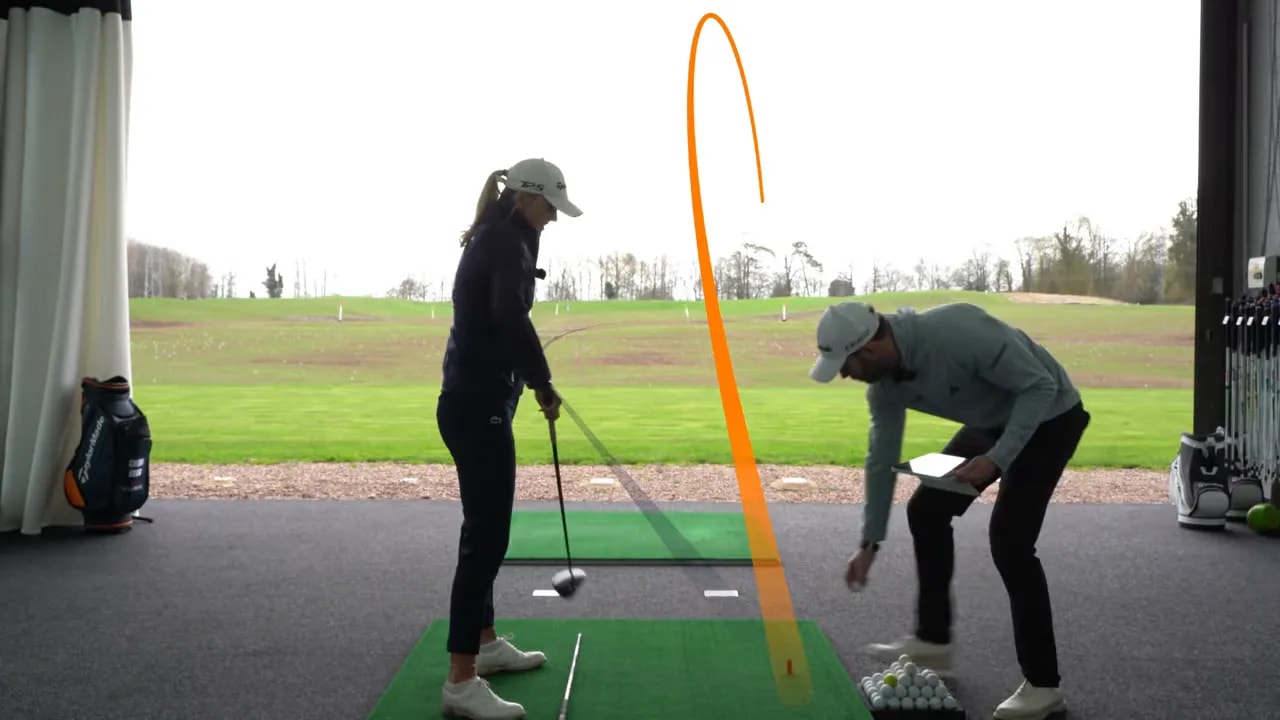
A more sustainable approach is to reduce the amount your path travels right in the first place. That gives you a straighter starting line, more centered contact, and less dependence on timing.
Step 2: Understand how ball position can hide a golf swing problem
One of the smartest points in the lesson is that ball position was acting like a compensation. The ball was set a fraction too far forward in the stance. That might seem harmless, especially with driver, because you do want the ball forward and you do want to hit up on it. But in this case, the forward ball position was helping offset a swing that was traveling too far out to the right.
Here is why that matters in golf:
- A driver should usually be played forward in the stance.
- With driver, you often want an upward angle of attack for better launch and distance.
- As the club moves upward through impact, it naturally begins moving a bit more left.
So if your path is strongly out to the right, a very forward ball position can disguise that. By the time the club reaches the ball, the path may look less extreme than it really is. The problem is that this is not a clean fix. It is a compensation layered on top of another issue.
In practical terms, this means your golf swing is relying on timing and geometry that can easily change from day to day. If you simply moved the ball farther back without changing anything else, the path would likely move even farther right. So the answer was not just to change ball position. The answer was to discover why the path was so rightward in the first place.
Step 3: Check whether your setup is encouraging the wrong golf path
Very often in golf, the swing issue starts before the club ever moves. Setup can quietly push your path in one direction.
In this lesson, several small setup elements were promoting an out-to-the-right motion:
- The toe line was aimed a little right.
- The hips were a little right.
- The shoulders were a little right.
- The hands needed to be slightly farther forward.
None of these by itself was dramatic. That is important. Many golf swing problems are not caused by one huge fault. They are caused by three or four smaller pieces all nudging the swing in the same direction.
That was the key diagnosis here. There was not one glaring flaw that made the player swing excessively to the right. Instead, multiple small influences were stacking together. Once that happens, your entire club circle gets tilted, and your swing direction becomes harder to neutralize.
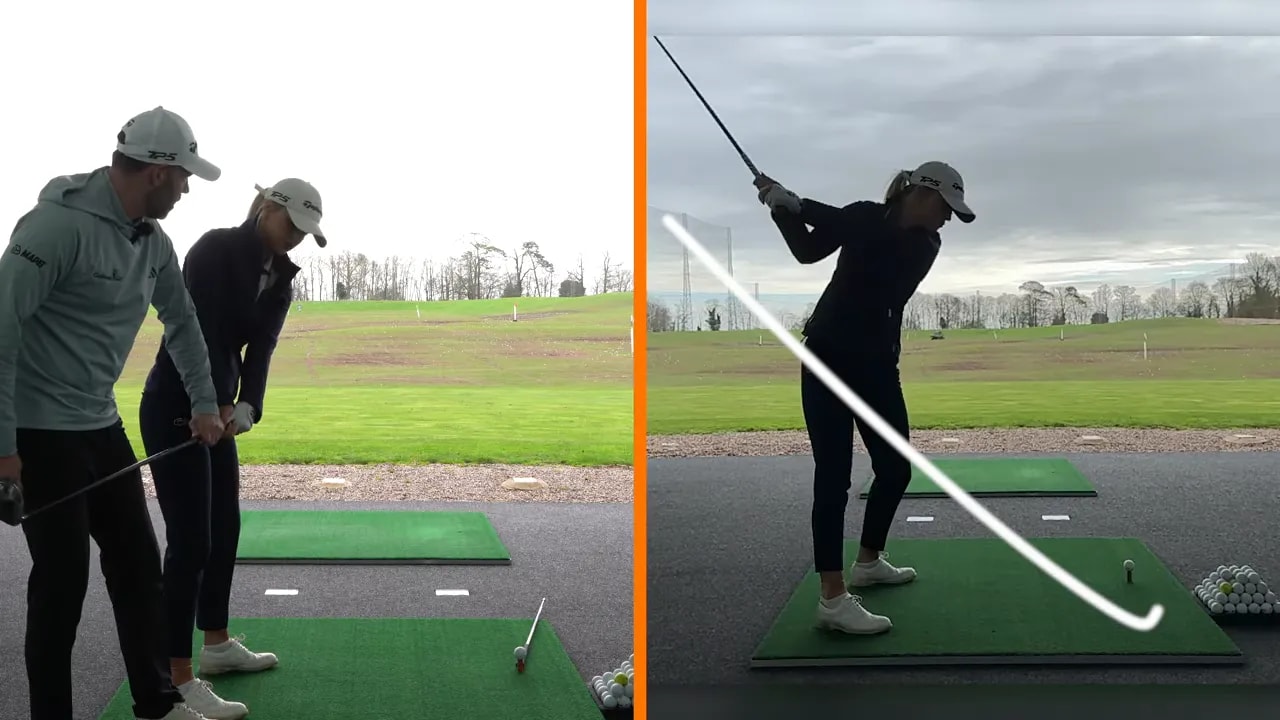
This is a useful lesson for your own golf practice. If your ball flight has a repeating shape, avoid looking for a single magic move. First examine whether your alignment, posture, and hand position are quietly setting up the pattern.
Step 4: Neutralize the golf swing circle instead of chasing symptoms
A helpful image used in the lesson was to think of the swing as a big circle around your body, almost like you are standing inside a hoop. In efficient driver golf swings, that circle is organized and relatively neutral. But if setup and takeaway push it off line, the circle gets twisted. Once that happens, the club can approach the ball from too far inside, sending path out to the right.
That matters for two reasons:
- It affects start direction and curve.
- It affects strike location, especially heel contact.
Heel strikes are common when the club is moving too far out to the right with the driver. Many golfers think a weak shot right always comes from an open face. Sometimes the bigger issue is simply where the club struck the face.
That distinction matters because the solution changes. If you are diagnosing everything as a face problem, you may keep trying to rotate your hands harder. But if the strike is the main culprit, you need to improve path and delivery first.
The initial changes in setup immediately brought the path closer to neutral. Even before a full swing adjustment, the numbers were improving. That is one of the most encouraging realities in golf coaching. A better setup can improve ball flight fast because it removes the need for mid-swing rescue moves.
Step 5: Clean up the takeaway for more consistent golf contact
After improving setup, the next job was to refine the takeaway. The club had been moving a little too far to the inside early in the backswing. Again, this was not wildly exaggerated, but it fed the overall pattern of swinging right.
The goal was simple: make the early club movement more neutral.
A useful checkpoint was to compare the club to a reference line on the ground. The club did not need to be perfectly on top of that line. A little inside is fine. A little outside is fine. But the extremes create problems. In this case, keeping the club more in front of the body in the takeaway helped organize the circle of the swing and reduce the tendency to drop too far inside later.
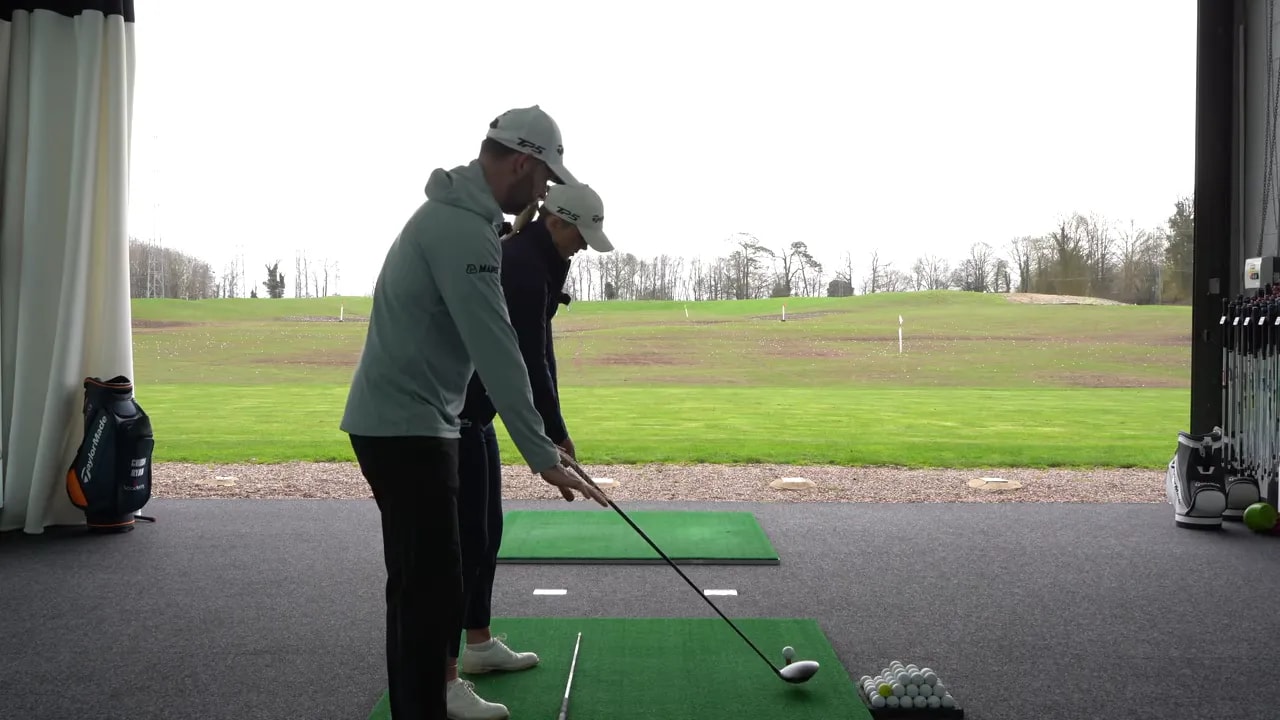
Even with a half-speed swing, the difference showed up quickly:
- Contact moved more toward the middle of the face.
- The shot flew straighter.
- The curve became more predictable.
That is exactly what you want in golf. Better contact usually gives you more stable ball flight than simply trying to manipulate the face. When strike improves, your misses become easier to read and easier to fix.
A simple way to think about it is this: if you are trying to hit a straight drive at a target, the easiest version of golf is to have the club traveling at the target with the clubface pointing at the target. The closer you get to that model, the less compensation your swing requires.
Step 6: Add speed only after your golf pattern improves
One mistake many players make in golf practice is trying to swing faster before the motion is organized. In this lesson, the player first made shorter, slower swings with the improved setup and takeaway. Once the path and strike looked better, speed was added back in.
This progression is smart for any golfer:
- Change the setup.
- Rehearse the new takeaway.
- Hit half-speed shots.
- Confirm that contact and path improve.
- Gradually build speed.
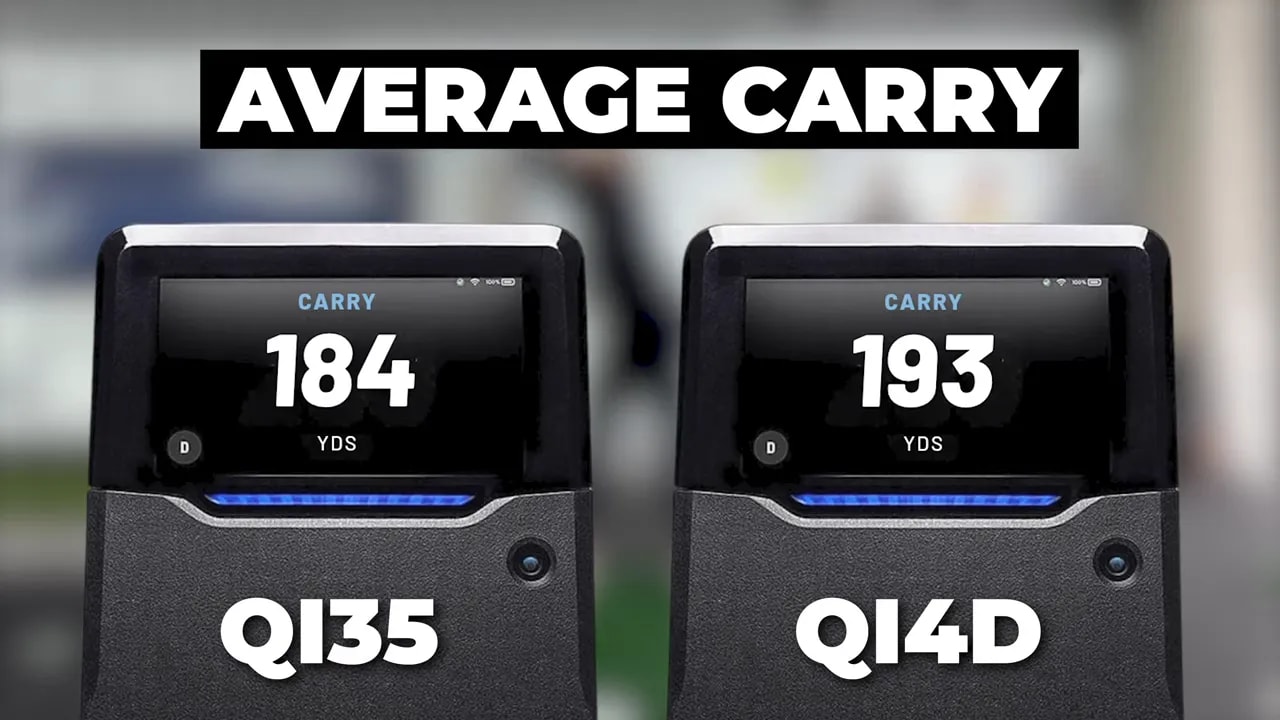
When speed returned, the improved movement held up. The shots stayed straighter, grouping tightened, and distance did not disappear. In fact, because contact improved, some shots went farther even without extra effort.
This is one of the most important truths in driver golf. More centered contact often creates more distance than trying to swing harder. A ball struck near the middle of the face launches more efficiently and keeps spin under control.
Step 7: Improve your golf release so the clubhead works better through impact
The final piece of the lesson addressed how the club was being delivered into impact. The player had a tendency to hold on to the angle too long. In other words, the club was not releasing early enough.
That kind of delayed release can create several driver problems in golf:
- It can de-loft the club.
- It can point the face more to the right.
- It can make the shaft lean too much at impact.
- It can encourage a glancing strike rather than a fully released hit.
With irons, players are often told to compress the ball and control the handle. But driver golf is different. You are not trying to produce the same kind of shaft lean you would want with a wedge or mid iron. Ideally, the shaft is a bit closer to vertical at impact, with the clubhead releasing properly.
The feel used here was powerful because it was simple. The player was asked to feel as though the clubhead was being thrown earlier, almost as if the hands would stay back while the club released in front. Of course, the hands do not literally stay back at impact, but that exaggeration creates a much better release pattern.
This changed two things at once:
- The face had less tendency to point right.
- The club delivered more loft and speed into the ball.
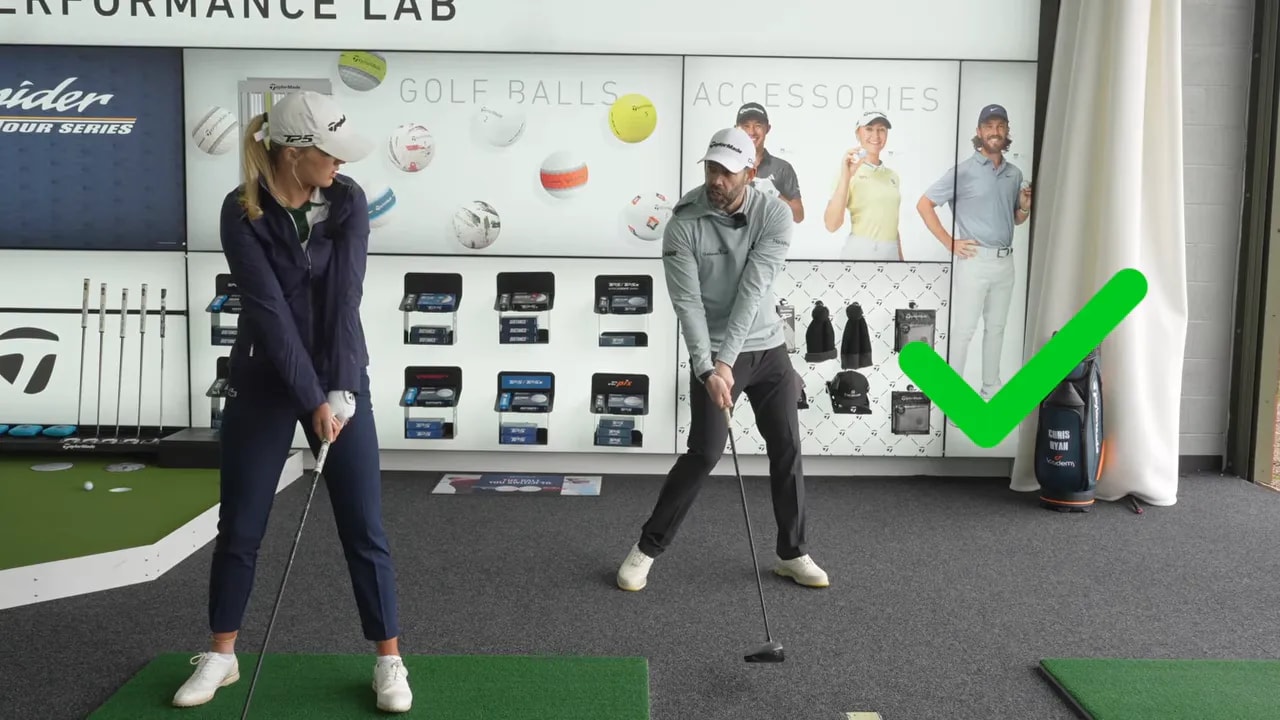
For many golfers, this is an eye-opening idea. If you keep “holding lag” with the driver, you may actually be hurting both control and distance. A better release can make the club feel faster, freer, and much easier to square.
Step 8: Use simple golf feels that produce measurable results
The best coaching cues in golf are often the ones that create a clear feel. In this lesson, the key feels were not overly technical. They were practical and easy to repeat:
- Set up less aimed to the right.
- Place the hands slightly more forward.
- Take the club away in a more neutral line.
- Feel the clubhead release earlier in the downswing.
Those changes did not make the swing complicated. They actually simplified it. Instead of needing a face that was precisely closed enough to rescue an exaggerated path, the swing became more neutral from start to finish.
The result was exactly what you want from driver golf:
- Tighter dispersion
- More centered strike
- Straighter start lines
- A little more distance
That is a strong reminder that better golf often comes from balance rather than effort. If several parts of your technique are fighting each other, your timing has to be perfect. When those parts start working together, consistency appears much faster.
Step 9: Understand why this golf lesson worked so quickly
Quick improvements in golf usually happen when the diagnosis is accurate. This lesson worked because it did not chase one isolated symptom. It looked at the whole pattern.
Here is the chain of cause and effect:
- The setup aimed the body too far right.
- The takeaway moved too much to the inside.
- The overall swing circle became tilted.
- The path moved too far right.
- Strike drifted toward the heel.
- The face had to work hard to get the ball back to target.
- The release pattern held the face open and de-lofted the club.
Once those pieces were cleaned up, the swing no longer needed so many compensations. That is why the results changed quickly. The grouping became smaller, the pattern shifted from slightly right to much straighter, and the longest shot of the session arrived after the release improved.
If you are trying to improve your own golf driver, this is the model to follow. Do not ask only, “Why did that shot go right?” Ask, “What in my setup, takeaway, and release is creating a path and strike pattern that makes right misses likely?”
Step 10: Build this golf fix into your practice
To make this lesson useful in your own golf game, practice it in a structured way. Do not jump straight to full-speed drivers. Build the pieces in order.
Practice sequence for better driver golf
- Check alignment
Make sure your feet, hips, and shoulders are not all aimed right of the target. - Set the hands correctly
Feel the hands slightly more forward at address if your setup tends to get too passive. - Rehearse a neutral takeaway
Use a club or alignment stick on the ground and keep the club from getting excessively inside early. - Hit half swings
Focus on centered strike and straighter start lines. - Rehearse the release
Feel the clubhead “kick out” earlier instead of dragging the handle through impact. - Add speed gradually
Only increase speed when the pattern stays stable.
If you do this well, your driver golf can become much simpler. The club will no longer need a chain of compensations just to produce one good shot.
FAQ
Why do I keep missing my driver to the right in golf?
A right miss in golf often comes from a club path that travels too far right, a face that stays open to that path, heel contact, or a combination of all three. In this lesson, the path was too far right because of setup and takeaway issues, and the release pattern made it harder to square the club.
Can ball position cause driver inconsistency in golf?
Yes. A ball position that is too far forward can sometimes hide another golf swing problem, especially if you already swing too far out to the right. It may temporarily offset the path, but it does not solve the root issue.
Why does an inside takeaway hurt driver golf?
An excessively inside takeaway can tilt the swing direction and encourage the club to approach from too far inside. In driver golf, that often leads to pushes, draws that overcurve, and heel strikes.
Should I hold lag with the driver in golf?
Not in the same way you might with an iron. With driver golf, holding the angle too long can de-loft the club and leave the face pointing right. A better release helps the clubhead work more naturally through impact.
What is the fastest way to improve driver consistency in golf?
Start with setup and strike. Check alignment, neutralize the takeaway, and improve contact before trying to swing harder. In many golf swings, better centered strikes produce both straighter shots and more distance.
Final thoughts on better golf with the driver
This lesson shows how a good driver can become an excellent one without a complicated overhaul. The player did not need to invent a new golf swing. She needed to remove the small pieces that were all pushing the club too far right, then pair that cleaner path with a better release.
If your own driver golf feels inconsistent, start by looking for stacked patterns. Are several small habits all nudging the swing in the wrong direction? If so, clean up the setup, organize the takeaway, and let the club release more naturally. Those changes can tighten dispersion, improve strike, and add distance without making the swing feel harder.
That is the kind of progress every golfer wants. Straighter drives, smaller misses, and more confidence from the tee.
0 Comments