
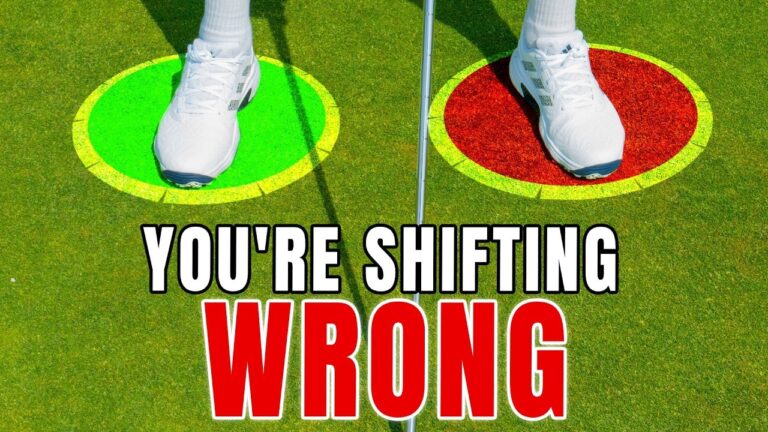

For years, many golfers were taught the same basic move in the golf swing: shift your weight to the back foot in the backswing, then shift your weight to the front foot in the downswing. It sounds simple, and for a long time it was accepted golf instruction.
But for many players, that thought creates more problems than it solves.
If your golf swing feels inconsistent, if your contact with irons comes and goes, or if your motion feels too slidey and hard to time, the issue may not be your effort. It may be the idea you are using. The better concept is not a large weight shift. It is a smart pressure shift.
That distinction can completely change how your golf swing feels. When you learn to move pressure properly through your feet while keeping your body more centered, your motion can become more natural, more powerful, and easier to repeat.
Table of Contents
- Step 1: Understand why “shift your weight” can hurt your golf swing
- Step 2: Start your golf setup with slightly more pressure on the lead side
- Step 3: Learn the key golf concept of pressure versus weight
- Step 4: In the backswing, press into the trail foot before the club moves
- Step 5: In transition, move pressure to the lead side earlier than you think
- Step 6: Use a simple pedal-to-pedal golf drill
- Step 7: Push up and away from the ground through impact
- Step 8: Practice the halfway-down golf drill for better strikes
- Step 9: Use these golf swing feels to make the move easier
- Step 10: Know what a good golf motion should feel like
- Common mistakes to avoid in this golf move
- FAQ
- Final thought
Step 1: Understand why “shift your weight” can hurt your golf swing
The phrase “shift your weight” often leads golfers to move too much off the ball. Instead of creating a powerful golf swing, it can cause the hips to drift, the head to sway, and the body to move so far laterally that getting back to the ball becomes difficult.
This is one of the biggest reasons amateur golfers struggle with iron play. If you try to load up heavily onto the trail side, you may feel as if you are making a good move. In reality, you may be making it much harder to return the club to the ball consistently.
The important point is this:
Weight and pressure are not the same thing.
You can create pressure under one foot while your body is actually moving in the opposite direction.
Good golfers tend to keep their mass relatively centered, even though pressure is moving dynamically through the ground.
That is why elite golf swings often look more stable than many recreational swings. There is motion, but it is efficient motion.
Step 2: Start your golf setup with slightly more pressure on the lead side
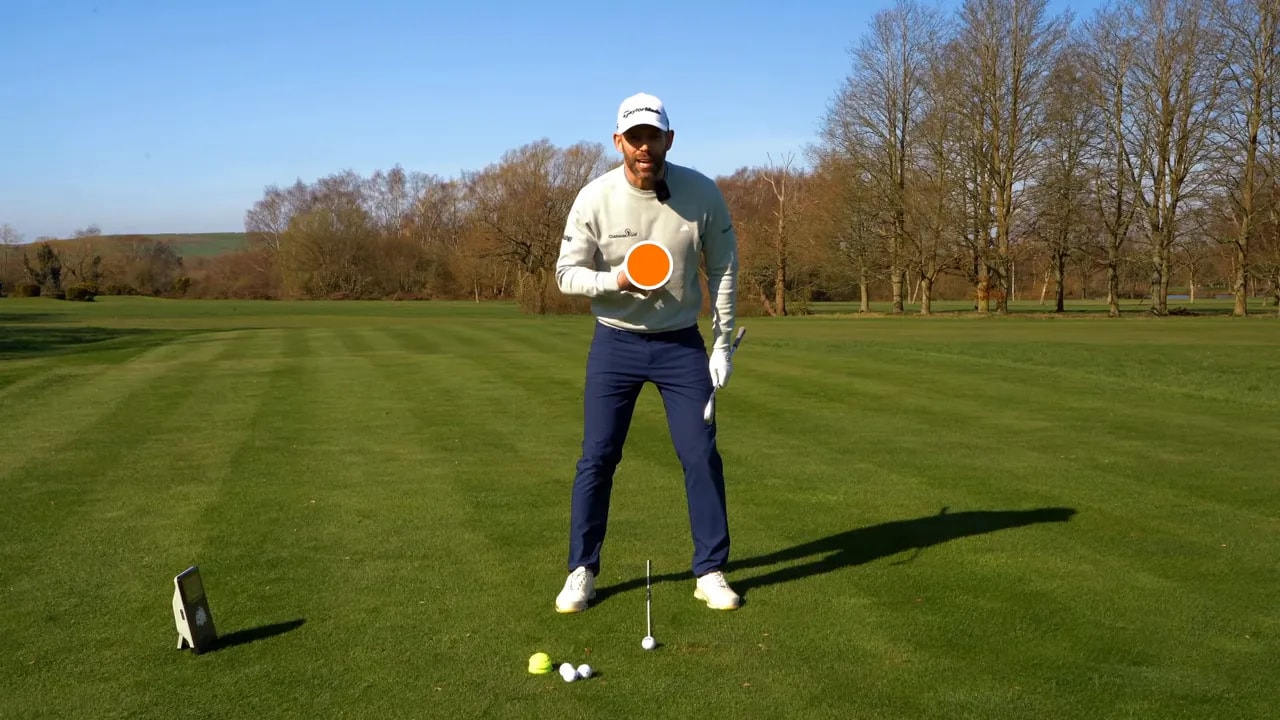
A better golf swing begins before the club ever moves. At address with an iron, strong players often set up with a little more pressure in the lead leg.
You do not need to measure this precisely. You do not need to worry whether it is 55 percent, 60 percent, or some exact number. What matters is the sensation.
Use this simple setup process:
Stand tall and feel balanced evenly between both feet.
Tip forward into your golf posture while keeping that balanced feeling.
From there, nudge your knees, thighs, and hips slightly toward the target.
Keep your head relatively still.
Stop when you sense just a little more pressure in the lead foot than the trail foot.
That small adjustment does two useful things in your golf setup.
It gives you a subtle lead-side pressure bias.
It helps preset an impact-like look, with the belt buckle and knees slightly more forward.
This does not mean leaning dramatically onto the front foot. It means creating a centered golf posture with a slight lead-side favor that makes the rest of the swing easier.
Step 3: Learn the key golf concept of pressure versus weight
If you want to improve your golf swing, you need to separate these two ideas clearly.
Weight refers more to where your mass is moving. Pressure refers to how force is being applied into the ground through your feet.
That difference explains why many golfers get confused.
Imagine pressing hard into the ground with your trail foot. The pressure under that trail foot increases. Yet the body can begin reacting in a way that sends motion toward the target. Pressure and body movement do not always match in the simplistic way many golfers assume.
In practical golf terms, this means you should stop trying to create a big side-to-side move. Instead, learn to use the ground better.
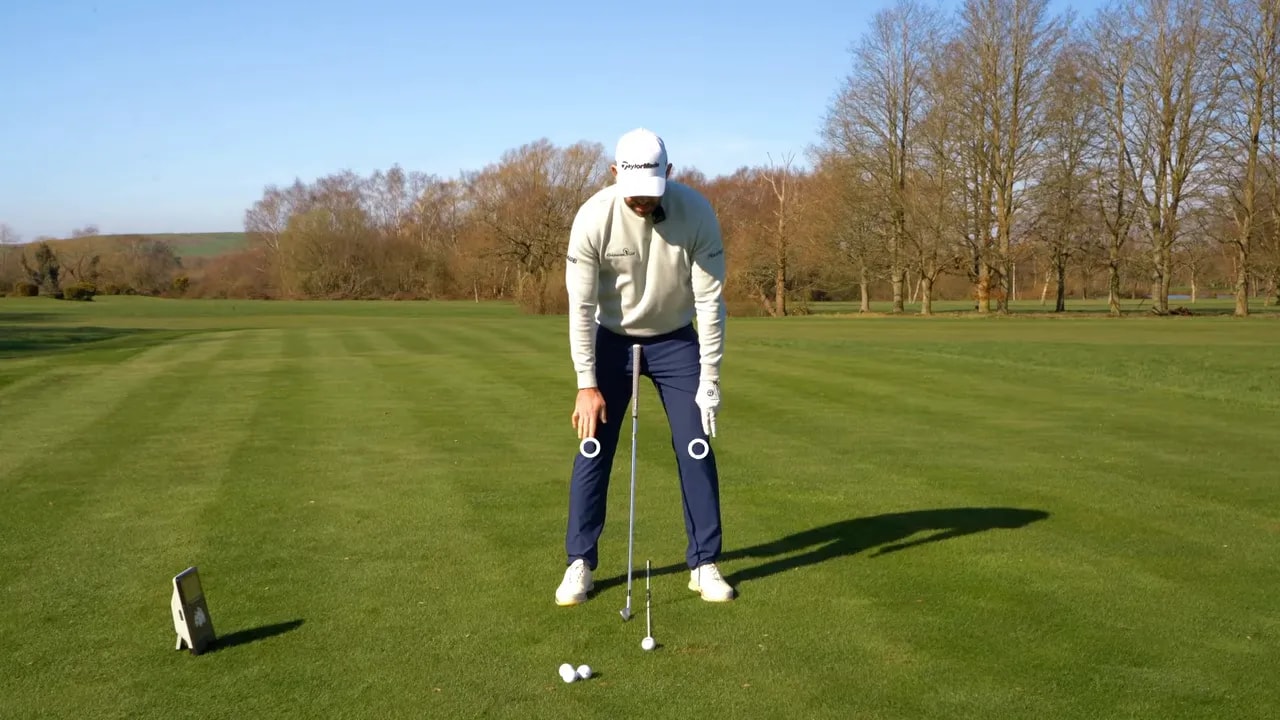
Think of your feet as working on pedals. The more effectively you press into those pedals, the more efficiently your body and club can move.
Step 4: In the backswing, press into the trail foot before the club moves
This is where the golf swing often starts to make more sense.
Rather than thinking, “Move your weight to the back foot,” think, “Press into the trail-side pedal, then turn.” That is a very different feel.
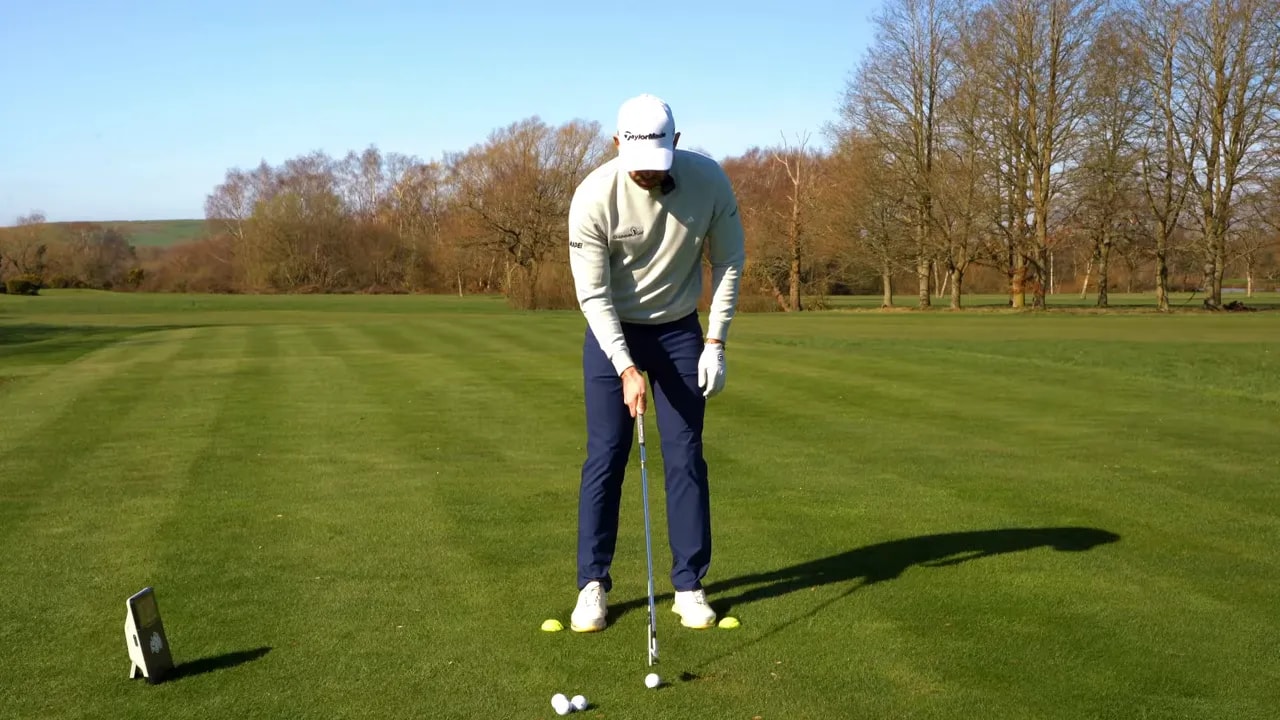
A useful drill is to place an object such as a half tennis ball just outside the trail foot, roughly level with the end of your laces. Treat it like a pedal.
Then rehearse this sequence:
Set up with slightly more pressure on the lead side.
Before the club moves away, press down into the trail-side pedal.
Allow that pressure increase to help initiate the backswing turn.
Turn into the backswing without drifting excessively off the ball.
The order matters. The foot pressure begins first, then the club moves. That small detail can transform the quality of your golf backswing.
When done well, there may be a tiny amount of lateral motion, but it quickly turns into rotation. The result is a backswing that feels loaded and athletic while still keeping you centered over the ball.
This is one of the biggest differences between a productive golf swing and a swaying golf swing. A sway moves your body too far. A pressure-driven backswing builds energy without losing your center.
Step 5: In transition, move pressure to the lead side earlier than you think
This is one of the most important pieces in the entire golf motion.
Many golfers think about pressure as a static checkpoint at the top of the backswing. That is not the best way to understand it. Pressure is always moving. The golf swing is dynamic, not frozen.
The goal is to:
Build pressure into the trail side early in the backswing
Then move pressure into the lead side early in transition
Elite golfers tend to create significant lead-side pressure much earlier than most amateurs realize. By the time the lead arm is about level with the ground in the downswing, many top players have already reached their peak pressure into the lead side.
Golfers who struggle usually do two things differently:
They do not create as much pressure into the lead side.
They do it too late, often much closer to impact.
That late move can rob your golf swing of speed, control, and strike quality.
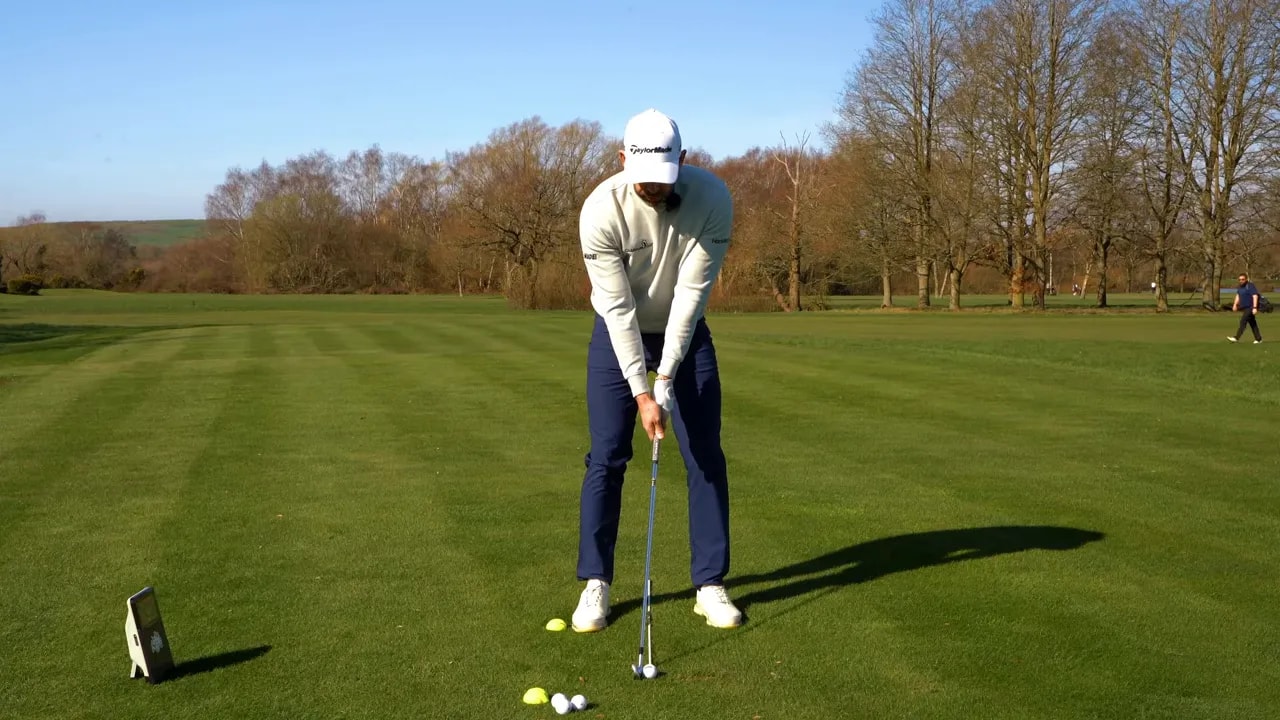
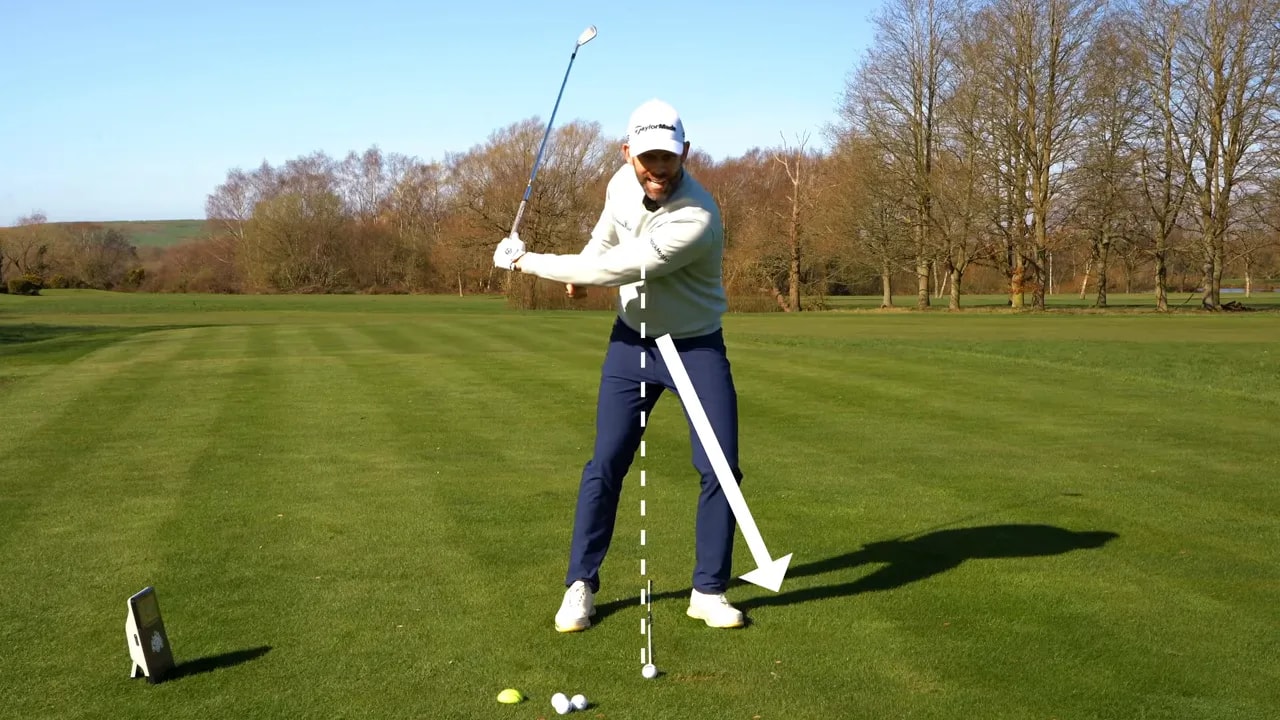
To train this, place a second pedal cue in front of the lead foot. Then rehearse moving from the trail-side pedal in the backswing to the lead-side pedal in transition.
The feeling should be fluid. Not back, then forward as two separate chunks. It should feel like one continuous movement through transition.
Step 6: Use a simple pedal-to-pedal golf drill
At this point, you can blend the motion together with a no-ball rehearsal.
Think of your golf swing as moving from one pedal to the other:
Trail pedal to lead pedal.
Rehearse this several times without hitting a shot:
Set up with slight lead-side pressure.
Press into the trail pedal and turn into the backswing.
As you change direction, move pressure into the lead pedal.
Keep the motion smooth and connected.
This drill helps you feel the source of energy in a good golf swing. The motion should feel rhythmic rather than jerky. It should feel flowing rather than forced.
That is an important sign that you are using the ground more efficiently.
If your golf swing has always felt rushed or disjointed, this rehearsal can help organize it. Instead of trying to throw the club from the top, you are learning to move pressure first and let the body and club respond.
Step 7: Push up and away from the ground through impact
Moving pressure into the lead side is not the end of the story. What you do with that pressure matters just as much.
Great golf swings do not simply move pressure left and then spin. They use that lead-side pressure to push away from the ground.
Look at what happens in a strong impact and post-impact position:
The lead leg is much straighter.
The hips are more extended.
The body is taller.
The chest is more back while the hips are more forward.
That happens because the golfer is not staying compressed into the ground forever. The golfer is using the ground, then pushing away from it.
Why is this important in a golf swing?
Because that push helps direct force through the grip, which helps the club release, square, and accelerate. In simple terms, the energy you built in the swing gets transferred more effectively into the clubhead.
For golfers, this can improve:
Clubhead speed
Face control
Ball-first contact
Overall strike quality
Step 8: Practice the halfway-down golf drill for better strikes
If you want a practical way to train this move, use a half-down rehearsal.
Set yourself in a position where your lead arm is roughly level with the ground in the downswing. From there, feel pressure in the lead side, then turn and push up and away from the ground.
This is a simple but powerful golf drill because it teaches the correct sequence late in the swing without requiring a full-speed motion.
Here is the drill:
Move into a halfway-down position.
Sense pressure under the lead foot.
From there, turn through and push upward.
Finish tall, with the body extended.
You can even hit short shots from this position. The goal is to learn that pushing away from the ground does not mean you will top the ball, scoop it, or hit up on it too much.
In fact, the opposite can happen. When the motion is sequenced correctly, that push helps send the grip upward while the clubhead works down through the ball with speed. That is why you can still take a divot after the ball and achieve excellent turf interaction.
For iron play, this is especially important. Proper lead-side pressure can help move the low point forward. Then the push through the ground helps deliver speed and release through impact.
Step 9: Use these golf swing feels to make the move easier
Golf instruction works best when the ideas are simple enough to feel. If all the mechanics become too technical, they are hard to apply on the range and even harder on the course.
These are the core feelings to keep:
Setup: a little more pressure in the lead foot
Backswing: press into the trail pedal, then turn
Transition: move pressure to the lead pedal early
Downswing: push away from the ground through the lead side
Finish: tall, extended, and balanced
If you keep those feelings in mind, your golf swing can become much more organized.
You are no longer trying to throw your body side to side. You are learning to create pressure, move pressure, and then use pressure.
Step 10: Know what a good golf motion should feel like
One of the best outcomes of this concept is not just better mechanics. It is better feel.
When pressure moves correctly, the golf swing tends to feel:
More athletic
More balanced
More rhythmic
More powerful without extra effort
Easier to repeat
That matters because good golf is not only about knowing positions. It is about creating a motion you can trust.
If you have been fighting swaying, hanging back, poor turf contact, or timing issues, this pressure-based model is a useful reset. It gives you a more realistic picture of what strong golfers actually do in the swing.
Common mistakes to avoid in this golf move
As you practice, avoid these errors:
Overdoing the setup bias. You only need a little more pressure on the lead side, not a dramatic lean.
Sliding in the backswing. Press and turn. Do not sway and drift.
Waiting too long to get lead-side pressure. In a good golf swing, it happens earlier than most players expect.
Spinning without pushing. Rotation is important, but so is pushing away from the ground.
Assuming “push up” means “hit up.” With irons, you can still strike down, compress the ball, and take a divot after it.
FAQ
Should you stop shifting your weight in the golf swing completely?
Not completely. There is still some movement in a good golf swing. The key is that you should stop trying to make a large, obvious weight shift. Focus instead on how pressure moves through your feet while your body stays more centered.
What is the difference between weight shift and pressure shift in golf?
Weight shift refers more to where your body mass is moving. Pressure shift refers to how force is applied into the ground through your feet. In golf, pressure can move dynamically without the exaggerated sway that often comes from thinking only about weight shift.
Why does pressure matter so much in the golf swing?
Pressure helps you use the ground to move your body and club more efficiently. Better pressure movement can improve rhythm, low-point control, speed, and strike quality in your golf swing.
How should pressure move in the golf swing?
You should begin with slightly more pressure on the lead side, then press into the trail side early in the backswing, move pressure back into the lead side early in transition, and finally push away from the ground through impact.
Will pushing up through impact make you top the golf ball?
No. When sequenced properly, pushing away from the ground does not cause a top or a scoop. It can actually help the club travel downward through impact with speed, which is why you can still hit the ball first and take a divot after it.
What is a simple golf drill to learn this motion?
A very effective drill is the pedal-to-pedal rehearsal. Use one cue near the trail foot and one near the lead foot. Rehearse pressing into the trail side in the backswing, then moving pressure into the lead side in transition. You can also practice from a halfway-down position and feel the lead-side push through impact.
Final thought
If your golf swing has always been built around the idea of shifting your weight back and through, it may be time to update that concept. Better golf often comes from better pressure, not bigger movement.
Set up with a slight lead-side bias. Press into the trail side and turn. Move pressure into the lead side early. Then push away from the ground through impact.
That sequence can help you stay centered, strike your irons more cleanly, and create a golf swing that feels both powerful and repeatable.
For many golfers, that is the missing piece.
0 Comments