
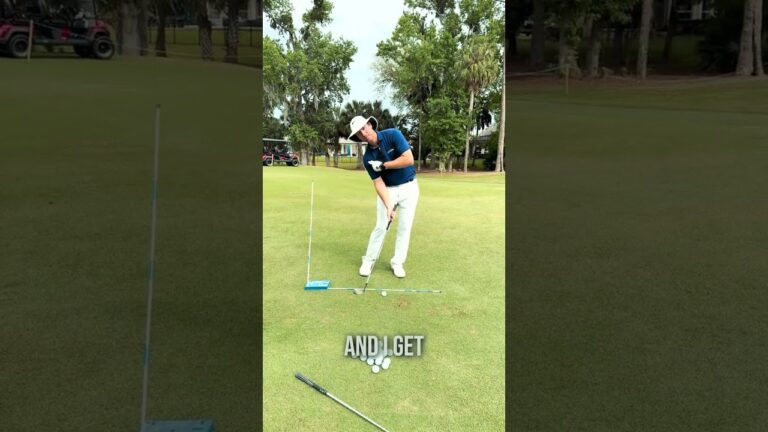

If you want better golf wedge play, clean pitch shots are one of the fastest ways to lower scores. A crisp strike gives you more predictable launch, more spin, and better distance control. A heavy strike adds too much turf. A thin strike takes the spin away and makes short-game golf feel unreliable.
The key is learning how to brush the ground correctly without digging, while still striking down enough to control the ball. That balance is what separates a soft, spinning pitch from a sloppy one.
This guide explains how to hit clean pitch shots in golf, including setup, clubface, body motion, low point control, and how the technique changes from roughly 30 yards to 90 yards.
Table of Contents
- Step 1: Understand what a clean pitch shot is in golf
- Step 2: Set up to let the club strike the turf cleanly
- Step 3: Feel the club work down, but keep your body from collapsing into the turf
- Step 4: Keep the hands passive and let the release happen
- Step 5: Move through the shot instead of freezing your weight
- Step 6: Use the right angle of attack for the shot length
- Step 7: Control spin by controlling contact, not by trying to add magic
- Step 8: Avoid the most common golf pitch-shot mistakes
- Step 9: Practice clean pitch shots with a simple ground-contact drill
- Step 10: Match the shot to the situation on the course
- Step 11: Use this quick checklist before every golf pitch shot
- FAQ
- Final takeaway
Step 1: Understand what a clean pitch shot is in golf
A clean pitch shot in golf is not a scoop and it is not a deep dig. It is a strike where the club reaches the ball first, uses the turf properly, and produces a crisp, controlled flight.
For most players, the problem is choosing the wrong extreme:
- Too steep, which drives the leading edge into the ground.
- Too shallow, which can cause thin contact or a weak, sliding strike.
What you want is a strike that feels downward but organized. The club is working into the turf, yet your body and swing geometry keep it from crashing too deep.
This matters because wedge spin in golf is closely tied to clean contact. If dirt or grass gets trapped between the clubface and the ball, spin drops quickly. Clean pitch shots are really about controlling ground interaction.
Step 2: Set up to let the club strike the turf cleanly
Your setup should help the club enter the ground cleanly and exit without digging. A few simple pieces make a big difference.
Use a narrow, athletic stance
A narrower stance makes it easier to keep the motion organized and keeps the shot compact. It also helps you move through the shot instead of hanging back.
Start with the face slightly open
For many pitch shots in golf, opening the clubface a little at address can improve turf interaction. The important part is that the face does not stay wide open through impact. It returns closer to square as the club releases.
This is a common misunderstanding. Some players open the face and then try to hold it open. That often adds loft without compression. A better pattern is to start a touch open, then let the club release naturally into the ball.
Allow some shaft lean at impact
Even with a lofted wedge, solid contact usually includes some forward shaft lean. That reduces delivered loft enough to create a stronger strike and better spin loft. In practical terms, you are not trying to add loft through impact. You are trying to strike the ball first with a stable, descending club.
Match the setup to the lie
If you want spin, you need a good lie. Clean pitch shots in golf are much easier from tight fairway turf or a clean first cut than from a lie with grass trapped behind the ball.
Step 3: Feel the club work down, but keep your body from collapsing into the turf
One of the best feels for clean contact is that the club is moving downward like a tool being delivered into the ground. But your upper body stays organized enough that the club does not bottom out too early.
Think of it this way:
- The club is traveling down into the shot.
- Your body stays far enough from the ground to prevent a deep dig.
- Your chest and shoulders do not dive under the plane.
This creates the crisp thump good wedge players produce in golf. You hear turf contact, but it is shallow and controlled rather than heavy.
If you struggle with fat pitch shots, this is often the missing piece. You may be trying to help the ball up by dropping the trail shoulder too much or by letting your torso tilt backward. That sends the low point behind the ball.
Step 4: Keep the hands passive and let the release happen
Many poor pitch shots in golf come from overactive hands. Players try to force spin, flip the wrists, or manipulate the clubface through impact.
A cleaner motion is more passive with the hands. The arm structure moves the club into position, then the club releases on its own. That creates better consistency and often better spin.
What passive hands look like
- The trail arm folds in the backswing.
- The elbow moves down in transition.
- The body keeps moving forward.
- The clubhead releases without a forced wrist throw.
This is especially helpful on touch shots where accuracy matters more than power. In golf, a passive-handed pitch tends to control strike location better than one driven by a last-second wrist action.
If you want a simple checkpoint, focus on the motion of the arm and body, not on trying to “hit” with the hands.
Step 5: Move through the shot instead of freezing your weight
There is a long-standing idea in golf instruction that short pitches should stay entirely on the lead side with almost no motion. While pressure often favors the lead side, trying to stay completely still can create the opposite of what you want.
If your body stalls and the club keeps moving, the club’s weight can pull you backward. That often leads to hanging on the trail side, flipping the club, or bottoming out early.
A better pattern is a small, natural flow into the lead side as you swing through.
What that should feel like
- A slight movement into the shot
- Body and arms moving together
- Pressure continuing toward the target through impact
This does not mean a big slide. It means your motion stays dynamic. Even on short wedge shots in golf, the body should not feel frozen.
Step 6: Use the right angle of attack for the shot length
Not every clean pitch shot in golf uses the same turf interaction. The shorter the shot, the more precise you need to be with how the club brushes the grass. As the shot gets longer, you can allow a slightly more aggressive downward strike.
From about 30 to 40 yards
At this distance, you usually do not create dramatic one-hop-and-stop spin unless conditions are ideal. The priority is very clean contact.
Use a shallow but descending strike. The club should nip the turf, not carve a divot. If you get too steep from this range, you are more likely to chunk it.
From about 50 yards
This is where many players can start producing more visible check on the green in golf. You can swing with more speed, and speed helps create spin if contact stays clean.
The strike can be a little more downward here, and the club can move through the turf more assertively. You still want control, but now you can be more aggressive through impact.
From about 80 to 90 yards
On fuller lob wedge shots, a steeper strike can work very well if the lie is good and the face is clean. The goal is simple: ball first, then turf, with as little grass or dirt as possible between face and ball.
This is one of the easiest places in golf to create a low, spinning wedge shot if your contact is precise.
Step 7: Control spin by controlling contact, not by trying to add magic
Players often ask how to get more spin on pitch shots in golf. The answer is less about tricks and more about strike quality.
Spin increases when these things happen together:
- A clean clubface
- A clean lie
- Ball-first contact
- Enough speed for the shot
- Proper loft delivery rather than adding loft through the hands
If you try to “slide” the club under the ball to create spin, you usually get the opposite. The ball comes out soft, high, and with less bite.
For many wedge shots in golf, especially from fairway lies, more spin comes from a slightly more downward strike with the face starting a bit open and then releasing through the ball.
Why a clean face matters
Grooves cannot do their job if they are packed with dirt or moisture. If you are practicing pitch shots, wipe the face often. This is a small detail, but it changes real on-course results.
Step 8: Avoid the most common golf pitch-shot mistakes
Most poor pitch shots come from a small group of errors. If you can remove these, your contact improves quickly.
Trying to help the ball into the air
The wedge already has loft. In golf, trying to lift the ball usually moves the bottom of the swing behind it.
Fix: Let the loft do the work. Focus on ball-first contact and a shallow turf strike after the ball.
Holding the face open through impact
Opening the face at address can be helpful, but trying to keep it open all the way through often leads to weak contact.
Fix: Start slightly open if needed, then allow the club to release naturally.
Getting the trail shoulder too far under
This creates a drop-kick pattern where the club hits the ground too early.
Fix: Keep your chest more level through impact and feel as if you stay on top of the shot.
Freezing your body
When your body stops and the club keeps going, timing gets difficult.
Fix: Keep a small forward flow through the strike.
Being too tentative
Short-sided pitch shots in golf often make players decelerate. That hurts contact and spin.
Fix: Commit to the landing spot and make a confident motion with enough speed.
Step 9: Practice clean pitch shots with a simple ground-contact drill
If you want to improve wedge contact in golf, use a visual barrier or reference line to train the club’s entry point and swing plane.
The purpose of the drill is to help you feel the club working down correctly while keeping the body organized so the club does not dig under the reference point.
How to use the drill
- Set up for a short pitch shot.
- Place a training aid or visual reference that encourages the club to approach from a more organized, upright delivery.
- Make small swings and focus on brushing the turf cleanly without crashing into the ground.
- Keep your body moving through the shot.
- Gradually increase speed while maintaining the same strike pattern.
The goal is not to manipulate the club with your hands. The goal is to produce a predictable low point and a clean thump.
What a good rep feels like
- Downward strike without digging
- Clubface contacting the back of the ball cleanly
- Body continuing forward
- Balanced finish
Step 10: Match the shot to the situation on the course
Clean pitch shots in golf are not all played the same way. Your lie, wind, and green shape matter.
Downwind conditions
Downwind shots often release more and may not spin as much. You still want clean contact, but expect less check than into the wind.
Short-sided pins
When you have little green to work with, you need precise contact and enough speed. Deceleration is the biggest danger here.
Good lies versus poor lies
If the lie is clean, you can be more aggressive in golf and try to produce more spin. If the lie is sitting down, your priority should shift toward solid contact and safe rollout expectations.
Longer wedge distances
As the shot lengthens, you can allow more downward strike and even take a small divot. That is often a better recipe for control than trying to sweep everything.
Step 11: Use this quick checklist before every golf pitch shot
Before you hit, run through this short routine:
- Lie: Is it clean enough to expect spin?
- Face: Is the clubface clean?
- Setup: Slightly open face if needed, narrow stance, athletic posture
- Motion: Small flow into lead side, not frozen
- Strike: Ball first, then shallow turf
- Release: Passive hands, natural club release
- Commitment: Choose the landing spot and swing with confidence
This simple process can make your short-game golf far more reliable under pressure.
FAQ
How do you hit a clean pitch shot in golf without chunking it?
Keep the club moving down into the ball, but let your body stay organized and continue toward the target. Avoid dropping your trail shoulder too far under the shot, and do not hang back. The ball should be struck first, with only a shallow brush of turf after impact.
Should the clubface be open on golf pitch shots?
It can help to start with the face slightly open, especially if you want a cleaner interaction with the turf. But the face should not stay wide open through impact. Let the club release so it returns closer to square at strike.
How do you get more spin on pitch shots in golf?
More spin usually comes from cleaner contact, not from adding extra hand action. Use a clean clubface, a good lie, enough speed, and a descending strike that keeps grass and dirt from getting between the face and the ball.
Should you take a divot on a golf pitch shot?
On very short pitch shots, you generally want more of a shallow brush than a deep divot. As the shot gets longer, especially from about 50 to 90 yards, a small divot can be perfectly fine if it happens after the ball.
Why do my golf pitch shots come out thin?
Thin shots often happen when you try to help the ball into the air, hold the face open too long, or fail to move through the shot. Let the loft do the work, keep your hands quiet, and keep your body moving toward the target.
Final takeaway
Clean pitch shots in golf are built on one core idea: controlled downward contact with smart turf interaction. You want the club to work into the ground without digging, the face to strike the ball cleanly, and the body to keep moving through the shot.
If you focus on setup, passive hands, a natural release, and better low-point control, your wedge play becomes more predictable. Start with short shots, pay attention to turf contact, and gradually build toward longer wedge distances. Crisp contact first, spin second. In golf, that is the order that produces reliable scoring shots.
0 Comments