
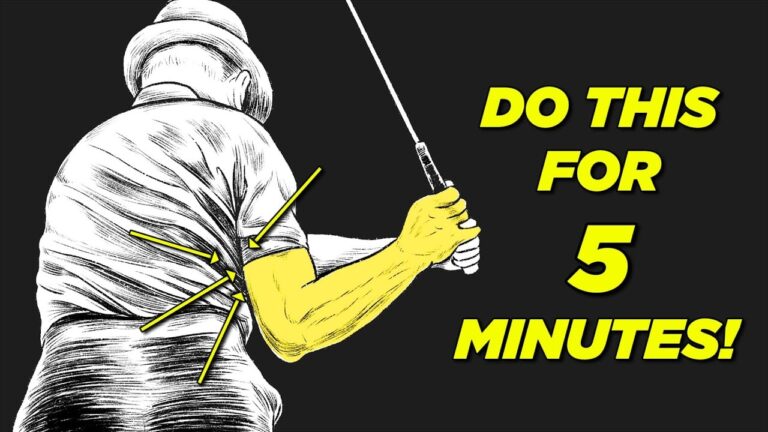

If your golf ball compression is inconsistent, you likely have the same downswing problem as most amateur golfers: you are casting and flipping the club at the start of the downswing. That movement throws away the angles professionals protect, and it makes it harder to strike the ball with that “pure” feel.
The fix is not another complicated swing thought. It is a specific transition move that helps you narrow your downswing, reconnect your arms to your body, and maintain the club’s “loaded” position long enough to produce speed and compression.
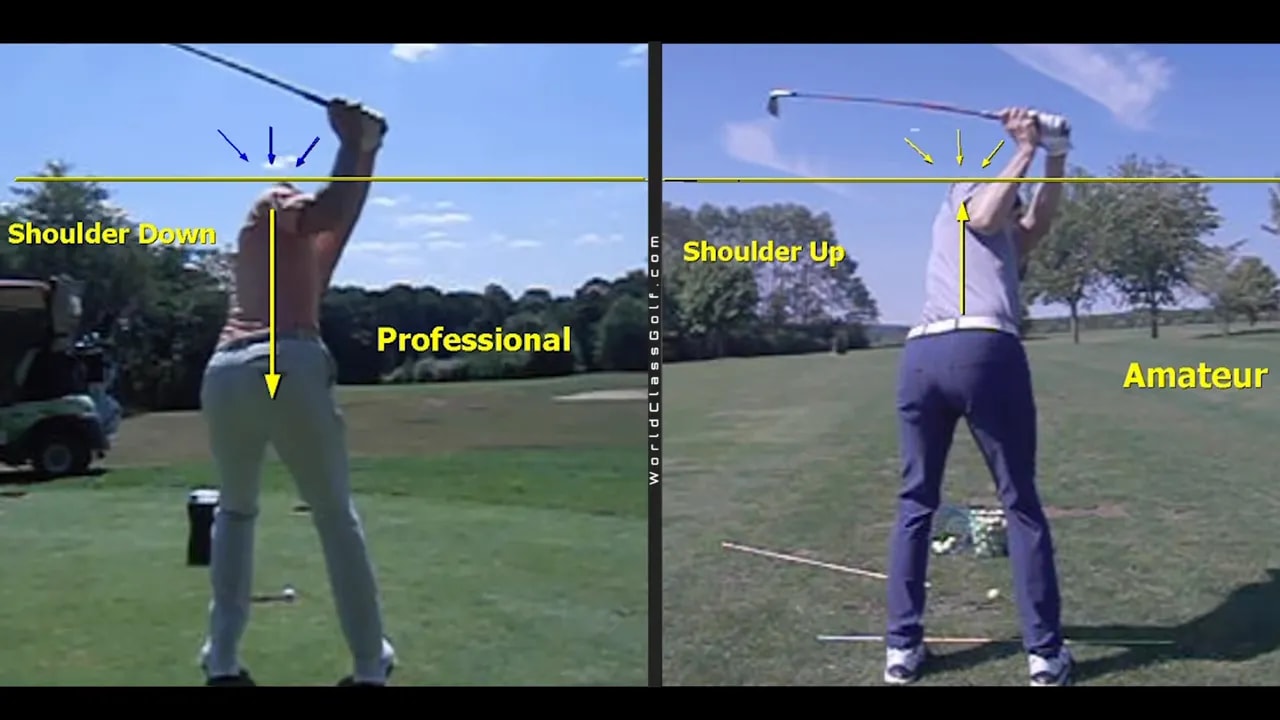
Key idea: amateurs often keep the lead shoulder higher than it should be, which makes the swing “too wide” and causes the club to drop and dump the angles. The result is a flip. The result is a loss of compression.
Table of Contents
- Step 1: Diagnose the casting and flipping pattern in your golf swing
- Step 2: Understand the “narrower downswing” solution for golf compression
- Step 3: Build the drill in two parts (changeover first, then lag)
- Step 4: Add “flex” to shallow the plane and square the face
- Step 5: Use an on-screen feedback indicator to confirm you are not casting
- Step 6: Use the grip-point indicator to improve release speed (without flipping)
- Step 7: Move the speed to the right place to avoid fat and thin shots
- Step 8: Put it together with a simple practice progression
- FAQ
- Bottom line: the simplest way to improve your golf ball striking
Step 1: Diagnose the casting and flipping pattern in your golf swing
The most common amateur error described in this lesson is the same one you can feel and see: the club starts down, but instead of keeping the correct angles intact, you:
- Cast the club (release the wrist angle too early, or throw the club out instead of letting it load).
- Flip with the hands (an active hand release that often happens to “save” a bad position).
- Let the downswing get too wide, which robs you of the proper arm-to-body connection.
One practical way to spot this without fancy tools is using simple video angles. Film from the side where you can clearly see shoulder and arm relationships. A key comparison is:
- Good players: lead shoulder moves down appropriately during transition, arms reconnect to the torso, and the club stays “in place” long enough to create lag.
- Typical amateurs: lead shoulder stays up, the club moves too wide, and the angles get lost before impact.
Step 2: Understand the “narrower downswing” solution for golf compression
To compress the golf ball, you need the club to be properly loaded before impact. That loading depends on what happens during transition and early downswing.
The method here is straightforward: create a narrower downswing than your backswing. In other words, don’t repeat the width you created on the way back. Instead, pull the motion inward so your arms can reconnect and maintain the right angle.
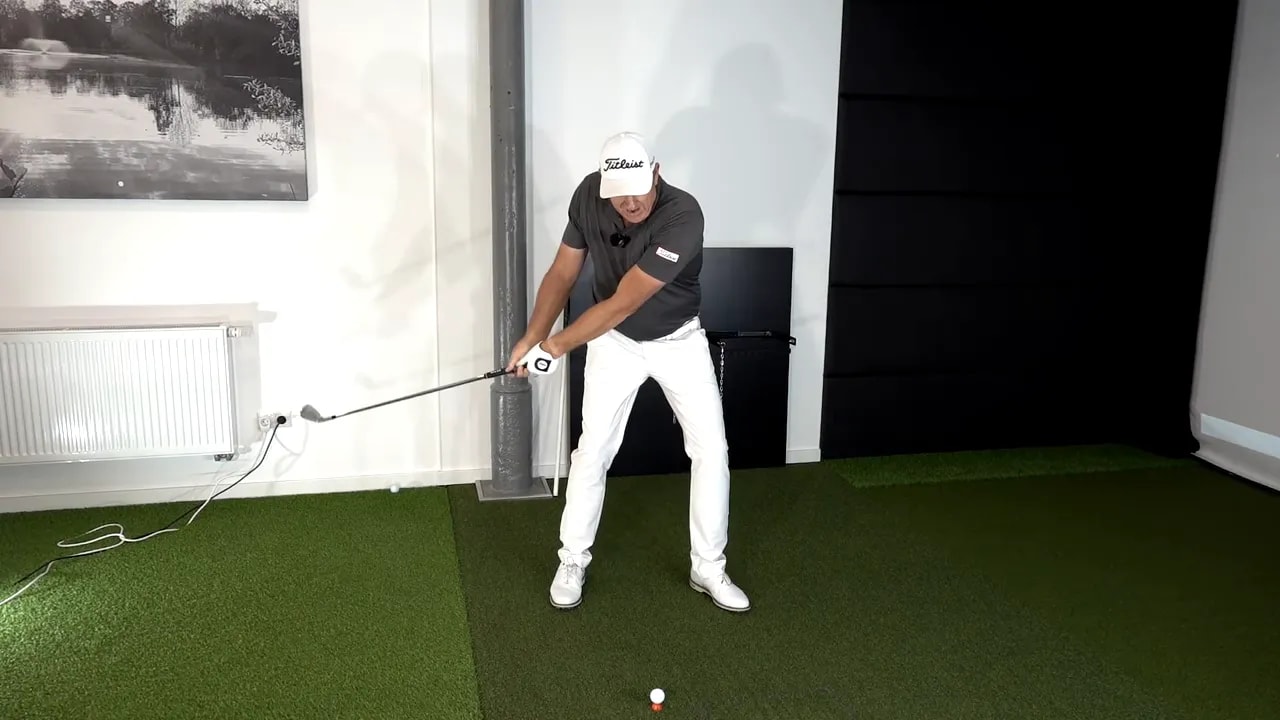
As the downswing begins, the goal is a pulling sensation that reconnects your arms to your body. This is what sets up your “wicked angle,” meaning the club is positioned so you can deliver speed into the ball instead of flipping through it.
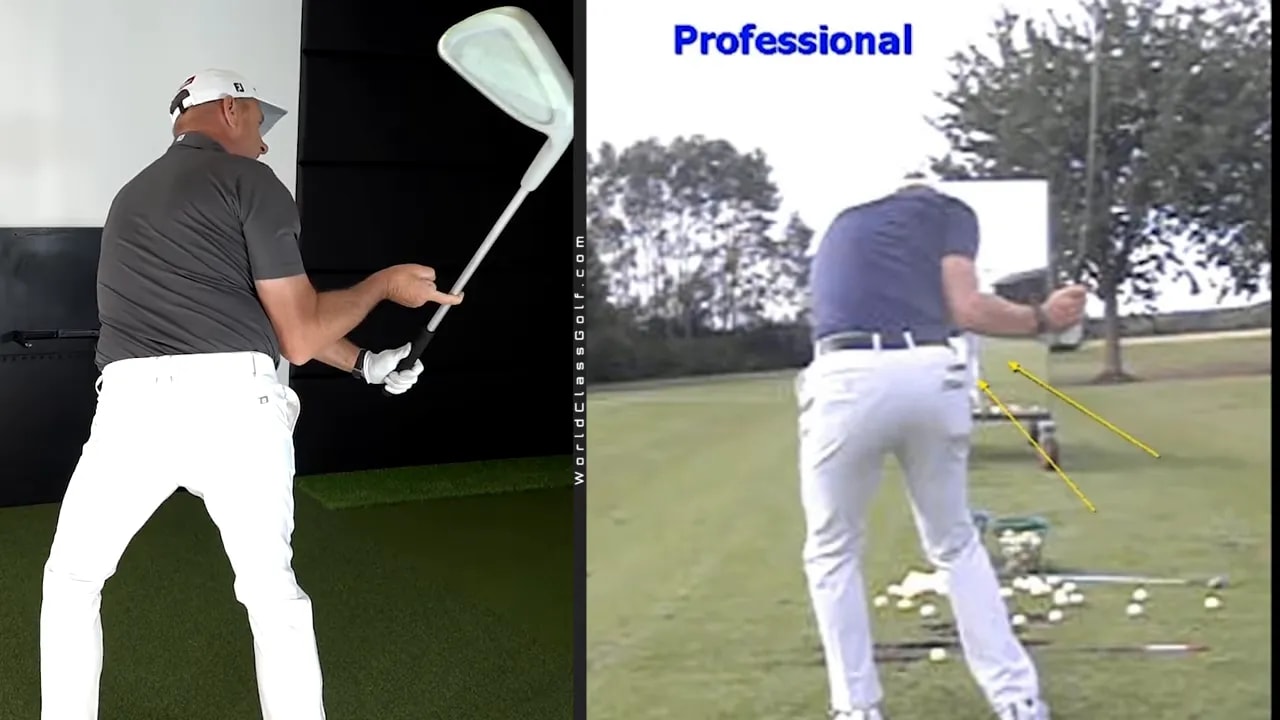
Step 3: Build the drill in two parts (changeover first, then lag)
This drill is designed for amateurs specifically. It starts easy, using body awareness and a “soft and heavy” feel, then adds lag and a controlled wrist action.
Part A: Changeover feel (wide to narrower)
Before you chase speed, make sure you can sense the transition. Start with your arms soft and heavy so you can feel the changeover.
- Take the club back feeling “wide.”
- Begin the downswing and feel it become “a little more narrow.”
- Focus on a pulling sensation that closes the gap and gets your arms moving into the narrower path.
You are training the transition, not hitting full shots yet. If your changeover feels chaotic, shorten the motion and slow it down.
Part B: Shift and connect (load the golf swing)
Next, layer in the rhythm that great players use: they shift, and then they connect. The drill uses a “sit there” feel so your body and arms synchronize rather than throwing the club.
- Take it back wide while keeping your arms loose.
- Shift and connect as you move into the downswing.
- Feel like you sit in that connected position briefly.
- Then move through the ball smoothly.
At this stage you are not forcing release. You are creating the conditions where release can happen naturally later.

Step 4: Add “flex” to shallow the plane and square the face
Once the narrow downswing and shift-and-connect feel start working, you add the next piece: a controlled wrist flex.
In the drill, the sequence becomes:
- Wide
- Shift
- Connect
- Flex
What is “flex” here? It is a soft, deliberate bowing of the wrist during the downswing, not a sudden slap at impact. When done correctly, it helps you:
- Shallow the club path
- Square the face
- Turn the club into a “battering ramp” (a description of how the club delivers energy into the ball)
- Rip through the shot while maintaining compression
Use tee height and half swings to help yourself. The goal is clean contact that confirms your angles are still intact when you strike.

Practice tip: when your arms are heavy and soft, you will feel when you are staying connected versus when your hands are taking over. If you start flipping, slow the flex down and focus on maintaining the narrow path.
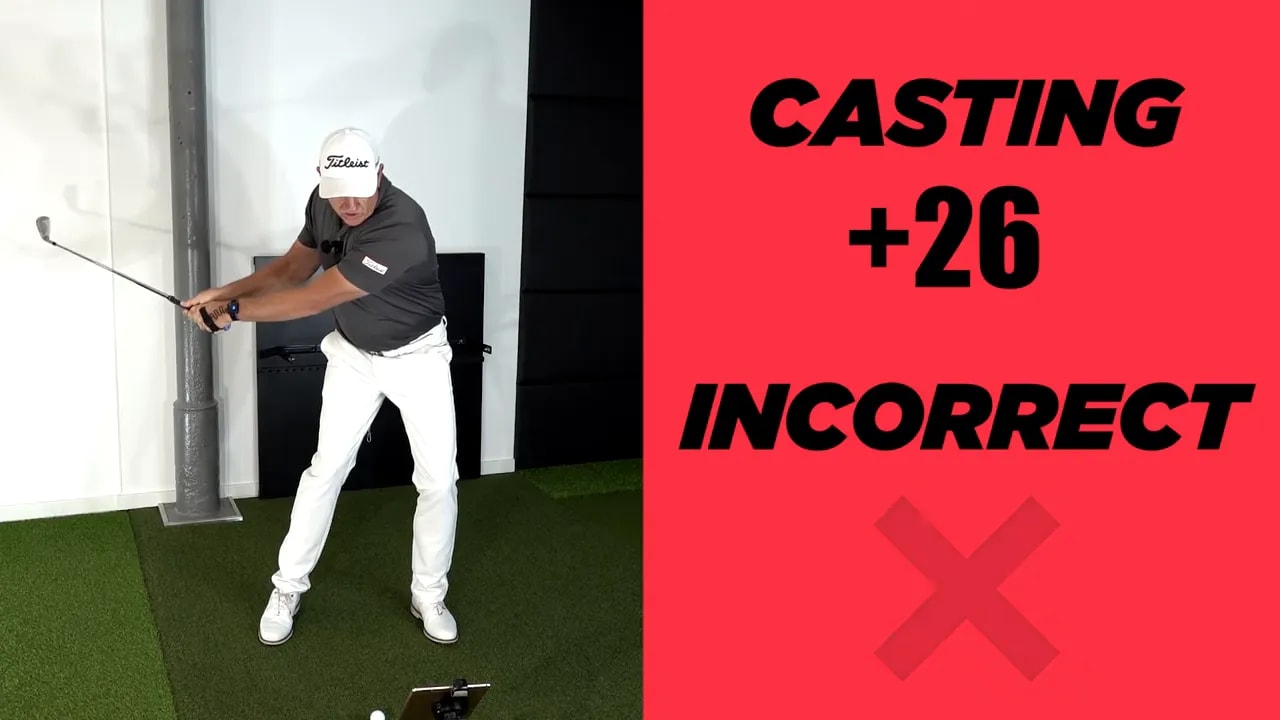
Step 5: Use an on-screen feedback indicator to confirm you are not casting
Many golfers can explain what they think they are doing, but struggle to tell what is actually happening at the exact moment problems begin. This is why technology feedback can be a shortcut to improvement.
The lesson’s key promise is simple: hit a ball, then look at whether you cast or flip. That lets you know how much you need to “create some feels” rather than guessing after a bad shot.
In practice, your goal is to see yourself maintaining the correct angle through the hitting zone. When the angle survives longer, compression becomes easier. When it disappears early, you cast or flip to compensate.
Step 6: Use the grip-point indicator to improve release speed (without flipping)
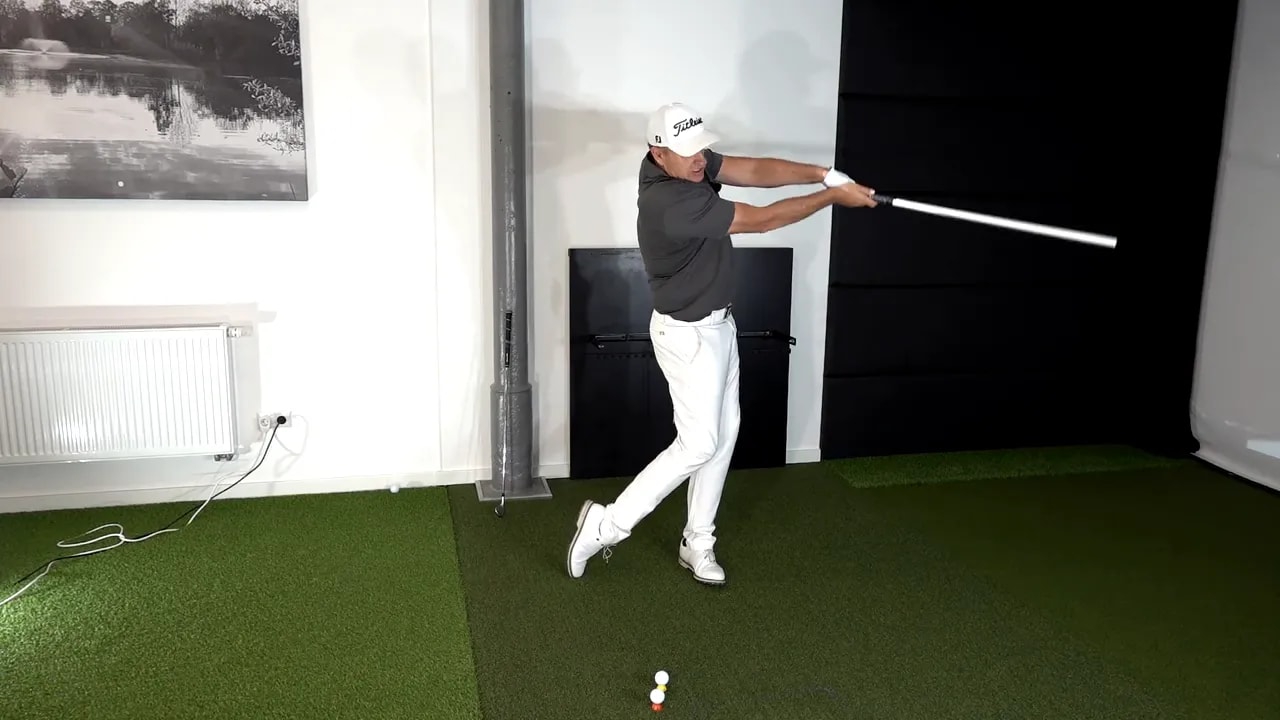
After you fix how you load the club, you still need the right release. The lesson points out a common amateur pattern: most amateurs have the grip pointed down through the moment where great players are already letting the energy go.
This becomes a practical indicator:
- Amateurs: grip tends to stay pointed down, often signaling “no release” or a held-down left wrist position.
- Great players: grip points upward more naturally as they release through impact, helping speed feel effortless.
Trying to keep the left wrist flat forever usually causes you to hang on. Hanging on pushes your speed later, often leading to poor contact and shots that miss right (for many golfers) because the club is not delivering energy where it should.
Instead, the lesson emphasizes the idea of hinge and unhinge. Great swings load the wrists and then release them. The release is not a flip. It is the natural unhinging of the saved angle.
What “hinge and unhinge” looks like in golf
- Hinge: build wrist angles and keep the club loaded through transition.
- Unhinge: let the angle release at the right time to maximize speed.
The lesson connects this to well-known effortless swings where speed comes from timing and sequence, not forced hand action. Examples mentioned include Fred Couples and players with very “effortless” release patterns, including long-drive and elite PGA Tour swings that show clean unhinging.
Step 7: Move the speed to the right place to avoid fat and thin shots
Another issue caused by casting and flipping is that your highest speed can end up in the wrong spot. That is why you might hit:
- Fat shots: highest speed occurs after the low point
- Thin shots: timing places impact too early relative to speed peak
The fix is to keep the stored angle long enough during the downswing, then let it go through the ball. When you do that, your highest speed aligns closer to where the club meets the turf and ball.
Step 8: Put it together with a simple practice progression
Here is a practical progression you can use during your next practice session to build the golf swing improvement quickly.
- Warm-up: hit short swings focusing on narrow downswing and arm softness.
- Changeover only: wide to slightly narrower path without worrying about impact quality.
- Shift and connect: add the “sit there” feel and move through slowly.
- Add flex: wide, shift, connect, flex. Aim for clean strikes on tee-height balls.
- Check your release indicator: after a few swings, look for natural “grip points up” behavior through the finish.
- Progress to full speed: once the contact is clean, increase tempo while keeping the same sequence.
If you lose the feel, go back one step. This drill is designed to be repeatable because it targets causes, not symptoms.
FAQ
How do I know if I’m casting or flipping in my golf swing?
Film your downswing from a side view and compare shoulder and arm spacing. Casting often shows a widening “gap” early in transition, followed by the club releasing too soon. Flipping shows increased hand activity and a less stable delivery into impact.
What is the “narrower downswing” idea for compression?
Instead of carrying the same width from the backswing into the downswing, you pull the motion inward so your arms can reconnect to your torso. This helps you preserve the stored angle long enough to compress the ball.
Does “flex” mean adding more wrist power?
No. Flex is a soft, controlled bowing of the wrist at the right moment. It helps shallow the path and square the club face, but you should keep it smooth rather than aggressive.
Why does keeping the left wrist flat hurt release?
Holding the left wrist flat forever often prevents the natural unhinging that creates speed. When energy cannot release, you tend to hang on and your speed peaks in the wrong place, leading to inconsistent contact.
How often should I practice this golf drill?
Practice it in short sets during a session. For many golfers, repeating the sequence (wide, shift, connect, flex) for 10 to 20 controlled swings is enough to create carryover, then you increase speed once contact improves.
Bottom line: the simplest way to improve your golf ball striking
If you want faster improvement in your golf swing, focus on the sequence that controls compression: a narrower downswing, a reconnecting arms feel, and a release that comes from hinge and unhinge instead of flipping.
When you stop casting and flipping and you keep the stored angle into impact, pure contact becomes far more repeatable. That is why this move creates quick improvement for so many amateurs.
0 Comments