

 Introduction: Improve Your Golf Swing by Moving Your Hips Forward
Are you struggling with inconsistent shots in your golf game? The solution isn’t about having perfect timing or faster hand speed. It’s all about mastering the move your hips forward technique in your downswing while maintaining a stable head. This accurate movement enhances strike quality, shallows the angle of attack, and effectively guides your club through an inside path instead of cutting across the ball.
Diagnose with a Hip-Line Check
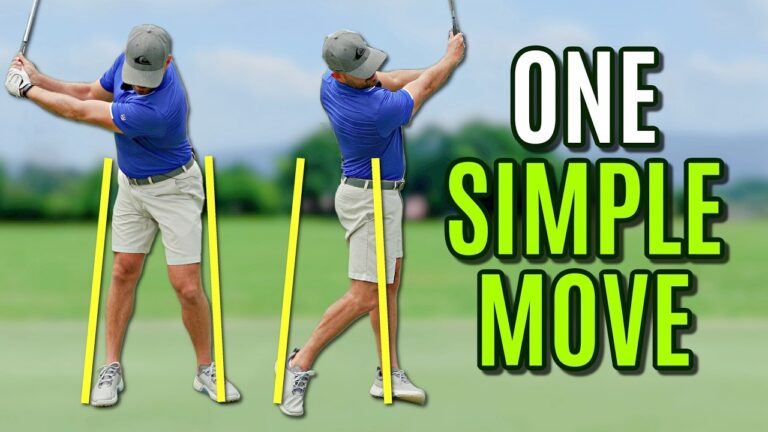
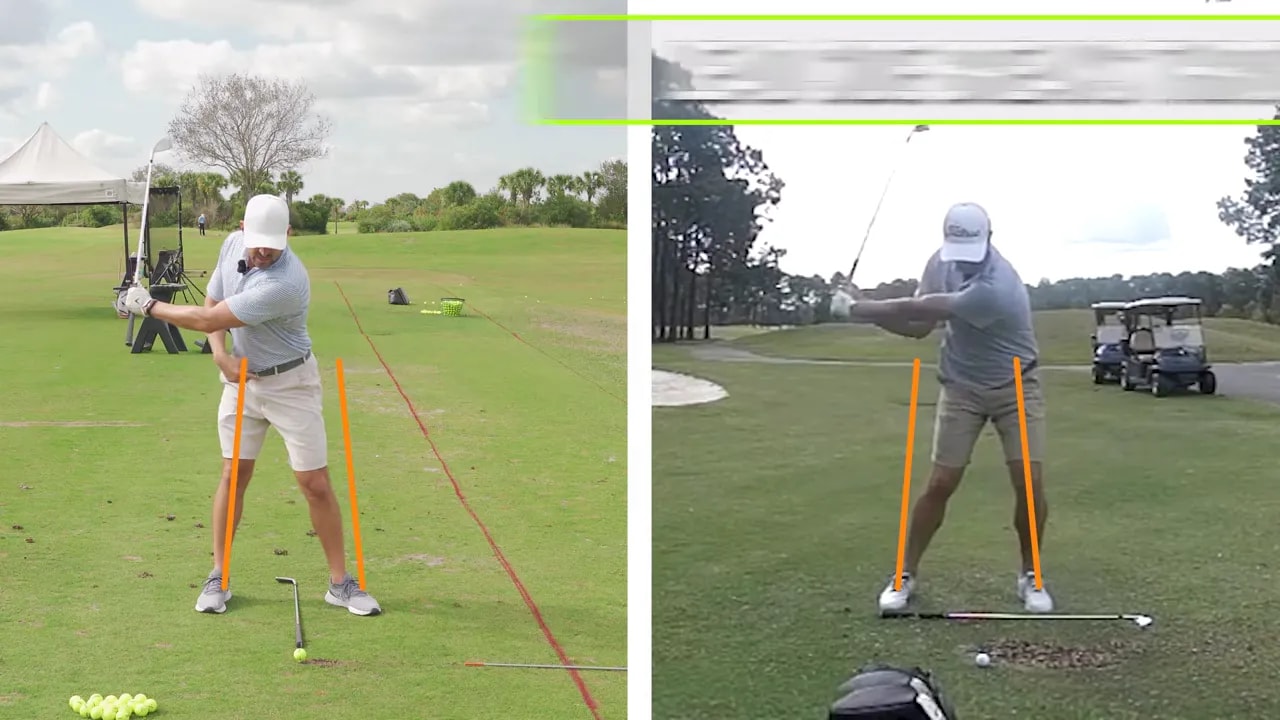
To transform your game, begin with a simple hip-line check, inspired by pros like Adam Scott and Grant Waite. Create two vertical lines along your legs: your lead-side line should break as you rotate, while your trail-side line shows a gap indicating forward hip movement. Record your swing to observe how your hips position relative to these lines, focusing on their forward thrust.
Master the Goal: Hips Forward, Head Stable
The key to a strong downstrike is combining moving your hips forward with correct rotation, while keeping your head stable. Preventing your head from moving forward prematurely avoids an over-the-top swing that often leads to inconsistent hits.
Two Techniques to Move Your Hips Forward
Option A: Fall Into Your Lead Side
Emphasizing the lead side, push your weight into the lead foot early. Feel the lead knee moving forward to drive hip travel.
Option B: Push Off Your Trail Side
Adopt a pitcher-like push-off from your trail side, extending the right leg to propel your body forward effectively.
Lead-Side Drill: Weight Scale Technique
Combat hanging back by pushing weight onto your lead foot in the downswing, ensuring your left knee moves forward. Practice this through rehearsals followed by actual shots, ensuring timing is precise at the start of the downswing.
Finishing Position: Maintain Head Back
Achieve a good finish by keeping your weight primarily on your left foot, with the belt buckle closer to the target, ensuring full body turn without head movement forward past arms-parallel position.
Trail-Side Push Drill: “Pitcher” Visual
For those uncomfortable with lead-side fall, employ a trail-side push. Visualize your right hip creating space from an imaginary wall, driven by a straightening right leg for hip-forward motion.
Combine Shift and Rotation for Forward Low Point
The synergy of forward hip movement and rotation is key. This results in a forward low point, yielding better contact, improved club delivery, and more efficient power transfer.
Your Practice Routine for Success
For the Range
- Practice lead-side drill and hit balls, focusing on hip and head positioning.
- Switch to trail-side feel, observing divots and shot shape for consistency.
At Home
- Slowly practice lead-side and trail-side rehearsals.
- Record swings to verify correct hip and head movement.
FAQ
Detecting Insufficient Hip Movement?
In video analysis, look for hips stationary or lagging, indicated by inconsistent contact or divots behind the ball.
Choosing the Right Feel
Select the cue that moves your pelvis forward and stabilizes your head. Experiment with both for best results.
Key Takeaways
- Effective ball striking relies on moving hips forward in sync with rotation.
- Drills like weight scale and pitcher aid in mastering this motion.
Focus on this singular move to refine your swing, achieve consistent strike positions, and elevate your golf game.
0 Comments