


Golf pitching can make or break a scorecard. When you’re 20 to 30 yards from the green the shots look simple, but knife the ball over the back or fat it short and frustration follows. This guide teaches two simple, high-impact changes you can make to your pitching setup and swing plane to strike more consistently, control start lines, and save strokes around the green.
Table of Contents
- Step 1: Get in Front of the Ball — Setup, Backswing, Impact
- Step 2: Get Steeper — Adjust Your Swing Plane
- Putting the two steps together: A practice routine
- How to measure progress
- Equipment notes that help
- Quick checklist before every pitch
- Frequently Asked Questions
- Final notes
Step 1: Get in Front of the Ball — Setup, Backswing, Impact
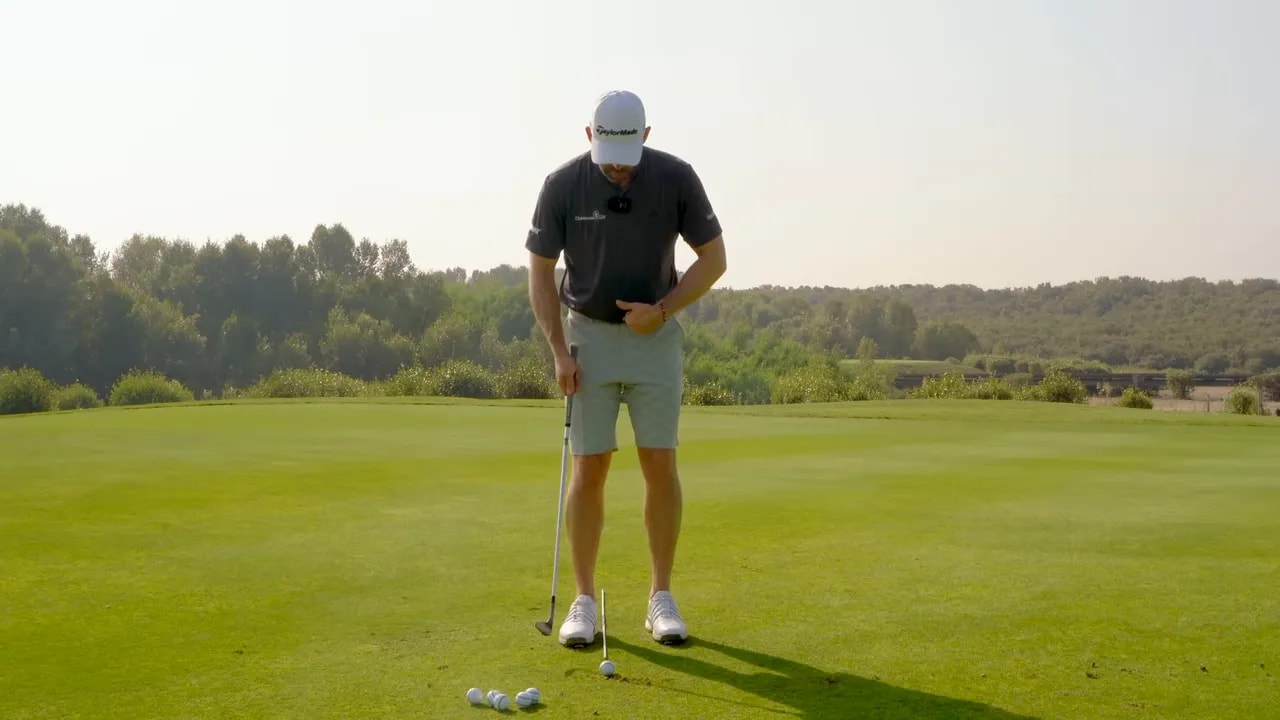
The first fundamental is your relationship to the ball through the entire motion. Think about two reference points on your body: your belt buckle and your sternum. For better pitching in golf you want both of those to be positioned toward the target side of the ball at setup, at the end of the backswing, and at impact.
Why this matters
If your low point is behind the ball you tend to fat pitch shots (hitting ground before ball). If it is target side of the ball you will more reliably strike the ball before the turf. That guaranteed ball-first contact creates cleaner contact, better spin, and predictable distance control for your golf pitching.
How to set up
- Move the ball back in your stance: Place the ball closer to your trail heel than your lead heel so it sits slightly back in your stance.
- Shift your weight forward: Use your knees and hips to put weight toward the lead side so your belt buckle sits in front of the ball.
- Stay stacked: Keep your shoulders level rather than tipping back. That keeps your sternum forward over the ball.
These two small setup adjustments—ball back and body forward—combine to move your low point to the target side of the ball. This is the single most reliable way to start striking pitch shots cleaner in golf.
Practice checkpoint: assign a number
Give yourself a feel-based number for how much weight or presence you have on the lead side at setup. It could be 60, 70, 75 percent—pick any number that helps you form a sensory target. When you take the backswing pause and check that you feel the same amount of lead-side presence you set up with. Hold that sensation through impact.
- Example: If your target feel is 75% lead-side, your belt buckle and sternum should still feel like they are 75% forward at the top of the backswing and through impact.
- If you lean back mid-swing to try to hit higher you will reintroduce poor contact and knife shots over the green.
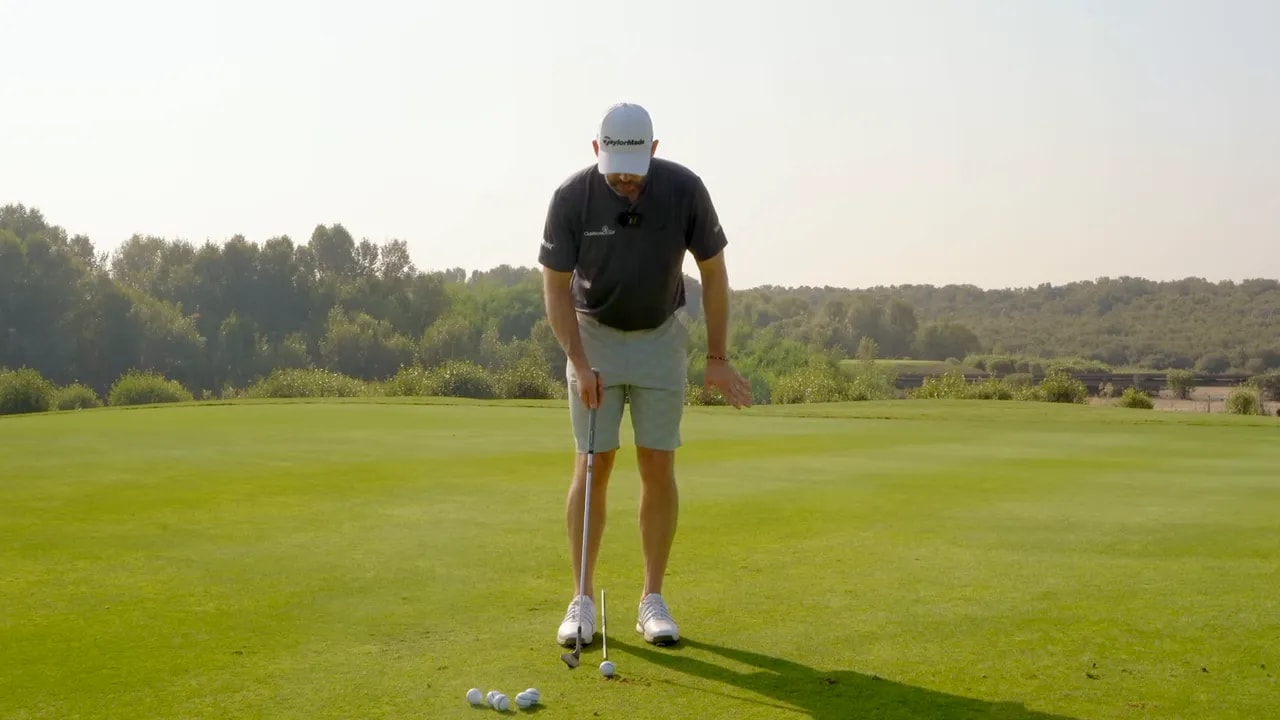
Drill: The Belt-Buckle Snapshot
- Set the ball slightly back in your stance and weight forward on your lead leg.
- Decide on a percentage feel for lead-side presence (for example, 75).
- Take your backswing, pause at the top and take a mental snapshot of how the belt buckle and sternum feel relative to the ball.
- Repeat slow swings, maintaining that snapshot from setup through impact.
Do this for 10–15 balls focusing on the feel rather than distance. After a short session you will notice cleaner strikes and fewer fat shots.
Step 2: Get Steeper — Adjust Your Swing Plane
Pitching in golf is not just about where your body is relative to the ball. It is also about the angle you swing the club around your body, known as the vertical swing plane. Shorter clubs like wedges naturally have a steeper, more vertical plane. Longer clubs and poor setup create a flatter plane. For pitch shots you want a steeper, more up-and-down motion.
How swing plane affects contact
- A low, flat swing plane makes it very difficult to hit down on the ball. If the club travels almost level with the ground it will often hit behind the ball or force you to flip the wrists to compensate.
- A steeper, more vertical swing plane creates natural down-and-through motion so the club hits the ball first then the turf, producing solid strikes and predictable spin.
Two ways to steepen your plane
- Change your setup
- Stand closer to the ball so the clubshaft sits more upright at address.
- Raise the grip slightly in your hands at address so the butt-end sits higher.
- This may feel cramped or like you are crowding the ball. That feeling is normal and often exactly what you want for better golf pitching.
- Change your swing path
- Use your body and hands to swing more up-and-down rather than brushing the turf long and flat.
- A steeper path makes it easier to strike the ball first and take a shallow divot after impact.

Simple alignment-stick reference
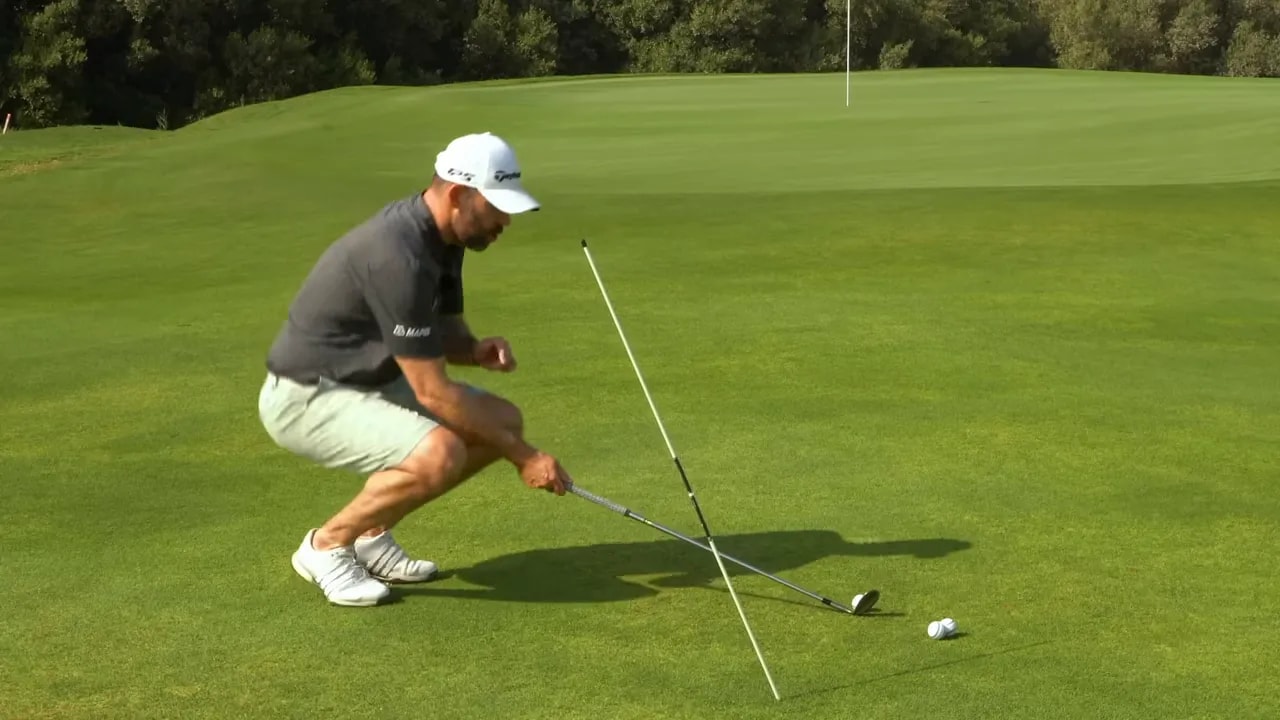
Place an alignment stick in the ground at roughly the same angle as your club at setup. Use it as a visual reference so you swing the club this side of the stick rather than outside of it. The goal is to feel the club working slightly more up-and-down and slightly out-to-in relative to the stick—this promotes cleaner contact and stops you from swinging too low and flat.
- If your club moves outside the stick on the downswing you will likely hit the ground before the ball and flip the hands.
- Working your club inside the stick promotes a more vertical approach and better ball-first contact.
Drill: Alignment-stick steeper plane
- Set up with the ball slightly back and weight forward as in Step 1.
- Stick an alignment stick in the ground at the clubshaft angle you want to use.
- Practice swinging so the club moves on the target-side of that stick on the downswing and through impact.
- Start with half swings, then build to three-quarter and full pitches.
This visual cue makes the abstract idea of swing plane concrete. Over a range session it will re-train your hands and body to move the club in a steeper, more effective path.
Putting the two steps together: A practice routine
Combine the forward setup and the steeper plane into a short, repeatable routine to ingrain the new motion for your golf pitching.
- Warm up: 10 easy half-swings with a wedge, focusing on rhythm.
- Setup check: Place ball back in stance and move weight forward so your belt buckle and sternum are target-side of the ball.
- Alignment cue: Place an alignment stick to the side of the ball at the desired clubshaft angle.
- Snapshot drill: Pick your lead-side percent (for example 75). Make a backswing, pause, and verify that your feel is unchanged from setup.
- Three-ball sets: Hit sets of three pitches concentrating on the setup and the alignment-stick plane. After each set, evaluate strike, start line, and feel.
- Course simulation: Practice from 20 and 30 yards, landing to a target area on the green. Vary trajectory and spin by changing swing length while maintaining setup and plane.
Practice in short bursts and focus on quality. You should see instant improvement in strike and consistency with dedicated work over a few range sessions.
Common mistakes and how to fix them
- Tilting back to get height: You may feel tempted to lean back to add loft. That creates thin or knifed shots. Keep your sternum forward and use turn and extension to produce height.
- Too flat a plane: If you stand too far from the ball you will flatten the shaft and struggle to hit down. Move in closer and raise the handle slightly.
- Flipping at impact: Flipping usually comes from hitting the ground first or having the shaft too flat. Check your low point, use the alignment-stick drill, and maintain forward body presence.
- Overthinking trajectory: Once you have setup and plane sorted, vary launch by changing swing length and tempo, not by changing posture mid-swing.
How to measure progress
Track the following during practice to measure improvement in your golf pitching:
- Strike consistency: How often you hit the ball clean before the turf.
- Distance control: Landing spots and how tightly you cluster them.
- Start line: Whether the ball starts on your intended line rather than curving unpredictably.
- Feel metric: Maintain the lead-side percentage you set at the start of practice and see if it becomes more automatic.
Record short videos from face-on and down-the-line occasionally. Compare your setup position, belt buckle location, and shaft angle. That will confirm whether your body and plane changes are transferring into your practice sessions.
Equipment notes that help
- Fresh wedge grooves and a high-spin ball will reward good technique with tighter stopping power. But don’t blame equipment for poor contact—technique matters first.
- An alignment stick is a cheap and effective training aid to visualize the swing plane.
- Use a loft that allows you to practice height with controlled swing lengths. If you need more height, use a fuller swing while keeping the forward body and steeper plane intact.
Quick checklist before every pitch
- Ball slightly back in stance.
- Belt buckle and sternum forward over the ball.
- Feel your chosen lead-side percentage and make a mental snapshot.
- Stand close enough that the clubshaft is more upright.
- Use an alignment stick during practice to ensure a steeper swing plane.
- Turn and extend through impact—do not tip backward.
Frequently Asked Questions
How much forward bias should I have at setup for pitch shots?
Aim for a noticeable forward bias without tipping your shoulders. Pick a feel-based number like 70 or 75 percent lead-side presence. The exact number matters less than consistency. The goal is to create the sensation that your belt buckle and sternum remain target-side of the ball through the swing.
Will standing closer to the ball crowd my swing?
Yes, it can feel cramped at first. That sensation is normal and desirable for pitching. Standing closer raises the handle and steepens the shaft, improving your ability to hit down on the ball. If it feels uncomfortable, start with small adjustments and build tolerance over practice sessions.
What if I still fat the ball after trying these steps?
Check three things: ball position, forward weight, and swing plane. If the ball is still fatting, move the ball slightly back, ensure your belt buckle is forward, and use the alignment-stick drill to ensure your swing plane is not too flat. Slow-motion swings and half-swings can help diagnose which element is failing.
How do I get more spin on my pitch shots?
Spin comes from clean strike with good loft and fresh grooves paired with a premium ball. The two technical changes here—lead-side presence and a steeper swing plane—improve strike and allow you to benefit from spin. Maintain clean contact and use a ball and wedge condition that support spin.
Can amateurs change these habits quickly?
Yes. These are small, high-leverage changes that produce rapid feedback. With focused practice using the drills and alignment reference, many golfers notice immediate improvement in strike and consistency within a few practice sessions.
Should I alter my grip or wrist action for pitching?
Grip changes are usually unnecessary. Focus first on setup and plane. Wrist flipping is a symptom of poor low-point control or a flat plane. Cure the root cause and your wrist action will naturally become cleaner.
Final notes
Improving your golf pitching does not require complex technique overhauls. Focus on two repeatable fundamentals: keep your belt buckle and sternum target-side of the ball through the swing, and steepen the swing plane by standing closer and using a clear alignment reference. Practice these two elements with short, deliberate drills and you will see more consistent strikes, improved control, and fewer costly short-game mistakes.
Make the setup and plane your practice priorities, and let the rest of your short-game performance follow.
0 Comments