
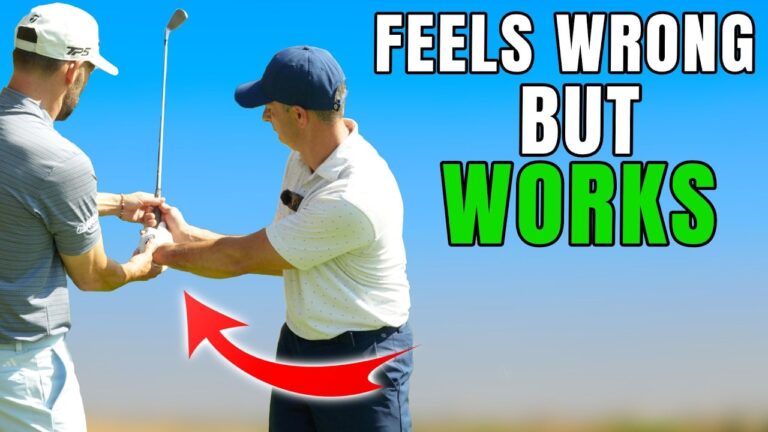

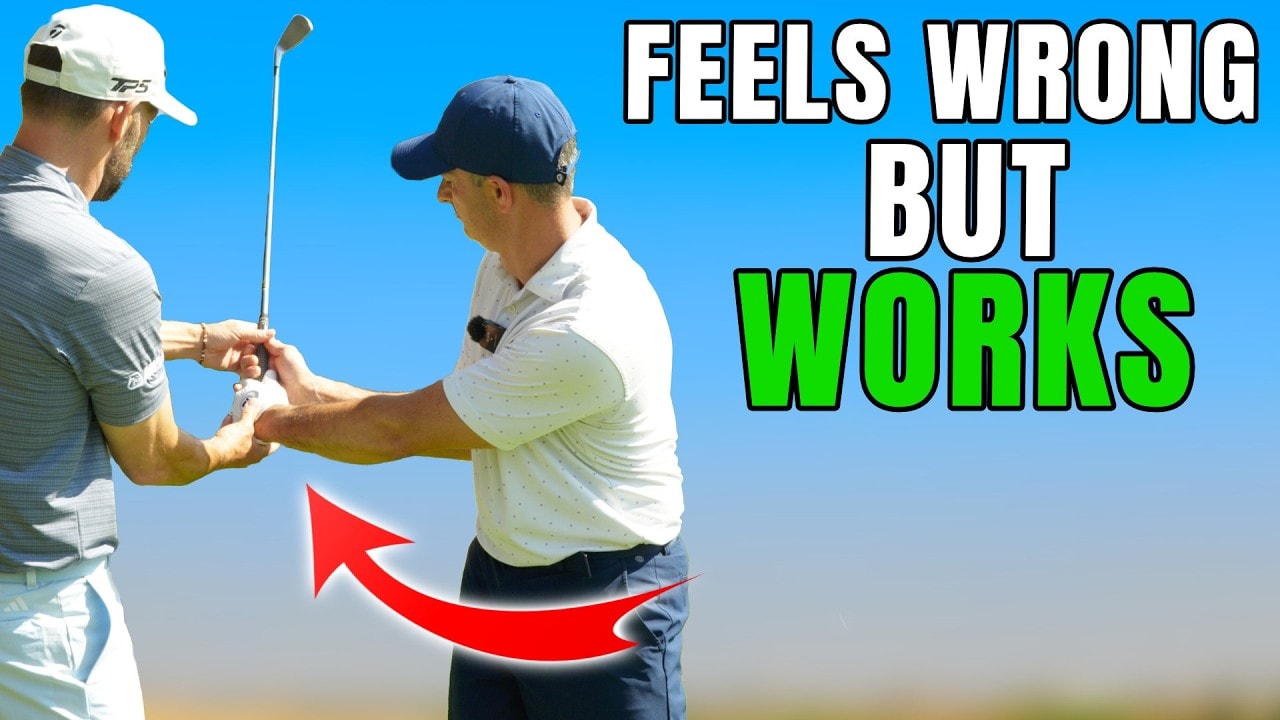
If your golf iron shots are drifting off the heel, producing weak contact, or occasionally turning into a shank, the solution may not be what you expect. Many golfers assume they need to pull the club closer to their body to stop heel strikes. In reality, that instinct often makes the problem worse.
This golf lesson breaks the issue down into two simple areas: setup and downswing delivery. When you improve those two pieces, you can turn inconsistent iron contact into a much more neutral, reliable ball flight.
Step 1: Diagnose the real golf problem before changing your swing
When your iron shots are poor, it is easy to blame path, face angle, or a dramatic swing flaw. But in this case, the key issue was strike location.
The club was being delivered reasonably well, yet contact kept drifting toward the heel. That is an important distinction in golf. A poor strike can hide a swing that is actually better than you think.
Before changing everything, start by asking:
- Are you missing the center of the face?
- Are heel strikes causing the bad shot pattern?
- Is your club delivery actually better than the result suggests?
If the strike is the main issue, your job is not to rebuild your whole golf swing. Your job is to create better spacing and a better delivery pattern into impact.
Step 2: Fix your golf setup by creating more room
The first correction is at address. The player was not standing too close with the whole body. Instead, the feet were a little too close to the ball while the head stayed in a reasonable spot. That combination made the hips look tucked under and left very little room to swing.
In practical terms, that means you can appear set up normally in golf, but still be crowded where it matters most.
Here is the adjustment:
- Keep your upper body generally where it is.
- Shuffle your toes slightly farther from the ball.
- Feel as if your toes are around 1 to 2 inches farther away.
- Add a touch more pelvic tilt so your belt buckle points more down toward the ground.
This creates space without forcing you to stand upright or reach awkwardly. It also improves your balance points. The sensation can feel strange at first, often as though your pressure is more toward the toes of your feet, but visually it usually looks much better.
This is one of those small golf changes that can have an immediate effect. If you start less crowded, you are less likely to move even closer to the ball during the downswing.
Step 3: Understand why heel strikes in golf can come from the hands moving the wrong way
This is the part that feels wrong, but changes everything.
Most golfers think that if the ball is hitting the heel, the clubhead must be too far away from the body. So they try to pull the handle inward during the downswing. That sounds logical, but the club does not react the way most people think.
Because your only contact point is the grip, whatever you do to the handle affects where the clubhead goes. If you pull the grip inward too early, the clubhead can actually get kicked farther out. That pushes the strike more toward the heel.
In simple golf terms:
- Pull handle in too soon and the clubhead moves out.
- Push handle out a bit more and the clubhead stays back more effectively.
That is why heel strikers often have the grip too close to the body in delivery, while toe strikers often have the handle too high.
It is a classic case of cause and effect being misunderstood in golf. The fix is not to drag the hands inward. The fix is to delay that inward movement so the clubhead stays behind the hands a little longer.
Step 4: Stop moving closer to the golf ball in the downswing
The setup issue and the delivery issue work together.
In this lesson, the hips were moving slightly closer to the ball during the downswing and into impact. At the same time, the grip was being pulled inward too early. That combination sent the clubhead outward and produced heel contact.
If you struggle with this in golf, focus on these two body pieces:
- Maintain the room you created at address.
- Avoid letting your midsection drift closer to the ball in transition and through impact.
You do not need to freeze your body. You simply need to avoid crowding the strike zone. When your hips stay more stable and your handle stays away from you a fraction longer, the club can approach the ball with much better geometry.
That tiny delay is often enough to turn a weak heel strike into centered contact.
Step 5: Learn the key golf sensation that keeps the clubhead behind the hands
The desired feeling is that the clubhead stays behind the hands for a little longer during delivery.
That does not mean holding the release forever. Great golf players absolutely allow the grip to come inward through impact, and that motion helps create speed. The important detail is timing.
In this case, the movement was not wrong. It was simply happening too early.
That is a useful idea for your own golf practice:
- Do not assume a motion is bad just because the shot is bad.
- Sometimes the motion is fine, but the sequence is off.
- A better sequence can produce a better strike without a major rebuild.
If you can delay the inward pull of the grip, the clubhead will not throw outward as soon. That gives you a much better chance of finding the middle of the face.
Step 6: Use the pump drill to retrain your golf delivery
Once the concept is clear, you need a practical drill. The lesson used a simple pump drill to change the pattern.
Here is how to do it:
- Make a backswing.
- Bring the club down until it is roughly level with the ground.
- Check that your lead hand looks approximately over the alignment stick from your perspective.
- Feel that the clubhead is slightly behind the hands, not lined up with them and not thrown out in front.
- Rehearse that move two or three times.
- Then let the club swing through.
At this stage, the exact shot result matters less than changing the movement pattern. That is a smart golf training approach. You are not chasing one perfect shot. You are creating a delivery that can produce good shots more often.
The pump drill gives you a checkpoint in transition and helps you sense the difference between:
- A clubhead that stays organized behind the hands
- A clubhead that gets thrown outward too early
Step 7: Build a simple golf checklist you can repeat on the range
Complicated swing thoughts rarely hold up well in golf. A better option is a short checklist.
The lesson effectively reduced everything to two points:
- Setup: toes a little farther away, better pelvic tilt, more room
- Downswing: keep the handle away from you slightly longer so the clubhead stays behind the hands
If you want to apply this in your own golf practice, run through the checklist before each ball:
- Am I standing with enough room?
- Is my belt buckle angled more down than tucked under?
- Can I rehearse the clubhead staying behind my hands?
- Can I make a smooth swing without yanking the handle inward?
This kind of structure makes practice more productive. Instead of beating balls and hoping for better contact, you are rehearsing a specific fix.
Step 8: Expect the golf fix to feel unusual at first
One reason golfers struggle to improve is that the correct move often feels unfamiliar. Standing a bit farther away can feel exaggerated. Keeping the handle away from the body longer can feel like you are doing the opposite of what should help.
That is normal.
In golf, feel and real are often very different. The movement that produces center strike may feel wrong only because you are used to the old pattern.
When testing this fix, judge it by ball flight and strike quality rather than by comfort alone. Better contact is the proof.
If your strike improves and the ball flight becomes more neutral, that is the sign you are on the right track even if the motion still feels odd.
Step 9: Look for these ball flight changes in your golf session
As the session progressed, the results improved quickly. The club delivery became better organized, heel contact reduced, and the ball flight became far more neutral.
Those are the outcomes you should expect when this golf fix works:
- Less heel contact
- Fewer shanks
- Fewer pulls to the left
- More centered strike
- More neutral iron ball flight
That improvement happened without changing every part of the swing. The backswing was already in a solid place with good wrist angles and a controlled clubface. The real breakthrough came from organizing setup and delivery.
That should encourage any golfer dealing with similar misses. Your golf swing may not be broken. You may simply need a better match between your spacing and your transition pattern.
Step 10: Apply the golf lesson during practice, not just during one good session
The biggest value in this type of golf coaching is not just hitting a few good shots. It is knowing what to practice next.
Take these ideas into your next range session:
- Start every bucket with setup rehearsals.
- Use slow motion pump drills before full swings.
- Monitor strike location as closely as you monitor ball flight.
- Keep your thoughts limited to room at address and handle location in delivery.
If you can do that consistently, you give yourself a much better chance of making the change stick.
For many golfers, the best iron improvements come from understanding what the club is doing in space, not from swinging harder or making a dramatic mechanical overhaul.
FAQ
Why do I hit shanks or heel strikes with my irons in golf?
A common reason is that you start too crowded, move even closer to the ball in the downswing, and pull the handle inward too early. That can force the clubhead outward and move contact toward the heel.
Should I pull my hands closer to my body to stop heel strikes in golf?
Usually no. That is the instinct many golfers have, but it often makes the heel strike worse. A better feel is to keep the handle away from your body slightly longer so the clubhead stays behind the hands in delivery.
How far should I stand from the golf ball with irons?
You want enough room that you do not feel crowded. In this lesson, moving the toes about 1 to 2 inches farther away created better space and improved strike quality.
What is the best drill for this golf problem?
The pump drill is very effective. Rehearse the downswing to a point where the hands are roughly over the delivery reference and the clubhead stays slightly behind them, then swing through.
Can this golf fix work if my backswing is already decent?
Yes. In many cases the backswing is not the main issue. If your setup and transition create poor spacing, fixing those pieces can dramatically improve iron contact without major changes elsewhere.
What ball flight should I look for when this golf fix is working?
You should start to see less heel contact, fewer shanks or pulls, and a more neutral iron flight. Centered strikes are the clearest sign that the change is helping.
If your iron play has been frustrating, this is a useful reminder that better golf often comes from the right simple fix, not a complex rebuild. Create more room at setup, delay the inward pull of the handle, and train the clubhead to stay behind the hands a little longer. It may feel wrong at first, but the strike can change quickly.
0 Comments