
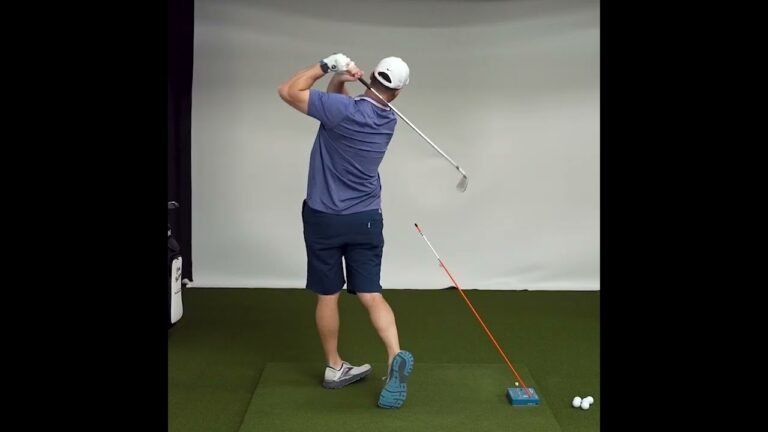

In golf, losing posture in the downswing is one of the fastest ways to make solid contact feel inconsistent. If you tend to stand up through impact, hit thin shots, struggle from tight lies, or feel the club gets too steep on the way down, this golf issue is worth fixing first.
The core problem is simple. As you rise out of posture, your hips move toward the golf ball, your spine straightens, and your hands get pushed farther away from your body. That changes the delivery of the club and makes clean, centered contact much harder.
This guide explains how to identify the pattern, why it hurts your golf ball striking, and how to train better posture with a simple feedback drill.
Table of Contents
- Step 1: Understand what losing posture means in golf
- Step 2: Know the common signs that this golf problem is hurting your swing
- Step 3: Learn why losing posture makes golf contact worse
- Step 4: Stop blaming club lie angle for a golf posture issue
- Step 5: Set up a simple golf feedback drill to fix posture loss
- Step 6: Position the drill correctly for better golf feedback
- Step 7: Make the right golf downswing feel
- Step 8: Hit short golf shots before building to full swings
- Step 9: Understand how this changes your golf impact conditions
- Step 10: Use this golf drill especially on iron shots and tight lies
- Step 11: Avoid the most common golf mistakes with this drill
- Step 12: Add this golf posture drill into your practice routine
- FAQ
- Final takeaway for better golf posture
Step 1: Understand what losing posture means in golf
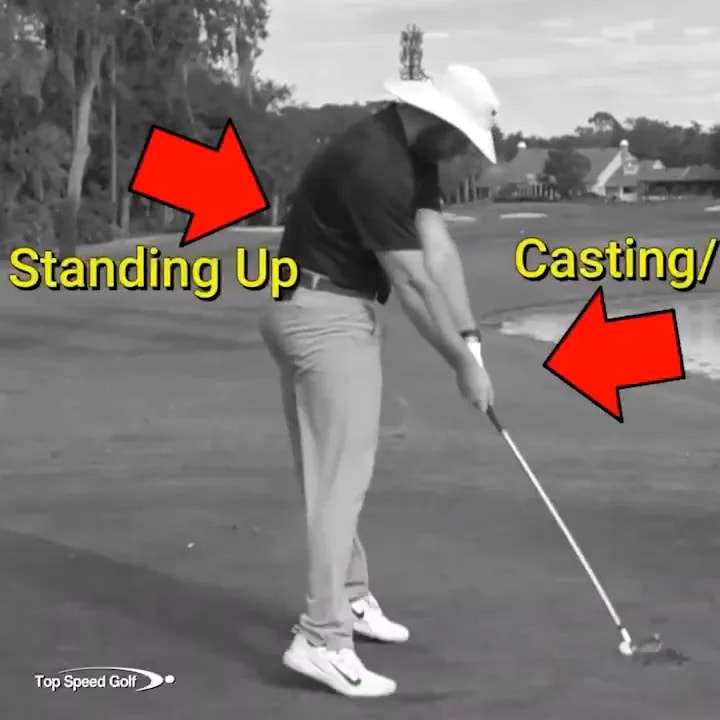
In golf, posture is the forward bend and body angles you create at address. Losing posture happens when those angles change too much in the downswing, especially when you stand up instead of staying centered over the ball.
When this happens, several things tend to occur together:
Your hips move closer to the ball.
Your chest and shirt buttons move farther away from the ball.
Your spine angle becomes more upright.
Your hands move outward instead of staying closer to your body.
Your shaft gets more vertical into impact.
That chain reaction is a major reason many golf players feel steep and cramped at the bottom of the swing.
Step 2: Know the common signs that this golf problem is hurting your swing
You do not need launch monitor data to suspect posture loss. In golf, the ball flight and strike pattern often give it away.
Common signs include:
Thin contact, especially with irons
Poor strikes from tight lies
Steep downswing or an over the top move
Toe down club delivery at impact
Less solid sound at contact
Inconsistent divots instead of square, clean turf interaction
If you struggle most when the ball sits cleanly on short grass, this golf fault is especially likely. Tight lies expose poor body mechanics because there is less margin for error.
Step 3: Learn why losing posture makes golf contact worse
Many golf players assume poor contact is only about the clubhead. In reality, body movement is often the real cause.
When you come down too steep, your body often reacts by standing up to create room. That may feel like a save, but it creates a second problem. As you rise, the hands are forced outward. Once the hands move out, the clubshaft gets more vertical and the club has to work harder just to reach the ground.
That is why the strike often gets thin. The geometry of the swing changes.
In practical golf terms, here is the difference:
Better posture through impact helps the club approach the ball on a shallower, more efficient angle.
Losing posture tends to make the shaft more upright, the toe lower than the heel, and impact less centered.
For golf players chasing that compressed, solid sound, staying in posture is a big part of the answer.
Step 4: Stop blaming club lie angle for a golf posture issue
It is reasonable to wonder whether this is just a lie angle problem. In golf fitting, lie angle matters, but it cannot fix a major posture breakdown.
Even properly fitted clubs can only be adjusted a few degrees. If your golf swing is sending the shaft into impact far too vertically, that equipment change is usually not enough to solve the root cause.
The more important point is this: if your body stands up and pushes the hands out, your delivery changes no matter how good the fit is.
That means your first priority in golf should be improving movement, then checking equipment if needed.
Step 5: Set up a simple golf feedback drill to fix posture loss
One of the best ways to improve golf posture is to use immediate feedback. A physical barrier can teach you very quickly whether your arms and body are moving correctly.
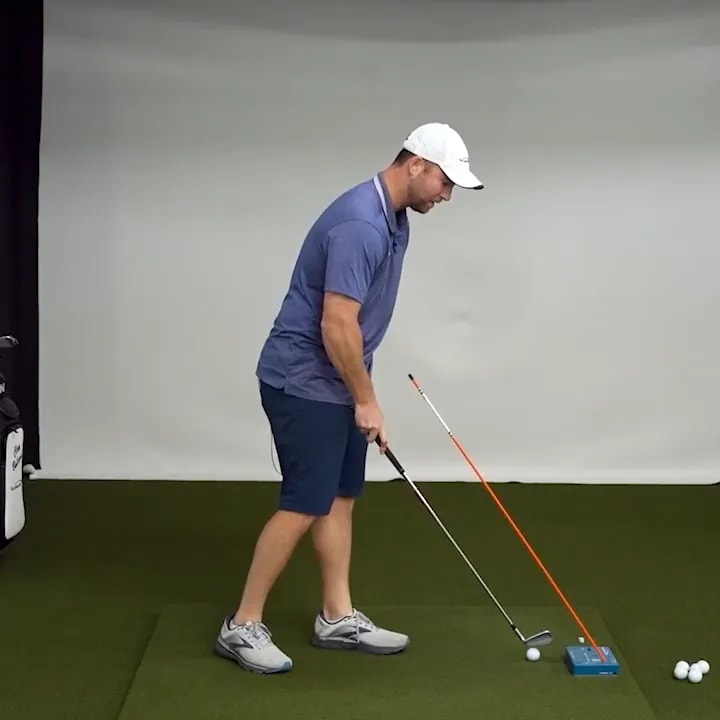
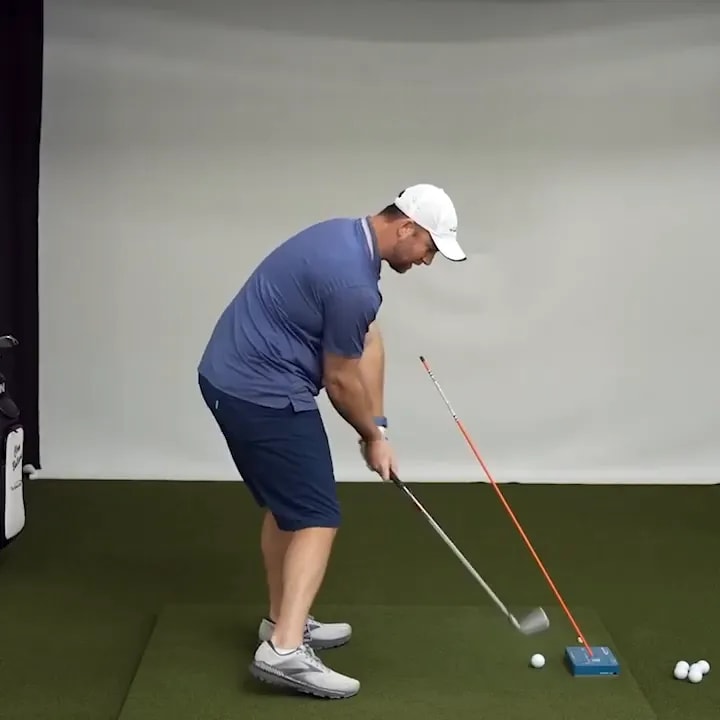
The setup uses:
A golf ball
An alignment stick with the blunt end exposed
A training block or stable object to hold the stick at an angle
The idea is to place the alignment stick on an angle beside the hitting area so that a poor downswing path or standing up move will cause your arms to run into the stick.
For safety:
Use the blunt end of the alignment stick
Make sure there is a rubber cap or protected tip
Position the golf ball far enough inside so you are not at risk of striking the stick with the clubhead
Step 6: Position the drill correctly for better golf feedback
Correct placement matters. In this golf drill, the ball should be placed on the front side of the training aid, with enough space on the inside so your clubhead can swing freely.
A good checkpoint is to keep the ball at least about one clubhead width toward you from the obstacle. That way, the golf club can still reach the ball naturally, while the stick remains close enough to punish the wrong move.
You are not trying to hit the stick with the club. The purpose is to detect whether your body and arms move outward as you lose posture.
If the drill is set correctly:
A steep, standing up move will run the arms into the stick
A better downswing will let you miss the stick cleanly
Step 7: Make the right golf downswing feel
To fix this golf issue, the goal is not to freeze your body. The goal is to keep your posture while delivering the club more efficiently.
Two helpful feelings stand out:
Feel your hips move back rather than popping forward toward the ball
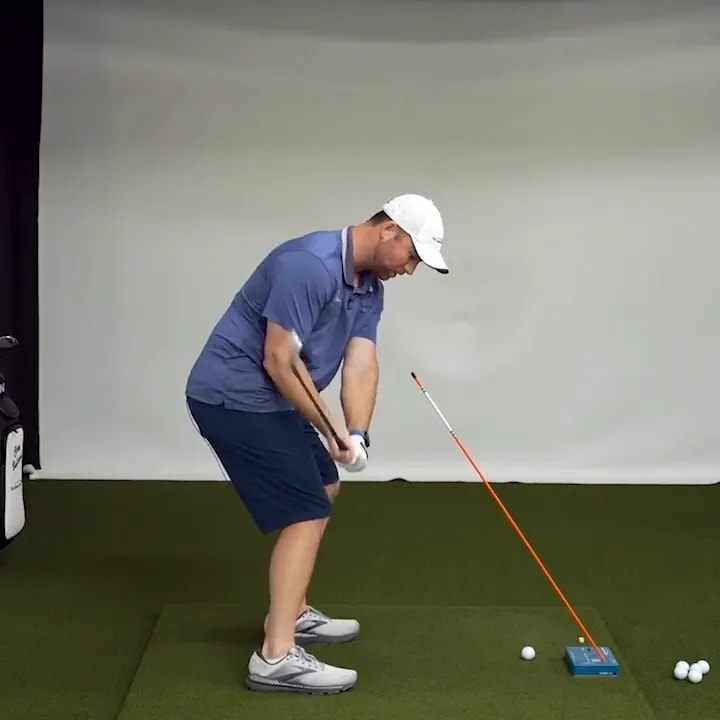
Feel your hands and arms stay closer to your body through the downswing
A useful image is that your hands feel as if they are moving close enough to almost brush your thighs on the way down. That keeps the arms from getting thrown out in front of you.
In golf, feels are not always real, but this is a productive feel for many players who stand up through impact.
Step 8: Hit short golf shots before building to full swings
Do not start this drill by swinging full speed. In golf, changing posture works better when you first learn the motion in smaller pieces.
Use this progression:
Make slow practice swings and miss the stick.
Hit short punch shots while keeping the same body angles.
Build to three quarter swings.
Only then move into fuller golf swings.
Your first success marker is not distance. It is clean contact.
Focus on these checkpoints:
Did you miss the stick?
Did the strike feel centered?
Did the ball come off with a more solid sound?
Did your finish feel balanced instead of forced?
In golf practice, instant feedback is powerful because you do not have to guess whether the motion improved.
Step 9: Understand how this changes your golf impact conditions
As you improve posture, your golf impact can change in several positive ways.
You give the club a better chance to arrive with:
A less vertical shaft
A flatter, more functional sole orientation
More centered contact on the face
A cleaner, squarer divot pattern
This matters because the sole of the club is designed to interact with the turf in a certain way. If your golf swing gets too upright through impact, the toe tends to drop and turf interaction becomes less predictable.
Better posture helps the club use its design the way it was intended.
Step 10: Use this golf drill especially on iron shots and tight lies
This drill is especially useful in golf when you are working on mid irons and shots from firm turf. Those situations demand precise low point control and expose any tendency to stand up.
It can help if you:
Hit irons solidly only from fluffy lies but struggle off hardpan or fairway
Feel cramped in the downswing
Tend to deliver the handle too far out in front of you
Take narrow, inconsistent, or glancing divots
For many golf players, this is one of those changes that improves several faults at once because posture influences path, low point, and strike quality together.
Step 11: Avoid the most common golf mistakes with this drill
Good drills can still be used badly. To make this golf practice effective, avoid these errors:
Do not place the obstacle too close to the clubhead
If the stick is positioned where you fear hitting it with the club, you may manipulate the swing instead of improving posture.
Do not swing too hard too soon
At full speed, most golf players revert to old patterns. Learn the movement gradually.
Do not only think about the arms
The arms move out because the body stands up. In golf, the body pivot and arm path work together.
Do not try to squat excessively
The better move is to keep your posture and let the hips work back, not to force an exaggerated downward motion.
Do not treat this as only an equipment issue
Club fitting can help in golf, but it will not replace better body mechanics.
Step 12: Add this golf posture drill into your practice routine
If you want this to carry over to the course, practice it in a repeatable way.
Try this simple golf routine:
5 slow rehearsals without a ball, missing the stick
5 half swings with an iron
5 three quarter swings focusing on solid contact
5 normal swings keeping the same feels
Then remove the obstacle and hit a few more shots while trying to reproduce the same motion. In golf training, that blend of constraint practice and normal swings often helps changes stick faster.
FAQ
Why do I stand up in my golf downswing?
In golf, standing up often happens as a reaction to a steep downswing. Your body tries to create room for the club by moving the hips toward the ball and straightening the spine. That sends the hands outward and makes consistent contact harder.
Does losing posture cause thin golf shots?
Yes. Losing posture in golf can lead to thin strikes because the hands move away from the body and the shaft becomes more vertical at impact. That changes how the club reaches the ground and often reduces centered contact.
Can club fitting fix my golf posture problem?
Not by itself. In golf, lie angle adjustments can help fine tune impact, but they usually cannot solve a major posture loss pattern. If your body movement is the main cause, swing mechanics need to improve first.
What is the best golf drill for staying in posture?
A strong golf option is an alignment stick barrier drill. Set the stick on an angle beside the ball so that if you stand up or throw your arms out, you will hit the stick. This gives immediate feedback and encourages the right downswing feel.
Should my hands feel closer to my body in the golf downswing?
For many golf players who lose posture, yes. A useful feel is that your hands and arms move closer to your body and almost brush your thighs in the downswing. That can help you avoid the outward hand path that comes with standing up.
Why is this golf issue worse from tight lies?
Tight lies demand precise contact. In golf, there is very little grass under the ball to hide poor low point control. If you lose posture and deliver the club too steeply or too upright, the mistake becomes much more obvious.
Final takeaway for better golf posture
If you want more solid golf shots, do not just think about the clubhead. Start with posture in the downswing. When you stay in your angles, keep the hips from drifting toward the ball, and let the hands work closer to your body, you make it much easier to deliver the club cleanly.
For many golf players, that leads to the exact improvements they want most:
More centered strikes
Better contact off tight lies
A less steep downswing
More consistent turf interaction
A more solid sound at impact
If your golf swing has been plagued by thin irons or a steep, cramped downswing, this is a practical place to begin.
0 Comments