
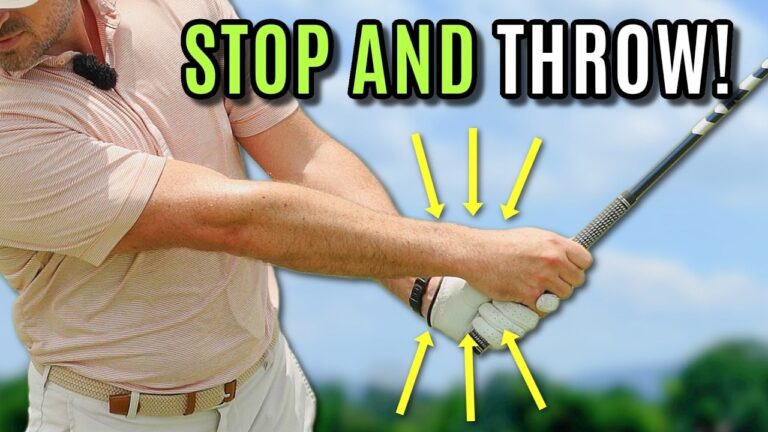

If you want more driver distance, the usual advice can send you in the wrong direction. Many golfers try to rotate harder, fire the hips faster, and keep everything moving through the ball at one steady rate. That sounds athletic, but for most players, especially senior golfers, it costs speed instead of creating it.
The core idea behind the slingshot golf swing is simple. You do not create your best clubhead speed by dragging the club through impact with nonstop body turn. You create it by letting the body slow enough for the arms, hands, and clubhead to sling past.
That shift in concept can help you pick up distance with less strain on your body. It can also make the driver feel more natural, more athletic, and a lot less forced.
The steps below break down how to use the slingshot golf swing to hit driver farther, what mistakes to avoid, and which drills will help you build speed that actually transfers to the course.
Table of Contents
- Step 1: Understand why the slingshot golf swing works
- Step 2: Stop making the all gas no brakes mistake
- Step 3: Learn the feel of the slingshot golf swing with the whoosh drill
- Step 4: Use the impact bag drill to train arm speed
- Step 5: Train each hand separately for the slingshot golf swing
- Step 6: Use the correct wrist motions for more clubhead speed
- Step 7: Let the arms sling off the body
- Step 8: Study what the best drivers do differently
- Step 9: Take the slingshot golf swing into a real driver shot
- Step 10: Build a simple practice routine for more driver distance
- Step 11: Avoid the common fears that keep you from releasing the club
- Step 12: Make the slingshot golf swing your on-course speed pattern
- FAQ
Step 1: Understand why the slingshot golf swing works
The easiest way to understand the slingshot golf swing is to stop thinking of golf as a pure turning motion. A better model is a throwing motion.
When you throw something, you do not simply spin nonstop and hope the object flies. You brace, sequence, and release. The same principle applies in the golf swing. Your body helps set things up, but the clubhead gains speed when the energy moves out through the arms and hands.
This matters most with longer clubs. A driver is not meant to be dragged through the ball with a frozen release. If you want speed, you need the clubhead to be free enough to sling past you.
That is why this approach is especially helpful for golfers who no longer move as well as they once did. If your hips and torso are less explosive than they were years ago, chasing speed with more turn is usually a poor trade. Learning to create speed from your arms and hands offers a much higher return.
Step 2: Stop making the all gas no brakes mistake
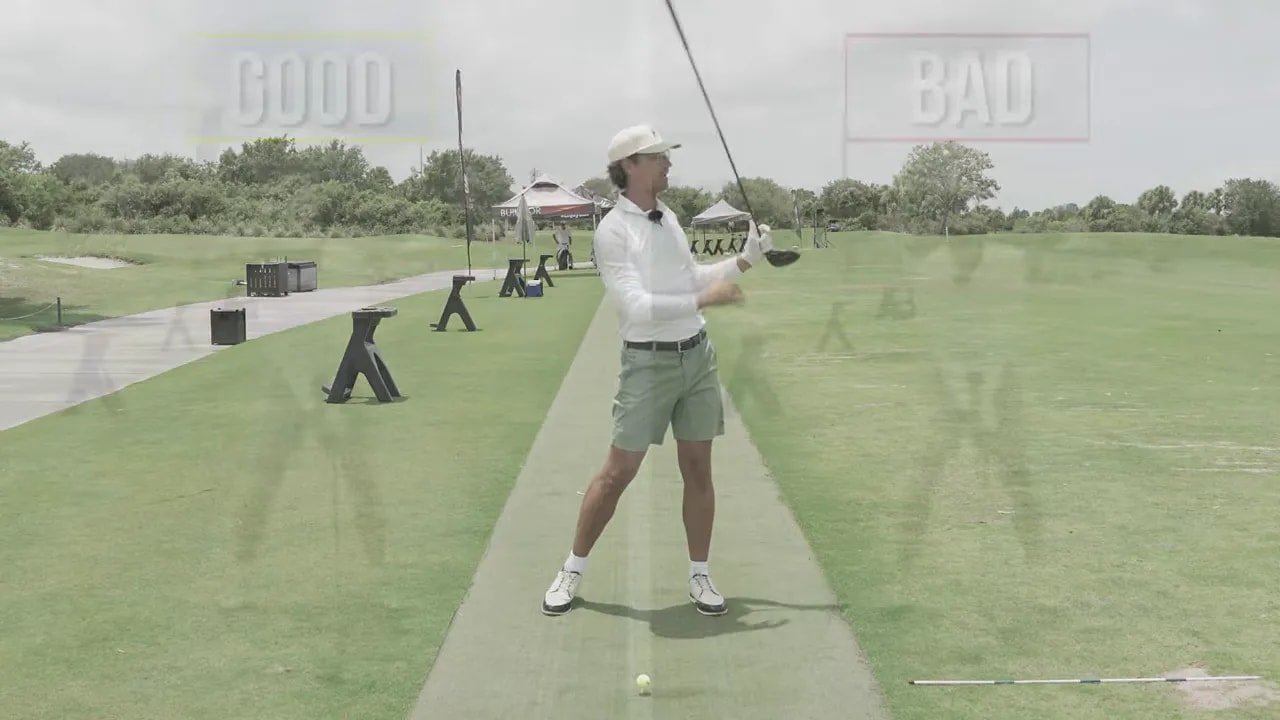
One of the biggest distance killers is the idea that your body, arms, and club should all move together at the same speed from start to finish.
That pattern often looks smooth, but it produces very little whip. The shoulders start down, the head moves, the body turns, and the club follows along with no meaningful separation. The result is an “all gas, no brakes” motion. Everything goes, but nothing gets flung.
In the slingshot golf swing, you need some form of braking or deceleration. That does not mean a complete stop. It means the lead side has to brace enough that the club can accelerate outward.
If your chest and hips keep racing open forever, the club tends to trail behind. Then you are forced to drag it into the ball. That is the opposite of a speed-producing release.
Think of it this way:
- Bad pattern: body and club move together at one rate
- Better pattern: body helps start the motion, then the arms and club sling past
- Result: more clubhead speed without trying to spin harder
This is where many golfers get stuck. They have heard “turn through” so often that they never learn how to let the club release.
Step 3: Learn the feel of the slingshot golf swing with the whoosh drill
The fastest way to feel the slingshot golf swing is the whoosh drill.
Take your club and flip it upside down so you hold the shaft near the clubhead and the grip points down. Now make swings and try to create a loud whoosh sound in front of you.
This drill gives you immediate feedback. If you keep turning everything together, the whoosh tends to be weak or mistimed. If you brace properly and sling the arms through, the sound gets sharper and more powerful.
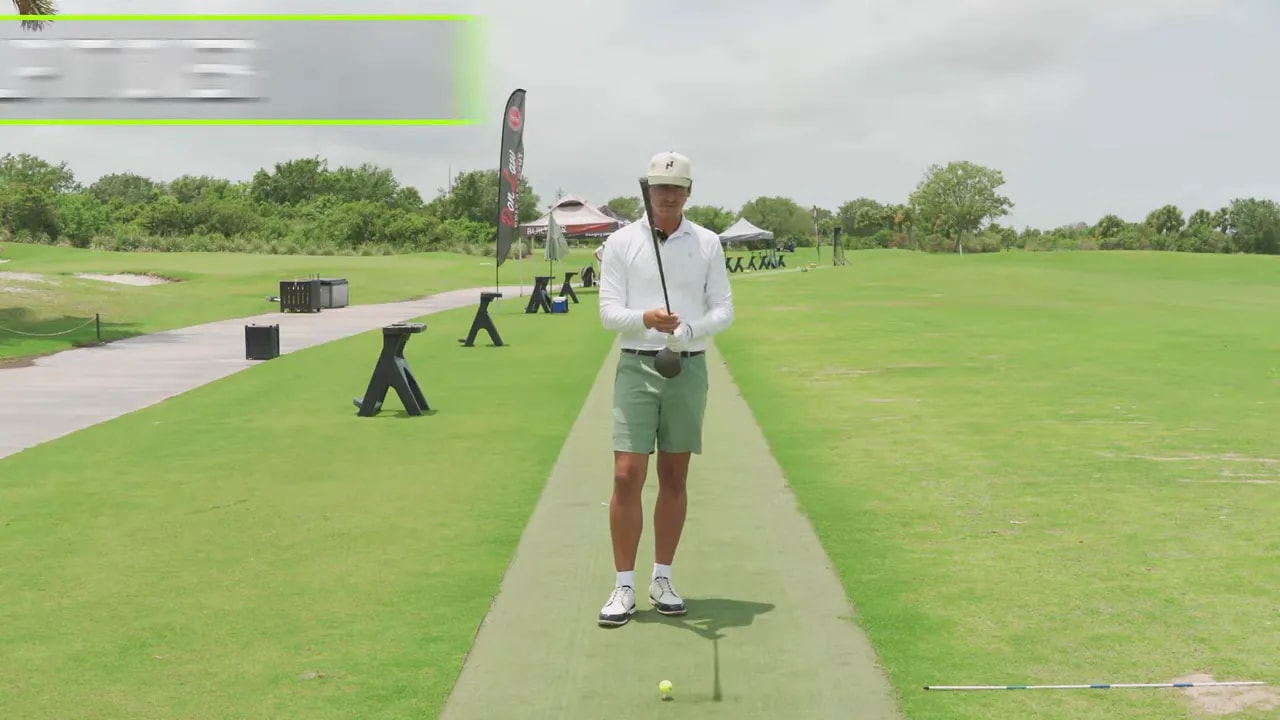
What you should feel during the whoosh drill:
- Your body is not trying to spin endlessly
- Your lead side braces up
- Your arms and hands become the speed source through the hitting area
- The club releases past your body instead of being dragged by it
A good athletic comparison is punching. You would not try to land a punch by only rotating and rotating until your arm eventually arrives. At some point, the body stabilizes and the arm fires. The golf swing works similarly when you are trying to create speed.
That is why the whoosh drill is so useful. It teaches the motion through sound, not just theory.
Step 4: Use the impact bag drill to train arm speed
Once you have a basic feel from the whoosh drill, the next step in the slingshot golf swing is to train speed through the hitting zone.
Set an impact bag, or a couple of pillows if needed, slightly in front of where the ball would normally be. The bag placement matters because it encourages you to move speed out toward the target rather than dumping it early.
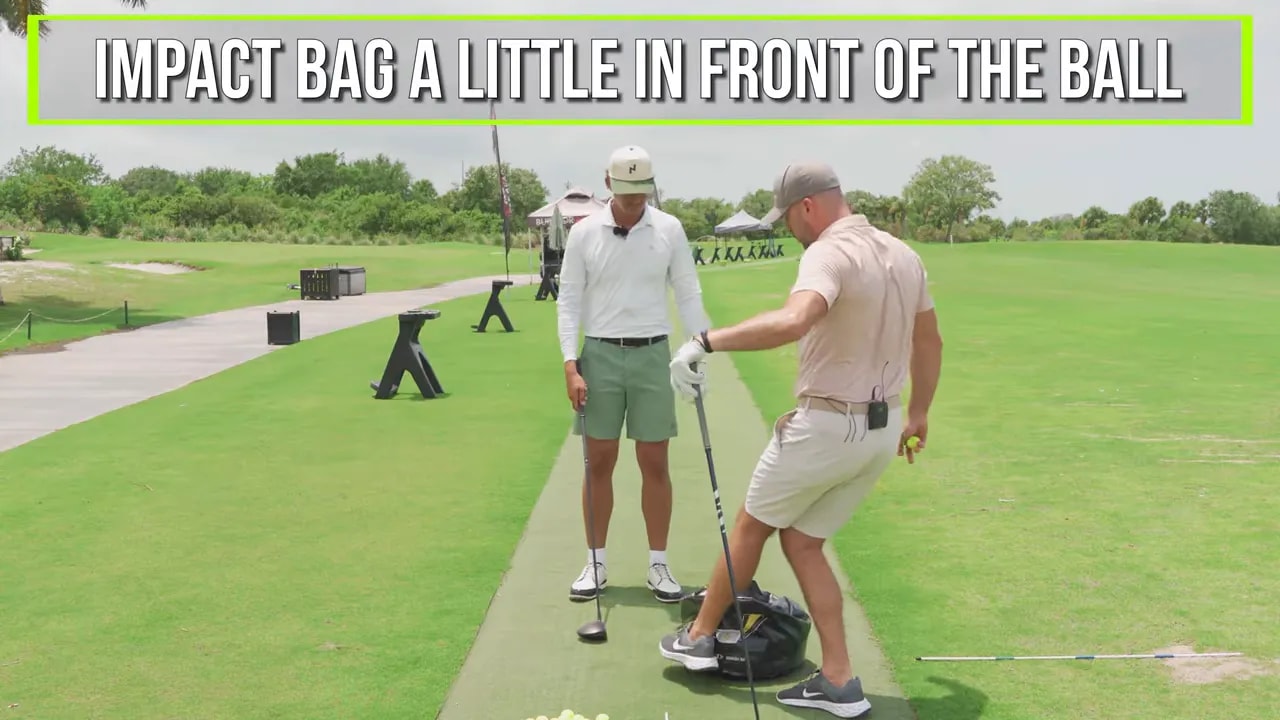
You can do this two ways:
- Hit the bag with the clubhead
- Flip the club upside down and drive the grip end into the bag
The second version is especially good for golfers who struggle to feel arm speed. The goal is to send the grip into the bag with more speed than feels normal.
Many golfers try this and realize something important right away. They do not actually know how to create speed with their arms and hands because they have spent years trying to move the body harder instead.
When you focus on the arms, the feeling becomes more like cracking a towel or snapping a whip. It is not a tense shove. It is a free, directed release.
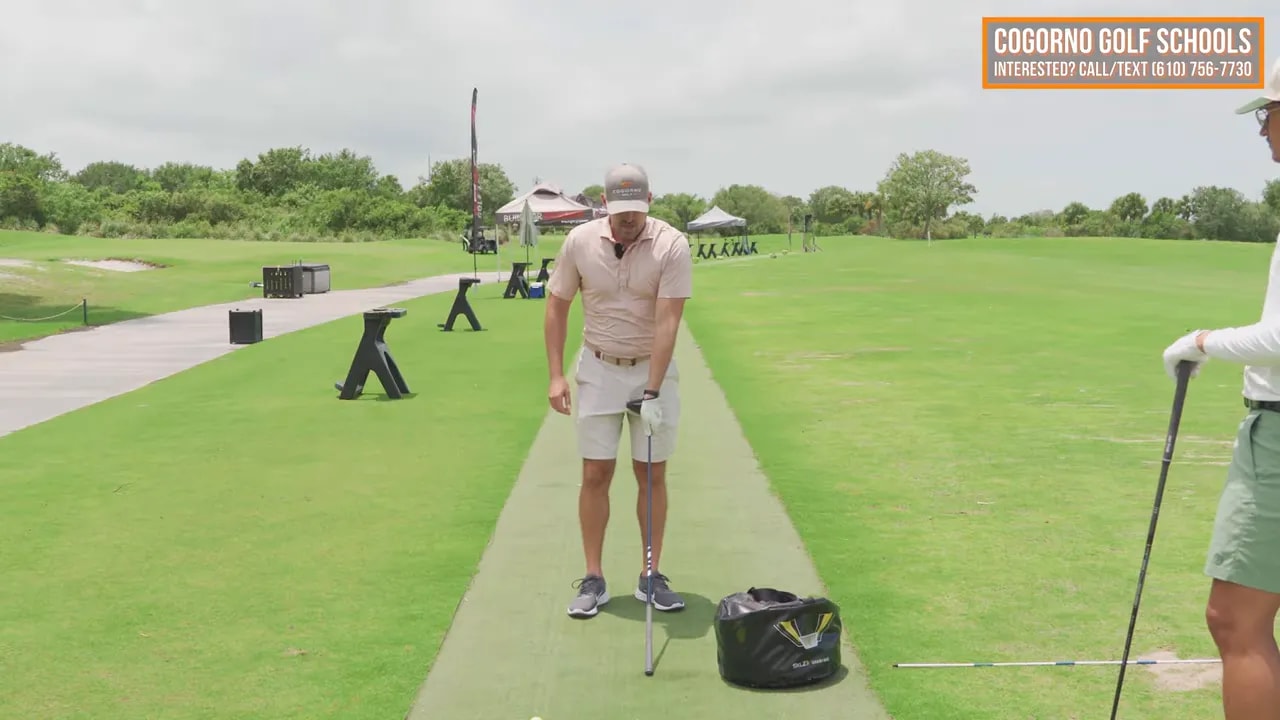
Practice the impact bag drill in small sets:
- 2 or 3 reps of the drill
- Then hit a ball
- Repeat the sequence
That blend makes it easier to carry the drill feel into a real driver swing.
Step 5: Train each hand separately for the slingshot golf swing
If you really want to build the slingshot golf swing, train each hand on its own.
Start with a few lead-hand-only reps. Then do a few trail-hand-only reps. The purpose is not to create a perfect swing shape. It is to teach your hands how to move the club with speed and freedom.
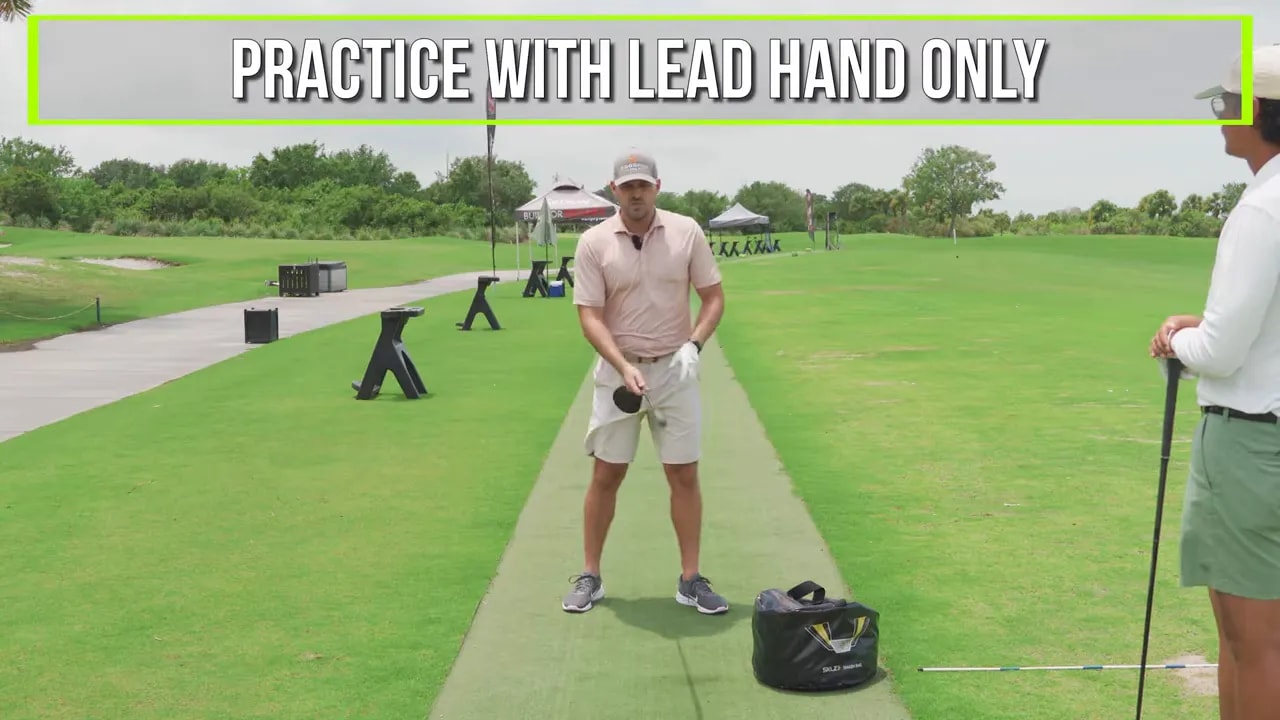
Single-hand work helps you notice whether you are trying to hold on to the club too long. A lot of golfers keep the wrists too rigid, keep the shaft leaning excessively, and never really let the clubhead go. That might work for elite speed players, but it is usually a losing strategy for everyday golfers.
If your swing speed is modest, you need more release, not less. The clubhead has to toss.
That does not mean throwing your mechanics away. It means understanding that speed requires motion in the club, not just motion in your body.
Step 6: Use the correct wrist motions for more clubhead speed
A big part of the slingshot golf swing is learning what the wrists actually do through impact.
There are two key motions:
- Up and down
- Back and forward

The downward motion helps you deliver speed into the strike. The forward motion helps the club release instead of staying trapped behind your hands.
If you hold the angle forever and drag the club through impact, you reduce your ability to create speed. The clubhead needs freedom to pass.
A useful feeling is this:
- Wrist motion works down
- Wrist motion works forward
- Arms move away from your body
When those pieces match up, the clubhead can sling through with much more force.
Step 7: Let the arms sling off the body
This is one of the most important details in the slingshot golf swing.
If your torso keeps turning hard through impact, your arms tend to stay pinned to you. That makes it difficult for the club to travel outward with speed. In other words, nonstop body turn can shove the arms inward when you need them to fire outward.
To get the arms off the body, the lead side has to brace. That brief braking action gives the club a path to sling past.
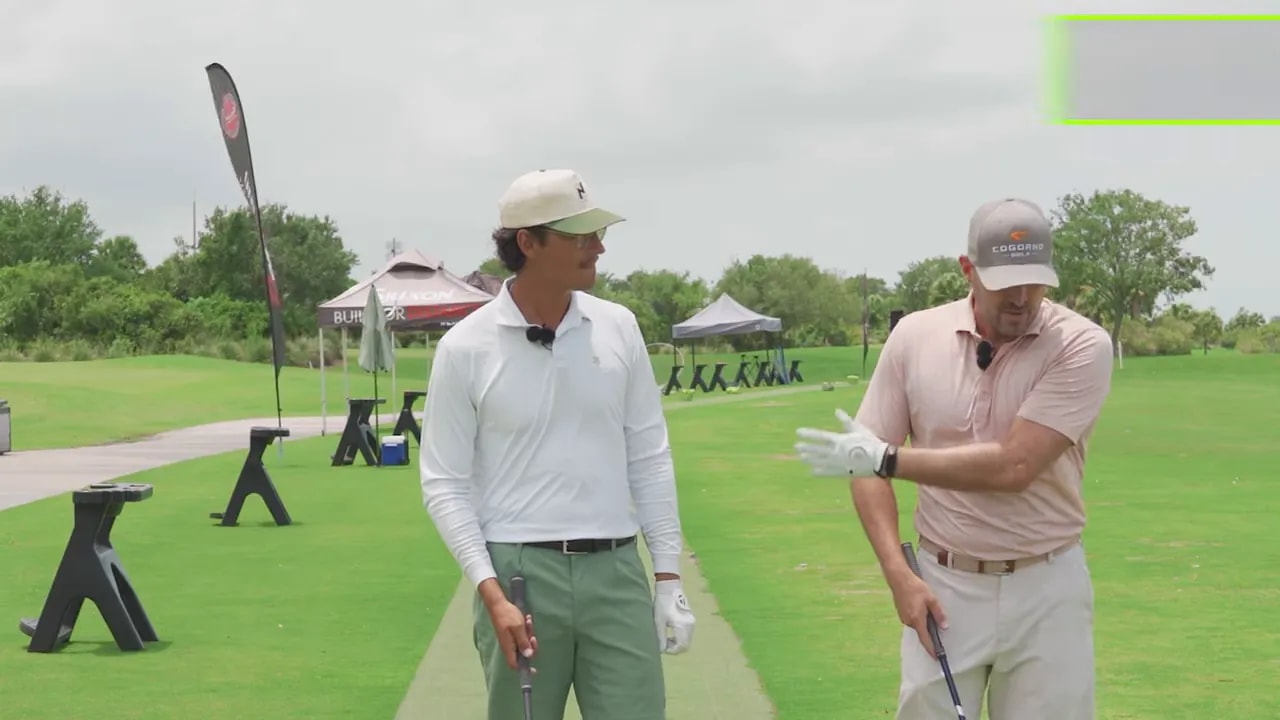
This is why powerful drivers often look as if the front side is not continuing to spin open forever at impact. There is a visible posting or bracing effect. That brace helps transfer speed into the club.
If you want a simple cue, use this one:
Slow the body down enough to get the arms off.
That single idea can completely change the way you move through the ball.
Step 8: Study what the best drivers do differently
The slingshot golf swing is not just a drill-room concept. It shows up in elite ball strikers too.
Players known for speed do rotate well, but they also create a clear release of the clubhead. Their motion is not just endless spin. There is sequencing, bracing, and a visible sling of the club past the body.
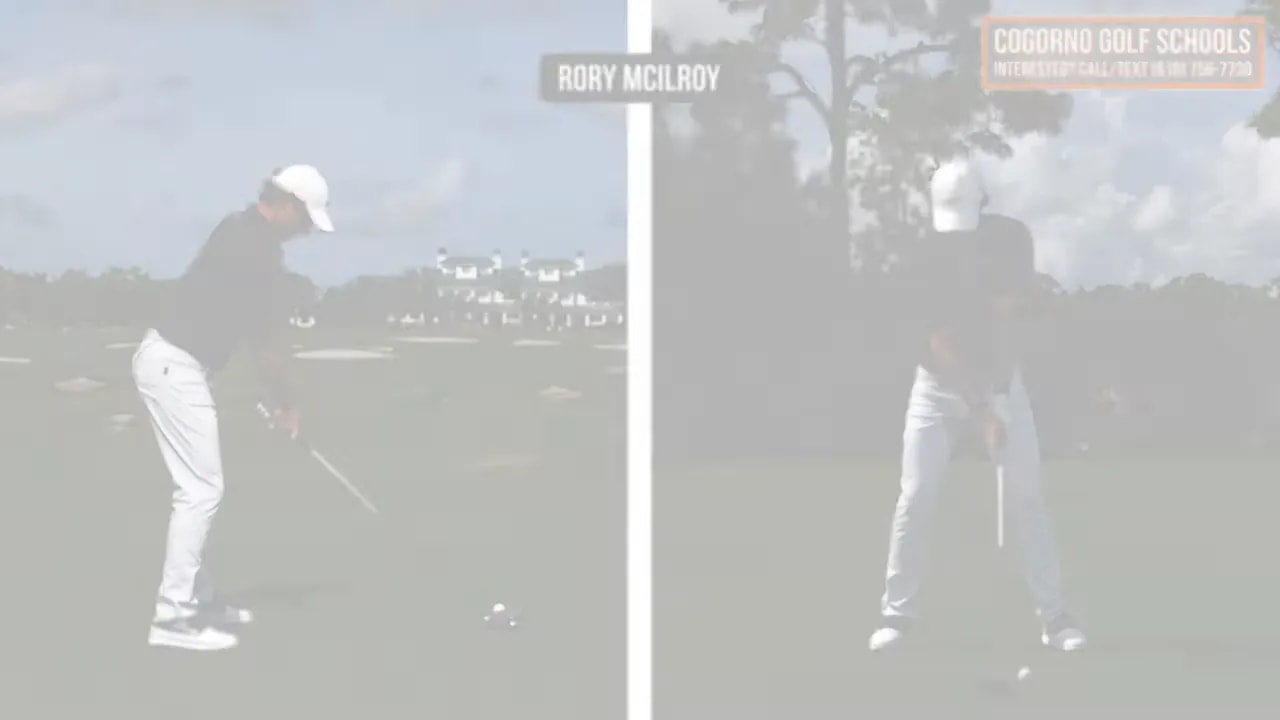
One example highlighted is Rory McIlroy. He is famous for speed, but the key detail is not simply how much he turns. It is how his body motion allows the club to fire past him. That is the model to study.
The lesson for your own swing is clear. Do not copy a tour player by only trying to open your hips more. Copy the full pattern, which includes the release.
Step 9: Take the slingshot golf swing into a real driver shot
Once you have rehearsed the drills, you need one simple thought when you hit driver.
Feel your arms and hands swing faster through the ball.
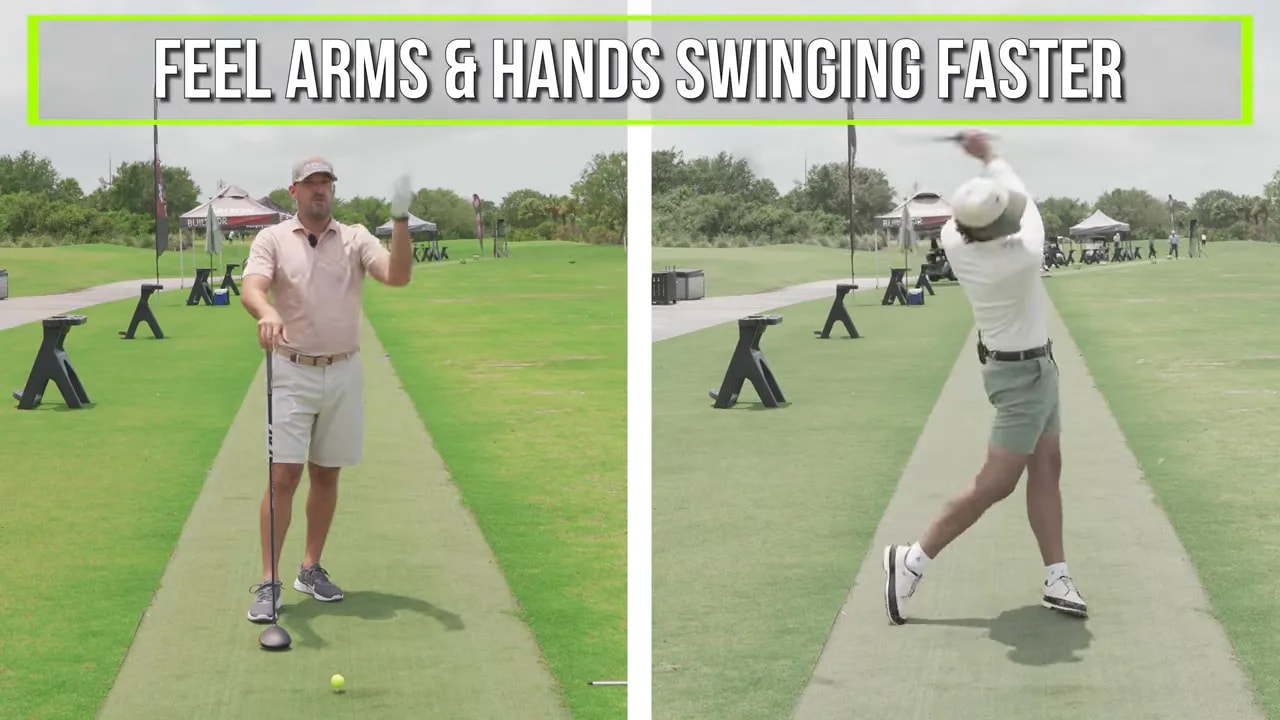
That is the practical bridge from drill to shot. You are not trying to make a perfect technical masterpiece. You are trying to produce speed in the right place from the right source.
Helpful swing feels include:
- Brace the lead side
- Let the wrists work down and forward
- Allow the arms to move away from the body
- Feel the clubhead being thrown at the ball
This should not feel like a full-body heave. In fact, one of the benefits of the slingshot golf swing is that the body effort can feel lower while the clubhead speed goes up.
That is exactly why this pattern can be such a game changer for golfers over 55, but it can help at any age.
Step 10: Build a simple practice routine for more driver distance
If you want this to stick, use a simple rotation in practice.
- Do 2 or 3 whoosh drill reps.
- Do 2 or 3 impact bag reps.
- Hit 1 driver with the feel of faster arms and hands.
- Repeat.
You can also mix in:
- Lead-hand-only reps
- Trail-hand-only reps
- Slow motion release rehearsals
- Face-on swings where you focus only on bracing and slinging
Keep the intention clear. If your goal is more speed, your practice has to include the intention to move the club faster. Many golfers say they want distance, but their practice swings are still cautious, body-dominant, and release-averse.
The slingshot golf swing works best when your intention, your drills, and your motion all match.
Step 11: Avoid the common fears that keep you from releasing the club
A lot of golfers resist this concept because they worry that releasing the club will make them flip, hook the ball, or lose control.
That concern is understandable, but for most players the bigger issue is the opposite. They hold on too long, create too much drag, and never let the clubhead work.
If you are a moderate-speed golfer, trying to keep the shaft leaning forever through impact is often a distance killer. The club needs to straighten out and move freely through the strike.
The answer is not a wild throw from the top. The answer is a sequenced release where the lead side braces and the arms accelerate through.
If you feel nervous, return to the drills. The whoosh drill and impact bag drill teach the motion in a way that is easier to trust.
Step 12: Make the slingshot golf swing your on-course speed pattern
When you bring this to the course, keep the thought simple and athletic.
Think of the clubhead as something you are tossing through the ball, not dragging with your chest. Feel the body support the motion, but do not ask it to do all the work. Let the speed come out through the arms and hands.
That is the real promise of the slingshot golf swing. More speed, more distance, and often less effort.
If you have been chasing 30 plus yards more by spinning harder, this shift in feel may be the missing piece.
FAQ
Who benefits most from the slingshot golf swing?
Golfers of any age can benefit, but it is especially useful for senior golfers and players who no longer create speed easily with body rotation. It helps you get more distance by using the arms and hands more effectively.
Does the slingshot golf swing mean you should stop rotating?
No. Your body still turns. The point is that your body should not keep racing open in a way that drags the club behind you. You need enough bracing and deceleration for the arms and clubhead to sling through.
What is the best drill to start with for the slingshot golf swing?
The whoosh drill is the best place to start. Flip the club upside down and make swings that create a loud whoosh in front of you. It gives you quick feedback on whether you are producing real release speed.
How do you practice the slingshot golf swing without an impact bag?
You can use a stack of pillows as a substitute. Place them slightly in front of the ball position and rehearse sending speed into that spot with the clubhead or the grip end of an upside down club.
What swing thought should you use with the driver?
A simple and effective thought is to feel your arms and hands swinging faster through the ball while the lead side braces. That usually creates a better release and more clubhead speed.
0 Comments