
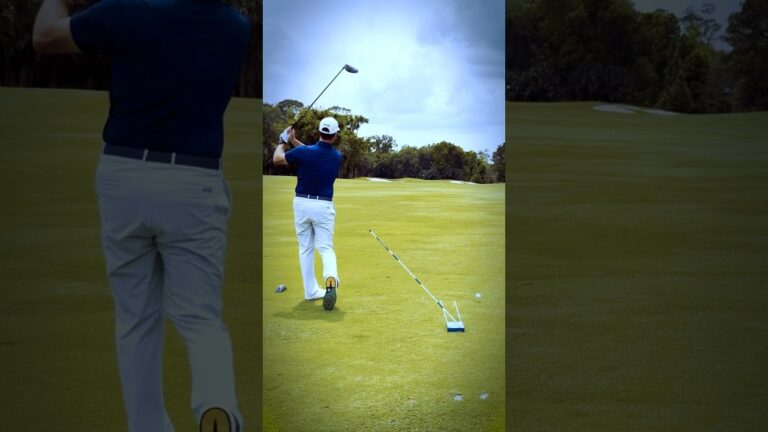

If you want better golf drives, one of the most useful ideas is learning the difference between a move that works for elite players and a move that hurts most amateurs. A powerful driver swing in golf often comes down to two pieces working in the right order: shallow the club early, then cover the ball through impact.
That sequence can help you hit draws, straighten out your ball flight, and avoid the common feeling of getting steep and chopping across the ball. If your golf driver misses are weak fades, slices, or glancing contact, this is the kind of pattern worth building.
Table of Contents
- Step 1: Understand the golf feel that causes confusion
- Step 2: Know what “shallowing” means in golf
- Step 3: Set up a simple golf drill station
- Step 4: Rehearse the early shallow move in your golf transition
- Step 5: Use the golf drill to build a draw first
- Step 6: Add the “cover it” move only after the club is shallow
- Step 7: Straighten your golf driver ball flight
- Step 8: Avoid the biggest golf mistakes with this move
- Step 9: Use a simple golf practice plan at the range
- Step 10: Match the right golf feel to your miss
- Step 11: Keep your golf swing thought simple on the course
- Step 12: Use golf training aids the right way
- Step 13: Take this golf move from practice to performance
- Golf FAQ
- Final takeaway for your golf driver
Step 1: Understand the golf feel that causes confusion
Many golfers hear advice like “get on top of it,” “cover the ball,” or “drive the right shoulder through.” In high level golf, that can be a useful feel. But there is a catch. Better players usually do that after the club has already shallowed in the downswing.
That order matters.
If you try to cover the golf ball too early, the shaft often gets steeper, the club comes down too far outside, and contact gets worse. Instead of powerful golf shots, you get pulls, slices, glancing blows, or a low spinny miss.
The key idea is simple:
Early downswing: shallow the club
Later downswing: let the club move back in front of you and cover the golf ball
That is the sequence that makes the driver feel athletic instead of forced.
Step 2: Know what “shallowing” means in golf
In golf, a shallower club means the shaft flattens in transition instead of getting more vertical. When the club starts down, you want the shaft to feel as if it drops into a better delivery slot.
For your golf driver swing, that usually means:
The clubhead stays behind you a bit longer
The shaft looks flatter on the way down
You approach the ball more from the inside
The club is less likely to cut across the ball
This is especially useful in golf if you are trying to hit a draw. A shallower delivery gives you a better chance to start the ball slightly right and curve it back.
Just as important, shallowing is not about dropping your hands straight down with no body motion. It is a blend of transition, arm motion, and body rotation that puts the club in a playable spot.
Step 3: Set up a simple golf drill station
A training station can make this concept much easier to feel. The setup shown here uses an external guide to show where the shaft should travel and where it should not.

Your goal is to create a visual reference that helps you monitor whether the club is shallowing or steepening.
When setting up your golf station:
Place the guide beside the ball line so you have a clear visual for shaft angle
Rehearse slowly before hitting balls
Focus on the shaft path in the early downswing, not just impact
If you do not have a dedicated golf training aid, you can still use alignment sticks in a safe practice setup. The point is to create feedback, not to make the drill complicated.
Step 4: Rehearse the early shallow move in your golf transition
Once you reach the top of the backswing, pause briefly. From there, feel the club drop shallower immediately. This should happen early, before you try to rotate hard through the shot.
A useful rehearsal is:
Make your normal backswing.
Pause at the top.
Let the shaft flatten as the club starts down.
Swing only to about head high in the downswing.
Check whether the shaft missed the steep path.
This kind of rehearsal teaches your golf swing where the club needs to be before impact. It is much easier to learn this in slow motion than at full speed.
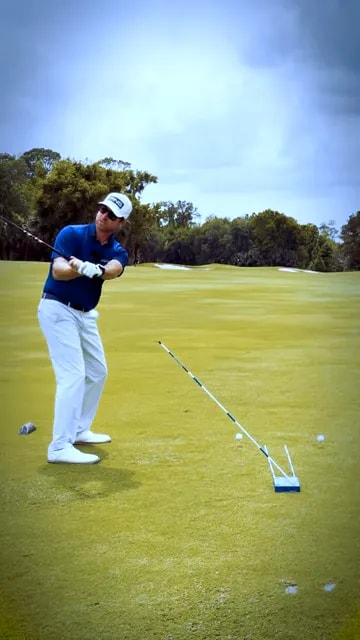
At this point in the golf swing, you are not trying to smash the ball. You are training the order of motion.
Step 5: Use the golf drill to build a draw first
For many golfers, a draw is the easiest proof that the club has shallowed correctly. If the path improves and the face is reasonably controlled, the ball can start a little right and curve back.
That makes this a great first checkpoint in golf practice.
When you do this correctly, you should notice:
A more inside approach into the ball
Less across-the-line cutting action
A stronger, more compressed driver strike
A ball flight that wants to draw instead of slice
If your goal in golf is to eliminate the weak left-to-right miss, this stage matters. Do not rush past it. Learn to own the shallow move before adding more aggressive body motion.
Step 6: Add the “cover it” move only after the club is shallow
Once the club is in a good downswing position, now you can add the second piece of the golf motion. From about head high in the downswing, feel as if you get more on top of the shot and let the club move back in front of you.
This is what helps you avoid getting stuck too far under plane.
In practical golf terms, the move feels like:
The right side works more through the shot
The clubface closes in a controlled way
The clubhead does not lag endlessly behind you
The swing keeps rotating instead of flipping
You can think of it as a two stage golf release:
Shallow first
Then cover and rotate through
That blend can turn a draw drill into a straighter, more neutral driver pattern.

Step 7: Straighten your golf driver ball flight
After you learn the draw version, the next step in golf is to make the flight more neutral. You are not abandoning the shallow move. You are simply pairing it with a better through-swing so the face and path match up more squarely.
To do that:
Keep the same early shallowing feel
From mid-downswing, feel the club working back in front of your body
Let your chest and right side keep moving through
Avoid hanging back and flipping the hands
In golf, this often produces the “laser straight” driver look players want. The club is not trapped behind you, but it also is not steep and cutting across the ball.
This middle ground is where a lot of good driving lives.
Step 8: Avoid the biggest golf mistakes with this move
There are several easy ways to misuse this concept in golf. If you know them ahead of time, your practice gets much more productive.
Common golf mistake 1: Trying to cover the ball too early
This is the biggest problem. If you fire the right shoulder out on top right from transition, the club usually steepens. That can ruin the whole pattern.
Common golf mistake 2: Shallowing so much that you get stuck
Some golfers finally learn to drop the club, then never bring it back in front. That can lead to blocks, hooks, and a trapped feeling.
Common golf mistake 3: Only practicing full speed
Golf swing changes usually need slow rehearsals first. If you do everything at full speed, your old motion tends to take over.
Common golf mistake 4: Focusing only on impact
The important part happens earlier. In golf, the quality of impact is often decided by where the shaft is when the club is still well above the ball in the downswing.
Common golf mistake 5: Mistaking feel for real
A feel that seems exaggerated may actually be exactly what your golf swing needs. Use video, a mirror, or a training station whenever possible.
Step 9: Use a simple golf practice plan at the range
If you want this to transfer to the course, keep your golf practice structured. Here is a straightforward range plan.
5 slow rehearsals without a ball, pausing at the top and shallowing early.
5 half speed swings to about head high in the downswing, checking the shaft path.
5 shots trying to hit a draw using the shallow-first feel.
5 shots trying to hit straight by adding the cover move after the club is shallow.
5 normal drives with one swing thought only.
That progression helps your golf swing move from drill mode to playable motion.
If you start hitting big hooks, you may be shallowing without getting the club back in front. If you start slicing, you may be covering too early and steepening the shaft.
Step 10: Match the right golf feel to your miss
Not every golfer needs the exact same emphasis. Your current driver miss in golf tells you which part deserves more attention.
If you slice the golf ball
Spend more time on the early shallow move
Pause at the top and rehearse the shaft flattening
Try to start shots slightly right and draw them back
If you hook the golf ball
You may already shallow enough
Focus more on getting the club back in front of you
Use the cover feel to stop the club from getting trapped
If you hit weak straight pulls in golf
You may be steepening early
Rebuild the transition so the shaft flattens sooner
Do not force the right side over the top from the start
This is one reason feels can be tricky in golf. The same advice can help one player and hurt another depending on the order in which it is applied.
Step 11: Keep your golf swing thought simple on the course
Range work can include multiple checkpoints. On the course, your golf thought should be much simpler.
Good options include:
“Shallow first”
“Drop then turn”
“Draw it, then cover it”
You do not want to stand on the tee trying to manage ten different golf positions. Pick the one feel that produces your best start line and contact.
Step 12: Use golf training aids the right way
A golf training aid can speed up learning when it gives clear feedback. In this case, the tool is helpful because it shows whether the shaft is flattening early and whether the club can then move back in front properly.
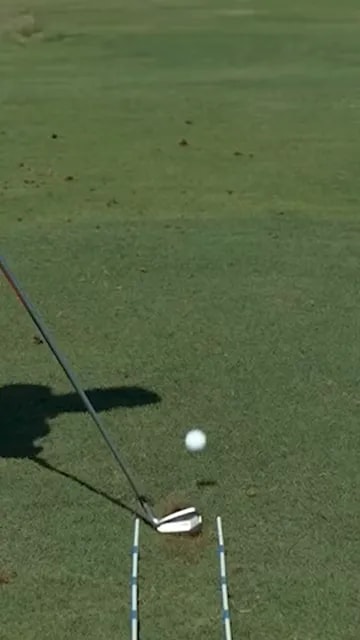
To get value from a golf training aid:
Use it for rehearsals before full shots
Do not rush into speed
Pair the visual with one simple feel
Step away and hit some normal shots so the move transfers
The aid should support your golf learning, not become something you depend on for every swing.
Step 13: Take this golf move from practice to performance
The final goal is not just to perform a drill. It is to hit better golf drives under normal conditions.
A strong transfer process looks like this:
Rehearse the shallow move slowly.
Hit a few exaggerated draw shots.
Add the cover feel for straighter shots.
Blend it into your normal rhythm.
Use one simple cue when you play.
If you keep the order correct, your golf driver can become more reliable without feeling robotic. The shallow move gives you space and path. The cover move gives you structure through impact.
Golf FAQ
Should you try to get over the top in golf?
For most golfers, no. The better idea is to shallow the club first. After that, you can feel more on top of the shot through impact. Trying to go over the top from the start of the downswing usually makes the shaft too steep.
What does shallowing the club do in golf?
Shallowing helps the shaft flatten in transition so the club approaches the ball from a better angle. In golf, that can improve path, reduce slices, and make it easier to hit a draw or a straighter driver shot.
Why do some golf players feel like they cover the ball with the driver?
That feel can help the club move back in front of the body and keep the swing from getting stuck. In golf, it works best only after the club has already shallowed early in the downswing.
Can this golf move help fix a slice?
Yes, it can help if your slice comes from a steep downswing path. Learning to shallow the club earlier in your golf transition often improves the path and encourages a stronger right-to-left ball flight.
What is the best way to practice this golf driver feel?
Start with slow rehearsals, pause at the top, shallow the shaft early, then add the through-swing cover feel later. In golf, the change usually sticks better when you begin in slow motion and build speed gradually.
Final takeaway for your golf driver
If you want better driver performance in golf, the order of movement matters more than the intensity of movement. Do not rush to get on top of the ball from the top of the swing. First, shallow the club. Then let the club move back in front of you and cover the shot through impact.
That sequence can help you hit stronger draws, straighter drives, and more dependable golf tee shots overall.
0 Comments