
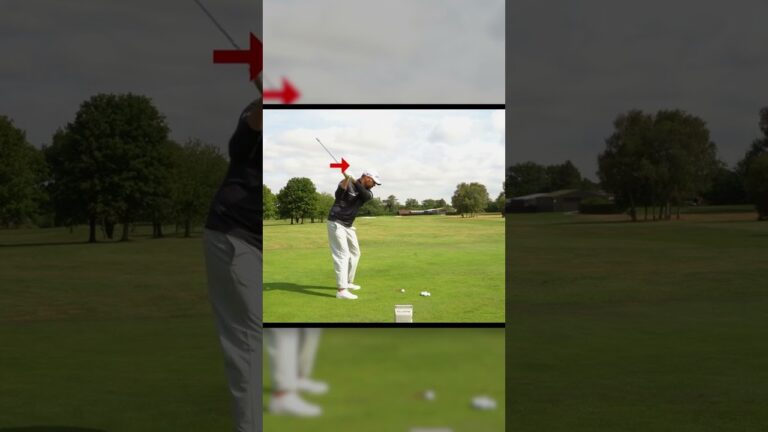

If you want to improve your golf ball flight and learn how to draw your irons, the key may not be in your grip, your stance, or your clubface alone. Often, the real difference is found in transition, the move from backswing to downswing. In golf, players who draw the ball tend to change direction very differently from players who slice it.
A simple shift in sequencing can change the shape of your downswing, improve your path into the ball, and help produce that right-to-left flight many golfers want. The concept is straightforward: in the backswing, you create body turn and arm lift. To deliver the club more from the inside in golf, you need to start down in the right order.
This guide explains that move step by step, so you can rehearse it correctly and start building a more reliable draw with your irons.
Table of Contents
- Step 1: Understand why your golf transition controls your ball flight
- Step 2: Recognize the common golf pattern that causes a slice
- Step 3: Reverse the order to create a better golf downswing shape
- Step 4: Keep your chest facing away from the target
- Step 5: Feel your arms move down and behind you in golf
- Step 6: Rehearse the move until it becomes natural in your golf swing
- Step 7: Turn through after the arms have dropped
- Step 8: Know what ball flight to expect from this golf move
- Step 9: Use one simple golf swing thought on the course
- FAQ
- Final thoughts on drawing your irons in golf
Step 1: Understand why your golf transition controls your ball flight
To draw an iron shot in golf, the club needs to approach the ball on a path that is more from the inside relative to the target line. One of the biggest reasons golfers fail to do this is the way they start the downswing.
The core idea is simple:
- In the backswing, you create body turn.
- You also create arm lift.
- The downswing is made up of those same elements returning in sequence.
Where many golfers run into trouble is that they begin the downswing with too much body rotation too early, while the arms drop later. That sequence often sends the club out and across the ball, a classic recipe for a slice or weak fade in golf.
If you reverse that order and let the arms start down while the chest stays back for a moment longer, the shape of the downswing changes immediately. The club works more behind you, which makes it easier to approach the ball from the inside and produce a draw.
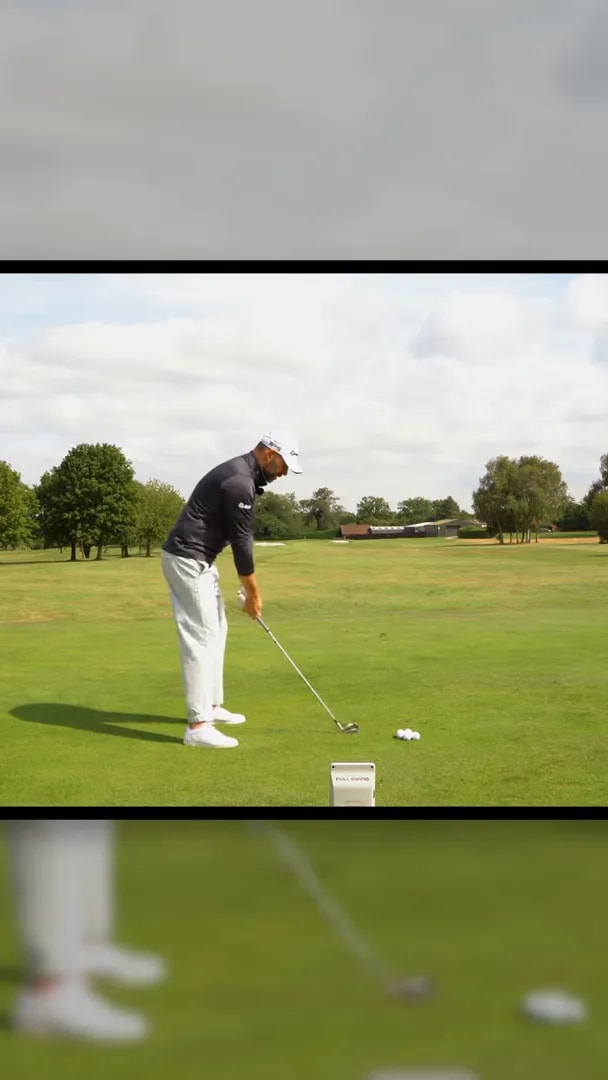
This does not require a complete swing rebuild. It is a change in feel and sequence. For many golfers, that one adjustment can be enough to transform impact conditions.
Step 2: Recognize the common golf pattern that causes a slice
If your iron shots tend to curve left-to-right, it is worth looking at your transition first. A typical slicing pattern in golf happens like this:
- You reach the top of the backswing.
- Your body unwinds aggressively.
- Your arms lag behind and drop too late.
- The club steepens and cuts across the ball.
This is often described as body turn first, arms second. It may feel powerful, but it usually creates the wrong shape in the downswing for a draw.
When the body opens too soon, the chest points toward the target too early. That early opening can pull the club over the top. Instead of the club falling into a shallower delivery, it moves out in front of you. In practical golf terms, that makes a draw much harder to produce.
You do not need to stop rotating entirely. You simply need to delay that body turn long enough for the arms to start down in a more useful way.
What this often feels like
Golfers who slice frequently feel as though they are trying to hit hard from the top. The body spins, the shoulders open, and the club follows that motion. Even if the intent is solid, the result is usually an out-to-in path.
If that sounds familiar, the fix is not usually more effort. It is a better sequence.
Step 3: Reverse the order to create a better golf downswing shape
The move that helps produce a draw is the opposite sequence:
- Arms drop first
- Body turn follows
That one change can instantly alter the path of the club in golf. As the arms start down while the chest remains closed, the club moves into a shallower, more inside position. Then, once the arms are in better delivery position, you can turn through to the target.
This is why good draw players often look so different in transition. They do not just unwind from the top. Their arms have a chance to fall while the upper body stays patient.
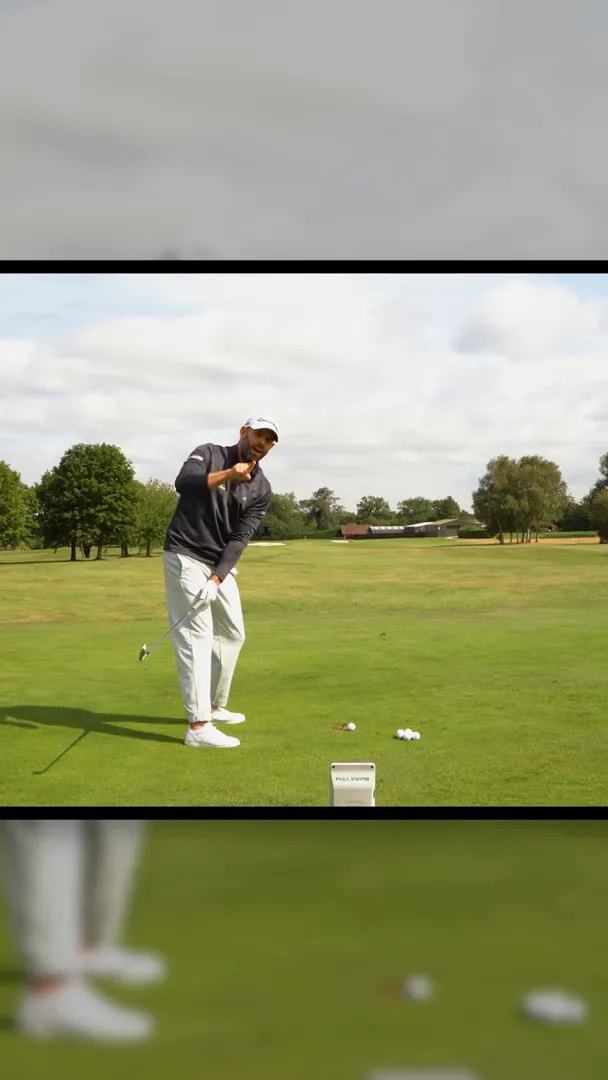
The goal is not to force your hands straight downward or to trap your body completely. The aim is to give the club a route behind you before the chest opens up. In golf, that is a major difference between a glancing cut and a powerful, compressed draw.
A useful way to think about it
Picture your backswing as two pieces built on top of each other:
- The body turns
- The arms lift
Now picture your downswing in reverse order:
- The arms lower
- The body rotates through
This is not a perfect mechanical model of every elite golf swing, but it is an excellent feel for golfers who want to draw their irons and stop coming over the top.
Step 4: Keep your chest facing away from the target
One of the most important feels in this move is what your chest does at the top of the swing. To encourage the arms to drop correctly in golf, keep your chest facing away from the target for a fraction longer as you begin the downswing.
That feeling matters because it prevents the upper body from opening too soon. If your chest starts turning immediately, you lose the space and time your arms need to shallow the club.
Think of it this way:
- At the top, pause mentally for a split second.
- Keep the chest closed.
- Let the arms move first.
You are not creating an actual stop. The swing is still flowing. But the feel should be that the chest stays back while the arms begin to work down.
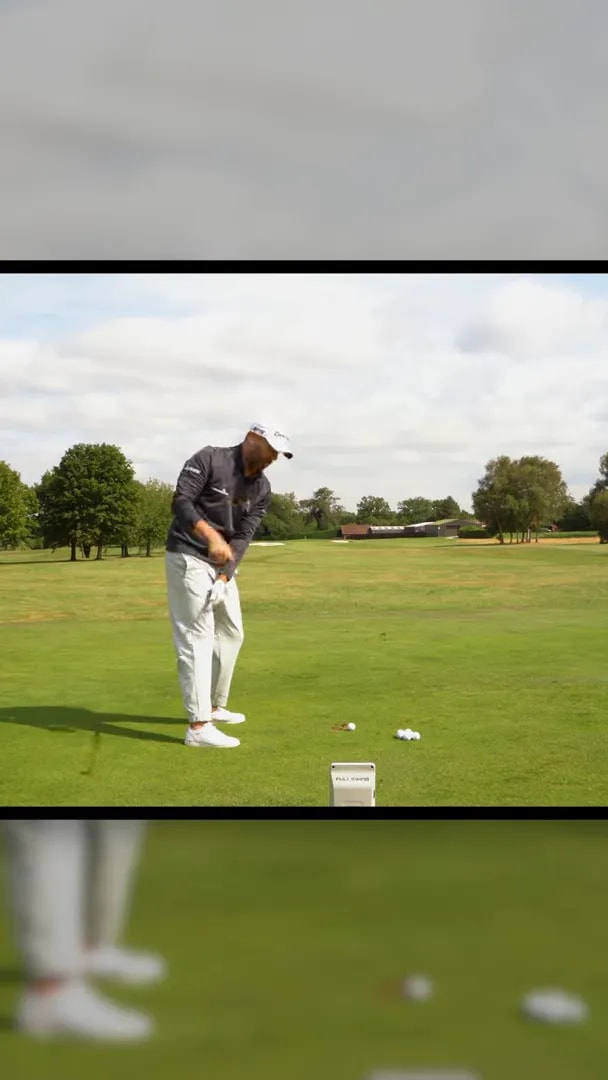
This is often a powerful correction because many golfers in transition feel exactly the opposite. They feel the chest racing toward the target. Replacing that with a patient chest can change your delivery dramatically.
Why this matters for iron play
With irons in golf, quality contact is just as important as curve. A better transition can help you approach the ball with a more functional path and improve strike at the same time. When the club drops into position instead of steepening, you often gain both control and solidness.
Step 5: Feel your arms move down and behind you in golf
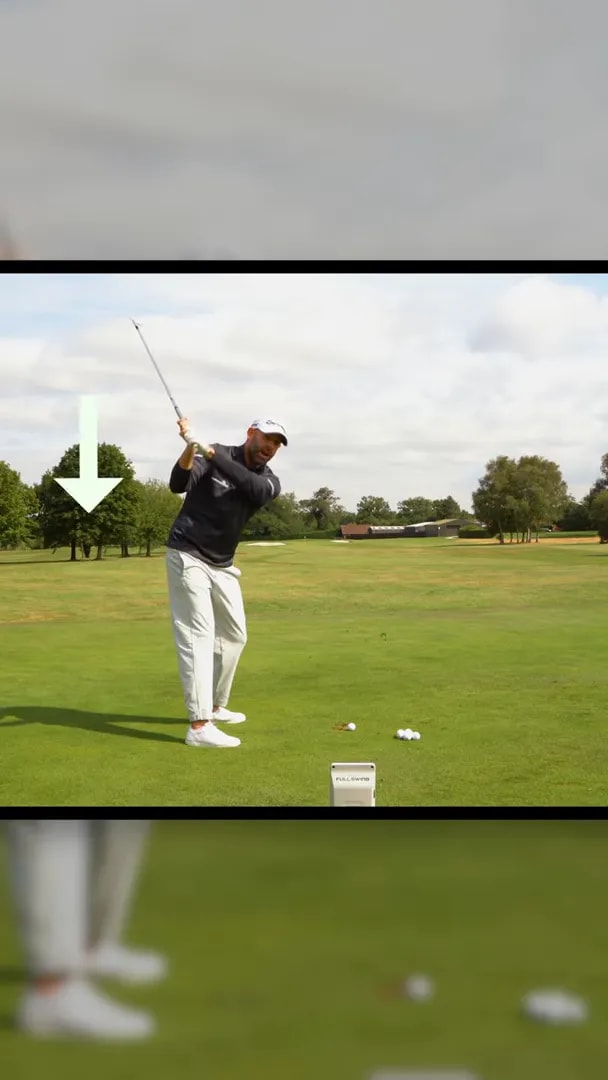
Once your chest stays back, the next feel is to move your arms down and behind you. This is the sensation that helps create the inside delivery associated with a draw in golf.
The wording matters here. Many golfers hear “drop your arms” and simply move the hands straight down in front of them. That may not improve the path at all. The better feel is that the arms work down while also moving slightly behind your body.
That movement helps the club shallow. It allows the shaft to approach on a more efficient angle, rather than getting steep and cutting across the ball.
Key feelings to focus on:
- Your chest stays closed for a moment.
- Your arms lower before your body fully unwinds.
- Your arms feel as though they move down and behind you.
- Then you turn through to the finish.
This is a feel-based swing thought, and that is important. In golf, feel and real are not always identical. The arms may only move slightly differently in reality, but the sensation of them working behind you can be exactly what you need to offset an over-the-top pattern.
Step 6: Rehearse the move until it becomes natural in your golf swing
The instruction is not just to understand the motion. It is to rehearse it repeatedly. That repetition is crucial because transition happens quickly in golf. If you only think about it on full swings, your old pattern is likely to take over.
A strong practice routine looks like this:
- Make a slow backswing to the top.
- Stop and check that your chest is still facing away from the target.
- Rehearse your arms moving down and behind you.
- Then turn through to a balanced finish.
Do that again and again. Slow rehearsals help your body understand the order. Once the motion starts to feel familiar, blend it into smoother swings.
A simple practice sequence
- Rehearsal 1: No ball, very slow, focus only on sequence.
- Rehearsal 2: Add a soft swing with the same chest-and-arms feel.
- Rehearsal 3: Hit a gentle iron shot and notice the starting line and curve.
If the ball starts a little right and curves back, you are moving in the right direction. In golf, that is often a sign that the club is approaching more from the inside.
The biggest mistake here is rushing. If you immediately go back to full speed, the old body-first transition can return. Build the motion gradually.
Step 7: Turn through after the arms have dropped
It is important to remember that this move is not arms only. The body still needs to rotate through the shot in golf. The difference is when that rotation happens.
After the arms have had a chance to drop into a better position, you turn through. That is what allows the swing to stay dynamic rather than getting stuck.
Think of the sequencing this way:
- Reach the top.
- Keep the chest facing away from the target.
- Let the arms move down and behind you.
- Turn through to the finish.
This final turn is what sends energy through the ball. Without it, you may start too far from the inside or struggle with timing. In golf, the best results come from the correct blend of patience and rotation.
So the message is not “do not turn.” It is “do not turn too soon.” That distinction makes all the difference.
Step 8: Know what ball flight to expect from this golf move
When you sequence the transition better, the expected outcome is simple: the ball draws.
That does not mean every shot will turn dramatically from right to left. In golf, a useful draw can be subtle. Even a gentle curve with a stronger starting line can be a major improvement over a weak slice.
As you practice this movement, look for these signs:
- The ball starts slightly more to the right of target.
- The curve moves back toward the target.
- Contact feels more compressed.
- Your downswing feels less steep and rushed.
If you still see a slice, check the order again. Most likely, the chest is still opening too early or the arms are not feeling as though they move behind you.
If you overdo the move, you may start hitting pushes or hooks. That usually means the club is approaching too far from the inside, or your body is not turning through enough. The correction is not to abandon the move, but to balance it with a proper through-swing.
Step 9: Use one simple golf swing thought on the course
When you take this into play, avoid loading your mind with too many technical details. In golf, one clear swing thought is often far more effective.
The best single thought from this concept is:
Keep the chest back, then let the arms drop.
That short phrase captures the essential pattern without becoming overwhelming. If you prefer a different feel, try:
- Arms first, turn second
- Chest stays back
- Down and behind, then turn
Choose the one that produces your best iron flight in golf practice. Then stick with it.
FAQ
Why does my golf ball slice with irons even when I try to swing harder?
Swinging harder often makes the body unwind too early from the top. In golf, that can steepen the club and send it across the ball, which encourages a slice. A better sequence is to let the arms start down before the chest fully turns through.
What is the main golf move that helps draw irons?
The key move is reversing the usual slice pattern in transition. Instead of body turn first and arms second, feel the arms drop first while the chest stays facing away from the target for a moment longer. Then turn through.
Should I stop rotating my body if I want to draw the golf ball?
No. You still need body rotation in golf. The goal is not to stop turning, but to avoid opening the chest too soon. Let the arms lower into position first, then rotate through the shot.
What does “arms down and behind you” mean in golf?
It means the arms should feel as though they move down while also working slightly behind your body, rather than out in front of you. That feel can help shallow the club and create a more inside path for a draw.
How should I practice this golf transition move?
Start with slow rehearsals. Make a backswing, keep the chest closed, rehearse the arms dropping down and behind you, then turn through. Repeat that motion several times before hitting shots. Rehearsal is essential because transition happens very quickly in golf.
Will this golf move help every player hit a big draw?
Not every player will hit a large draw right away, but this sequencing change can help create a more inside delivery and improve iron ball flight. For many golfers, even a small draw or a straighter shot is a meaningful step forward.
Final thoughts on drawing your irons in golf
If you want to draw your irons in golf, the transition deserves your attention. The difference between a slice pattern and a draw pattern can come down to a simple sequence change. Instead of spinning the body from the top and leaving the arms behind, keep the chest back for a moment, let the arms work down and behind you, and then turn through.
That move changes the shape of the downswing. It gives the club a better route into the ball. And it can help produce the kind of iron flight that many golfers chase for years.
Keep the concept simple:
- Backswing equals body turn and arm lift.
- Downswing starts with arm drop.
- Chest stays closed a touch longer.
- Then the body turns through.
Rehearse it often, trust the feel, and use it to build a more reliable draw in your golf swing.
0 Comments