


Focus keyphrase: fairway wood contact
If your fairway woods and hybrids feel unpredictable, you are not alone. These clubs ask a lot from your swing. They are among the longest clubs in the bag, they have less loft than your irons, and they are often used in situations where you want both clean contact and height.
That combination is exactly why so many golfers top them, hit behind them, or struggle to launch them high enough to get proper distance.
The good news is that better fairway wood contact does not usually require a full swing rebuild. In many cases, it comes down to improving two simple pieces of motion before you even think about power. First, you need to control how the club interacts with the ground. Second, you need to control where the club lands relative to the ball. When those improve, loft and launch improve too.
Considering that mid to high handicap golfers use fairway woods and hybrids roughly 25% of the time, even a modest improvement here can make a real difference to your scores.
Table of Contents
- Step 1: Understand why fairway wood contact is so difficult
- Step 2: Learn the three keys to fairway wood contact
- Step 3: Fix the depth of your arc for better fairway wood contact
- Step 4: Use a simple shoulder rehearsal before every wood or hybrid shot
- Step 5: Control where the club lands to improve fairway wood contact
- Step 6: Use the prop drill to stabilize your low point
- Step 7: Avoid the most common prop drill mistake
- Step 8: Blend the two feels together for high, solid shots
- Step 9: Build a repeatable pre-shot routine for fairway wood contact
- Step 10: Keep realistic expectations with fairway woods and hybrids
- FAQ
- Final thought on fairway wood contact
Step 1: Understand why fairway wood contact is so difficult
Before fixing anything, it helps to understand why these clubs can feel so demanding.
- They are longer than your irons
- They have less loft
- They are often hit from the ground, not a tee
- You usually need them when the shot matters, such as trying to reach a green in two
That means a small mistake in low point, arc, or face delivery can create a big miss. A topped hybrid and a heavy fairway wood often come from the same root problem: the club is not returning to the ball and turf in a predictable way.
So if you have struggled with these clubs, do not assume you are doing something wildly wrong. They are simply less forgiving of poor movement patterns.
Step 2: Learn the three keys to fairway wood contact
Consistent fairway wood contact comes from controlling three things:
- The depth of the arc, meaning how the club interacts with the ground
- The location of the low point, meaning where the club lands relative to the ball
- The loft you deliver, which helps the ball launch high enough to carry
If your strike is inconsistent, one or more of these is breaking down.
You might hit too far into the ground on one swing, then miss the turf entirely on the next. Or you may contact the ground in different places from swing to swing, which makes it nearly impossible to produce repeatable shots. And if you lean the shaft too much or lose your angles, you can remove too much loft and hit low bullets that never climb.
For most golfers, the best place to start is the first point: controlling the depth of the arc.
Step 3: Fix the depth of your arc for better fairway wood contact
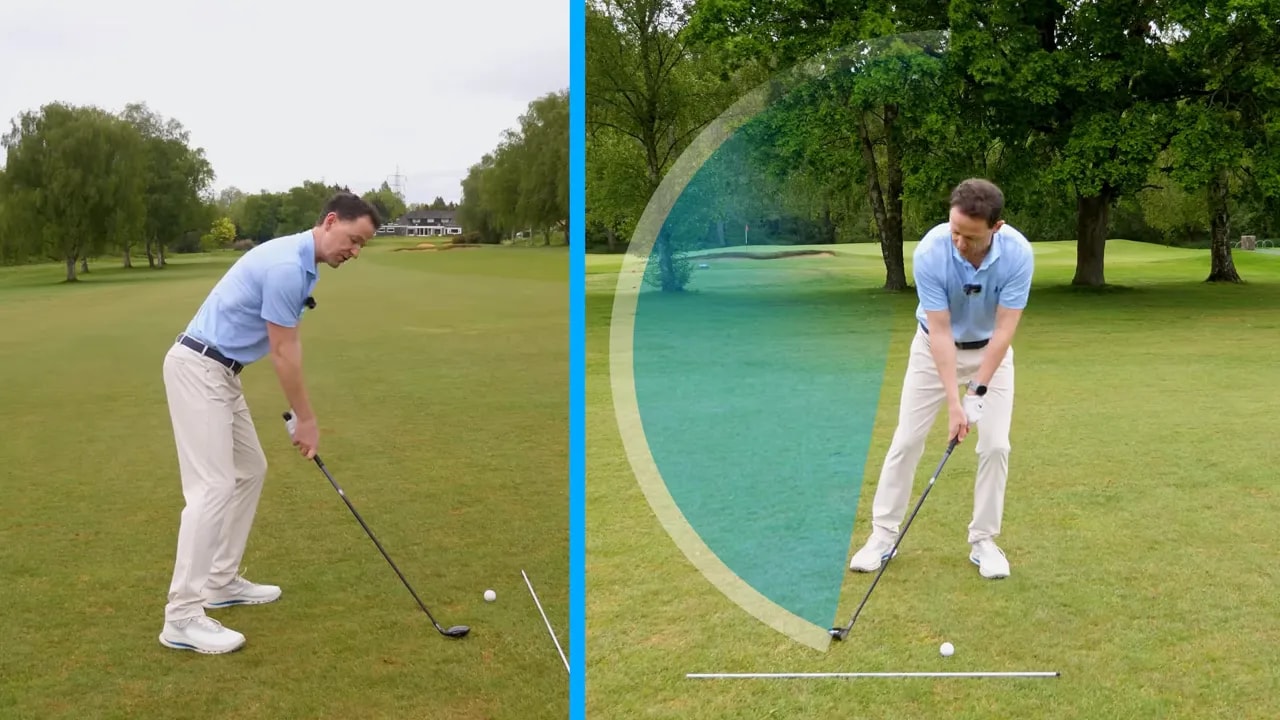
When your depth of arc changes too much, your strike gets random. One shot is thin. The next is heavy. Another is topped. This usually means your swing radius is not staying intact.
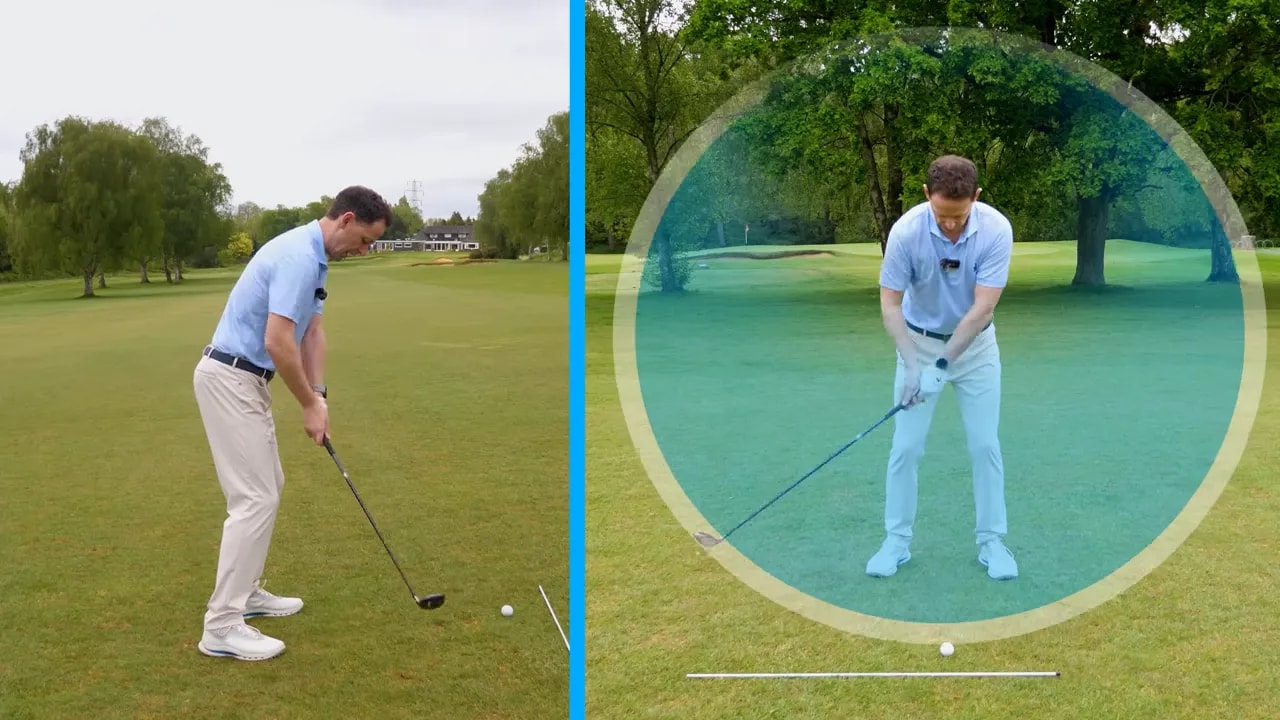
A simple way to understand this is to think about your arms in the swing. If your arms suddenly pull in or throw out, the clubhead changes height and distance from you. That makes controlling the bottom of the swing much harder.
The key feel is not to force your arms together. Instead, make your shoulders move properly so your arms can stay connected to the motion naturally.
What to feel
You want your shoulders to work on an arc:
- Your trail shoulder works behind you in the backswing
- Your lead shoulder works down and across
Both descriptions can work. The point is the same. Your shoulders must turn in a way that keeps the structure of the swing intact.
When that happens, your arms do not need to spread apart or take over. The club stays on a more predictable arc, and your chance of clipping the ball cleanly off the ground improves immediately.
Why this matters
If your shoulders stop moving and your arms start making the swing on their own, everything becomes unstable. The club can get too far away from you, too close to you, too steep, or too shallow. Once that happens, solid fairway wood contact becomes more luck than skill.
By contrast, a good shoulder turn helps maintain the radius of the swing both back and through. You are not manually trying to hold your arms in place. You are creating the conditions for a consistent strike.
Step 4: Use a simple shoulder rehearsal before every wood or hybrid shot
This is one of the easiest ways to build a better strike pattern.
Before hitting the shot, make a few small practice swings and focus only on the shoulder motion. Keep it simple:
- Feel the lead shoulder move down
- Feel the trail shoulder move behind you
- Let the arms stay quiet and connected
You can even rehearse this next to a wall. If your arms begin to throw outward, you would hit the wall. That instant feedback helps you feel a more compact and controlled motion.
As a warm-up thought, this can be excellent. It gives you a clear pre-shot feel without cluttering your mind with technical detail.
If your main miss is poor turf contact, start here first. Many golfers see immediate improvement simply because the club starts returning to the ground more consistently.
Step 5: Control where the club lands to improve fairway wood contact
Once the depth of the arc is more stable, the next issue is where the club reaches the ground.
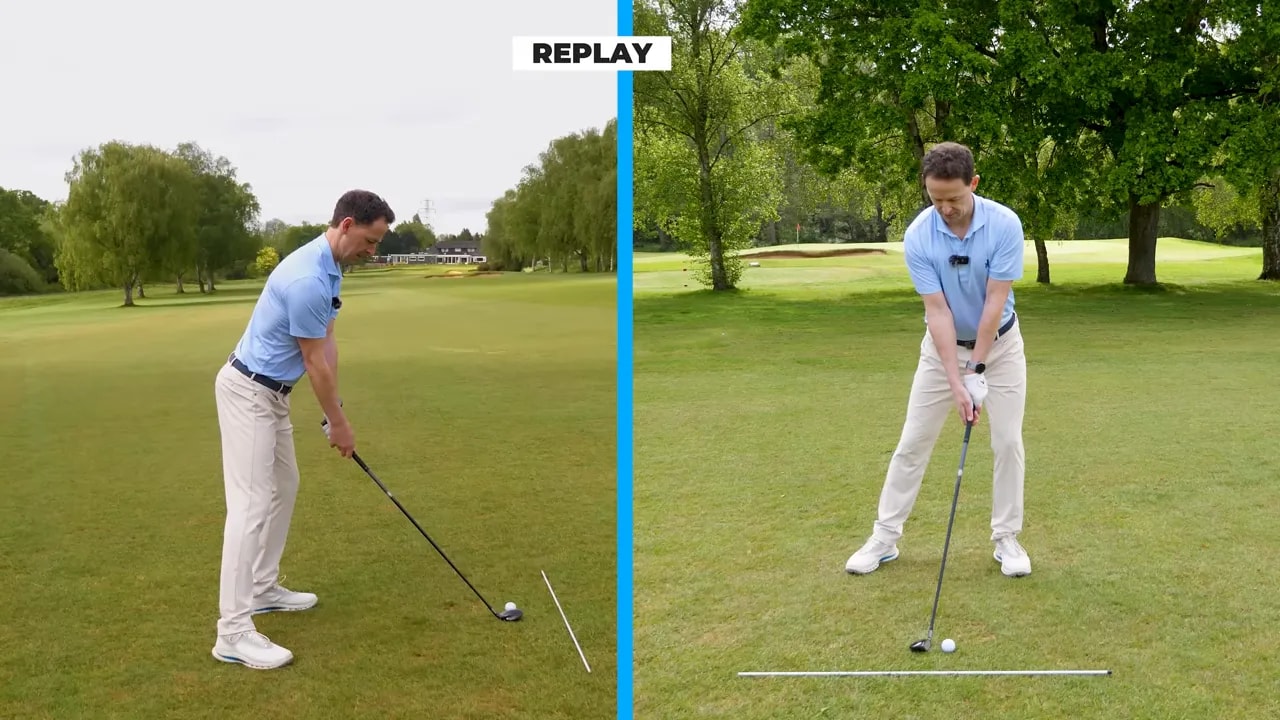
With a ball on the ground, you want the club to land just slightly ahead of the ball. For a hybrid, the ball position should be just ahead of center. That setup helps you strike the ball first while still allowing the club to brush the turf in the correct place.
If the club lands too far ahead, you may deloft the club too much and hit the ball too low. If it lands too far behind, you can hit it heavy, thin, or top it. Different misses can come from the same low-point problem.
This is why many golfers feel like their fairway woods and hybrids are inconsistent for no clear reason. The pattern is actually clear: the club is bottoming out in a different place from one swing to the next.
Step 6: Use the prop drill to stabilize your low point
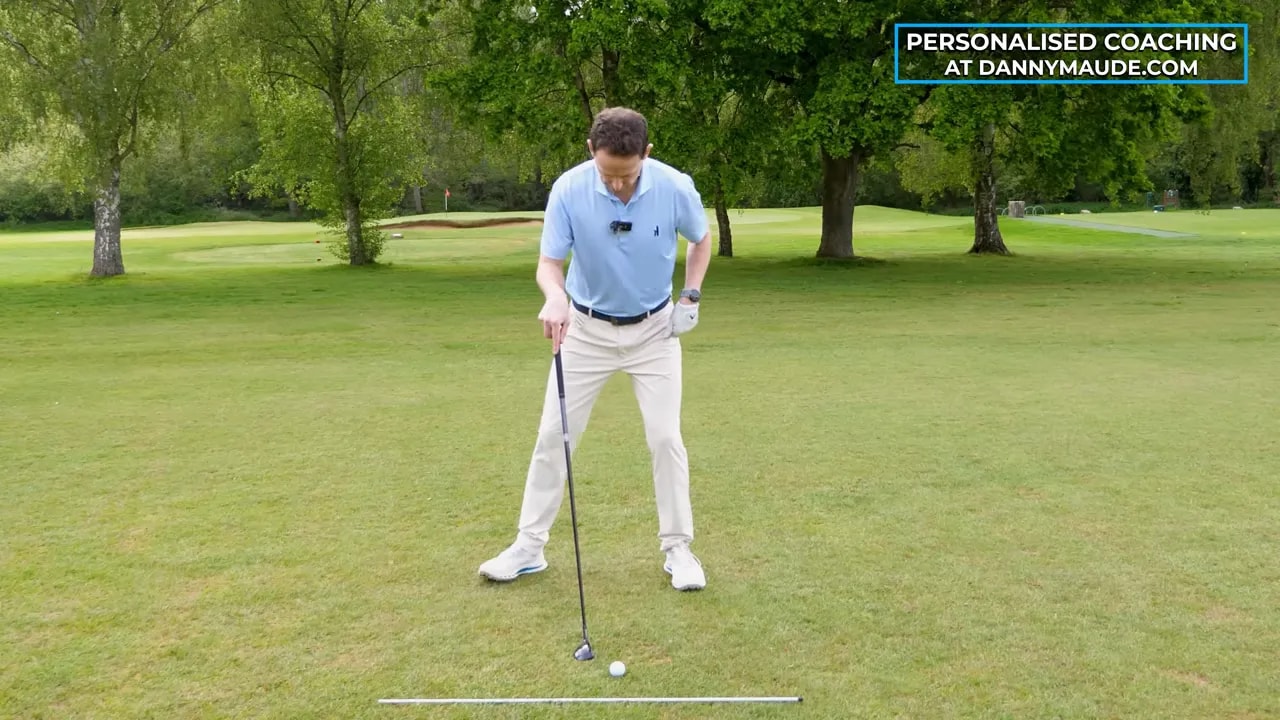
The most effective drill taught here is the prop drill. Its goal is simple: reduce excessive side-to-side movement so the club returns to the ground in a more reliable spot.
How to set it up
- Set your trail foot slightly farther back
- Flare that trail foot outward
- Imagine a stake running up your lead side
- Now imagine you are propping that stake up with your trail side
This image gives you a very clear task during the backswing. Rather than swaying off the ball, you push with the trail foot in a way that supports your lead side and helps you turn around a more stable center.
What the prop drill does
Done correctly, the prop drill helps you:
- Stay more centered
- Turn instead of sway
- Create space for the club to travel on a better arc
- Return the club to the ball with more loft
- Improve the consistency of your low point
It also blends nicely with the shoulder concept from earlier. As you push and turn, your shoulders can move on a circle more naturally. That supports both the radius of the swing and the strike location.
Step 7: Avoid the most common prop drill mistake
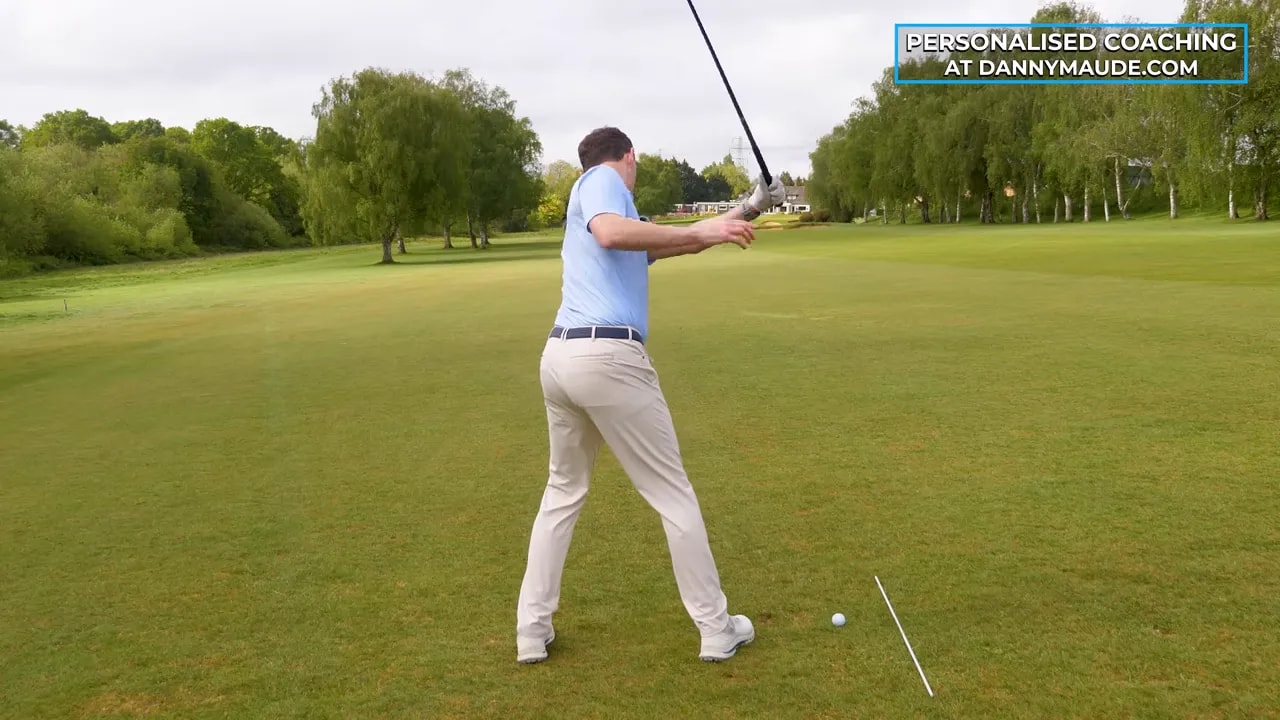
The drill only works if you keep one detail correct: your head stays centered.
Many golfers hear the idea of pushing and immediately slide or tilt too much. They move their upper body away from the target, which removes loft and makes the strike worse rather than better.
The right motion is this:
- Push with the trail foot
- Feel the trail hip and trail pocket work behind you
- Turn around the ball
- Keep your head relatively centered in the stance
The wrong motion is swaying to the trail side with no real turn.
When you sway, several problems show up at once:
- Your low point shifts around
- Your shoulders do not turn properly
- The club tends to get thrown over the top
- You lose loft
- Your contact becomes inconsistent
This is why the drill can feel restricted at first. If you are used to moving a lot from side to side, a centered turn may feel smaller. But that “restricted” feeling is often exactly what creates more control.
Step 8: Blend the two feels together for high, solid shots
The real improvement in fairway wood contact comes when you combine both pieces:
- Shoulders working on an arc so the swing radius stays intact
- The prop drill feel so your low point stays more consistent
Together, these movements give you something very important: space.
Space allows the club to approach the ball from a better position. It helps you strike down into the back of the ball with enough loft still present on the clubface. That is what launches hybrids and fairway woods higher, with better carry and more useful distance.
When this starts to work, the strike feels cleaner. The ball launches rather than skidding low off the turf. You are no longer trying to help it into the air by scooping. Instead, the structure of the swing produces the launch for you.
Step 9: Build a repeatable pre-shot routine for fairway wood contact
If you want these changes to transfer to the course, keep your routine short and simple.
A practical pre-shot routine
- Set the ball just ahead of center for your hybrid or fairway wood from the ground
- Make one or two small rehearsals feeling the shoulders turn on an arc
- Feel your trail foot prop up your lead side while your head stays centered
- Step in and make the same motion without adding extra thoughts
This routine keeps your attention on movement quality rather than outcomes. Instead of worrying about whether the shot will go high enough, you focus on the pieces that create clean contact.
Step 10: Keep realistic expectations with fairway woods and hybrids
Even with better technique, these clubs will never be the easiest in the bag. They still demand more precision than a short iron. So while it is worth improving them, it is also important to be patient with yourself.
If your fairway wood and hybrid strikes become even a little more predictable, you will likely see better distance control, more confidence on long approach shots, and fewer wasted shots from poor contact.
That is a big gain from two simple feels.
FAQ
Why do I keep topping my fairway wood?
Topping usually happens when the depth of your swing arc changes or when the club bottoms out too early. A poor shoulder turn, arms that spread away from the body, or excessive sway can all cause this. Start by improving your shoulder motion so the swing radius stays more consistent.
Where should the ball be for better fairway wood contact?
For the hybrid example taught here, the ball is positioned just ahead of center. The goal is to strike the ball with the club landing slightly ahead of it. That helps you produce clean contact and enough loft to launch the ball well.
What is the prop drill in golf?
The prop drill is a feel that helps reduce excessive sway and improve low-point control. You set the trail foot slightly back and flared, then imagine your trail side is propping up a stake running through your lead side. This encourages a centered turn and more consistent strike location.
Why does the prop drill feel restricted?
It often feels restricted because it removes the side-to-side movement many golfers are used to. That freedom may feel natural, but it often creates inconsistent contact. The more stable motion of the prop drill can feel unusual at first, but it usually improves control.
How do I hit my hybrid higher?
To hit a hybrid higher, you need to preserve loft through impact. That means controlling where the club lands and avoiding excessive sway or forward shaft lean that strips loft away. A better shoulder turn and a centered pivot can help the club approach the ball with enough loft to launch it properly.
Do these fairway wood contact tips also work for irons?
Yes. The same principles of controlling the arc, stabilizing the low point, and turning instead of swaying can help iron contact as well. The exact setup and ball position may vary, but the movement concepts carry over.
Final thought on fairway wood contact
If you want better results with fairway woods and hybrids, start with the strike, not the speed. Better fairway wood contact usually comes from a more reliable arc and a more predictable low point.
Feel your shoulders working on a circle. Feel your trail side propping you up rather than swaying you away from the ball. Keep your head centered. Then let the club do what it was designed to do.
Clean contact, higher flight, and more distance often begin with that simple sequence.
0 Comments