

 Unlock Greater Golf Distance: Master Your Takeaway Now!
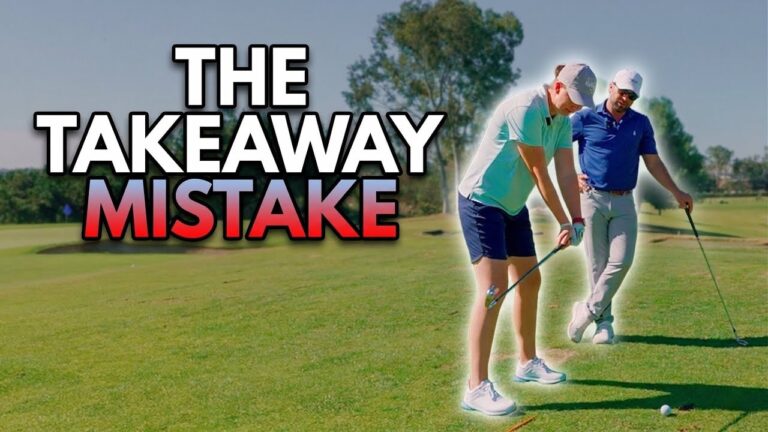
Does your golf game suffer from heavy irons, stray driver shots, or flat carry numbers? It’s time to evaluate your golf takeaway. Often, swing issues trace back to early positioning errors, not the downswing. This guide unveils common takeaway mistakes stealing your distance and offers actionable drills for improvement.
Table of Contents
- Why the Takeaway Mistake Ruins Distance
- Identify Your Pattern
- Correct Takeaway Misconceptions
- Visual Checkpoints for Improvement
- Improve Timing Using Body Movement
- Optimize Your Setup for Better Leverage
- Rehearse Takeaway for Real Performance
- Avoiding the Bowed Wrist Trap
- The Two-Part Drill Technique
- Rebuild Your Contact and Divot Pattern
- Avoid These Common Mistakes
- Frequently Asked Questions
- Next Steps: Formulate Your Practice Plan
Why the Takeaway Mistake Ruins Distance
Distance in golf hinges on effective club delivery at impact, and a poor takeaway can lead to:
- Deviation from the intended swing path—causing later compensatory moves.
- Diminished leverage—opposing the maintenance of a consistent club front.
- Steeper angle of attack—prompting inconsistencies in ball contact.
The goal isn’t a downswing overhaul; it’s refining the takeaway to ease the swing process.
Identify Your Pattern
Recognize common patterns indicating a flawed takeaway:
- Driver drifting right-right: Often, synchronization issues early explode in the downswing.
- Chunked irons: Results from overly steep, misaligned delivery.
- Cupped/shut sensation at the top: May lead to closed, steep swings.
- Inconsistent carry: Points to changed leverage or swing base.
Aligning these symptoms with your game can spotlight takeaway problems.
Correct Takeaway Misconceptions
A prevalent misconception—“the club must go outside”—leads to excessive hand outward movement. This misstep culminates in a reactive shift during impact. Instead, fuchsia on maintaining your hands on a steady course for optimal swing relationships.
Visual Checkpoints for Improvement
Visual checkpoints can streamline your takeaway and foster consistency:
- Keep hands on the line: Or close to it, to guide club stability.
- Avoid premature club inside movement: This preserves the overall swing shape.
- Post-correct alignment creates smoother transitions and fewer last-minute fixes.
Such alignment enhances club path clarity and swing flow.
Improve Timing Using Body Movement
Connecting hand movement with body rotation ensures the hands aren’t lagging during downswing. It calls for a synchronized transition, where your hands follow through as the body turns.
Optimize Your Setup for Better Leverage
Even an improved takeaway requires a supportive setup. Avoid high hand postures induced by improper hip placement:
- Align hips with ankles
- Position shoulders past toes
- Maintain a conducive handle elevation to preclude wrist strain
A well-planned setup keeps the takeaway effective.
Rehearse Takeaway for Real Performance
Adopt a rehearsal that mimics actual swings. Leverage a 10-and-10 approach that ingrains accurate takeaway positioning.
- Start as you mean to execute.
- Rehearse alongside desired line and turn naturally.
- Solidify the connect between feel and actual execution.
Avoiding the Bowed Wrist Trap
A misconception is forcibly bowing the wrist. It leads to misalignment and loss of control. Instead:
- Use position checkpoints without forcing unnatural wrist bows.
- Stabilize grip through hinge and elbow alignment.
- Encourage natural club drop through position rather than turn.
Corrective wrist technique enhances control and swing balance.
The Two-Part Drill Technique
Separate and integrate corrective measures to master the takeaway:
- Create visual constraints for consistent hand and club placement.
- Enhance the relationship between hands and club through short swings.
- Scale up to full swings, maintaining consistent path behavior.
Rebuild Your Contact and Divot Pattern
Recognize takeaway improvements via contact adjustments:
- Consistent divots betray superior control and leverage.
- Redirected ball flight signifies effective swing remodeling.
Such improvements cement your progress in correcting the takeaway.
Avoid These Common Mistakes
- Address changes incrementally.
- Ensure practice drills adapt into full swings.
Frequently Asked Questions
What takeaway change prevents right shots?
Ensure your hands remain on their intended path; prevent early out movement that redirect club trajectory.
Signs of takeaway affecting distance?
Look for inconsistent flight patterns, loss of control, and club grip shifts signaling deeper issues.
Effect of bowing wrists on distance?
It can shut and steepen shots. Opt for wrist stabilization and natural club placement instead of force.
Next Steps: Formulate Your Practice Plan
Allocate 15-20 minutes to train around takeaway consistency:
- Refine setup, optimize your starting posture.
- Implement takeaway rehearsal with intended alignment.
- Execute the two-part constraint drill to maintain proper hand/club path.
With a refined takeaway practice, expect your swing to deliver power and precision.
0 Comments