
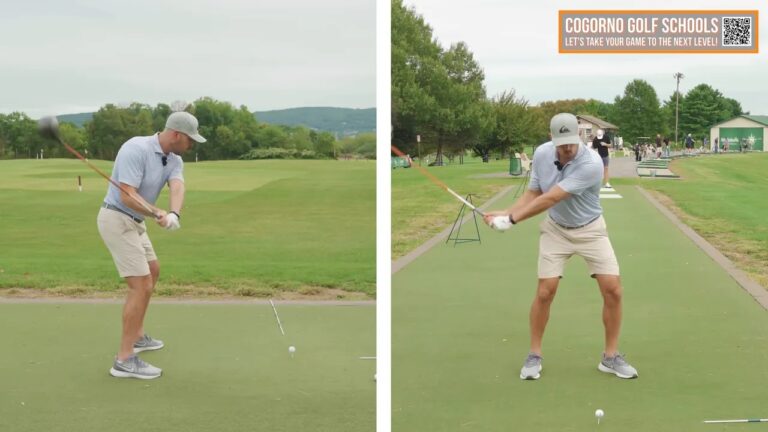

If your driver feels inconsistent, you might not have a “power” problem. You might have a release problem.
The most common driver miss described here is the weak, short miss to the right (often caused by a club face that is too open at impact). The fix is not forcing rotation harder. Instead, you learn a free release through impact using two specific pieces of feel: toss and turn.
Focus keyphrase: free release through impact
Why your driver goes weak and right (and what it really means)
When shots come out low, weak, and to the right, the root issue is frequently the same: your club face is too open when the ball is struck.
An open face can rob you of both distance and direction. You lose compression, the ball launches with less effective loft, and you miss right because the face is not properly squared.
The goal is to square the club face while still delivering the correct amount of loft. Elite players do this through a free release through impact, which allows the club to catch up and rotate naturally instead of staying “stuck” behind your hands.
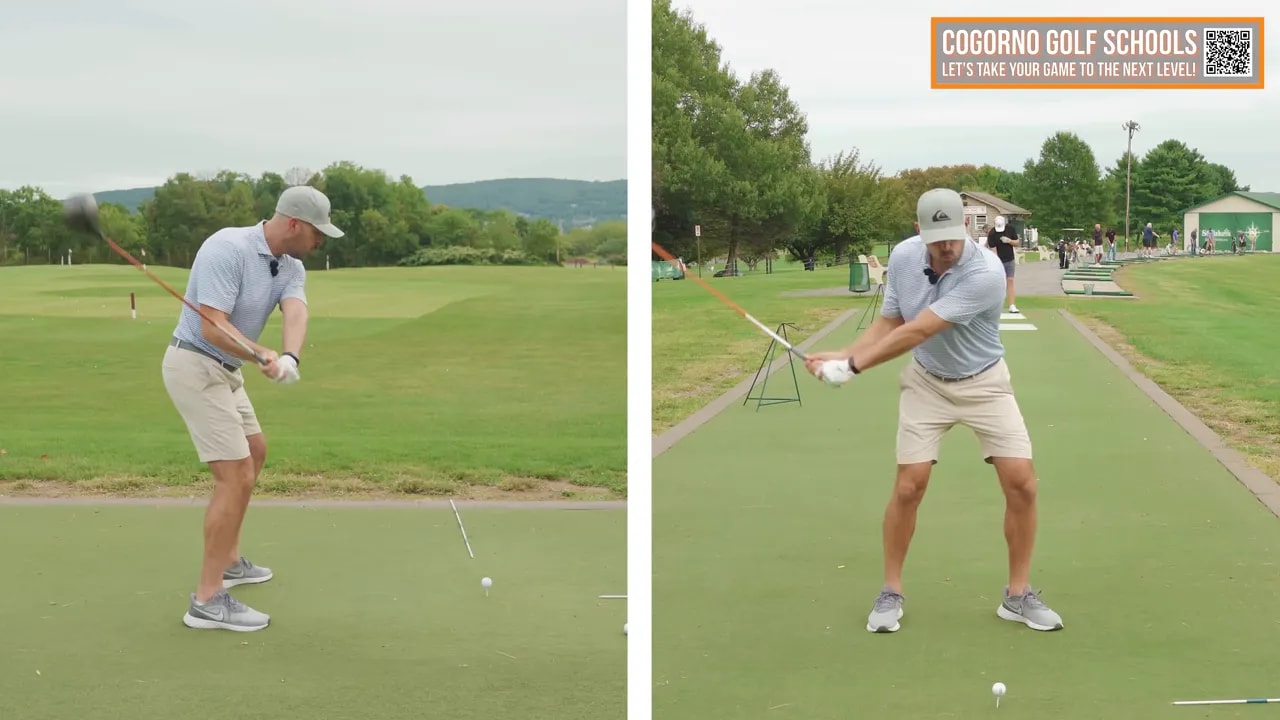
Step 1: Understand the two-part driver release framework (toss and turn)
The release framework used to fix weak right starts with two abilities you must perform during the downswing:
- Square the club face (so the face is not left open)
- Deliver the correct amount of loft (so the driver launches high enough to go far)
To organize those feels, think of a two-part sequence:
- Toss: a trail-hand release that helps the face square
- Turn: a lead-arm rotation that closes the face further and supports power
When these two pieces happen early enough (without you overholding), the club head gradually passes your hands instead of staying trapped behind them. That pattern creates solid contact and more consistent ball flight.
Step 2: Diagnose your miss with ball flight feedback
Before changing mechanics, use your tendencies.
If you often hit:
- Weak shots that go right: you likely need more face squaring (less passive release)
- Shots that are short: you may be delivering insufficient effective loft or releasing too late (or both)
The key idea: if the face is open, you will feel like you need more “rotation.” But the fix here is usually not brute force. It is improving how the club is released through impact.
Step 3: Build the “toss” feel with your right hand only
The first part of free release through impact is the toss you feel with your trail hand.
Here is how the feel works:
- Start with your right wrist bent back fully in the backswing.
- During the downswing, the wrist “tosses” through. That motion helps the club face move from pointing too far right toward a more square position.
Important: Tossing does not mean you lock your arms and flip the club aggressively. The point is to be slightly more active with the release so you stop being overly passive.
Right wrist positioning check
From about hip high to hip high on the way down, notice what happens when your right wrist is bent back versus when you allow it to toss forward.
A helpful way to think about it:
- With the right wrist bent back, your club face points too far right relative to target.
- As you toss and let that trail-hand release happen, the club face starts moving toward the target.
- If you toss too far, it can move too far left. That is also feedback, not failure.
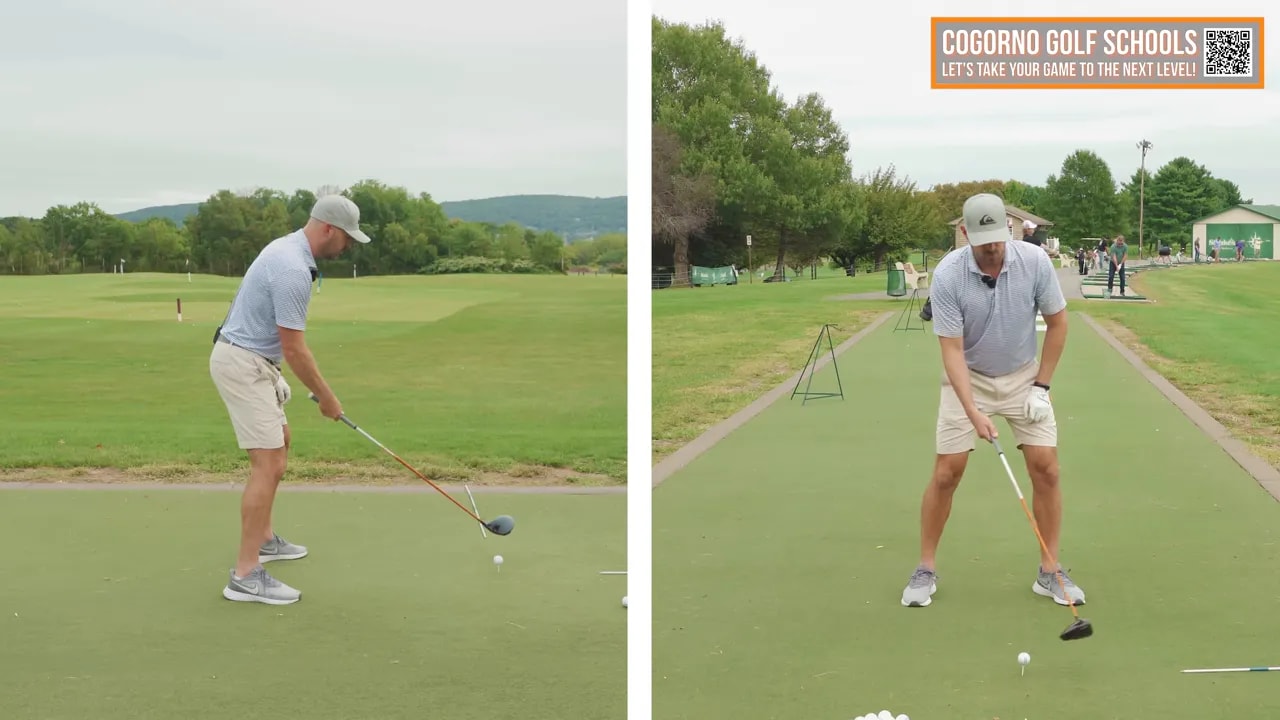
The drill: three reps right hand only
- Set up like you would for a driver swing.
- During the backswing, bring the club back while your right wrist bends back fully.
- On the way down, take the move right wrist only feel.
- Do it from roughly hip high to hip high to feel how the toss creates squaring.
- Hit three reps like this.
Coaching cues in this method:
- Go back to roughly rib high or chest high for the drill, not all the way like a full driver swing.
- Feel the right wrist move from fully bent back toward fully bent forward.
- Do not keep the club head behind your hands “forever.” Release the head so you get speed and face squaring.
How to know if your toss is correct
After your three reps, look at ball flight:
- If shots still come out low, weak, right, your toss likely needs to happen more or sooner.
- If shots go too far left, you may be overdoing the toss. You want “enough” toss, not maximum toss.
The target feel is for the club face to be closer to straight up and down as it approaches impact. Players can have slight differences based on speed, but the principle holds.
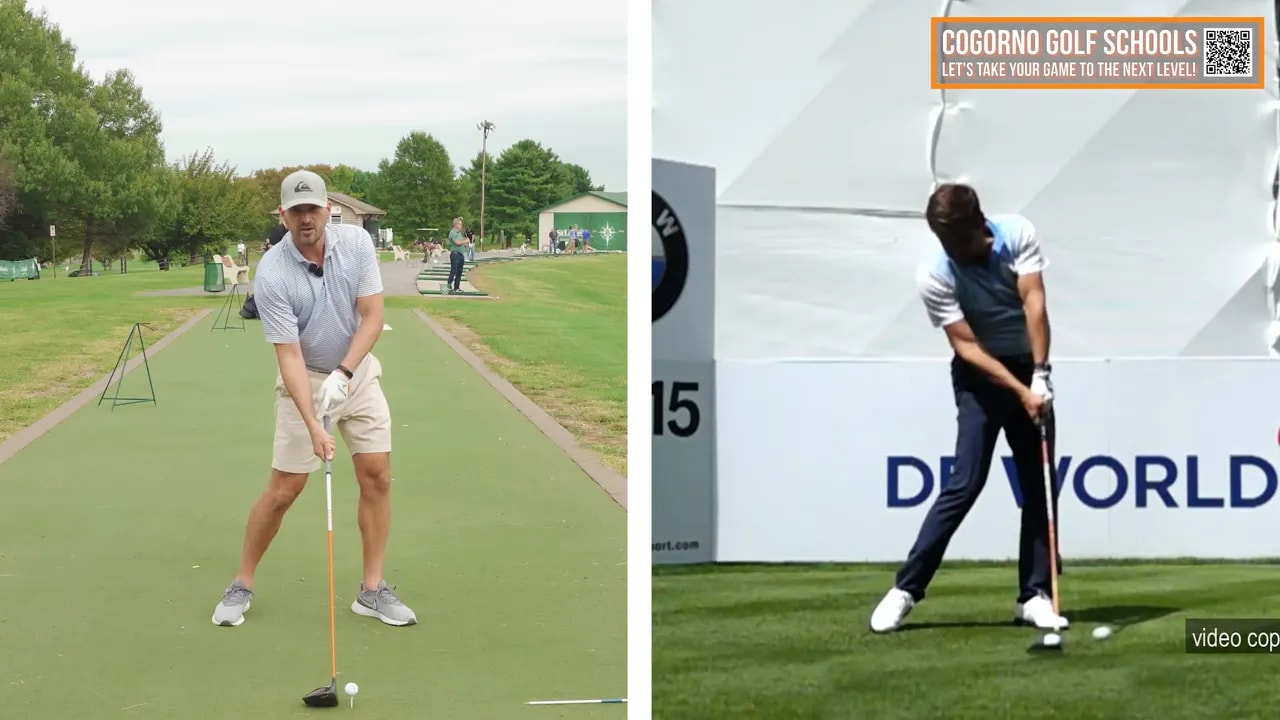
Step 4: Add the “turn” with your left arm only (lead arm rotation)
Once the toss helps your face square, the next piece is the turn you feel with your lead arm.
The purpose of turn is to keep the club rotating through the hitting area and help close the face more reliably while maintaining a powerful strike.
What “turn” should feel like
A helpful benchmark is the glove logo orientation:
- As you pass impact, the glove logo should be pointing away from you by impact and then continue behind you.
- This is described as a normal arm rotation pattern that supports a good 180 degree amount of arm rotation through.
If you have been “trying to hold on forever,” you may see a pattern where the left forearm and palm point down toward the ground through impact. That leaves the face wide open and creates weak right misses.
The correction cue is more specific:
- As you come through, feel your left forearm and palm point slightly up from level to the ground
- Not fully up and not perfectly level, but angled slightly upward
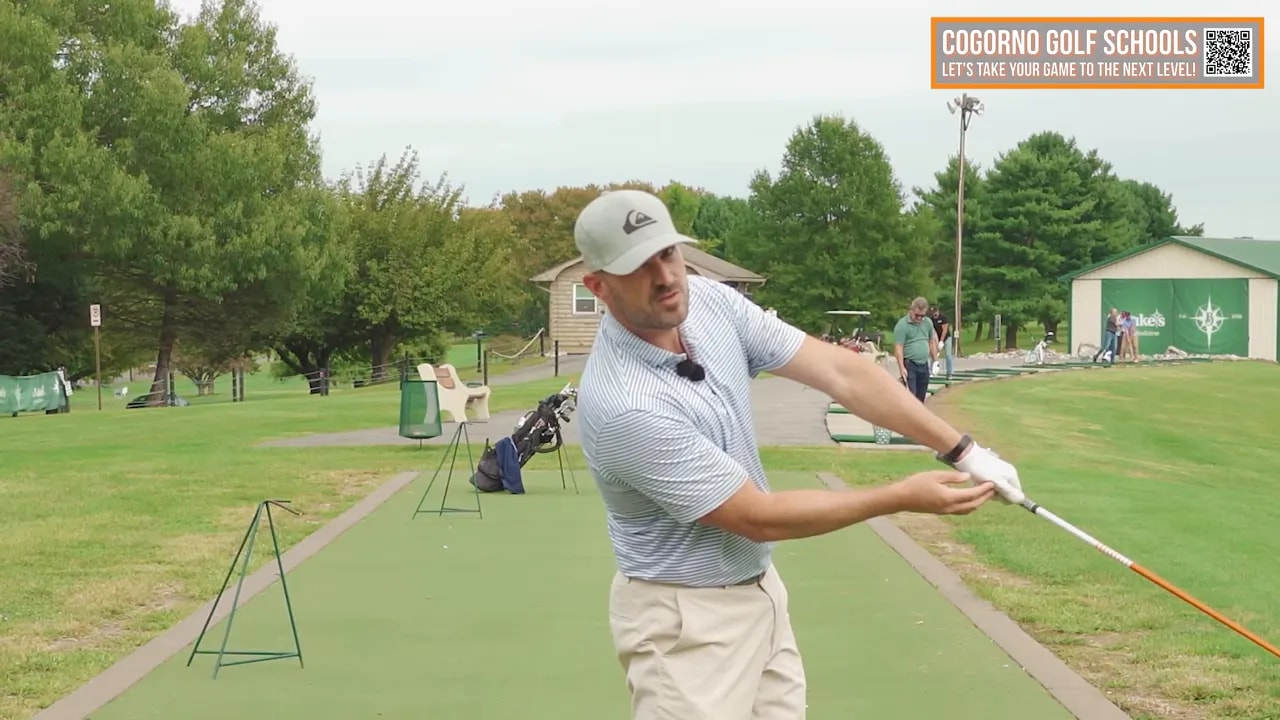
The drill: three reps left arm only
- Do a short practice sequence with left arm only.
- From about hip high, feel the turn through the strike area.
- Specifically feel the left forearm and palm pointing slightly up from level to the ground.
- Hit three reps with that feel.
When this is done correctly, the left wrist may look slightly cupped (extension) through impact. That is not the problem in this context. The goal is free release through impact plus proper face squaring, not forcing a “perfect” static wrist look.
Step 5: Combo “toss and turn” for maximum driver distance and consistency
The two drills train two separate components. The next step is combining them so your club face catches up correctly without you holding it back.
Use this progression:
- Three swings focusing on the trail hand toss only (toss helps square the face).
- Three swings focusing on the left arm turn only (turn supports closing the face and power).
- Then three swings combining both feels.
When you combine them, you should feel the sequence begin early enough in the downswing that the club face is squared sooner rather than later. The toss can start feeling “really soon” from the top, but you still keep the release natural and controlled.
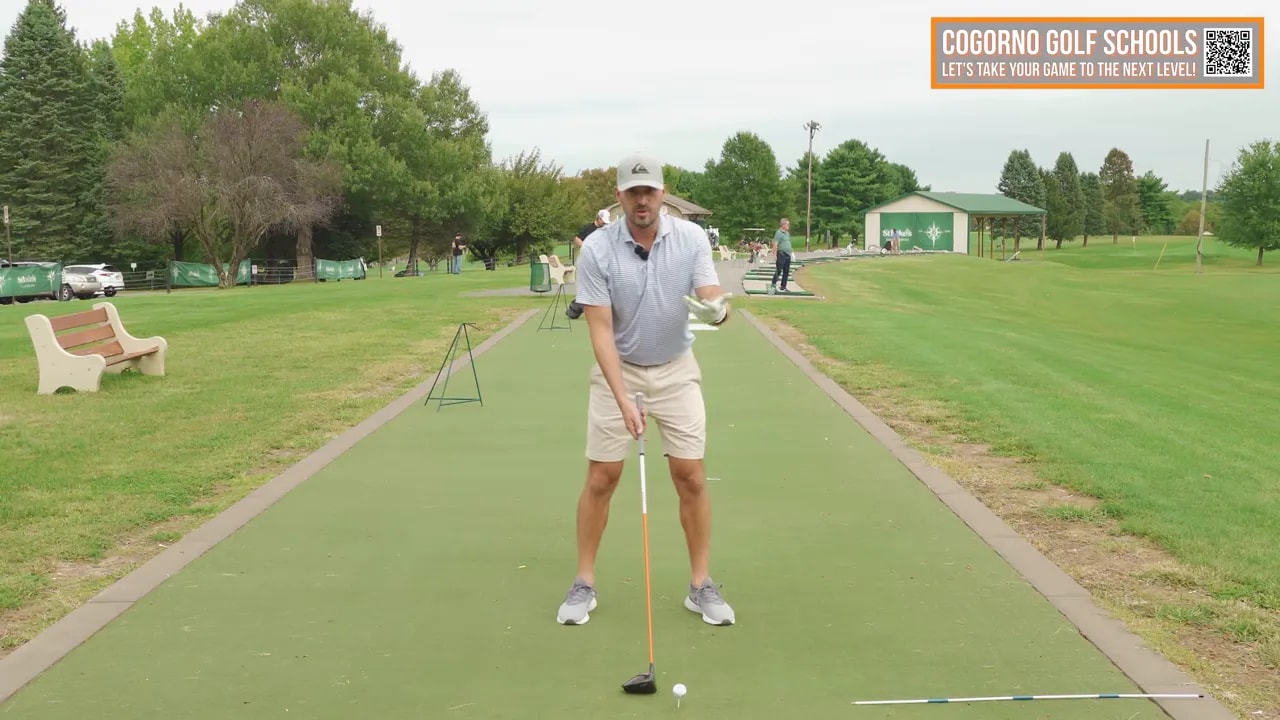
Key concept: let the club head pass your hands
A major mistake many golfers make is preventing release. In this method, the priority is:
- Do not keep the club head behind your hands forever.
- Do allow the club head to gradually pass your hands through impact.
This matters because face squaring and distance depend on speed and the club rotating naturally. If you hold on, the face stays open and the ball comes off weak.
The goal is also not to eliminate club face rotation. You are allowing natural rotation and using the feels of toss and turn to square the face more efficiently.
Step 6: Adjust if you still miss right, pull left, or lose loft
After implementing free release through impact, your ball flight becomes a diagnostic tool.
If you still hit weak right
- You may not be tossing enough or early enough. Increase the trail-hand toss feel slightly.
- Double-check that you are not too passive. Weak right is often a sign you are under-releasing.
- Confirm you are allowing the club head to pass your hands. If you feel trapped behind your hands, the release is too contained.
If you start hitting shots too far left
- You likely overdid the toss or closed the face too aggressively.
- Reduce toss slightly in your next combo attempt and stay focused on “enough” to bring the face to square.
If you lose distance even when direction improves
- It can indicate the loft delivery is not matching the release. Toss and turn both influence loft and strike quality.
- Revisit the right hand only drill. If you keep the club head behind your hands, speed is lost. The drill should feel like the club is releasing through impact.
Common questions about the toss and turn driver release
Is “toss” just flipping the club?
Not in this framework. Toss is a trail-hand release that helps the club face move from too open toward square. You are not trying to throw the clubhead straight and uncontrolled. The goal is a free release through impact with the club still progressively releasing and passing your hands.
Should I toss from immediately from the top?
You can start feeling the toss early enough that it helps the face square sooner. The guide is not “wait and see.” However, if you overdo it, it can send the ball left. Use ball flight feedback to dial in timing.
What if I already rotate my body a lot?
Body rotation helps, but weak right often comes from the face staying open due to release timing. This method isolates the arms and hands to train face squaring. You can have strong body rotation and still miss right if you are passive through impact.
Which is more important: toss or turn?
They work together. The method emphasizes toss first because it helps square the club face for many amateurs who are too passive. Turn then adds additional closing and supports power. If you fix only one, you may get partial improvement.
Optional practice plan for the range
If you want a simple structure, use this within a single range session:
- Warm up with short swings.
- Three reps right hand only focusing on toss and the right wrist moving from bent back to bent forward.
- Three reps left arm only focusing on forearm and palm slightly up from level.
- Three combo swings combining toss (right hand feel) and turn (left arm rotation feel).
- Hit full shots only after ball flight improves (less weak right, better launch height).
After you see better face squaring, you can make minor setup and path adjustments if needed. But the release is the foundation.
Final takeaway: fix the release, not just the swing thought
Your driver problem is often not that you are swinging “wrong.” It is that you are not releasing freely through impact enough to square the face and deliver the right loft.
If your misses are weak and right, the solution is to:
- Practice a controlled trail hand toss to square the club face
- Add lead arm turn to close the face and create power
- Combo both feels so the club head can pass your hands naturally
When the timing is right, you should notice more solid contact, higher launch, and straighter results along the right edge of the fairway turning into a more consistent pattern.
0 Comments