

If you hit your best shots on the range but struggle once you get to the course, the issue is rarely your swing mechanics. It is usually your pre-shot routine.
In this guide, you will learn how to build a repeatable golf pre shot routine that helps you shift from “thinking” to “playing,” reduce on-course anxiety, and make your setup and tempo more consistent under pressure.
Table of Contents
- What a pro pre shot routine actually does (and why amateurs skip it)
- Step 1: Use a two-zone system (think box and play box)
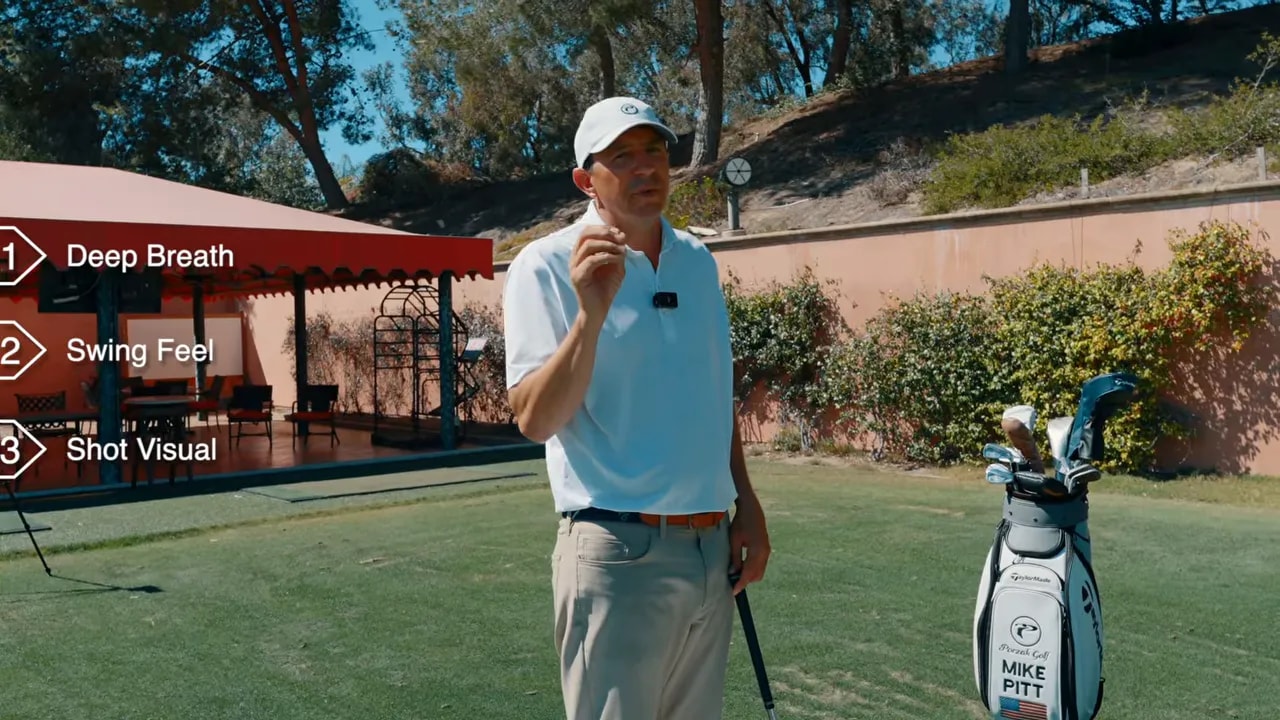
- Step 2: Build your routine around three essentials: breath, feel, visual
- Step 3: Add an intermediate target to control direction
- Step 4: Control your transition (pace, setup, and tempo)
- Step 5: Change the definition of “success” to kill fear of failure
- Step 6: Practice your routine like you practice your swing
- Common mistakes to avoid (especially on course)
- Build your personalized golf pre shot routine checklist
- Frequently asked questions
- Takeaway: the routine is the performance upgrade
What a pro pre shot routine actually does (and why amateurs skip it)
A great routine does three things better than “winging it” ever can:
- It creates consistency when conditions change (wind, lies, pace of play, pressure).
- It manages your mental state by giving your brain something repeatable to do.
- It improves the quality of the swing start by aligning your body and club face before impact.
On the range, you often get to start your swing quickly with less consequence. On the course, the stakes are higher, and distractions increase. Pros use routine to reduce decision-making and keep execution predictable.
Focus keyphrase: golf pre shot routine
This is the core of the solution: a golf pre shot routine you can repeat exactly, shot after shot, from almost every lie and distance.
Step 1: Use a two-zone system (think box and play box)
Most golfers practice the swing. Few practice the moment right before the swing. A high-performing golf pre shot routine separates preparation from execution.
The “think box” (where decisions happen)
In the think box, you do the mental work: decide club, check wind, pick targets, and set intentions.
The think box should be in the same relative spot every time so your brain recognizes the process and calms down.
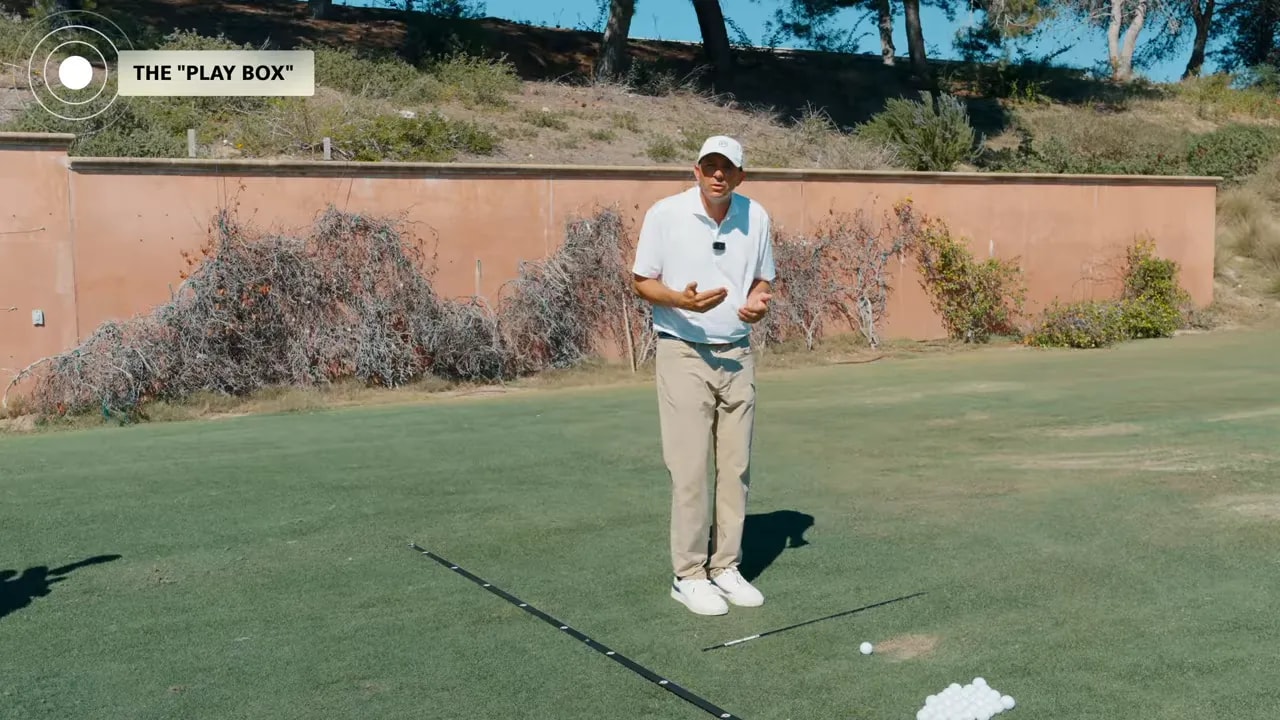
The “play box” (where athletic execution takes over)
In the play box, you move into feel, movement, and timing. This is where you stop overanalyzing and focus on response.
The key is a clear transition: from “planning” to “performing.”
Step 2: Build your routine around three essentials: breath, feel, visual
When pressure rises, your breathing and your attention change. Pros counter that by inserting mental resets into their golf pre shot routine.
1) Breath: slow down before you start thinking faster
Start your think box with a big, deep breath that shifts you into a calmer state. The goal is not hype. The goal is control.
- Inhale slowly.
- Exhale with more length than your inhale.
- Repeat if needed, but keep it consistent every shot.
2) Feel: choose one swing intention you can execute
In the think box, pick a simple feel that helps your swing do what you want. The best feel is the one you can repeat and trust.
Examples of feel intentions (use what fits your game):
- Smooth backswing to reduce rushing
- Stay tall through the start to improve contact
- Finish balanced to encourage better weight transfer
If you cannot describe a feel in one sentence, your routine is too vague.
3) Visual: “see it” before you swing it
Visualization is not fantasy. It is programming. You are giving your brain a pattern for what you want to happen.
There is no single “correct” visualization style. Choose what works for you:
- See your ball flight from behind the ball.
- See a tracer line (ball path) to your target.
- See a specific landing spot and how the ball approaches.
Important rule: visualization takes practice. Do not expect it to click on the first attempt.
Step 3: Add an intermediate target to control direction
Many amateurs focus only on the final target. Pros often use an intermediate checkpoint so their body can deliver the club face to a more reliable starting point.
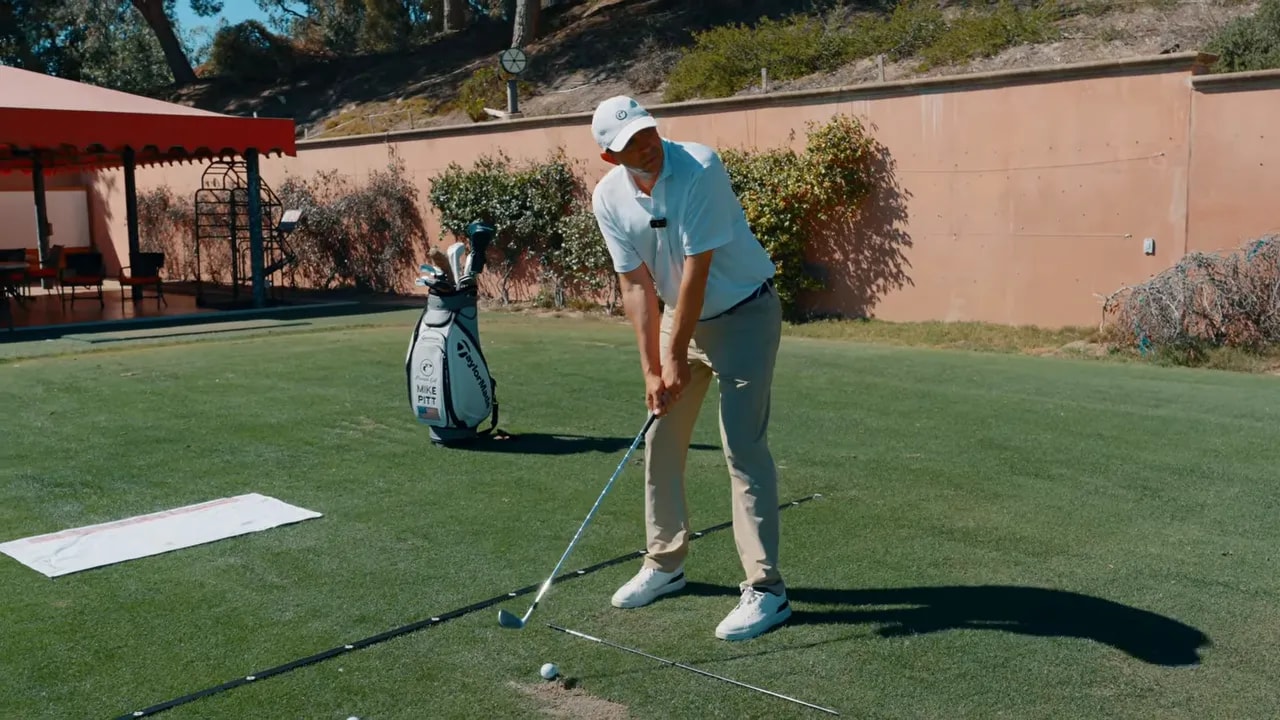
An intermediate target is a spot on the ground that helps you aim and start the ball on the intended line. Your eyes lock onto this spot during your play sequence.
Here is how to choose one:
- Pick a spot slightly ahead of your ball (or downrange) where you want the ball to begin.
- Make it easy to see from your setup position.
- Make it consistent with your intended shot shape (draw, fade, straight).
Once you commit to that intermediate target, your job becomes simple: deliver the club face to the spot (and swing with your chosen feel).
Step 4: Control your transition (pace, setup, and tempo)
The transition from think box to play box is where many golfers lose the benefits of their routine. If you rush, your swing usually speeds up. If you drift, your alignment gets worse.
Move in at the same pace every time
After breathing, walking pace matters. If you normally swing quick, a fast walk can reinforce a quick, unstable swing start.
Pick a transition pace and keep it consistent shot after shot.
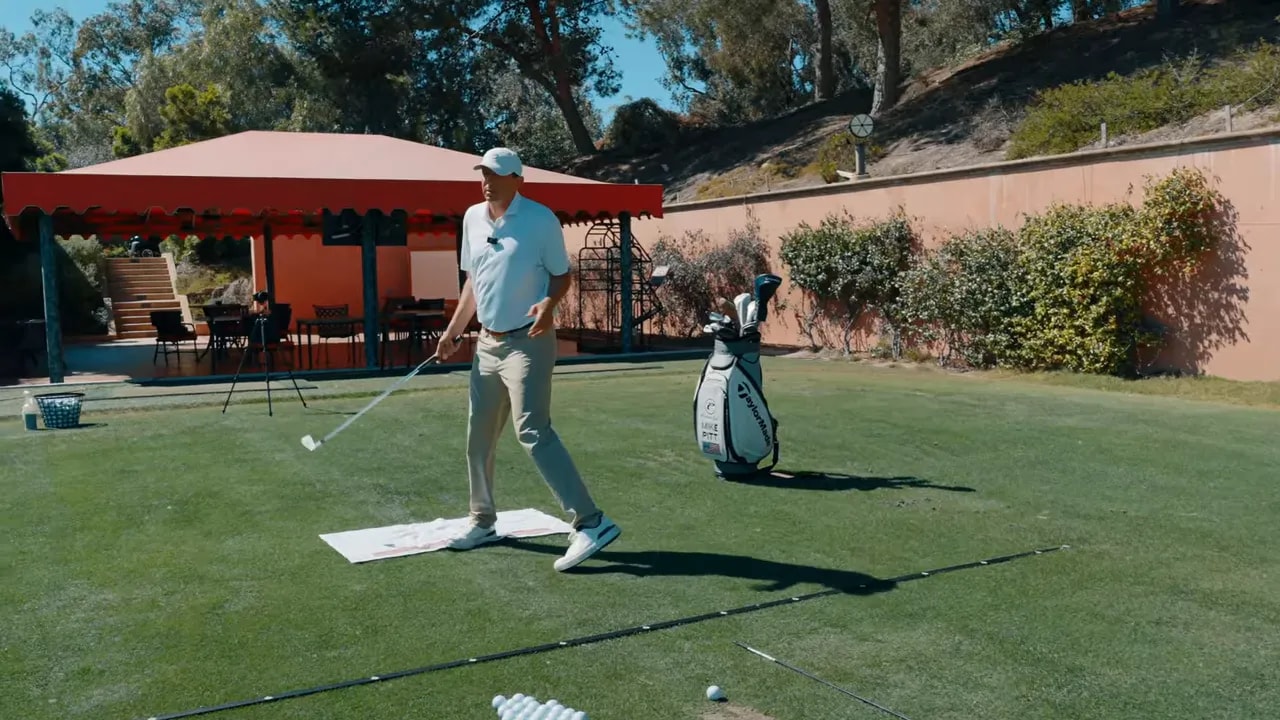
Feet, settle, waggle, and one last look
Use a repeatable physical sequence:
- Keep your eyes on the intermediate target while you move into position.
- Spread your feet and settle your stance.
- Rehearse your feel with a couple controlled practice motions (not a full swing rehearsal).
- Do a brief waggle to confirm rhythm.
- Take one or two looks, then commit.
Most importantly, stop adding new thoughts after you start your play sequence.
Step 5: Change the definition of “success” to kill fear of failure
On-course anxiety usually comes from one place: the fear of not meeting expectations. That fear makes you tighten up and rush decisions.
A pro-style golf pre shot routine reduces anxiety by redefining success.
Make your routine the goal, not the result
Ask yourself:
- If your job is to execute your routine, can you fail?
- If you hit a swing with effort and intent, isn’t that success?
When your only “pass or fail” measure is whether you completed the routine correctly, the outcome pressure drops. Your body can swing.
Commit to execution cues
During pressure, keep your focus on:
- Your breath
- Your chosen feel
- Your visual of the ball flight
- Your intermediate target checkpoint
- Your consistent transition pace
Step 6: Practice your routine like you practice your swing
If you only “think about routine” on the course, it will not hold up under stress. Your golf pre shot routine needs reps.
Range practice method (10-minute protocol)
- Pick one club you tend to overthink (for many players, it is driver, wedge, or mid-iron).
- Stand behind the ball and perform your full think box steps.
- Walk into your play box at the same pace each rep.
- Use your breath, feel, visual, and intermediate target.
- Only track one thing: did the routine happen exactly as planned?
- Then hit the shot.
After 10 minutes, you should notice something important: your mind becomes quieter because it knows what comes next.
Measure consistency, not just ball flight
Ball flight will vary. Your routine should not.
Common mistakes to avoid (especially on course)
A good routine can fail if the routine is inconsistent or you treat it like advice instead of a system.
Mistake 1: Starting your “thinking” too late
If you wait until you are already over the ball to decide everything, your brain scrambles. Put the decision time into the think box.
Mistake 2: Changing the routine for every shot
Adjustments happen, but the structure should remain stable. Change details like club and targets, not the order of actions.
Mistake 3: Over-visualizing or under-visualizing
Visual too little and it will not anchor you. Visual too much and you slow down the transition. Find a rhythm you can repeat.
Mistake 4: Adding new swing thoughts during the play sequence
Once you enter the play box, your job is to execute. If you keep inserting thoughts, you restart anxiety.
Mistake 5: Rushing the walk in
If your tendency is to swing quickly, rushing the transition reinforces that tendency. Keep your pace consistent.
Build your personalized golf pre shot routine checklist
Use this checklist to write your own system. Keep it short enough that it fits under pressure.
Think box checklist
- Same relative spot behind the ball
- Deep breath (calm state)
- Club selection
- Wind and lie quick check
- Feel intention (one phrase)
- Visual (ball flight or landing)
Play box checklist
- Walk in at the same pace
- Intermediate target eyes locked
- Feet set and settle
- Waggle and rhythm confirmation
- One or two looks
- Commit and swing
Frequently asked questions
How long should a golf pre shot routine take?
Most routines fall between 20 and 45 seconds per shot once you are experienced. The exact timing matters less than consistency. Practice until the sequence feels automatic, then keep the same duration under pressure.
Do I need a different routine for different clubs or lies?
You can change details like club selection, targets, and visual cues, but keep the structure identical. For example, you might use a different feel for a wedge versus a driver, yet the order of breath, feel, visual, intermediate target, and commit should stay the same.
What if my routine makes me feel slower or more tense?
If the routine increases tension, simplify. Reduce visualization complexity, use one breath instead of several, and shorten practice rehearsals. Then practice the routine on the range until it feels fluid and calming.
Should I aim for the exact target or an intermediate target?
Both can matter, but an intermediate target helps control the start line. Use the intermediate checkpoint to “aim your body,” while still trusting the intended shot shape to carry you to the final target.
How do I stop checking results mid-routine?
Commit to the transition. Once you enter the play box, stop adding new thoughts. If you catch yourself result-checking, return to the last confirmed element of your routine, such as the intermediate target and your feel.
Takeaway: the routine is the performance upgrade
Your swing changes when your mind changes. A consistent golf pre shot routine protects your attention, reduces fear of failure, and gives you a repeatable path from preparation to execution.
Build your routine with a two-zone system, anchor it with breath-feel-visual, use an intermediate target, control your transition pace, and practice the sequence until it runs on autopilot.
If you do that, the course stops feeling unpredictable and starts feeling familiar.
0 Comments