


Focus keyphrase: The easiest golf swing for senior golfers
If your golf swing has started to feel like a negotiation, you are not alone. Many senior golfers still want more distance and lower scores, but they cannot (and should not) copy a PGA Tour swing that demands extreme rotation, perfect mobility, and nonstop athleticism.
The good news is that you can build the easiest golf swing for senior golfers by chasing the right kind of power. Not more force. Not a faster swing you cannot control. Instead, you learn a momentum pattern that helps you generate speed while staying balanced, stable, and as pain-free as possible.
This approach starts in a place where seniors usually feel confident: chipping. Then it transfers to irons, hybrids, fairway woods, and driver.
Table of Contents
- Step 1: Stop trying to swing like a PGA player (and build speed that fits your body)
- Step 2: Learn the momentum mechanism at the center of the easiest golf swing for senior golfers
- Step 3: Use chipping to feel the correct motion first (before you try it with a driver)
- Step 4: Progress to the helicopter motion for the easiest golf swing for senior golfers
- Step 5: Apply the drill to irons, hybrids, fairway woods, and driver
- Step 6: Use a simple balance checkpoint to keep the swing pain-free
- Step 7: What to do on the range today (a short, senior-friendly practice plan)
- Step 8: Consistency matters more than chasing distance
- FAQ: The easiest golf swing for senior golfers (pain-free power)
- Conclusion: Build effortless speed with the easiest golf swing for senior golfers
Step 1: Stop trying to swing like a PGA player (and build speed that fits your body)
Most swing advice assumes you can do three things that naturally change with age:
- Turn as far as younger players
- Move the club through impact with the same timing
- Handle the same physical stress week after week
Flexibility may be reduced. Your back, shoulder, or wrists may have battle wounds. Maybe you cannot rotate as freely as you did ten years ago. The result is predictable: your swing becomes more effortful and you lose both distance and control.
The goal is not to “work through pain” or “muscle it harder.” The goal is to create an effortless motion that still delivers speed. That means building the swing around the timing and momentum your body can repeat.
Step 2: Learn the momentum mechanism at the center of the easiest golf swing for senior golfers
One key concept drives everything here: the butt of the club moving upward as the head moves downward.
In a smooth, powerful swing, the club does not just “stay level” while you turn. It has a dynamic low point and a natural rise in the grip end that helps the club line up and accelerate through impact.
When that momentum pattern is missing, you often see a familiar problem:
- You turn through and the butt end stays at the same height
- The club feels like it is being thrown or flicked with the arms
- Your arms can break down, and control suffers
- Even if you “swing fast,” the ball flight becomes less consistent
Fixing this is not about forcing your arms into a new position. It is about creating a stable body-supported motion that allows the club to move with speed and control.
Step 3: Use chipping to feel the correct motion first (before you try it with a driver)
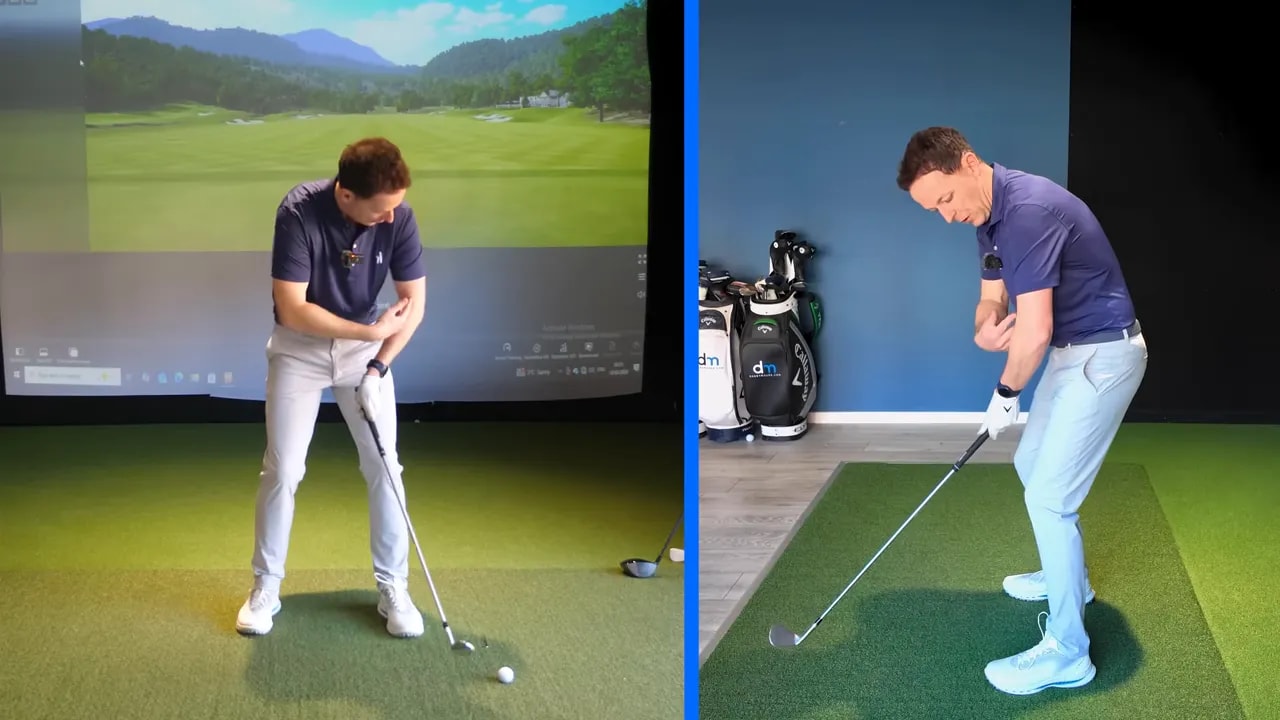
Chipping is the perfect training ground because it reduces variables. You can feel the mechanics without needing full swing power or perfect turn.
The recommended starting point is a simple setup and a drill that mimics a “helicopter” feeling.
Why chipping first makes the drill easier to transfer
- With a chip, the club is often more vertical approaching the ball
- That makes it easier to sense how the grip end should work upward
- You can build rhythm and control without over-rotating
The first part of the helicopter drill (the rocking motion)
Here is the practical way to rehearse it:
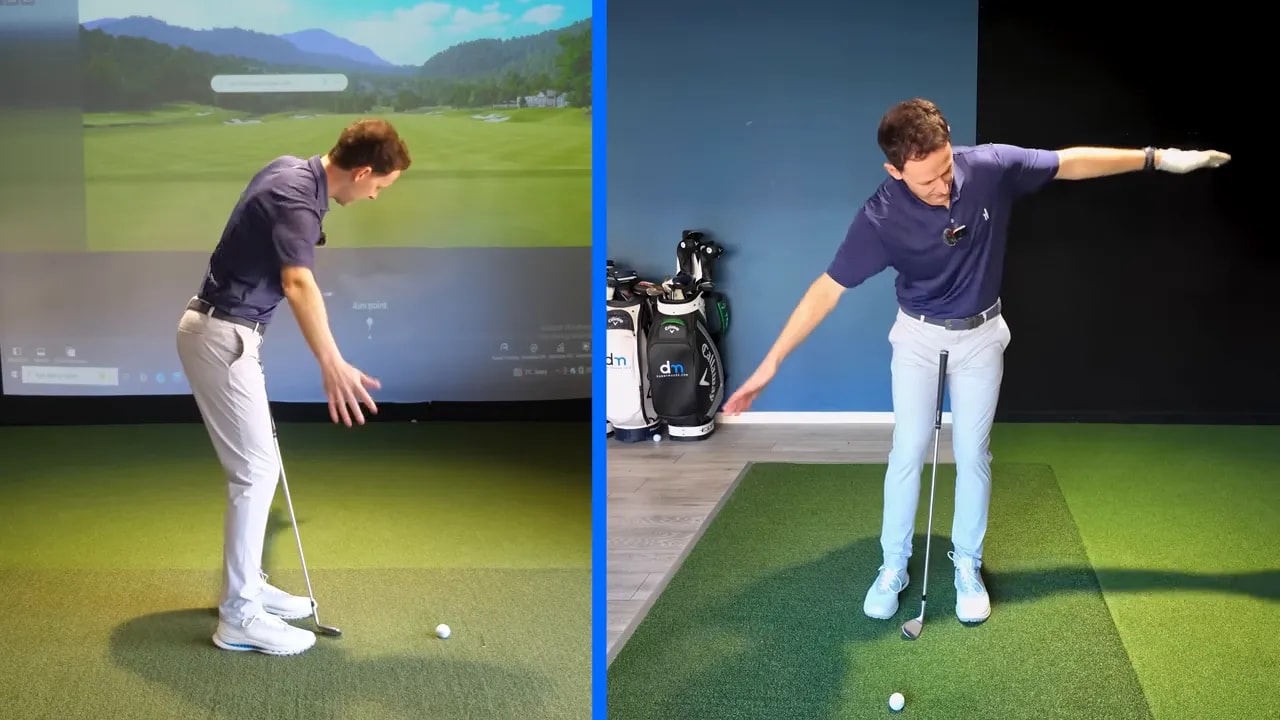
- Put your arms out in front of you so you can feel your shoulder motion.
- Practice a rocking movement that moves your body back and then returns you forward.
- As you come back down, focus on what your shoulders do: they should help you bring the body back into normal alignment through the “impact zone.”
- Feel that the club would be pulled out of the ground by this body motion, not shoved down by your arms.
The purpose of the rocking phase is stability. You are learning how the body supports momentum so the club can accelerate naturally.
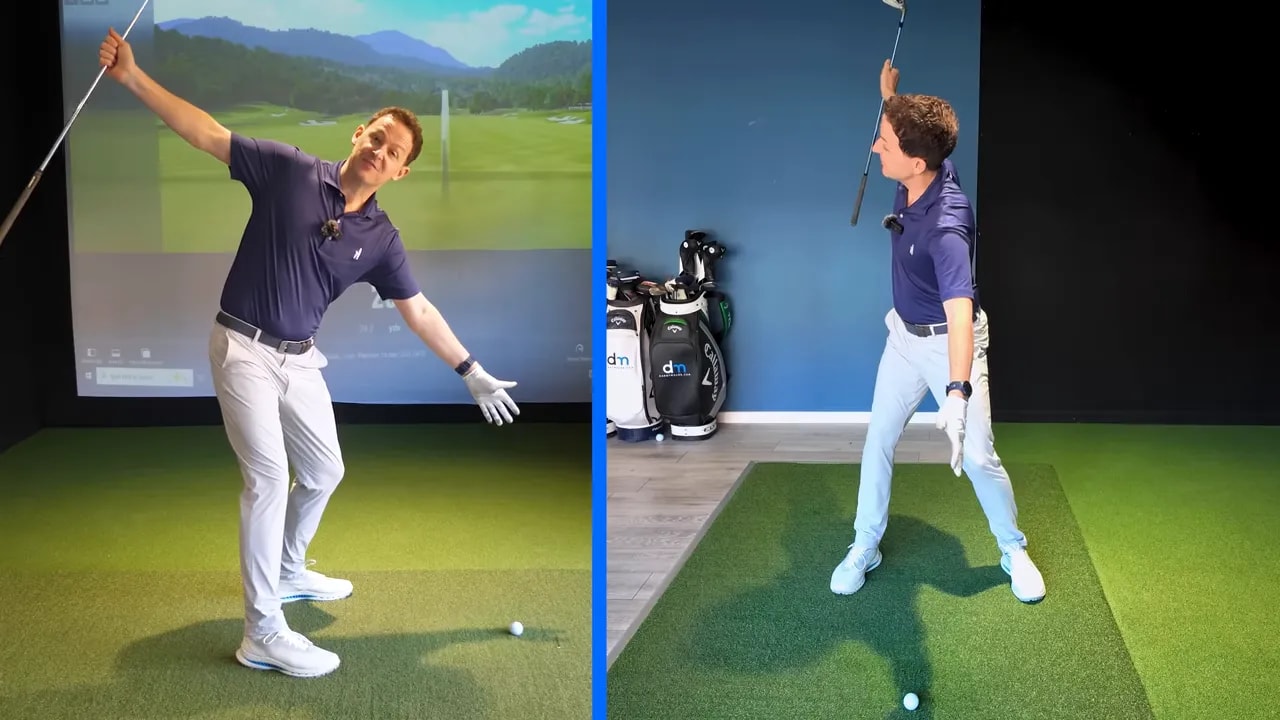
Step 4: Progress to the helicopter motion for the easiest golf swing for senior golfers
After you can feel the rocking version, you move into the helicopter drill with a bigger match to the full swing action.
The helicopter is essentially a combined movement that blends:
- Rocking your shoulders and body
- A controlled act of the arms and club to keep timing connected
This is where flexibility matters, but not in the way most golfers think.
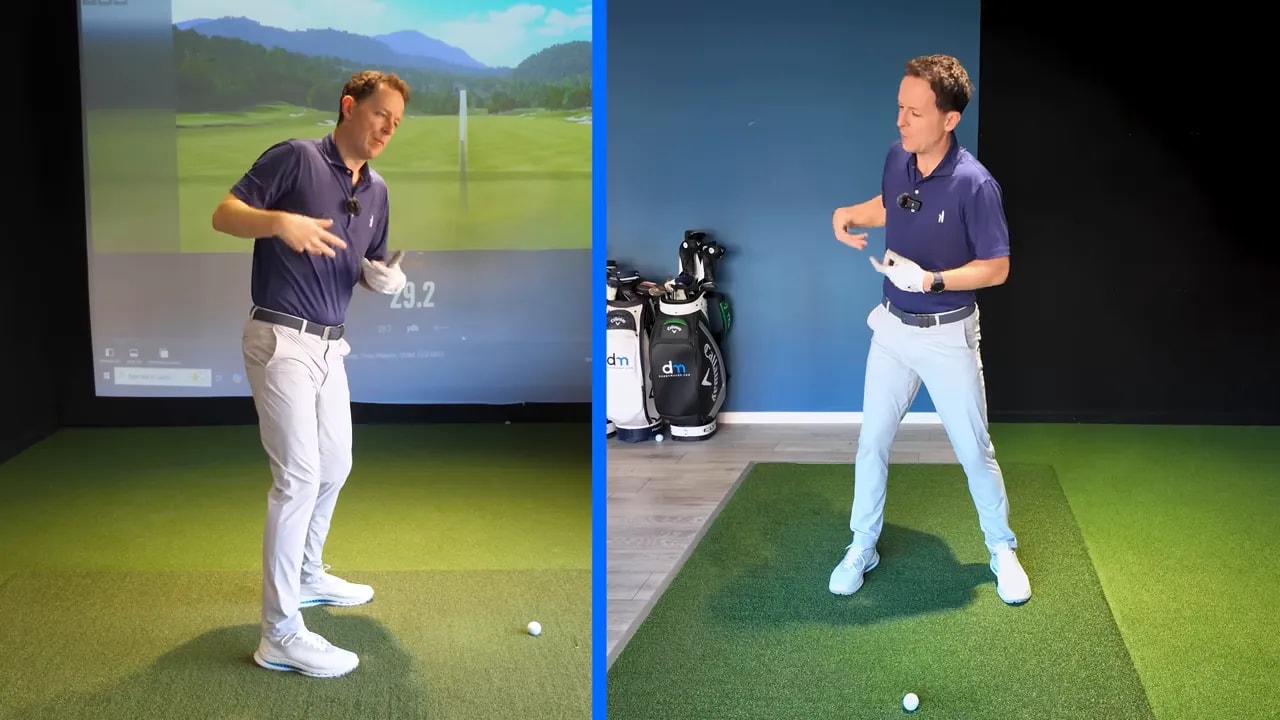
Limited flexibility? Use a tilted-axis setup instead of forcing rotation
If flexibility is reduced, turning hard and fast often creates a “heave.” You end up using more effort, and the club does not come out of the turf correctly. The helicopter approach encourages you to move along an angle that lets you work “up and back” rather than purely around.
Practical cues:
- Your eyes and shoulders should feel like they are on an angle (not squaring up and spinning).
- As you move, you are storing energy on that incline and then stabilizing it so it can release through impact.
Even if you cannot reach the same range as more mobile players, you only need enough to create the momentum and stability. The ball is already gone after that point, so exact positions are less important than repeatable timing.
Step 5: Apply the drill to irons, hybrids, fairway woods, and driver
Chipping taught you the momentum idea. Now you apply it through the bag, with one important twist.
Different clubs need different club approach, but the same momentum idea
In chipping, you may see the shaft more vertical. In an iron and beyond, the club works more on an incline through the swing arc.
So your “upward and inward” release becomes more relevant:
- The club still has a lowest point
- From there, it accelerates upwards and inwards toward your body
- The butt end working upward supports the club’s controlled speed
How to rehearse without overcomplicating it:
- Start with short shots using the same helicopter rhythm you practiced with chipping.
- Keep your goal as “controlled momentum,” not maximum effort.
- Then build to full swings gradually, letting the body-supported helicopter action keep the club stable as it passes the impact area.
Step 6: Use a simple balance checkpoint to keep the swing pain-free
Pain-free power is not just about avoiding injury. It is about avoiding unstable movement. When your body stays unstable, you compensate with effort, and compensation often creates discomfort.
A helpful balance checkpoint:
- If you lean back too much, the club may not exit correctly and you may be more prone to fat shots.
- If you stay balanced and stable while the body works upward and backward out of the way, the butt tends to rise naturally and the club releases through impact.
You do not need to chase topping fears. Instead, focus on balance and the intended momentum. Correct balance leads to the correct club path and timing.
Step 7: What to do on the range today (a short, senior-friendly practice plan)
Here is a practical way to practice the easiest golf swing for senior golfers without turning your session into a puzzle.
- Start with tip shots and chips (5 to 10 minutes).
- Focus on rhythm and control
- Feel the club’s momentum supported by your shoulder and body rocking
- Add 20 to 40-yard short iron shots (10 to 15 minutes).
- Repeat the same helicopter rhythm
- Let the club work “up and in” after the low point
- Finish with a few full swings (5 minutes).
- Use fewer balls
- Stop while the swing still feels connected and stable
Remember: your brain learns best when you feel success. Short game success also improves your scoring ability directly, and it builds confidence for longer clubs.
Step 8: Consistency matters more than chasing distance
A useful data point from a ShotScope ShotScot watch observation was surprising: amateurs may not need to hit the ball farther. They may need to hit their longest shot more often.
That shift changes the priority for senior golfers:
- Distance is great, but control is how you earn it repeatedly
- When you remove instability and arm flicking, your best swing becomes available more frequently
- With a stable momentum pattern, you can create natural speed without “swinging harder”
The easiest golf swing for senior golfers is the one that stays consistent under fatigue, stiffness, and the realities of your body.
FAQ: The easiest golf swing for senior golfers (pain-free power)
Can I do the helicopter drill if my flexibility is limited?
Yes. The drill is designed to work around reduced rotation by using a tilted-axis feeling and a body-supported “up and back” motion. You do not need to match the deepest positions of more flexible players. You need repeatable momentum and stability.
Will this help me hit driver longer without swinging harder?
That is the intention. By improving the club’s momentum pattern and keeping it stable through impact, you can create more speed naturally. When your motion is connected, you do not need to force additional effort to gain yards.
Why do you recommend starting with chipping instead of irons or driver?
Chipping makes the key feeling easier to access because the club approaches more vertically and you can sense the butt-end upward motion with less complexity. Once that rhythm is present in the short game, it transfers more reliably to longer clubs.
What is the main cause of losing control in this swing pattern?
Usually it is a lack of momentum supported by the body. If the butt end of the club stays too level while you turn, the club can feel like it is being thrown with the arms, which leads to arm breakdown and inconsistency.
Should I worry about topping the ball while doing a helicopter motion?
Instead of focusing on topping fears, focus on balance and stability. Correct body-supported upward motion helps the club come out of the turf. If you are leaning back excessively, that can contribute to poor contact, so keep your location balanced.
Conclusion: Build effortless speed with the easiest golf swing for senior golfers
The path to pain-free distance is not forcing your body into a younger-player swing. It is creating a repeatable momentum pattern that your body can support. The helicopter drill begins with chipping to teach the sensation of controlled club acceleration, then it transfers through irons, woods, and driver.
If you want more distance with less effort, focus on what matters most: momentum, control, and balance. That combination is how the easiest golf swing for senior golfers becomes real on the range and on the course.
0 Comments