


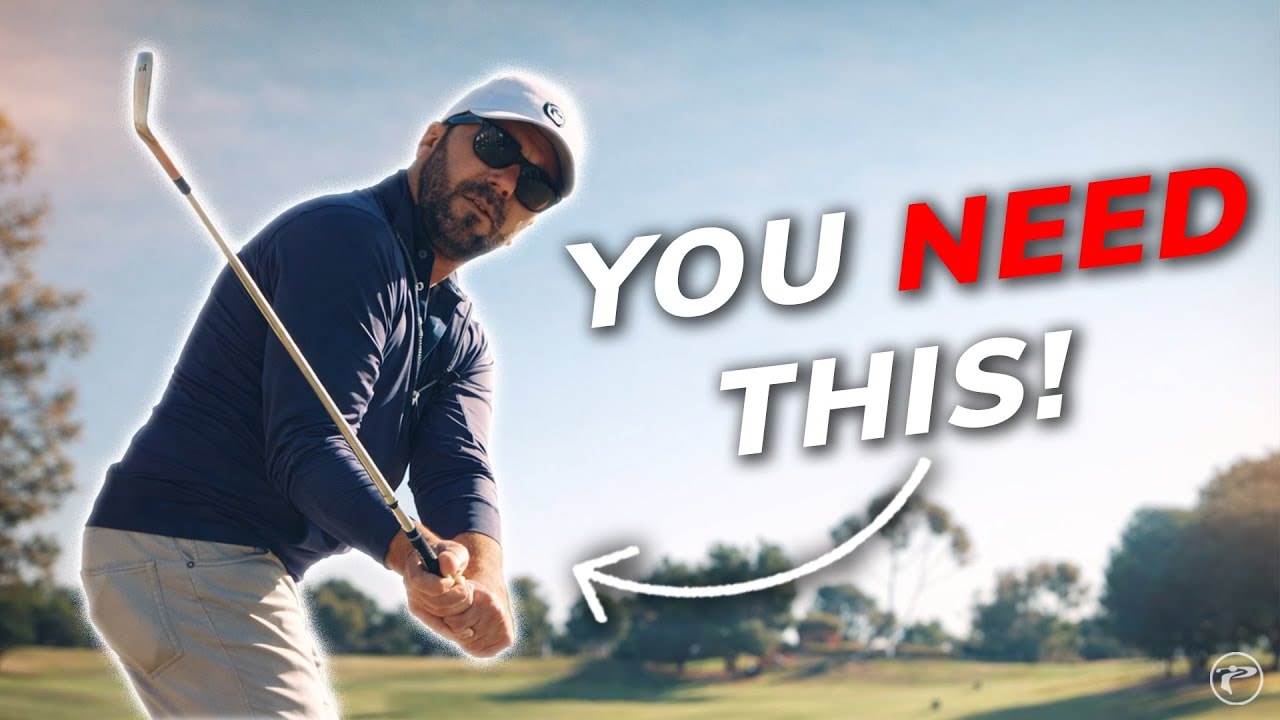
 Unlock greater distance and precision in your golf swing by mastering ball compression. This guide outlines four essential steps that promise enhanced spin control and fewer thinned shots. Perfect your technique with detailed drills and practical advice for solid, reliable strikes every time.
Contents
- Step 1: Find the Perfect Setup
- Step 2: Harness Shoulder Connection
- Step 3: Maximize Power Through Leverage
- Step 4: Master Low Point Control
- Step 5: Integrate Techniques for Full Play
Step 1: Find the Perfect Setup
The setup lays the foundation for your swing path and compression. Focus on aligning your hands correctly and ensuring the butt of the club points towards the ball to create a straight, repeatable swing path.
- Hands aligned: Guide your hands back along your feet’s line, ensuring they don’t cross your body.
- Aim the grip: Direct the club’s butt end toward the ball to form a proper swing plane.
- Half-swing test: Practice small swings to verify your plane — a straight ball flight confirms correct setup.
Step 2: Harness Shoulder Connection
For optimal syncing, let your shoulders initiate the swing, keeping your arms aligned with your body. This connection ensures stability and accuracy in your strike.
- Lead with your shoulder: Begin your swing with the left shoulder, allowing the hands to follow naturally.
- Stay connected: Avoid letting your hands cross your chest. Keep your lead arm linked to your torso.
- Slow-motion drills: Execute the swing slowly, holding the setup to sense hand movement rooted in shoulder rotation.
Step 3: Maximize Power Through Leverage
Effective leverage lets you control club head release. Focus on using the handle to drive the movement rather than swinging the club head itself.
- Handle-first practice: Start with a backswing, then lead with the hands and handle on the downswing.
- Pause drill: Halt at impact to feel the handle’s weight, fostering better release control.
- Controlled swings: Use half swings to focus on controlled handle release post-impact.
Step 4: Master Low Point Control
Strike the ball first, then the turf, focusing on the low point just past the ball. This ensures maximum compression and launch efficiency.
- Line target: Visualize a line just beyond the ball for your turf contact.
- Ball-first sound: Aim for a clean “pinch” sound to confirm proper contact.
- Chipping consistency: Apply the same low point control for short game precision.
Integrated Practice Routine
Begin with a dedicated warm-up using these focus points:
- Establish your setup with hand alignment and club aiming.
- Practice shoulder-led swings to avoid the hands getting ahead.
- Emphasize releasing via the handle.
- Hit full shots aiming for a precise divot just past the ball.
Common Mistakes and Fixes
- Overactive hands: Reinforce shoulder-led swings and practice impact pauses.
- Ball scooping: Focus on hitting down and let the loft handle lift.
- Premature release: Rely on leverage techniques to delay wrist release.
- Inconsistent strikes: Practice the imaginary line drill for precision.
Advanced Practice: An 8-Week Plan
- Weeks 1-2: Focus on setup and shoulder rotation with half swings.
- Weeks 3-4: Integrate handle-first techniques with expanded swing length.
- Weeks 5-6: Concentrate on low point control with wedges.
- Weeks 7-8: Gradually increase swing speed, monitoring results closely.
Shot Setup Checklist
- Ensure hands align with feet.
- Direct club’s butt towards the ball.
- Prepare shoulders for rotation.
- Use a grip that supports handle pressure.
- Aim low point beyond the ball.
Diagnosing Strike Issues
If chunking strikes: Reassess early lever loss; practice handle-focus drills.
If thinning shots: Reinforce ball-first strike with visual line drills.
Equipment Insights
Technique trumps loft. Proper strike lets club loft effectively project the ball.
Today’s Effective Drills
- Set-and-Go: Echo the setup for consistent connection.
- Imaginary Line Drill: Refine chipping with targeted post-ball contact.
- Handle Release: Om focuses on hand movement control.
Step 5: Integrate Techniques for Full Play
Connect short and full swings by applying these compressive techniques. Short game mastery naturally bridges into reliable full-swing compression with commitment and practice.
Common Questions
How soon will I see improvement in compression?
What does “swing the handle” actually feel like?
Why is hitting down into the ball important?
Can these methods help with chipping yips?
How do I check my low point on the course?
By mastering these techniques, golf pivot compression becomes intuitive. Practice them consistently for improved accuracy and shot power.
0 Comments