


Focus keyphrase: prop drill golf swing
If your ball striking feels inconsistent, this is for you. The prop drill golf swing is a simple setup that trains your body to return the club to the same spot and to swing on a more consistent path. That combination is the foundation for better contact, straighter direction, and more repeatable low-point control with every club in the bag.
You can use it with irons first, then adapt it for driver. It is also built to help the most common root cause of messy contact: players “twisting” too hard on the way down, which throws the lower body out of position, forces you to manipulate with your hands, and often leads to hitting behind the ball, topping, slicing, or missing the strike point.
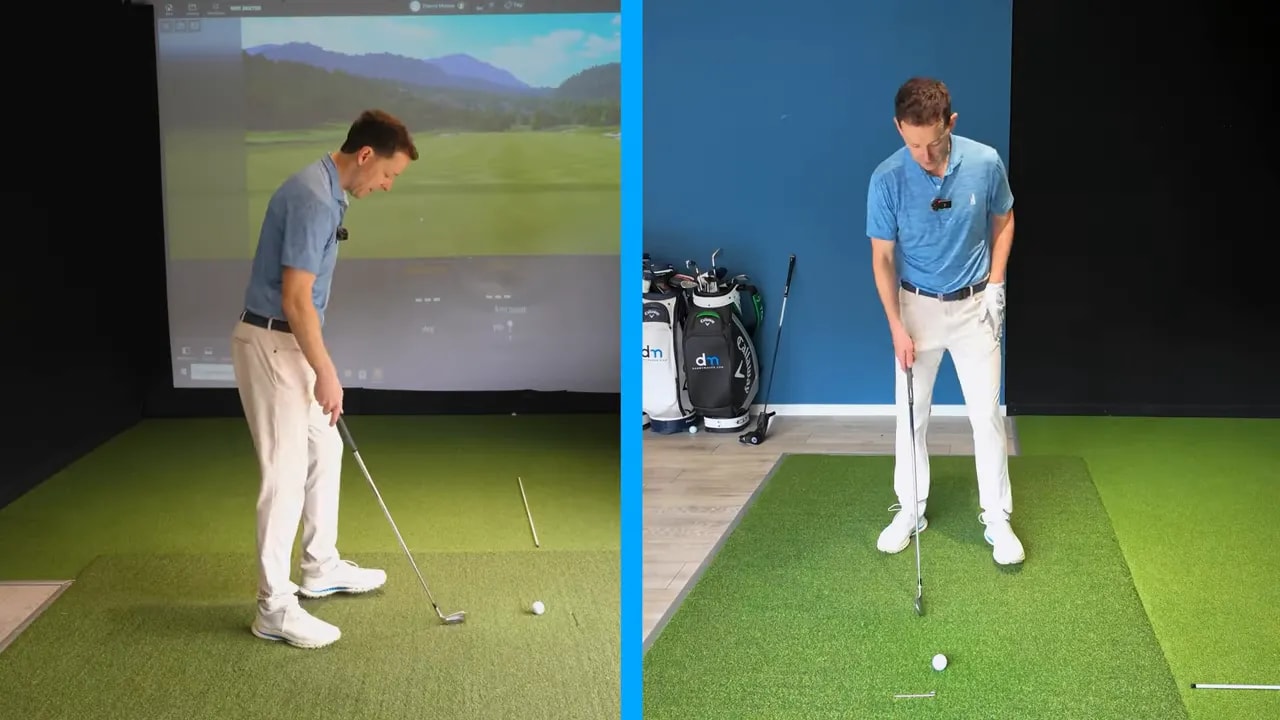
Table of Contents
- Step 1: Understand what consistent ball striking actually requires
- Step 2: Learn the core idea of the prop drill golf swing
- Step 3: Use the prop drill golf swing with irons to stop hitting behind the ball
- Step 4: Expect the “restricted” feeling and treat it as a positive sign
- Step 5: Apply the prop drill golf swing to driver
- Step 6: Use an exaggerated drill move first, then reduce it
- Step 7: Take the prop drill golf swing to every club in your bag
- Quick checklist: how to know you are using the prop drill golf swing correctly
- FAQ
- Bottom line
Step 1: Understand what consistent ball striking actually requires
Before you practice, it helps to know what the body is trying to do. Consistent contact with any club usually requires two things:
- Repeat the landing spot: the club needs to land in the same approximate spot time after time. If that changes, your contact and your direction usually change too.
- Keep a consistent swing arc: the club should track on a fairly repeatable arc so it can naturally drop to the ground and strike the ball without you forcing it with your hands.
When either of these breaks down, the swing tends to compensate in predictable ways. For example:
- If the club goes off the arc, your hands often have to “save” it. That can produce a pattern you may know as a hook.
- If you get too far in another direction, you can end up more over the top and hit a slice.
The prop drill golf swing is designed to improve both repeatability and arc by correcting how the lower body behaves during the downswing.
Step 2: Learn the core idea of the prop drill golf swing
The prop drill is simple: you create a restriction that encourages your lower body to stay in position while you turn back and rotate through.
Here is the key feel:
- Set up to hit a shot with your chosen club.
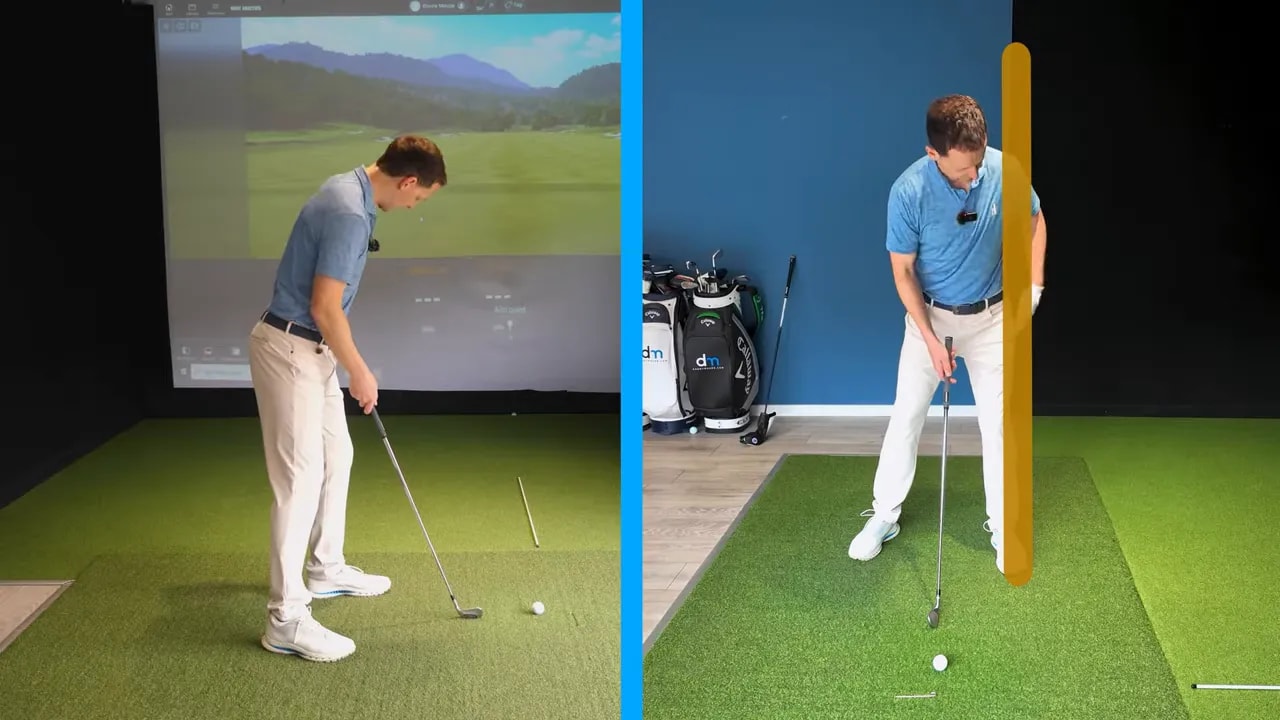
- Imagine there is almost like a stake running through your lead side (your left side if you are right-handed).
- Use your trail foot to “prop” up that stake.
What does “prop” mean? In practice, it means your trail foot acts like a brace. It discourages your lower body from sliding or drifting away from where it needs to be as you start the downswing.
Because this setup limits an incorrect motion, it also helps you:
- Land the club more consistently in the same area.
- Return to a more consistent arc so the club can naturally fall into the ball.
Step 3: Use the prop drill golf swing with irons to stop hitting behind the ball
Many golfers struggle with irons for one main contact reason: the swing bottom (low point) moves behind the ball. The result is often:
- Ground-first contact
- Tops
- Thin strikes
One example comes from a student, Max, who had that exact issue. He sometimes caught the ground behind the ball and occasionally topped his shots. The cause was a familiar pattern: he was “part of the slice family,” meaning he tended to twist too hard on the way down.
When you twist excessively in transition, the lower body and upper body can become misaligned. The lower body drifts, the club’s low point shifts, and your path changes. Instead of delivering the club efficiently, you often end up manipulating with your hands. That is how hitting behind the ball and directional misses can appear together.
Here is what the prop drill golf swing changed for Max and how you can apply the same fix:
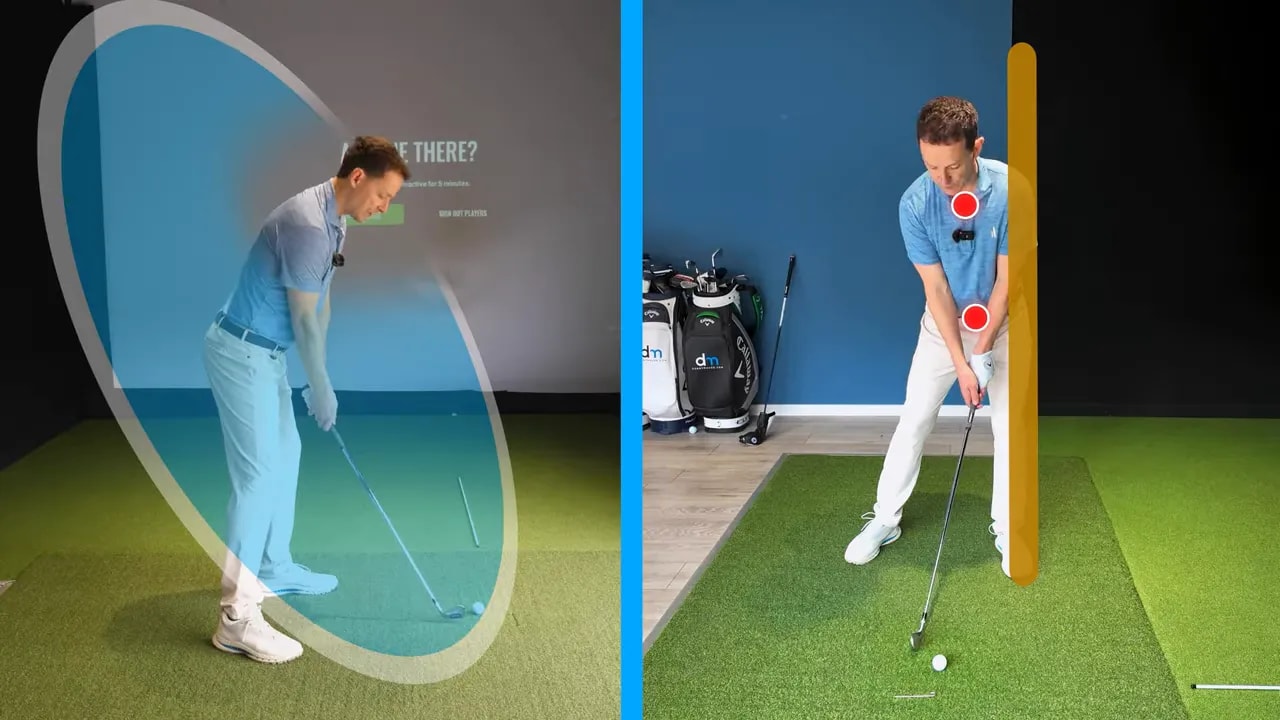
- Get set up with the trail foot “prop” against your imagined lead-side stake.
- Feel like you are pushing your right leg (trail side) underneath your upper body.
- Keep your head centered in your stance. The head does not drift laterally.
- Make a few swings while maintaining the feel of that trail-side pressure as you turn back.
What to notice: As you push that trail leg toward the target, it “repositions” your trail pocket (the space where your trail arm and hand feel connected behind you). That creates room to come back into the ball more efficiently.
This also supports a cleaner downswing sequence. With the body more stacked over the ball at impact, you tend to strike ball then ground more often instead of ground then ball.
Step 4: Expect the “restricted” feeling and treat it as a positive sign
On your first attempts, the prop drill golf swing may feel strange. That is normal.
The restriction is the point. If your previous swing relied on twisting and drifting, the drill removes your comfort option. Your body may want to “collapse” or spin through instead of staying stacked. When that happens, your strike can get worse temporarily because you are switching patterns.
Your job is not to force a perfect swing immediately. Your job is to find the correct feel that keeps your structure:
- Feel like the trail pocket stays back longer.
- Feel like you continue the push as you go down.
- Let that create space for the arms to move into the strike.
That forward pressure and maintained pocket position is what allows the club to swing more “straight back” into the ball rather than escaping.
Step 5: Apply the prop drill golf swing to driver
Now the question that matters for most golfers: does the prop drill golf swing help with driver too?
The principle stays the same. The difference is what you are trying to deliver with driver.
Most golfers tend to be “twisters.” With driver, that twisting often leads to coming over the top and chopping down on the ball. The result can be weak launch conditions, slice spin, and inconsistent strike location.
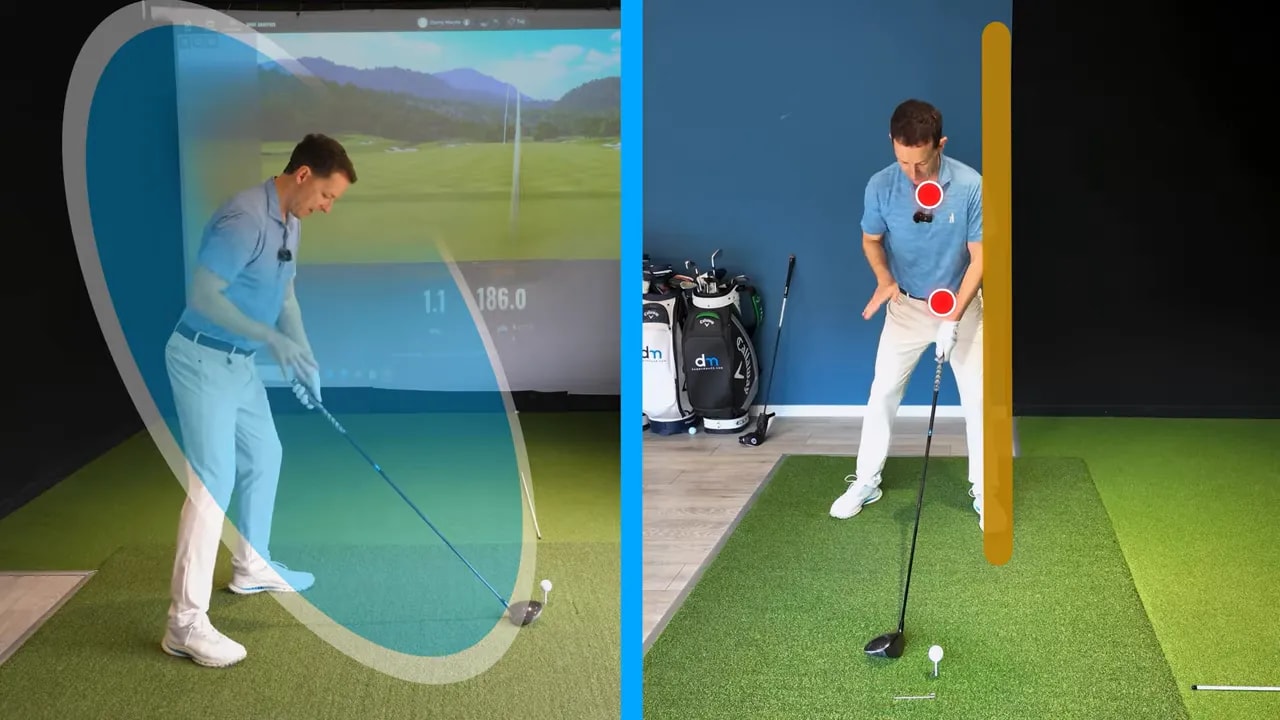
With driver, the goal described here is to deliver a really good amount of loft onto the club. A key physical indicator is the relationship between your lower body and upper body at impact. In a good shape, your lower body is slightly ahead relative to your upper body.
So how does the prop drill help that?
- When you prop yourself up with the trail foot and keep your lower body underneath your upper body, you are less likely to “pop out” or drift in a way that causes a right-curving slice-type motion.
- Because you keep that pressure, you also create space for your arms. That makes it easier to swing with an improved arc and deliver the face with more consistent loft.
Step 6: Use an exaggerated drill move first, then reduce it
The best practice order is simple:
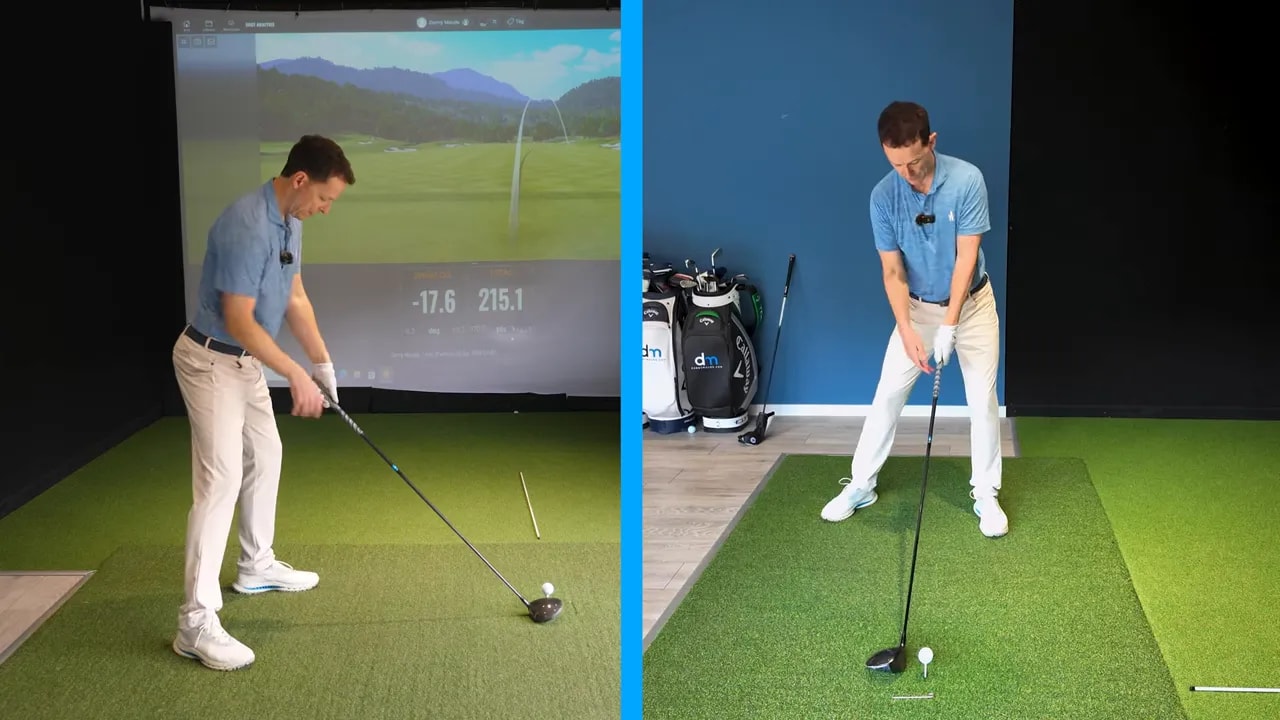
- Exaggerate the prop feeling for a few swings with driver.
- After you see the strike improve, reduce the exaggeration so it becomes your natural swing feel.
To exaggerate, you can do two things:
- Turn your foot out slightly (trail side).
- Push the trail leg underneath and keep it “under” your upper body through the move.
Someone who already has a lot of lower-body-on-time (like the coach in the example) might feel that exaggeration could create too much of that lower-body-under role. For you, the exaggeration is a learning tool. For a slicer, it can be a very powerful correction because it helps preserve the arc into the ball.
What to aim for: a solid strike and a more consistent club path that sends the shot more where you intended, not curving off to the right due to a slice-like delivery pattern.
Step 7: Take the prop drill golf swing to every club in your bag
One of the best parts of this approach is that it generalizes. You are not learning a different drill for each club. You are training a single body behavior: how to keep your lower body positioned so the club can return to a consistent arc and landing spot.
Use the same core setup and adapt only the club and your swing speed:
- Start with irons because it is easier to feel when you are hitting behind the ball.
- Move to fairway woods and driver once contact is improved and your strike feels more ball-then-ground.
- Keep sessions short: a few “focused” swings per club usually beats grinding.
If you do this consistently, you are training your swing to be more repeatable. And repeatability is what accuracy relies on.
Quick checklist: how to know you are using the prop drill golf swing correctly
- Your head stays centered in your stance while you create the trail-leg push.
- Your trail foot feels like a brace that prevents your lower body from drifting away.
- You feel pressure pushing underneath your upper body, not twisting away.
- Your strike improves (less ground-first contact, fewer topped shots, more solid contact).
- Your misses reduce because your club path and landing spot become more repeatable.
FAQ
Will the prop drill golf swing work if I have a slice?
Yes. The drill targets the pattern where excessive twisting in the downswing causes lower-body drift, which shifts the club path. By propping the trail foot and keeping the lower body underneath the upper body, you can improve the arc and make it easier to deliver the club more consistently.
How do I stop topping irons when I try this drill?
Focus on maintaining the feeling of the trail pocket staying back and the trail leg continuing to push underneath through the downswing. Also keep your head centered. Those two feels help you create space for the arms to move into impact, improving low-point control.
What does it mean that the drill “feels strange”?
Restriction is the point. If your swing relies on twisting and drifting, the prop drill reduces that motion. At first, your body may want to collapse or spin. Treat the strange feel as learning feedback and keep the trail-leg push and centered head in place.
Can I use the prop drill golf swing at the golf course?
Yes. The setup is simple enough to take to the course. Use it with a few controlled swings before you go after full shots, especially with irons and then driver.
How should I practice this with driver?
Exaggerate the trail-leg-under feel briefly to find the correct pattern, then reduce it so it becomes natural. The goal is to keep your lower body underneath your upper body to support a better arc and deliver loft more consistently.
Bottom line
The prop drill golf swing is effective because it fixes what most swing problems share: inconsistent lower-body positioning that disrupts your club path and where the club hits the ground. With a simple trail-foot brace and a focused feel of pushing underneath your upper body while keeping your head centered, you can create a repeatable arc and cleaner strike pattern across irons and driver.
Use it for a few swings at a time, pay attention to ball then ground contact with irons, and then adapt the same structure to driver. One simple adjustment, repeated correctly, is often all it takes to make your golf swing feel more stable and your shots more accurate.
0 Comments