


If your irons launch too high, your contact feels inconsistent, or you struggle to take a true divot, you likely need more golf compression. Compression in golf is not just a “feel.” It is a repeatable impact position created by how you grip, how you set the club, and how you deliver the handle through the downswing.
This guide breaks down how to build more compression and hit lower-launching, more penetrating shots that stay on line. You will also get short-practice drills you can do at home to lock the feeling in.

Table of Contents
- What “compression” means in golf (and why it matters)
- Step 1: Use a grip that supports compression
- Step 2: Stop the “disconnect” that kills compression
- Step 3: Build “set and drive” so the handle moves through
- Step 4: Create forward shaft lean for lower, stronger strikes
- Step 5: Practice compression with short swings that feel “loud”
- Step 6: Use the “L position” concept to train your downswing
- Step 7: Train the body-to-handle sync with a simple drill
- Step 8: Use a “merry-go-round” style shoulder drill (spine-friendly)
- Common compression mistakes to avoid
- How to apply compression on course
- FAQ: Golf compression
- Takeaway: Build compression through leverage and handle delivery
What “compression” means in golf (and why it matters)
Golf compression is the ability to deliver the club to the ball with the right sequence so you strike the ball after the low point. In practical terms, it means:
- More ball speed because the strike is centered and the clubface is better controlled.
- More consistent launch because you avoid “sweeping” the club off the turf.
- Cleaner divots on irons because the club can compress into the turf through impact.
- Lower, more predictable spin tendencies on many iron and wedge shots.
Many players mistakenly try to “hit up” to make the ball travel farther. The result is often early height, thin contact, and a strike that floats instead of driving through.
True compression helps you launch the ball on the correct angle because you are improving how the club meets the ground and the face meets the ball.
Step 1: Use a grip that supports compression
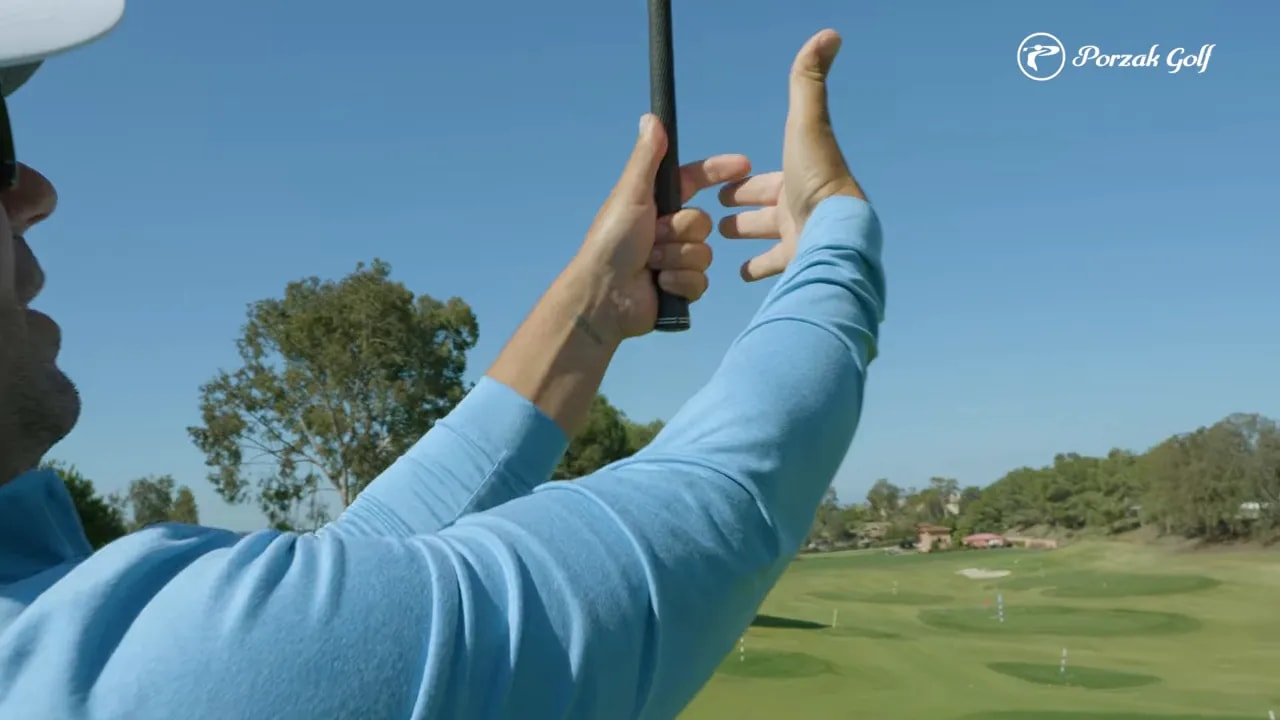
Compression starts in your hands. If your grip reduces leverage, you may struggle to set the club in a way that allows the handle to drive through. A grip that encourages leverage helps you:
- Maintain control of the clubface.
- Set the club with less “drag” in transition.
- Arrive with more forward shaft lean.
- Hit down through the hitting zone instead of around it.
Quick self-check for leverage:
- Your fingers should carry more pressure than your palm.
- Thumb placement should feel secure and connected rather than “floating.”
- You should feel the club load instead of feeling like your arms must rescue the swing.
If your current grip makes you feel like you must “flip” to square the face, you probably need a more leverage-friendly grip to create compression without extra manipulation.
Step 2: Stop the “disconnect” that kills compression
When players lose connection from backswing to downswing, the club often:
- Goes away to the outside with the arms
- “Settles” to the top
- Requires late timing to get back on plane
Late timing might work sometimes, but it usually produces:
- Higher-than-intended launches
- Shots that feel like they slide
- Inconsistent divots (too shallow or missing)
The goal is not forcing your wrists into a specific position. The goal is to create a sequence where your hands and body do not feel like they are working against each other.
Step 3: Build “set and drive” so the handle moves through
Compression is created by your ability to set the club and drive the handle through the impact area. When the handle lags behind and then “catches up,” you often sweep or come out of posture.
A more effective pattern is:
- Set the club so it has structure at the top.
- Drive the handle through as you turn your body.
- Arrive with a posture where your body does not have to flip or manipulate late.
When this is right, you should feel like your arms are not doing all the work. Your turn supports the handle’s forward movement into impact.

Step 4: Create forward shaft lean for lower, stronger strikes
One of the biggest differences between “high hands” and true compression is where the shaft is delivered. More compression often pairs with forward shaft lean at impact.
Forward shaft lean helps you:
- Shift the strike lower on the club face
- Hit down to create turf interaction
- Compress the ball instead of skimming it
Important: you do not force lean by pushing your arms forward from the top. You build lean by improving grip leverage, using a proper set position, and delivering the handle through while turning.
Step 5: Practice compression with short swings that feel “loud”
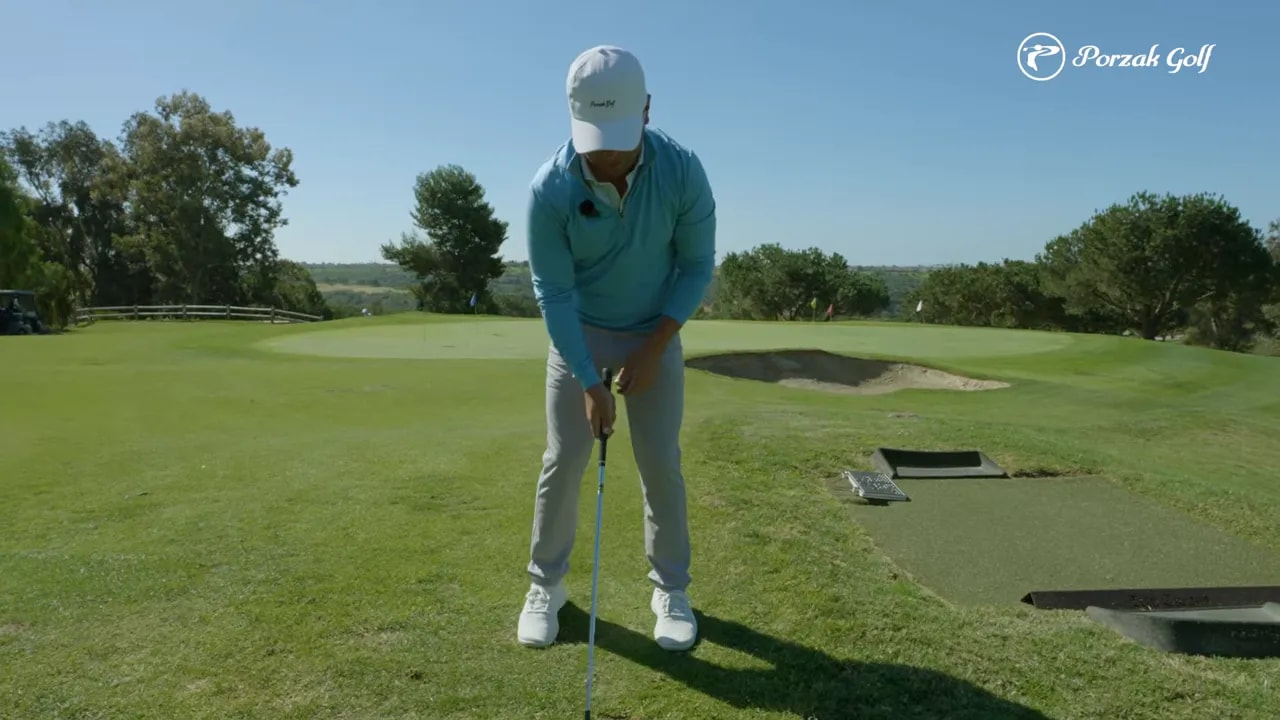
When learning compression, full swings often hide the problem because timing is masked by speed. Short swings let you feel the sequence clearly.
Use this simple practice method:
- Take a wedge or short iron.
- Make a swing about half to three-quarters speed.
- Focus on set (before the downswing) and drive the handle (during the downswing).
- Keep the finish controlled so you do not “throw” your arms.
Your goal is the feeling of compression at impact. If you are doing it right, the ball should sound solid and your divot should show you are striking after the low point.
How to know if you are compressing (not just hitting the ball)
- Ball flight tightens: the arc becomes more predictable.
- Divot improves: turf interaction looks like a real strike, not a top.
- Contact feels heavier: the clubface-to-ball connection feels “compressed.”
- Distance may increase: cleaner strikes produce more efficient carry.
Step 6: Use the “L position” concept to train your downswing
A helpful training reference for compression is achieving an “L-like” structure early in the downswing. The point is not the exact angle itself. It is what that structure represents:
- Hands positioned correctly relative to your body turn
- Leverage preserved so the handle can drive
- Less need for late wrist flipping
During practice swings, think:
- Push the shoulder to start the downswing
- Pull with the lead-side trigger feeling (index finger pressure concept)
- Let the club move as a unit instead of dragging it with the arms
If you are compressing, the club should return on a better path with less “rescue.”
Step 7: Train the body-to-handle sync with a simple drill
Compression is not only arm mechanics. It is a body delivery system. A common issue is that the hips and the handle do not move together.
Try this synchronization drill using a club:
- Set up with a balanced stance.
- Address the ball and feel your spine angle.
- Practice a move where your left hip and the handle feel like they reach the same moment through the downswing.
- Stop at a controlled position (do not chase full speed).
This drill teaches your body to support the handle, reducing the tendency to rush the arms or stall the club at the top.

Step 8: Use a “merry-go-round” style shoulder drill (spine-friendly)
If your compression efforts create tension or strain in your lower back, you need drills that keep movement organized.
One effective concept is a shoulder-driven rotation drill where the shoulders rotate around your spine without collapsing posture.
Drill idea:
- Place a club or alignment stick so it references inside your lead foot (or lead side reference point).
- Practice a motion where your right shoulder turns through as the club face arrives near your lead side.
- Feel a consistent spine angle and a stable chest relationship to the ball line.
The purpose is to encourage a repeatable rotation pattern that helps you compress without compensating.
Common compression mistakes to avoid
- Trying to hit the ball up with the arms. If you are sweeping, you will lose turf interaction.
- Too much palm grip and not enough finger leverage. This often leads to a late, hand-dominant delivery.
- Disconnecting the arms from the body in transition. The club “settles,” and you become reliant on athletic timing.
- Chasing full swings too early. Compression is easiest to learn at reduced pace with clean impact.
- Forcing wrist hinge instead of improving sequence. True compression comes from structure and handle delivery, not from flipping late.
How to apply compression on course
Compression practice should translate into better shot selection and ball flight. Here is a simple on-course checklist:
- Pick a target and commit to a strike zone.
- Start the swing with your body turn feeling supported by your grip leverage.
- Feel the handle driving into the turf to the back of the ball position.
- Attack the low point so your club compresses and then passes through.
If you struggle with high flight, focus on the sensation of striking down with control, not on “getting under” the ball.
FAQ: Golf compression
How do I know if I am getting more golf compression?
You will typically see more consistent divots, a tighter launch pattern, and a heavier strike sound. Shots should feel like the club compresses the ball and the ball does not pop up early.
Does compression only apply to irons?
Compression is most noticeable with irons and wedges because turf interaction matters. You can also apply compression concepts to fairway woods and hybrids, but the swing changes by club.
Why do my shots go too high even when I hit down?
High shots often come from sweeping, too little handle-forward delivery, or a grip and release pattern that produces too much dynamic loft. Improving leverage and delivering the handle through helps tighten launch.
What should I practice first: grip, hinge, or swing path?
Grip leverage is usually the fastest place to start because it supports set position and handle drive. Then practice short swings focused on delivery. Path adjustments come later and become easier once impact improves.
Do I need full swings to build compression?
No. Short swings with good structure teach compression reliably. Full swings can be used after the impact feeling is consistent.
Takeaway: Build compression through leverage and handle delivery
If you want more golf compression, focus on a sequence that preserves leverage, prevents disconnection, and lets the handle drive through as you turn. Use short practice swings to lock the feel in, then apply it to wedges and irons first for the quickest feedback.
Compression is repeatable when it is trained. Start with grip support, build the set and drive pattern, and let your body rotation deliver the club through the hitting zone.
0 Comments