
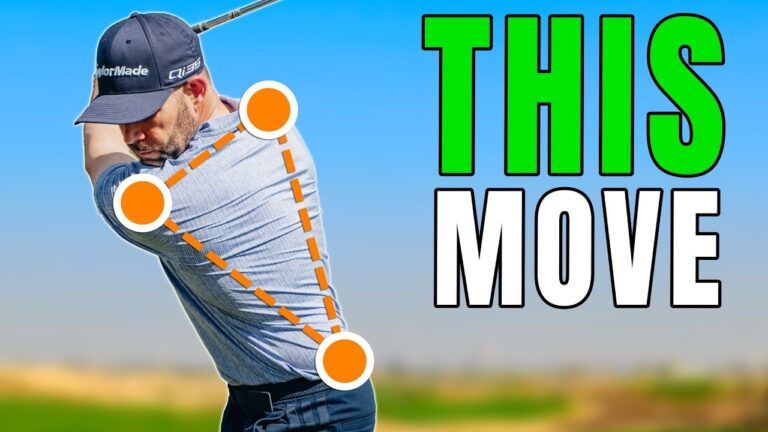

Improving your golf accuracy and distance does not require a complete swing overhaul. It comes down to understanding three simple body movements and using them at the right times. When you coordinate rotation, side bend and forward bend/extension correctly, the club will track better, your head will stay centered and you will generate more power with less effort.
Table of Contents
- Step 1: Understand the three core movements for golf
- Step 2: Remove forward bend in the backswing to hit straighter golf shots
- Step 3: Add extension to your delivery to create speed and distance in golf
- Step 4: Put it together — a simple practice sequence for golf
- Common swing faults and how this approach fixes them in golf
- Step 5: Drills, progressions and practice plan for golf
- Step 6: Quick checklist to use before every shot
- FAQ
- Final thoughts on using body movement to play better golf
Step 1: Understand the three core movements for golf
Your body can move in three primary ways that matter for the golf swing:
- Rotation: the turning of your upper body and shoulders.
- Side bend: tilting the torso left or right.
- Forward bend and extension: bending toward the ball (flexion) and standing up or arching back (extension).
These are not independent pieces you can ignore. They blend together throughout the swing. How you start at address and how you transition between those positions determines the club path, the face orientation at impact and ultimately how straight and how far your shots go.
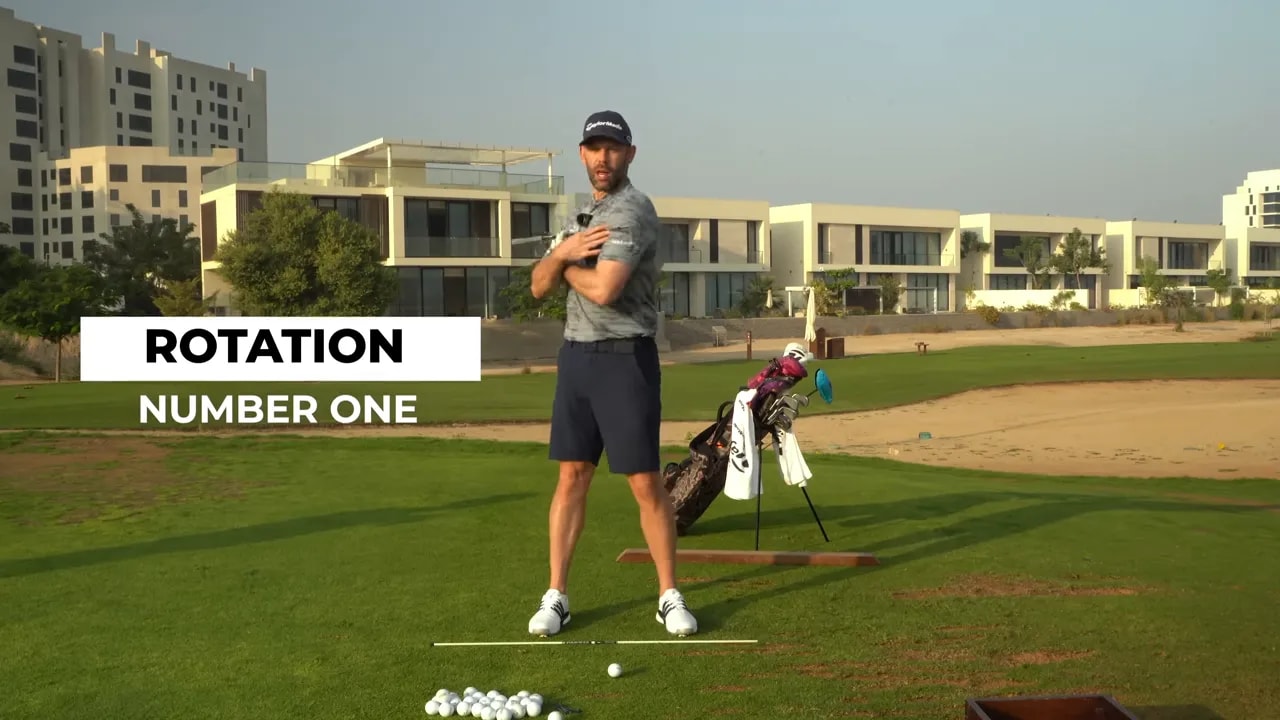
At address you are primarily in forward bend. You might have a tiny bit of side bend because of hand height, but most of the setup posture is flexed at the hips toward the ball. If you only think about rotation during the backswing while keeping that forward bend, the club will drop low, move inside and your head will tend to move off the ball. That low, inside takeaway is the origin of many pulling, hooking or thinned iron shots.
Step 2: Remove forward bend in the backswing to hit straighter golf shots
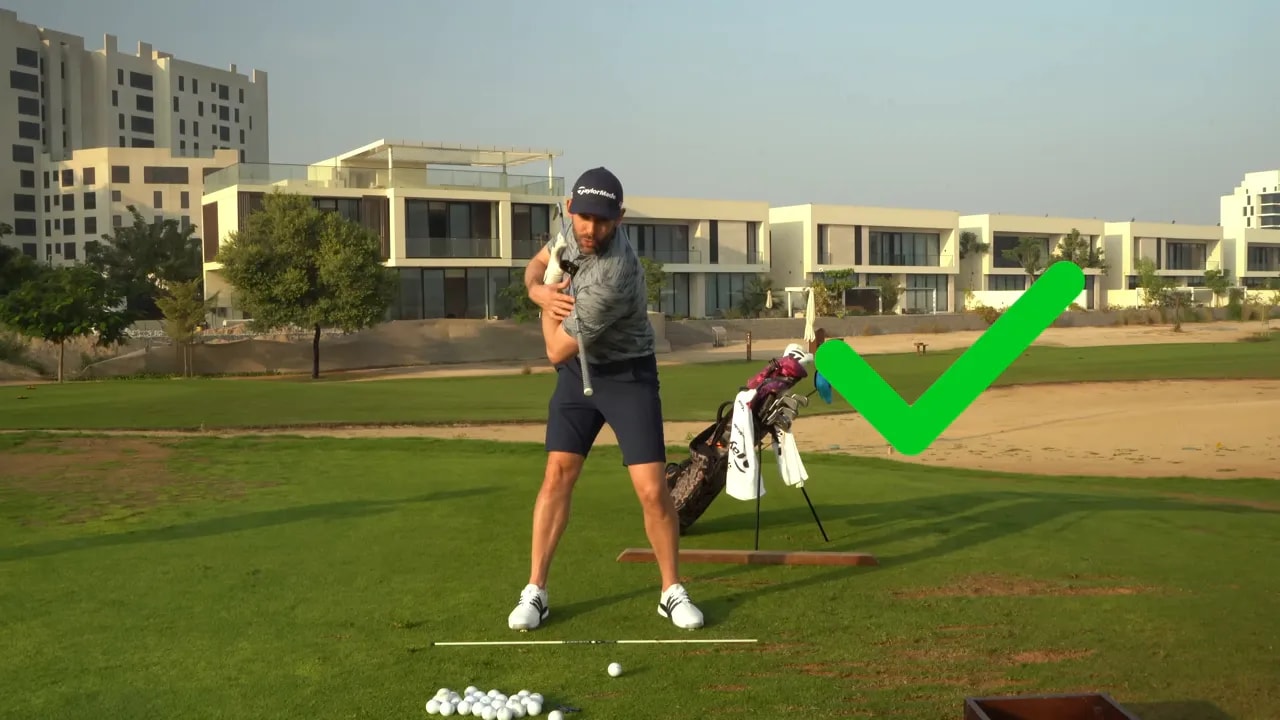
The key to a clean backswing shape is removing the forward bend and replacing it with rotation and side bend. At the top of the backswing great positions show the chest rotated and slightly lifted relative to setup, not still dipping toward the ball.
- Put the club across your shoulders and stand tall so you can feel the changes in chest angle. This makes posture adjustments obvious and repeatable.
- Practice turning your chest and shoulders toward the target while simultaneously letting the torso tilt slightly away from the target (side bend). The goal is to end the backswing with your sternum pointing up and back, not down toward the ground.
- Use a simple coaching cue: imagine your jacket buttons or sternum pointing toward the camera in front of you as you rotate. Buttons down equals the wrong movement; buttons up and back equals the correct blend of rotation and side bend.
The physical result is that the club rises to a near-horizontal plane and the head stays centered over the ball. You will produce a much more consistent club path and less tendency to get the club too far inside on the downswing.
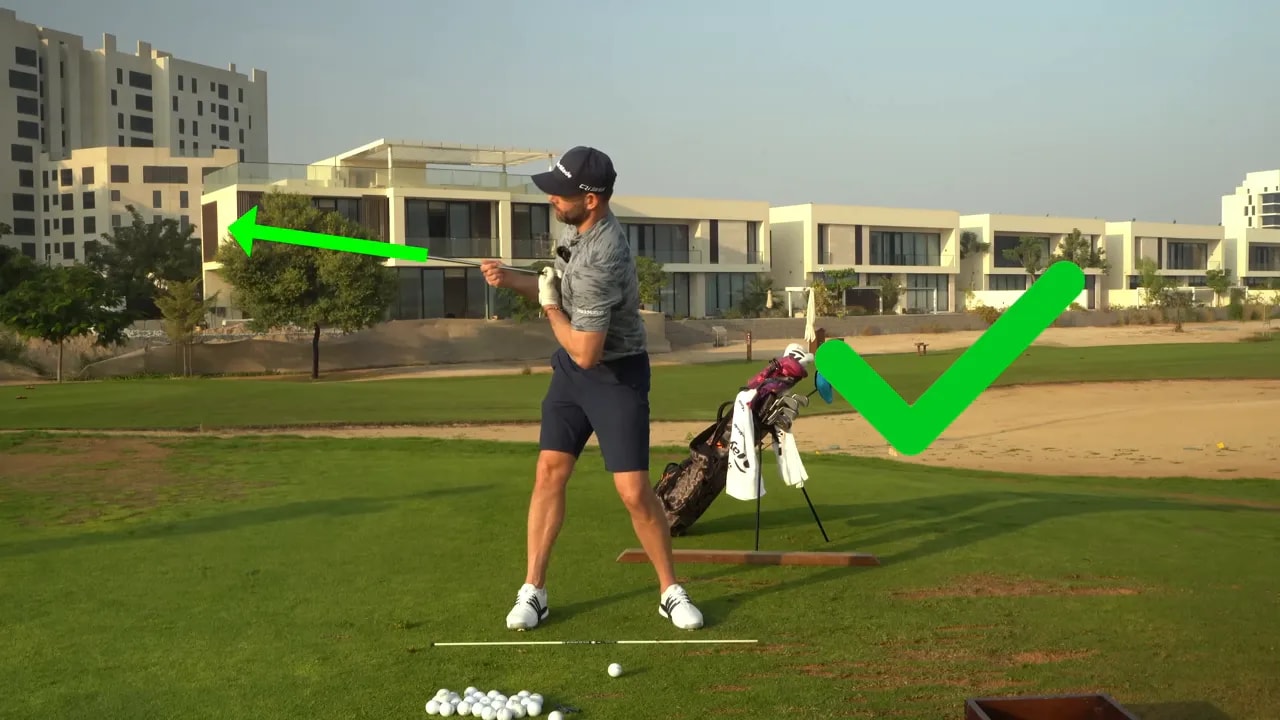
Practice drill: take the club across your shoulders, adopt your normal setup forward bend, then rotate back while consciously lifting the chest and letting the head remain centered. Repeat this slowly until the feeling is familiar. You will learn to swap forward bend for rotation and side bend on the backswing.
Step 3: Add extension to your delivery to create speed and distance in golf
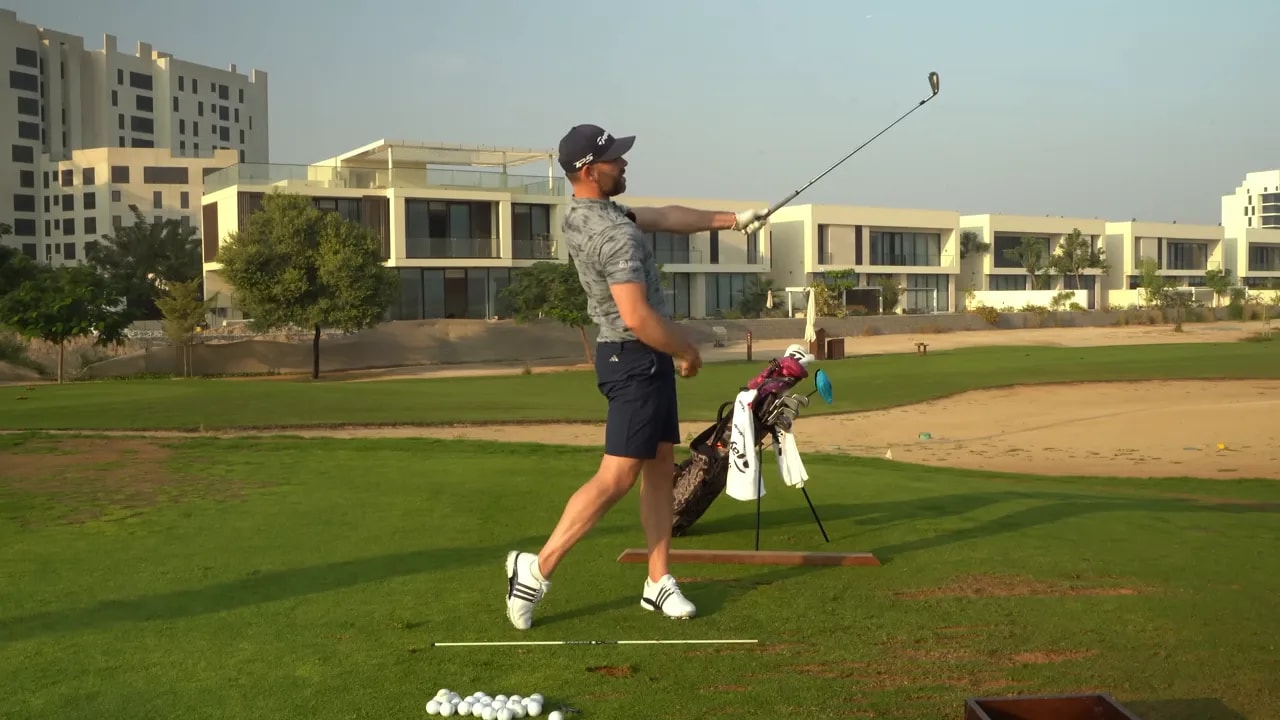
Rotation creates direction and control. Extension creates speed. The most powerful players do not stay bent over through impact. They move from flexion to extension — they stand up and arch slightly into the follow-through. That upward body motion is how you load the legs, transfer ground force into the torso and ultimately into the clubhead.
Think about throwing a heavy object as high as possible. You would flex forward to pick it up, then drive your hips and stand tall into extension to throw. The same physics applies to golf. Going from flexion to extension at the right moment is a direct path to more clubhead speed.
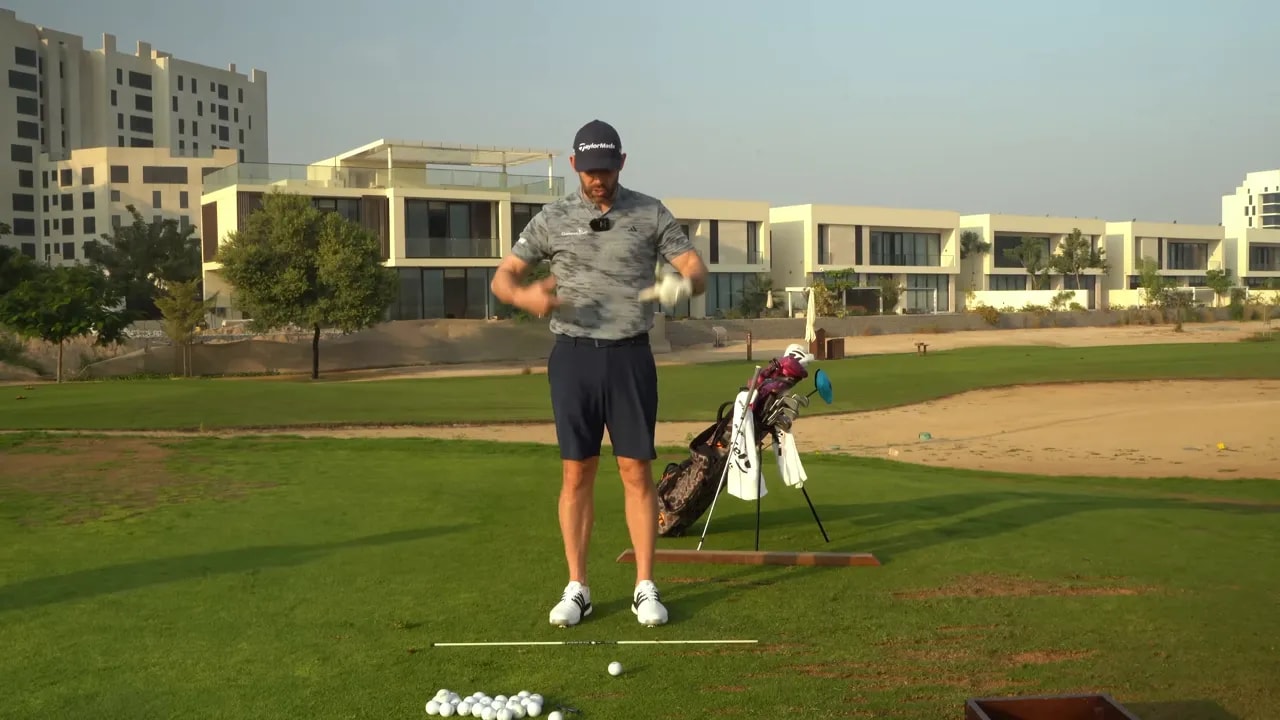
How to practice the extension move:
- Start in a delivery-like position: a forward tilt similar to setup with the club in your hands as if halfway through the downswing.
- Rotate toward the target while simultaneously pushing your belt buckle toward the target and up. The belt buckle cue encourages extension and hip drive.
- Feel your chest move up and back as you extend. The club should point down toward the target, not pop up above the plane.
This move lets you keep a short follow-through and still hit the ball a long way because the speed came from the body extension into impact, not from swinging your arms longer.
Step 4: Put it together — a simple practice sequence for golf
Combine the backswing shape and the extension delivery in a focused drill sequence. Spend 10 to 15 minutes per practice session on these steps and your body will learn to sequence the movements automatically.
- Warm up: 3 minutes of shoulder turns with the club across your back. Feel rotation only to loosen up the thoracic spine.
- Backswing shape drill: 10 slow reps with the club across your shoulders. Move from forward bend into rotation and side bend so your chest points up and back at the top.
- Delivery-extension drill: 10 reps starting in a delivery position. Rotate while driving the belt buckle toward the target and up. Make the club point to the target on extension.
- Combine with short shots: hit half and three-quarter shots focusing on the same sequence. Keep the focus on body sensation rather than ball flight. Let the hands and club follow the body.
- End with full shots: once the movement feels familiar, hit five full shots concentrating on the two-stage pattern — swap forward bend for rotation/side bend in the backswing, then move from flexion to extension through impact.
During the sequence, use these coaching cues:
- Buttons up and back — chest lifts in the backswing.
- Keep your head centered — it will follow the chest position rather than dictating it.
- Belt buckle toward target and up — promotes extension and ground drive in the downswing.
- Point the club at the target on extension — confirms the body delivered the clubhead energy.
Common swing faults and how this approach fixes them in golf
- Too much inside takeaway: Caused by keeping forward bend and simply turning. Fix by lifting the chest and adding side bend in the backswing.
- Head drifting off the ball: Often a reaction to poor body sequencing. If you move the chest correctly, the head stays centered naturally.
- Lack of distance: Stems from staying bent over through impact and relying solely on rotation. Fix by adding extension from flexion at delivery and driving through with the legs.
- Early release or casting: Reduces power and causes thin shots. Using body extension helps the arms and hands stay passive and receive the clubhead speed.
Step 5: Drills, progressions and practice plan for golf
Use drills that isolate each movement and then put them together. Here is a 4-week progression you can follow.
- Week 1 — Movement awareness: 3 sessions per week, 15 minutes each. Club across shoulders drill for backswing shape and belt-buckle extension drills.
- Week 2 — Short shots: 3 sessions per week. Add half shots focusing on chest orientation and extension finish. Record yourself to confirm chest and belt buckle cues.
- Week 3 — Full shots with target focus: 3 sessions per week. Hit 30 balls per session alternating irons and woods while maintaining the movement sequence.
- Week 4 — On-course transfer: Take the practice to the course. Play 9 holes focusing on one swing thought: buttons up/back on the backswing and belt buckle toward the target on the downswing.
Repetition with the correct sensations builds a motor pattern that will enable you to hit straighter and longer shots without overthinking.
Step 6: Quick checklist to use before every shot
- Setup: Forward bend at the hips, athletic posture.
- Pre-swing: Take club across shoulders and feel chest orientation.
- Backswing: Swap forward bend for rotation and side bend — chest up and back.
- Transition: Begin downswing with rotation and target-focused extension.
- Impact: Belt buckle moving toward target, club pointing down to the target line.
- Follow-through: Short or long, but feel the extension through the torso and legs.
FAQ
How do I know if I’m still keeping forward bend in the backswing?
If your club stays low to the ground, the face of your jacket or your sternum is still pointing down, or your head drifts away from the ball, you are likely keeping forward bend. Use the club-across-shoulders drill and focus on turning the chest up and back. A quick video from the range will also reveal the posture change.
Won’t getting more extension mess up my timing?
No. Extension is a timing partner for rotation when trained correctly. Start slow and practise the belt-buckle push drill so your body learns to extend at the right moment. As the movement becomes more comfortable, speed will increase without losing control.
Can these movements help both irons and drivers?
Yes. The same sequencing principles apply to all clubs. Rotation and side bend shape the backswing while extension into impact produces power. The degree of rotation or extension may vary by club, but the underlying movement pattern is consistent.
How often should I practice these drills to see improvement?
Short, focused practice sessions three times a week will produce noticeable changes within a few weeks. Prioritise quality over quantity: 15 minutes of mindful drilling is better than hours of unfocused hitting.
What are simple cues for the range or on the course?
Use these three cues:
- Buttons up and back for the backswing.
- Belt buckle to target and up for the downswing and impact.
- Point the club at the target on extension to confirm correct delivery.
Final thoughts on using body movement to play better golf
Simplicity wins. Focus on understanding and practicing the three core movements — rotation, side bend and forward bend/extension — and how they interact. Replace forward bend at the top with rotation and side bend for greater accuracy. Add extension from flexion through delivery to create speed and distance.
These changes are subtle but high-impact. They let you hit straighter shots more consistently and add real power without wild mechanics. Use the drills and progressions above, keep the coaching cues simple, and let the body learn the sequencing. Over time your swing will feel easier, more repeatable and more effective on the course.
0 Comments