
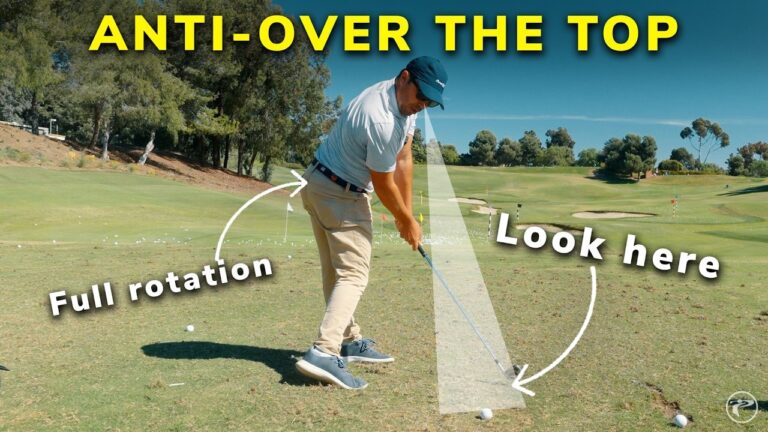


Overcome Spinning Out: Transform Your Golf Swing for Perfect Strikes! Is your golf game suffering from inconsistent shots? The culprit might be an unnoticed habit called spinning out, where your upper body races ahead, disrupting your swing path. Discover how to diagnose and correct this issue, ensuring your arms and club sync perfectly for maximum power and accuracy.
Understanding Spinning Out: The Swing’s Silent Enemy
To maintain a powerful downswing, your hips and lower body must rotate in sync with your arms and hands. Spinning out occurs when your torso rotates prematurely, throwing off your swing path and causing weak or erratic ball contact.
Key issues include:
- Thin shots or low contact.
- Rightward misses, leading to pulls or weak pushes.
- Loss of distance due to broken sequencing.
- Glancing blows, losing track stability from the shoulders.
A balanced fix involves maintaining rotation while preventing upper-body displacement for an aligned and powerful strike.
The True Goal: Spinning Out Fix Drills
Your effective downswing relies on:
- Deep lead hip impact, which remains active throughout.
- Controlled chest position, allowing arms a seamless descent on the same trajectory.
If spinning out disrupts your shot, practice disassociation—allow hips and hands to move dynamically while keeping your upper body steady.
The Sternum Stays Facing Target Concept
To counteract spinning out, ensure your sternum remains oriented to the target line as hips drive rotation and hands modulate delivery. Aligning the body in this manner reduces the temptation for an early spin, resulting in stronger, more precise shots.
Train with a Full-Speed Wall-Effect Feel
For spinning out correction, practice a sensation where your chest seems to hit an invisible wall while lower-body movement continues. This controlled motion enables a well-timed release without the torso overpowering the club.
Engage in Effective Spinning Out Drills
Drill 1: Pocket Back to Pocket Back with Upper Body Constraint
Set your alignment aid against your sternum and train your hips to pivot without the chest taking over. Controlled practice of this drill refines hip mobility while keeping the sternum still.
Drill 2: Ball-Behind Chest Feel
A ball placed behind you to discourage torso movement integrates restraint with impactful delivery, improving directional stability and impact quality.
Drill 3: Shoulders as a Track
Maintain proper shoulder alignment to prevent early upper body release. Focus on keeping the lead shoulder embedded under your chin as your hips reach fullest depth during impact.
Match Hips and Hands Sans Stalling
A consistent swing isn’t about freezing movements. Instead, ensure smooth sequenced transitions from your left hip to your right during downswing, aligning your upper body correctly for a flawless follow-through.
Diagnose and Target Mistakes with Feel Tests
Gauge your swing performance with these evaluations:
- Thin right shots: Use disassociation drills to counter early torso involvement.
- Glancing strays: Reinforce the shoulder track to prevent deviations.
- Persistent right hooks: Temptation for upper-body speeding ahead may require chest stability focus.
Short Practice Plan for Long-Term Gains
- 2 minutes: Align posture through sternum control.
- 4-6 minutes: Execute Drill 1 with steady upper body.
- 6-8 minutes: Perform Drill 2 focusing on contact.
- 3-5 minutes: Regular swings refined with impact checks.
Avoid Common Spinning Out Pitfalls
- Do not freeze body—the sequence needs rotation.
- Address torso spin, not just hand speed.
- Prevent rushing from the top—follow through should be controlled.
- Ensure depth in hip motion to maintain compression.
- Use physical aids like balls to foster awareness and restraint.
FAQs on Spinning Out Solutions
Is Spinning Out like Going Over the Top?
Although similar, spinning out focuses on premature torso rotation, unlike the outside-in path of an over-the-top swing. Both can occur concurrently but need distinct analyses and remedies.
Do I Stop Hip Rotation for Spinning Out Remedy?
No, continue hip rotation; instead, dissociate and control chest movement to enhance delivery and compression.
Thin Right Shots Remedy?
Apply ‘Ball-Behind Chest’ with sternum regulation to inhibit early torso spin, promoting solid ball contact and impact.
Will These Techniques Instantly Revolutionize Ball Flight?
Initial sessions often yield better strikes. Comprehensive ball flight improvement requires attention to timing, path, and face adjustments.
Effective Disassociation Mechanics?
A synced motion of hips and hands while mitigating forward chest lag ensures correct path adherence and depth in hip action, preventing spin-out occurrence.
Your Quick Spinning Out Fix Checklist
- Maintain rotation without compromising club pace.
- Dissociate hips and hands from chest action for consistent compression.
- Strengthen impact stances: focus on hip depth and shoulder alignment.
- Utilize constraints like sternum and ‘ball-behind’ techniques for perceptual guidance.
Incorporating these techniques regularly into your practice can drastically improve your swing consistency, leading to more satisfying and reliable golfing experiences.
0 Comments