
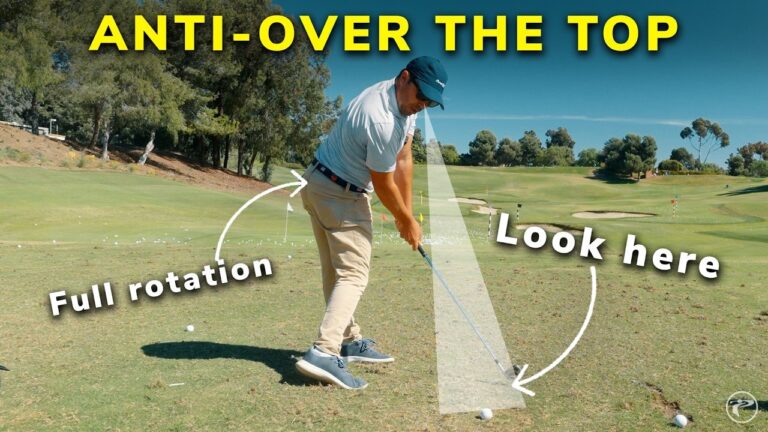

Spinning-out is one of those swing habits that feels harmless at first, but it quietly ruins ball flight, distance, and consistency. If your shots start thinning, pulling, or “glancing” off the face, you may be rotating your body past the point where your arms and club can stay connected to the same swing path.
This guide teaches you what spinning-out really is, why it happens, and a practical fix you can practice on the range: disassociating your upper body from your hips so your hands and hips fire while your chest stays back. You will also learn drills to stop thin right shots, reduce flippiness at the bottom, and improve strike quality.
Table of Contents
- Step 1: Understand spinning-out (and why it destroys contact)
- Step 2: Know the real goal with spinning-out fix drills
- Step 3: Use the “sternum stays facing the target line” concept
- Step 4: Practice a full-speed pattern with a wall-like feeling
- Step 5: Drills to stop spinning-out (simple, effective options)
- Step 6: Match hips and hands without stalling them
- Step 7: Diagnose your miss with quick “feel tests”
- Step 8: A focused practice plan (10 to 20 minutes)
- Mistakes to avoid when fixing spinning-out
- FAQ about spinning-out and the fix
- Summary: The spinning-out fix in one checklist
Step 1: Understand spinning-out (and why it destroys contact)
In golf, your downswing needs two things to happen in sequence:
- Your hips and lower body rotate and deliver the club with power.
- Your arms and hands deliver the club to the ball on the correct path with proper timing.
Spinning-out usually means your upper body (especially your torso and shoulders) yanks forward or rotates ahead of your arms and club. The effect is that your club is forced to “find a release” while your body is no longer positioned to support solid compression.
Common symptoms include:
- Thin shots or low, skimming contact
- Rightward miss that shows up as pulls to the wrong side or weak push-right depending on your path and face
- Loss of distance because the sequence breaks down
- Glancing contact across the ball because the shoulders no longer behave like a consistent track
The fix is not to “stop rotating.” It is to keep rotation but prevent your upper body from spinning out of position so the hands can use the space they need.

Step 2: Know the real goal with spinning-out fix drills
Your swing still needs rotation and power. The goal is to protect two parts of the impact setup:
- Impact depth with the lead hip (your lead hip should be fully working, not stalled early)
- Chest staying back under control so your arms and hands can descend on the same plane they went back
When spinning-out happens, you often get a situation where:
- Your lower body may still rotate, but your upper body gets ahead.
- Your arms are forced to catch up, which can create flippiness at the bottom.
- Your club exits differently, leading to inconsistent strike quality.
So you will practice a disassociation: let the hips and hands fire while the upper body stays back longer than your instincts want.
Step 3: Use the “sternum stays facing the target line” concept
One of the most reliable cues for the spinning-out fix is: keep your sternum oriented back longer while your hips and hands deliver.
Think of it like this:
- Your hips are responsible for rotation and delivery.
- Your hands are responsible for getting the club on the correct path and speed.
- Your upper body is responsible for staying “connected” to the correct track long enough for impact.
This helps players who “cut across it,” because it reduces the tendency to get dragged across the ball with a forward-spinning torso. Done correctly, the result is typically a more stable, straighter flight with the potential for a gentle draw shape.

Step 4: Practice a full-speed pattern with a wall-like feeling
To fix spinning-out, you need a rehearsal that teaches your body where to stop rushing from the top and where to allow the lower body to turn.
A helpful training feeling is:
- As you start down, your hands and hips fire, but your chest stays back.
- It should feel like you “hit a wall” with your forward movement instead of throwing your torso at the ball.
- Your arms still come down in front of your chest as you rotate into impact.
This is not a pause. It is controlled timing. The hands still arrive with intent, but your torso is not outrunning the club.
Step 5: Drills to stop spinning-out (simple, effective options)
Drill 1: Pocket back to pocket back with upper body restraint
This drill is designed to train your hips to turn without your chest flipping forward.
How to set up
- Use an alignment aid (like a rod) held against your sternum by a partner or by a stable support setup.
- Stand tall enough to keep posture stable.
- Focus on moving the hips back and through a “pocket” motion while your upper body does not lunge forward.
How to practice
- Make small controlled motions first.
- Feel the lead hip turning and depth building without your chest becoming the driver.
- Repeat rhythmically (multiple reps) until your hips can move while your sternum stays quiet.
What it should feel like
- Your beltline or lead hip is traveling and turning.
- Your upper body is resisting the urge to spin.
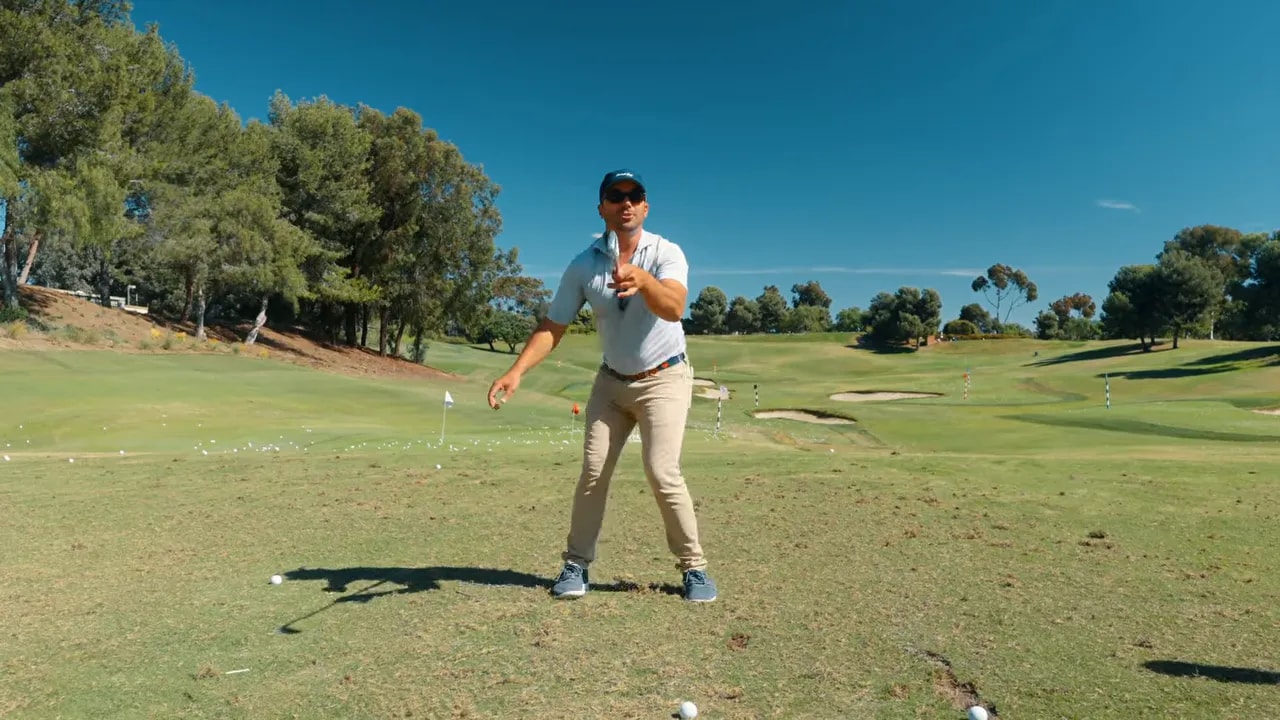
Drill 2: Impact targeting with a “ball behind the chest” feel
This drill uses a simple but effective target sensation to prevent your torso from flying through.
How to set up
- Place a ball slightly behind you or behind where your chest would normally go forward in the downswing. The point is to create a “don’t hit this” feeling.
- Address the real ball normally.
How to practice
- Start your downswing feeling your chest stays pointed back while hips and hands open and deliver.
- Even if your sternum naturally moves, you should prevent the belt-buckle style spin from happening early.
- Strike a few shots focusing on solid contact and stable ball flight.
Why it works
The restriction forces your arms and hands to use the space correctly. It also helps your release happen naturally instead of being dragged by an early upper-body spin.
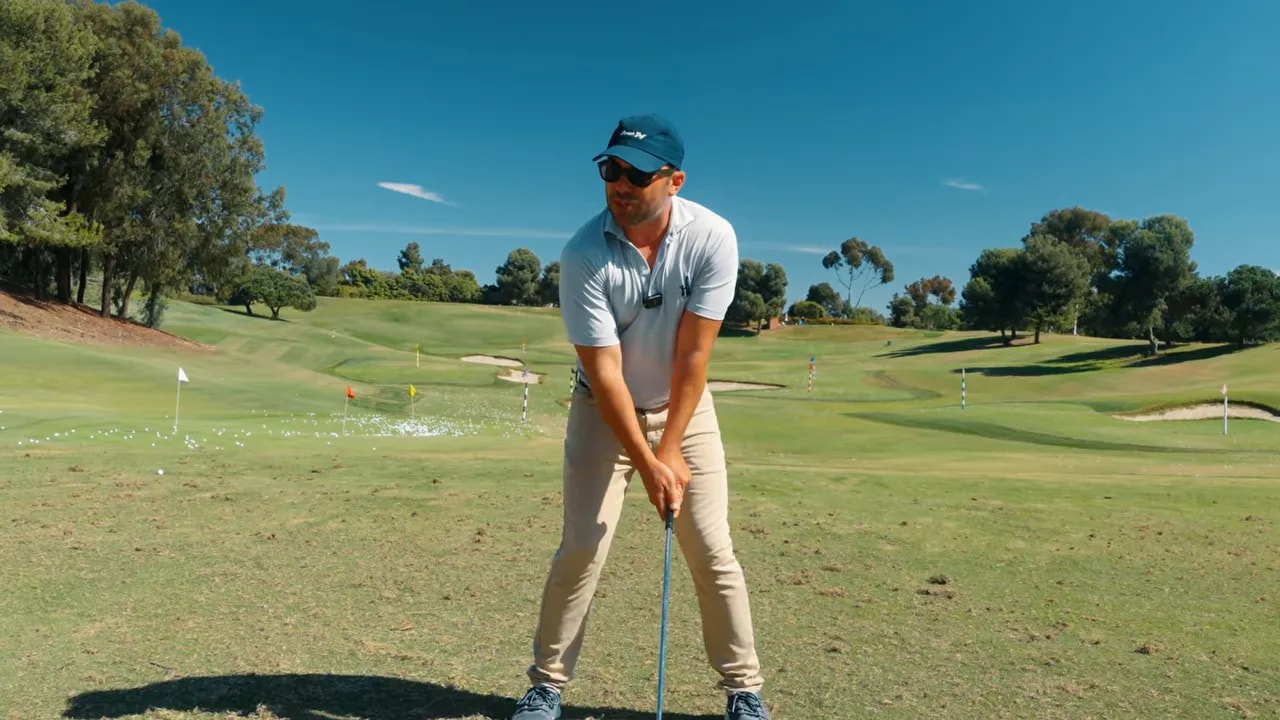
Drill 3: Shoulders as a track (check your lead shoulder and impact alignment)
If you only drill hand speed but ignore torso behavior, spinning-out can return. Instead, train the concept that your shoulders form the train track of the swing.
What to check at impact
- Your lead shoulder should stay “under your chin” longer rather than backing away early.
- Your upper body should not be overly open or “out” relative to the hips at the moment of strike.
- Your lead hip should be at or near maximum depth as the club passes through.
Practical cue
Keep your upper body feeling like it stays close to the correct track, while rotation continues underneath.
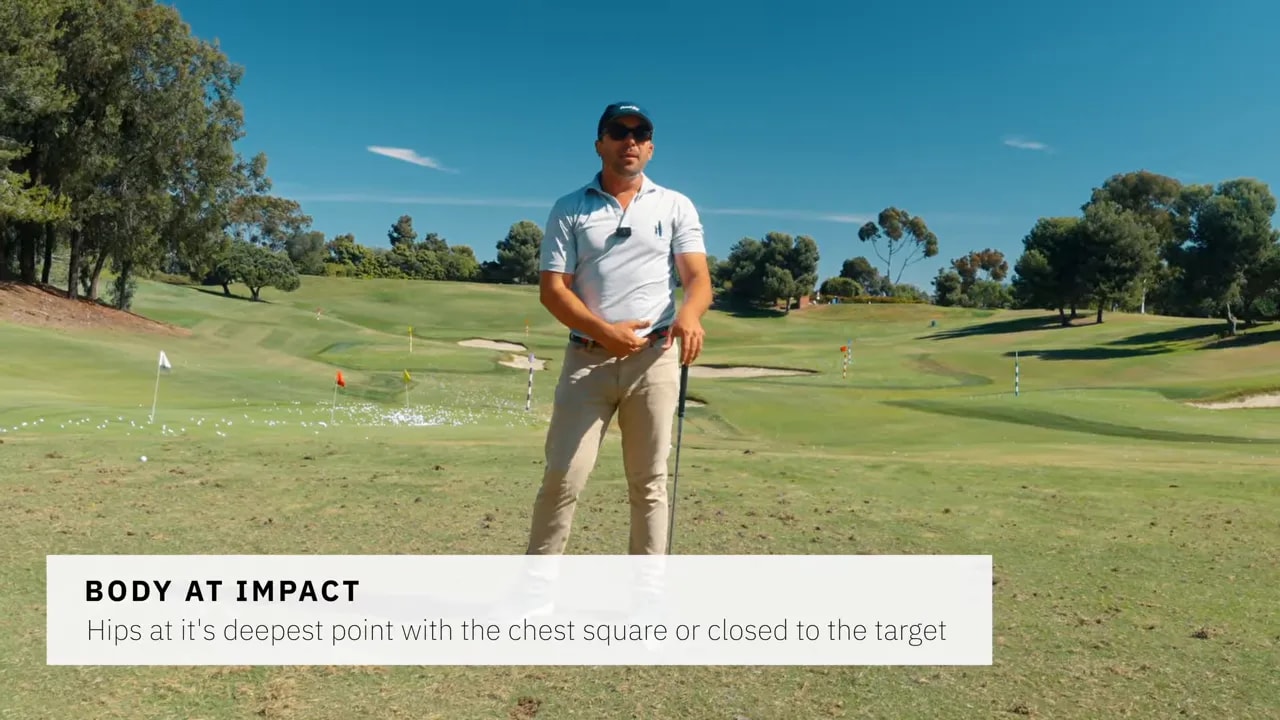
Step 6: Match hips and hands without stalling them
One misconception that keeps golfers stuck is: “If I stop spinning out, I must stop rotating.” That is backwards.
Your sequence should look like this:
- From top to transition: your left hip moves back and matches the right in a controlled way.
- From slot to impact: your left hip goes deeper behind as the club delivers.
- Upper body: stays back close to where it should be so it does not spin out and pull the club off line.
This allows your release to extend past your body naturally. When spinning-out is eliminated, you often get cleaner compression and a more reliable ball flight pattern.
Step 7: Diagnose your miss with quick “feel tests”
Use these feel tests to identify what part of the spinning-out pattern you are showing.
- If you hit thin right shots: you may feel flippiness at the bottom and an urge to spin the torso early. Prioritize the disassociation drills (sternum restraint and the “ball behind” sensation).
- If the club feels like it glances across the ball: your shoulders may be drifting off the train track too early. Slow down and rebuild with the shoulder-track check.
- If your shots start right and never recover: your release timing may be dragged by upper-body movement. Focus on keeping chest back while allowing hips and hands to fire.
Do not guess blindly. Pick one miss type, choose one drill, and practice it long enough to create a repeatable pattern.
Step 8: A focused practice plan (10 to 20 minutes)
If you want results with spinning-out, use a short, structured session.
- 2 minutes: posture and rehearsal with the “chest stays back” feeling without hitting balls hard.
- 4 to 6 minutes: Drill 1 (pocket back to pocket back with sternum restraint). Keep it controlled.
- 6 to 8 minutes: Drill 2 (ball-behind chest sensation). Strike a small group of shots.
- 3 to 5 minutes: normal swings with the impact check: lead hip depth and shoulder track.
Scoring rule: track only two things: strike quality (solid contact vs thin) and direction (stable vs wildly right or glancing). When those improve, move up in intensity.
Mistakes to avoid when fixing spinning-out
- Trying to “freeze” your body instead of controlling it. Rotation is still required for power.
- Over-cueing hands only. If the torso spins out, hand work alone cannot fix the path and impact alignment.
- Rushing from the top. If you feel like you lunge forward early, you are likely recreating the same spinning-out problem.
- Neglecting lead hip depth. If your hips stall to protect your chest, you will lose compression and timing.
- Not using a sensory constraint. Cues like “keep chest back” work better when you pair them with a tangible feel (like the ball-behind or sternum restraint).
FAQ about spinning-out and the fix
Is spinning-out the same thing as an over-the-top swing?
They are related but not identical. Spinning-out is primarily an upper-body timing issue where the torso outruns the club. Over-the-top is often described as an outside-in path problem. Many golfers with an over-the-top release also spin out, but you can have spinning-out without a classic over-the-top path, especially if your hands still find the club to some degree.
Should I stop rotating my hips to fix spinning-out?
No. Your hips should still rotate and deliver. The fix is disassociation, not stalling. Hips and hands fire while your chest stays controlled longer so the club can deliver on the right path with proper compression.
What is the best drill if I keep hitting thin right shots?
Use the “ball behind the chest feel” drill paired with sternum control. The goal is to stop early torso spin that causes flippiness at the bottom and weak impact compression.
Will these drills change my ball flight immediately?
You may notice improved strike quality quickly, sometimes within a few sessions. Ball flight changes often take a bit longer because direction is affected by path, face, and timing. Focus on solid contact first, then direction.
How do I know I am doing the disassociation correctly?
You should feel hips and hands working together while your upper body does not throw forward. At impact, your lead hip should be deep, and your shoulders should remain on a consistent “track” rather than drifting into a spin-out position.
Summary: The spinning-out fix in one checklist
- Keep rotation but stop your upper body from outrunning the club.
- Disassociate hips and hands from chest timing so the club can deliver with compression.
- Train impact positions: lead hip depth and shoulder track control.
- Use sensory constraints: sternum restraint and the ball-behind chest feel to prevent early torso spin.
If you focus your practice around those checkpoints, spinning-out becomes much easier to break. The end result is typically better contact, more stable direction, and a downswing that feels connected instead of rushed.
0 Comments