


If your golf shots feel rushed, your swing can look “fast” even when it is losing control. The result is usually the same: inconsistent contact, poor iron strike, and distance that never matches your intention. A key reason this happens is that rushing the downswing often triggers casting, which then forces a late, unreliable impact.
The fix is not simply “swing slower.” The fix is creating a body-led sequence so the downswing starts with your core and lower body, not your hands throwing the club.
This simple move is a step-and-turn pressure shift drill that trains the correct order: the body moves first, the club follows later, and your wrist can re hinge naturally instead of being thrown away early.
Table of Contents
- Step 1: Recognize what rushing the downswing does to your golf swing
- Step 2: Understand casting as a sequencing problem
- Step 3: Use the step drill to create a body-led downswing sequence
- Step 4: What to feel during the downswing (the “lag” that isn’t forced)
- Step 5: Check your strike results (distance is a symptom)
- Step 6: Transfer the body-led sequence to the golf course
- FAQ
- Keep your golf downswing calm by leading with your body
Step 1: Recognize what rushing the downswing does to your golf swing
On the course, rushing usually feels like this:
- Your swing from the top feels quick and out of control.
- Contact is high on the face or thin, with poor strike quality.
- Distance drops because the ball launch and strike timing suffer.
- The ball goes “nowhere” even if you feel like you should be creating speed.
Mechanically, the pattern is often:
- The club gets thrown from the top early.
- Lag gets lost or the club angle collapses too fast.
- That collapse shows up as casting, where the club releases before your body has actually delivered it to the ball.
- At impact, you may flip the club instead of compressing down through the strike.
A slower, smoother downswing often feels “like it has more time,” and you can make better contact because the club stays in a better position longer. The goal is to create that better timing without sacrificing speed.
Step 2: Understand casting as a sequencing problem
Casting is easy to think of as a “holding angle” problem. But the more useful idea is that casting is usually a sequencing issue.
When you rush, your hands and arms often lead the downswing. If your body is not yet driving, the club has nowhere safe to go. That forces your wrists to release early and the club gets thrown early.
Instead of trying to force the club to behave, train the order so the club naturally stays organized longer.
In practical terms, your best shots come from a rhythm where:
- Your body initiates the move down.
- The club head lags behind your hands slightly during transition.
- The wrist re hinges instead of being thrown open.
Step 3: Use the step drill to create a body-led downswing sequence
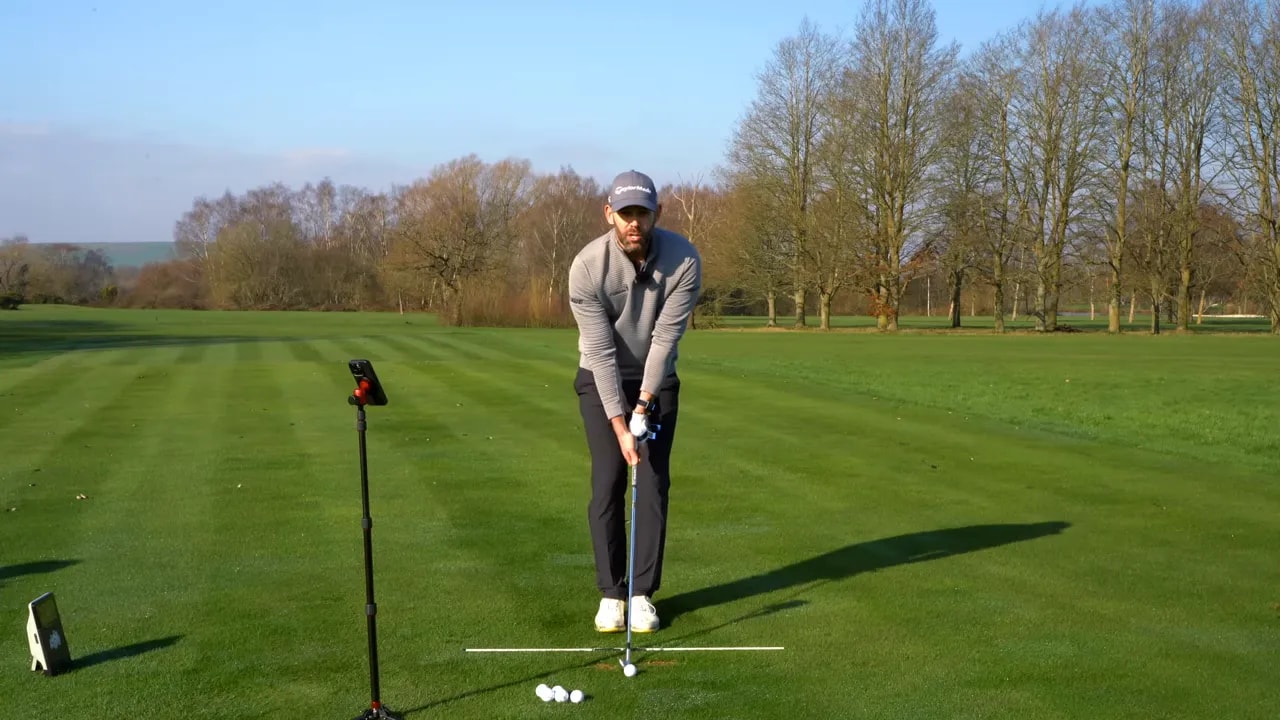
This step drill is designed to stop the rushing pattern by training how to start the downswing from the ground up. You will not begin by swinging the club head. You will start with your body, then let the club follow.
Setup
- Bring your feet together.
- Hold a normal iron grip.
- Make small swings only. Distance is not the goal. Timing is.
Phase 1: Step to your trail side (pressure shift)
Start with a small move away from the ball by stepping to your trail side. The important detail is that this is not only a foot move. It should feel like a pressure shift through your whole body.
As you step and turn:
- Your body is moving away from the target.
- The club head stays “quiet” near the ground.
- You are training the sensation of body-led movement, not club-led movement.
You should notice a subtle delay where the club head follows your hands rather than instantly rushing ahead.
Phase 2: Step into your lead side (with pressure)
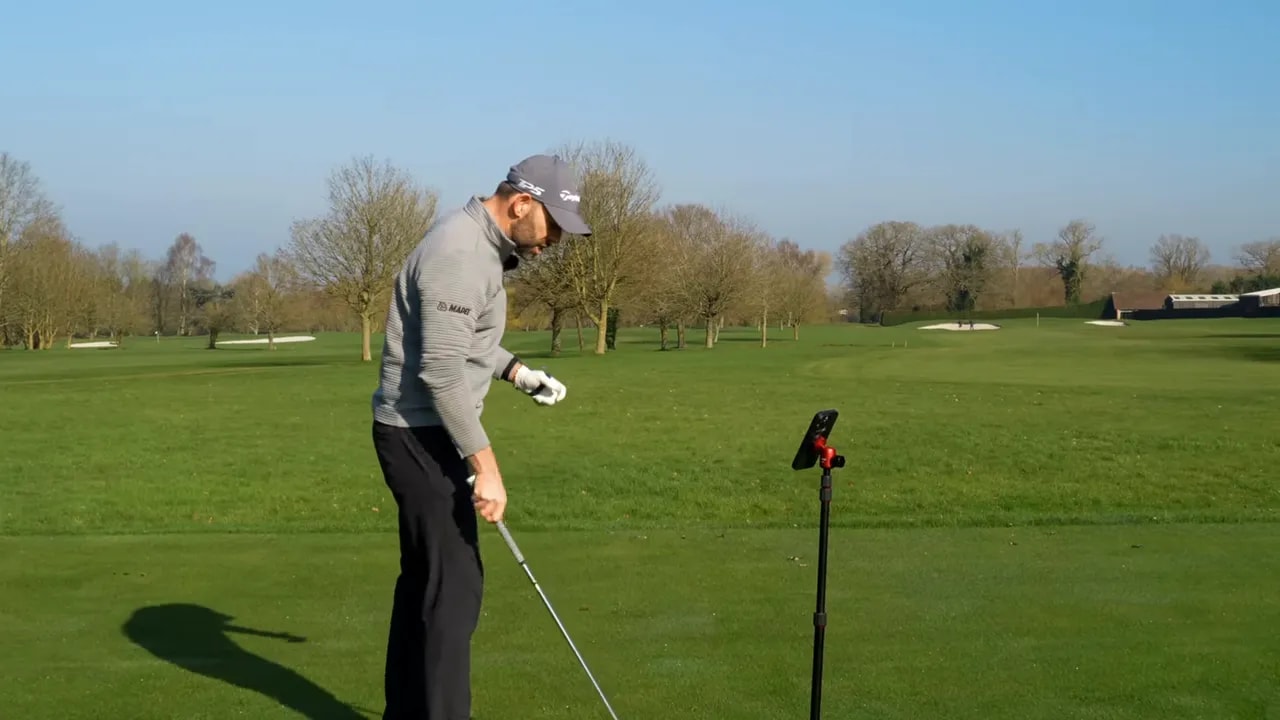
When your lead arm gets around level with the ground on the backswing phase, do the opposite and step toward your lead side.
Key details:
- As your arm and club are still moving away from the target, you step into the lead side.
- That step should feel like you create force and pressure into the lead foot.
- Your body should move forward and slightly down as it transfers weight.
This is where the sequence is trained:
- Body leads the movement.
- The club lags behind properly.
- Your wrists can re hinge naturally, reducing early release.
Do a few reps slowly. If the drill is working, you should feel like the downswing becomes easier to control. Even at 50 to 60 yards of “practice speed,” the quality of the strike should improve.
Step 4: What to feel during the downswing (the “lag” that isn’t forced)
Many golfers try to “hold lag” by thinking about wrist angles. That can backfire because it encourages tension and rushing to protect something you cannot control.
The better cue is to feel sequencing:
- Start with the body pressure shift and turn.
- Let the club head follow later.
- When you step into the lead side, the club should catch up in the right order.
When you get this right, the strike tends to improve because you can actually compress the ball instead of flipping at it.
Step 5: Check your strike results (distance is a symptom)
During training swings, do not judge purely by distance. The drill is about impact timing and direction. A rushed, club-led downswing often produces:
- High strike on the face
- Lower ball speed or less carry because compression is missing
- Inconsistent ball flight
After a few reps of the step drill, you are looking for:
- Better contact quality
- More centered strikes
- More consistent direction
- A downswing that feels slower and smoother even though it still produces results
Once your strike improves at partial speed, it is much easier to repeat under pressure at full swing.
Step 6: Transfer the body-led sequence to the golf course
It is common to learn a drill in practice and then struggle to use it on the course. The solution is to remove the two biggest course mistakes that trigger rushing.
Course mistake 1: Freezing the clubhead behind the ball
Many golfers set up by “parking” the clubhead behind the ball. They build tension through the hands and arms. Then, when they feel ready, they snatch it away with the clubhead, which often starts the downswing too early.
What you want instead:
- The club head should be moving during your backswing and transition, not locked behind the ball.
- Your body should be moving as well, even if it is subtle.
A useful way to think about it is: alignment may be placed briefly, but you should not stop your movement. If your body is moving, you are much more likely to start the downswing with your core.
Course mistake 2: Skipping practice swings that build rhythm
Before your shot, use a short rhythm routine that keeps you from rushing.
Try this pre-shot reset:
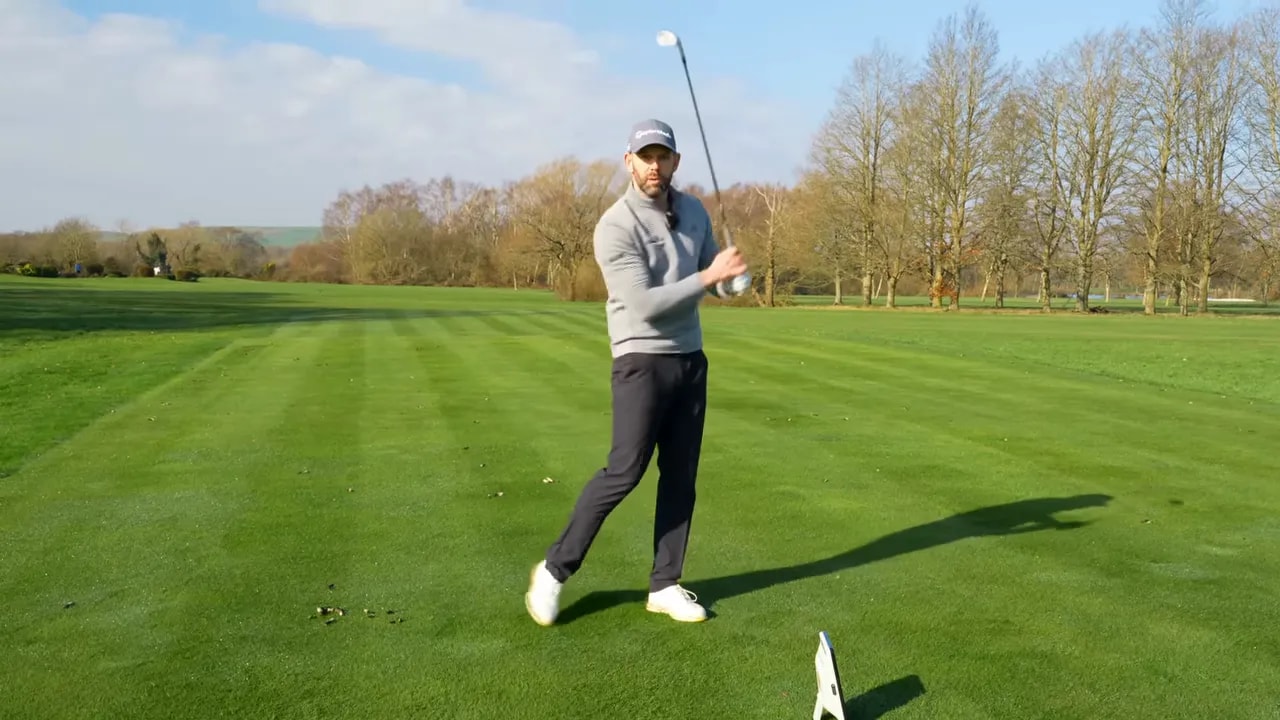
- Hover your club about 12 to 8 inches above the ground.
- Bring your feet together.
- Make small movement practice swings.
- Feel that what starts is your body, not the club.
This builds flow without focusing too much on the clubhead position. It is also easier to repeat under pressure because it matches the body-led pattern you trained in the step drill.
During these practice swings, you should feel the start of the golf motion coming from your core and pressure shifts, not from a quick release of the arms.
FAQ
How do I know if my problem is actually casting from rushing?
If your downswing feels quick and out of control, contact is often high or thin, distance drops, and your club releases early, you are likely casting due to poor sequencing. A good test is whether a body-led step drill improves strike quality even at reduced speed.
Will this drill make my golf swing feel too slow?
The goal is not to permanently swing at half speed. The step drill trains sequencing so your downswing becomes smoother and more controlled. As your strike improves, your speed typically becomes more usable because your contact timing improves.
Should I focus on “holding lag” during the swing?
Instead of forcing lag, focus on the sequence: pressure shift and turn with your body, then allow the club to follow later. This reduces early release without creating tension.
Can I use this step drill with any club or only irons?
You can practice with irons first because the feedback is clear and the strike is easier to standardize. Once sequencing feels stable, you can adapt the same body-led pressure shift concept to other clubs at shorter distances.
How many reps should I do before I take a full swing?
Start with 5 to 10 small reps. Stop when strike quality and the downswing feel improve. Then take a few full swings focusing on the same body-led start and keeping your rhythm. If you feel yourself rushing again, return to the step drill for a couple of reps.
Keep your golf downswing calm by leading with your body
Rushing the downswing creates a cascade: early throwing from the top, casting, lost compression, and inconsistent impact. The simplest way to break the pattern is to lead the motion with your body using a pressure shift step drill.
When you step and turn first, allow the club head to follow with proper timing, and transfer pressure into your lead side, your golf swing naturally feels slower and your strike quality improves. Over time, that sequence becomes your default under pressure.
0 Comments