


Chipping can feel like a lottery. One minute you watch a friend casually drop the ball close to the hole, the next you stand over a chip filled with tension, convinced you will either fat it or thin it. The difference is rarely a single trick. It is a change in how you move. Once you rebuild three simple patterns — a flowing club motion, a shoulder rock instead of a torso rotation, and precise control of your arc depth — you will strike more chips cleanly and build genuine short game confidence.
The focus keyphrase for this post is easy chipping technique. Use the steps below to create a repeatable routine that removes anxiety and replaces it with rhythm. This is a practical, step-by-step plan you can practise without complicated instructions or long sessions on the range.
Table of Contents
- Step 1: Build a flowing club motion — the foundation of any easy chipping technique
- Step 2: Rock, don’t rotate — turn twisting into a guided rocking motion
- Step 3: Control arc depth — learn to rise slightly through the shot
- Step 4: Combine the three patterns into a repeatable routine
- Step 5: Learn to change the ball flight once your patterns are consistent
- Sample 15-minute easy chipping technique practice plan
- Common mistakes and how to fix them
- Why an easy chipping technique saves strokes
- How long will it take to see improvement with this easy chipping technique?
- Will I top the ball if I “rise” through the shot?
- What club should I use when practising these patterns?
- How do I change the height of the chip shot once I can strike consistently?
- Can this method help with chipping yips?
- Final notes on building an easy chipping technique
Step 1: Build a flowing club motion — the foundation of any easy chipping technique
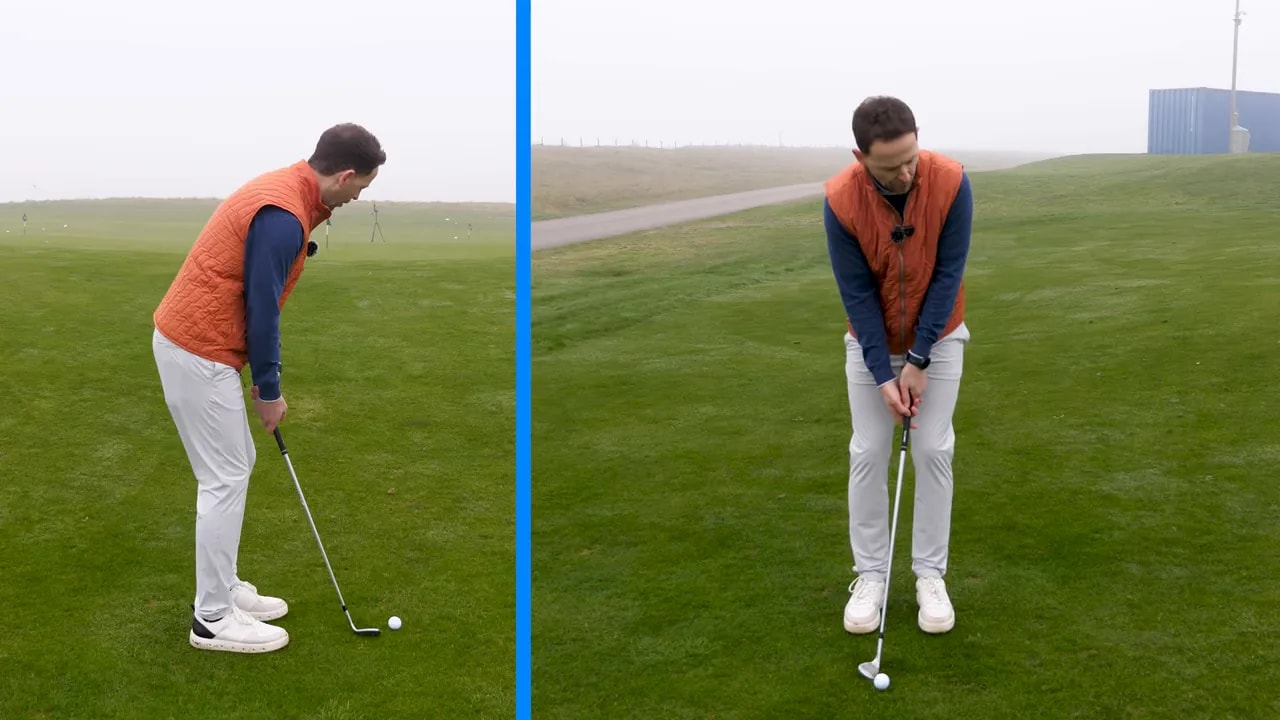
Before you try to fix your body, fix the club. Too many golfers overemphasise striking the ball and teach themselves to tense up at impact. The first pattern to develop is a flowing, pendulum-like swing of the club where the ball simply “gets in the way” of the motion.
What to practise
- Empty swings: Stand in your chipping stance with no ball and swing the club back and forth slowly. Feel the club’s momentum. Think of throwing a small ball underhand to someone — there is a natural impulse and release.
- Ignore the target: The target is secondary at this stage. Trust the motion. The idea is to remove any jerky reactions as the club meets the turf or ball.
- Allow the club to “get in the way”: When you reintroduce a ball, accept that the club will make contact as part of a flowing arc, not as a deliberate, tense strike.
Why this matters
A flowing motion reduces the micro-jerks and wrist flicks that cause fat and thin shots. It also lowers anxiety because you are no longer trying to force a perfect strike; you are repeating a movement your body recognises.
Step 2: Rock, don’t rotate — turn twisting into a guided rocking motion
Once the club is flowing, the next pattern is about body mechanics. Many golfers rotate excessively on the backswing. Their hands roll inside, the upper body lifts and moves off the target line, and the swing path goes too far inside-out. That pattern forces a wrist flick through impact and produces inconsistent contact.

Replace the twisting motion with a shoulder rock. The shoulders should move back and then down through the shot, creating an up-and-down guide for the club rather than a circular twist.
- How to feel the rock: Take a practice swing and imagine the shoulders are rocking on a hinge — back then down through contact. There is still small rotation, but the dominant feel is a forward-and-back rock rather than a spin.
- Hands stay on top: Because you are not rotating the torso aggressively, the hands remain more in front and the club face stays predictable through the arc.
- Rhythm counting: Use a simple cadence like “one, two” to coordinate the rock with the flow of the club. One for the takeaway, two for the strike.
Drill example
- Take five empty swings focusing only on the shoulder rock.
- Take five swings without a ball and count “one, two” out loud on each repetition.
- Place a ball and hit 10 chips with the same count, maintaining the rocking feeling.
The result is a simpler, more repeatable swing path. Many top players use this pattern naturally around the greens: small, controlled movement, powered by rhythm not force.
Step 3: Control arc depth — learn to rise slightly through the shot
The last, and often the most decisive, pattern is controlling the depth of your arc. Picture the clubhead tracing an arc that has a bottom point somewhere below the hands at impact. If you lower your body too much as the club comes down, that bottom point effectively moves behind the ball and you fat the shot. The solution is an opposing body response: as the arms move down, your body should rise gently.

How to practise the rise
- Soft knees: Start with a slightly flexed knee position. Keep the legs relaxed rather than locked.
- Feel the opposite motion: As the club approaches the ball, imagine your torso and legs straighten very subtly — a small inhale or an almost imperceptible standing up.
- Exaggeration first: Practise an exaggerated low-to-high sequence to make the feeling obvious: start lower on the setup, then intentionally stand up a little as the club comes through.
Why the rise works
The slight rise moves the geometry of the swing so that the bottom of the arc remains ahead of the ball rather than behind it. The club meets the ball first or the turf just after the ball, producing clean contact and reducing chunks. This is not a tip to pop the wrists or to lift the head; it is a subtle, coordinated body response that keeps the arc in the right place.
Step 4: Combine the three patterns into a repeatable routine
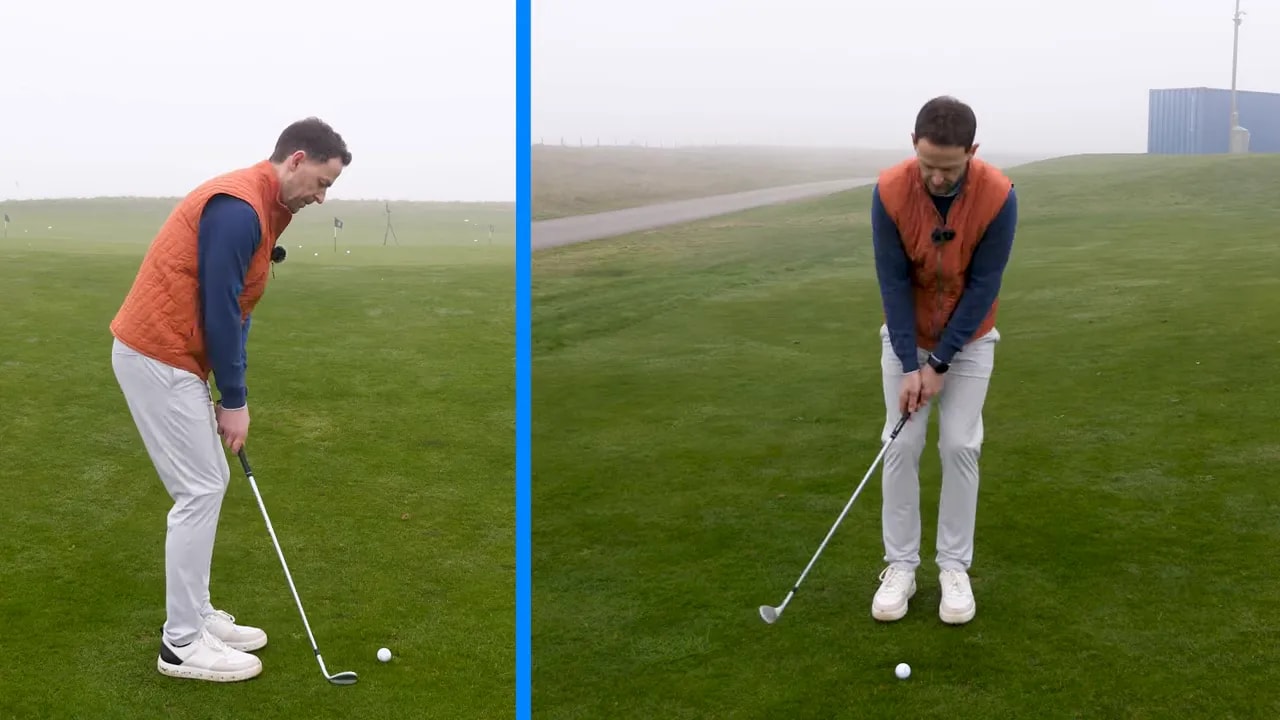
Each pattern is useful on its own. Together they form a reliable method for consistent chipping:
- Flow: Swing the club like a pendulum so the ball simply gets in the way of a smooth motion.
- Rock: Use a shoulder rock rather than a big rotation to guide the club up and down.
- Rise: Control the arc depth by slightly standing up as the club comes through, keeping the bottom of the arc in front of the ball.
Putting them together
A practice progression you can follow:
- Warm up with 10 empty pendulum swings focusing on a smooth flow.
- Add the shoulder rock and make another 10 swings, counting “one, two” to sync shoulders and club.
- Take five exaggerated low-to-high reps to feel the rise.
- Hit 20 chips from 10 to 20 yards focusing on flow + rock + rise. Keep the count and listen to the turf sound.
- Adjust ball position slightly forward for higher flight or slightly back for lower flight once the pattern is stable.
Practice tips to accelerate progress
- Quiet your hands: If you feel a wrist flick, stop and repeat the pendulum swings without a ball to reestablish the feel.
- Listen to the turf: A crisp, single sound means good contact. If the sound is heavy or you hear two impacts, simplify back to empty swings.
- Short, focused practice beats long, mindless reps: Ten minutes with deliberate attention to the three patterns will help more than an hour of random chipping.
- Mindset: Make striking the ball less of an obsessive goal. The goal is repeating the movement. Trust the arc and the body will make the contact.
Step 5: Learn to change the ball flight once your patterns are consistent
Once you can strike chips reliably, you can develop trajectory control. Trajectory changes are a secondary skill and should come after the three core patterns are established.
- Higher chips: Move the ball slightly forward in your stance so you catch it a little later in the arc. This produces a higher launch and a softer landing.
- Lower chips: Move the ball slightly back and shorten the arc so you catch the ball earlier and keep the flight low.
- Spin and roll: Ball selection and clubface angle affect roll. If you want more roll, de-loft the club slightly; for more check, open the face and move the ball forward.
Only change one variable at a time. If you alter ball position and distance control suffers, return to the basic patterns until stability returns.
Sample 15-minute easy chipping technique practice plan
- Minutes 0–3 (Flow): 15 empty pendulum swings focusing on a smooth club release.
- Minutes 3–6 (Rock): 10 swings counting “one, two” emphasizing the shoulder rock.
- Minutes 6–9 (Rise): 6 exaggerated low-to-high reps to feel the rise through impact.
- Minutes 9–13 (Combine): 12 chips from 8–20 yards using all three patterns. Vary targets and listen to turf contact.
- Minutes 13–15 (Adjust): 4 chips experimenting with ball position for higher or lower flight.
Repeat this short routine two or three times per week and you will train a more reliable movement. The emphasis is on quality of movement rather than quantity of repetitions.
Common mistakes and how to fix them
- Over-rotating on the takeaway: Fix by practicing the shoulder rock and limiting torso spin. Use a mirror or phone camera to check that your shoulders move back and down rather than twist wildly.
- Jerking at the ball: Go back to empty pendulum swings. Build trust in the motion before returning to live shots.
- Fatting shots: Focus on the rise. Practise exaggerated low-to-high reps until the feel of standing up through the shot becomes automatic.
- Topping the ball: If topping becomes a problem when you start to rise, reduce the exaggeration and rebuild the subtlety. Light, rhythmic practice will blend the feel without sacrificing contact.
Why an easy chipping technique saves strokes
Improving the short game delivers significant returns. Swing improvements with a driver might be tempting, but data shows that short game gains translate to real score reductions. A more reliable chipping technique directly reduces penalty strokes from missed greens and poor recovery shots. The three-pattern approach focuses on reproducible movement rather than a long list of technical fixes. That simplicity is what makes it both effective and quick to learn.
How long will it take to see improvement with this easy chipping technique?
Many players notice better contact within a single focused practice session because the drills correct obvious flaws like jerky hands or excessive rotation. To make the new patterns automatic, practise the short 15-minute routine consistently over several weeks. Frequency and deliberate attention are more important than total time.
Will I top the ball if I “rise” through the shot?
Not if the rise is subtle and coordinated with the arms. The rise is not an upward swipe but a small straightening of the body as the clubs travels through its arc. Start exaggerated to learn the feel, then reduce the intensity until it becomes a slight, rhythmical motion.
What club should I use when practising these patterns?
Start with a mid- to low-lofted wedge you plan to use around the greens, such as a pitching or gap wedge. Once you can repeat the patterns, practise with a variety of clubs to learn different distances and trajectories. The movement remains the same; only ball position and arc length change.
How do I change the height of the chip shot once I can strike consistently?
Move the ball slightly forward for a higher shot so you catch it later in the arc. Move the ball back for a lower flight. Only adjust one factor at a time after your fundamental patterns feel stable.
Can this method help with chipping yips?
Yes. The yips often arise from tension, overthinking, and inconsistent movement. Replacing complex instructions with simple, repeatable patterns reduces anxiety and gives a reliable process to follow. Gradual, rhythmical practice rebuilds confidence.
Final notes on building an easy chipping technique
Chipping is less about the perfect micro-adjustment and more about consistent patterns. Train the club’s flow, guide it with a shoulder rock, and control the arc depth by rising gently through the shot. Those three patterns remove the need for dozens of competing tips and deliver dependable contact.
Use the practice progression above, listen for the sound of clean turf contact, and prioritise short, focused sessions. With time and attention to these patterns, you will hit cleaner chips, reduce your short-game mistakes, and play more confident golf around the green.

0 Comments