


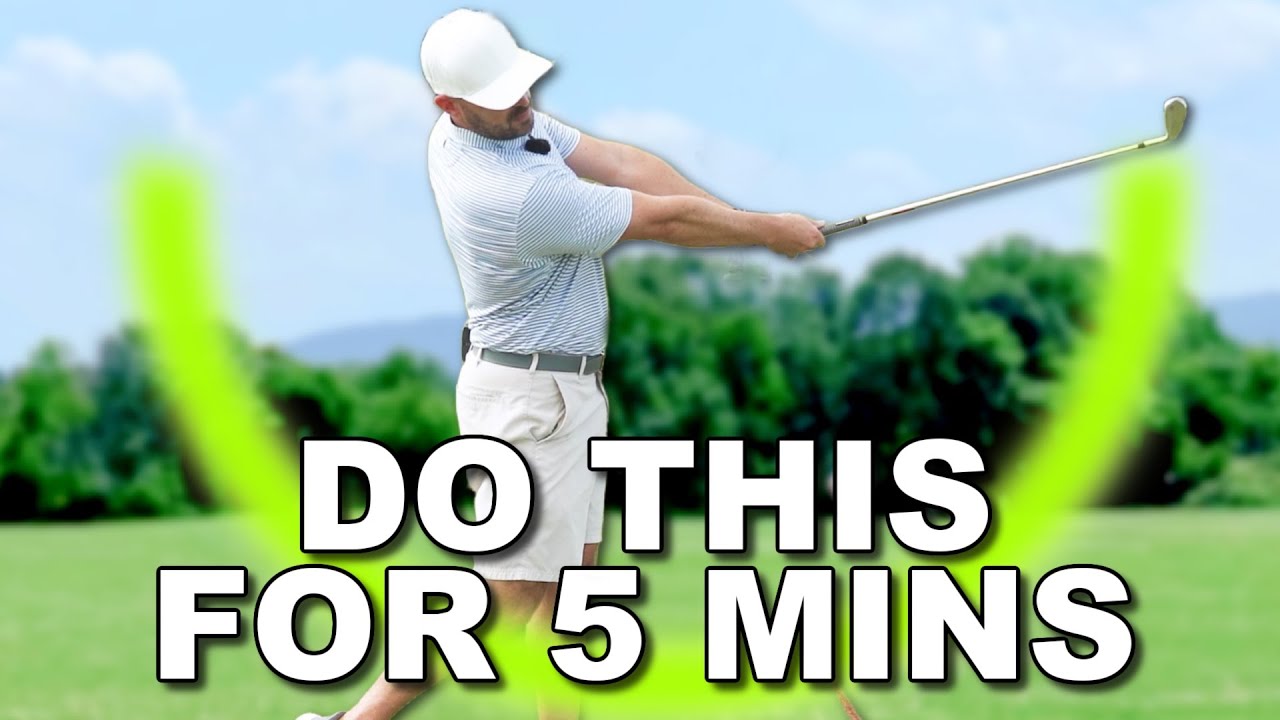
 Unlock a powerful and consistent golf swing by mastering one essential move. Discover how to keep your lead arm straight through impact—boosting contact, distance, and ball flight consistency.
Keeping your lead arm straight through impact is one of the quickest ways to improve contact, distance, and ball flight. Most golfers struggle with this because they try to force the arm rather than creating the body rotation, extension, and tilt that make a straight lead arm possible. The single move that unlocks everything is learning how to push the butt of the club away while your body fully rotates and your head stays back. When you train this sequence, you stop flipping, stop early extending, and start striking irons like a tour-level ball striker.

Table of Contents
- Step 1: Train Full Rotation to Keep Lead Arm Straight
- Step 2: Keep Your Head Back While Turning
- Step 3: Add Extension and Side Bend
- How to Practice the Drill: A Simple Training Plan
- Common Mistakes and How to Fix Them
- Coaching Cues That Work
- Sample Range Session: 60 Minutes
- Why This Works: The Physics and Feel
- Progressions and Advanced Variations
- Putting It All Together
Step 1: Train Full Rotation to Keep Lead Arm Straight
The first reason your lead arm bends through impact is simple: you do not turn your body enough. If you try to move the hands across the finish without turning the torso, the trail hand cannot reach the lead hand. That physical limitation is why you see bent arms and inconsistent contact.
Here is the drill to train the rotation that makes a straight lead arm possible.
- Hold the club with your lead arm extended out in front of you. The shaft should be roughly parallel to the target line and the butt of the club should be pointing back toward you.
- Take your trail hand and move it to meet your lead hand while keeping your lead arm straight. The only way your trail hand can reach is by turning your hips, knees, and shoulders toward the target.
- Check alignment. When your hands meet, your shoelaces, kneecaps, right hip, and right shoulder should be rotated toward the target and essentially square to it.
- Repeat this move three times as a rehearsal, then make a full swing trying to pass through that same position in motion — butt of the club pushed away, body fully turned.

Practice cue: think of turning to get the lead arm straight rather than forcing the arms. This encourages your body to do the heavy lifting. As you rotate correctly, the lead arm naturally extends and the clubhead stays on a good path. Do 20 to 30 reps of the drill two to three times per week to build the pattern into your muscle memory.
Step 2: Keep Your Head Back While Turning
Rotation alone will not fix everything. The second critical part of keeping your lead arm straight is preventing your head and torso from rushing forward. When your head moves forward through impact, the club moves too steep and too far over the top. That causes flipping and thin or fat strikes as you try to compensate with your hands.
Head back guard — feel like there is a wall over the ball that keeps your head from moving forward.

How to layer the head-back cue into the rotation drill
- Start with the lead-arm-out and trail-hand-to-lead-hand drill from Step 1.
- As you rotate to meet the lead arm, feel like your head stays back over the ball; do not let it drift forward. Keep your chest turning but keep the head behind the ball line.
- Combine the two: push the butt of the club away with the lead arm while turning the body and keeping the head back.
When you keep the head back while rotating, the club can work from low and inside through the ball. That creates better contact, more power, and a more reliable draw shape if that is your natural flight. It also stops the early-extension or flip that kills consistent iron striking.

Step 3: Add Extension and Side Bend
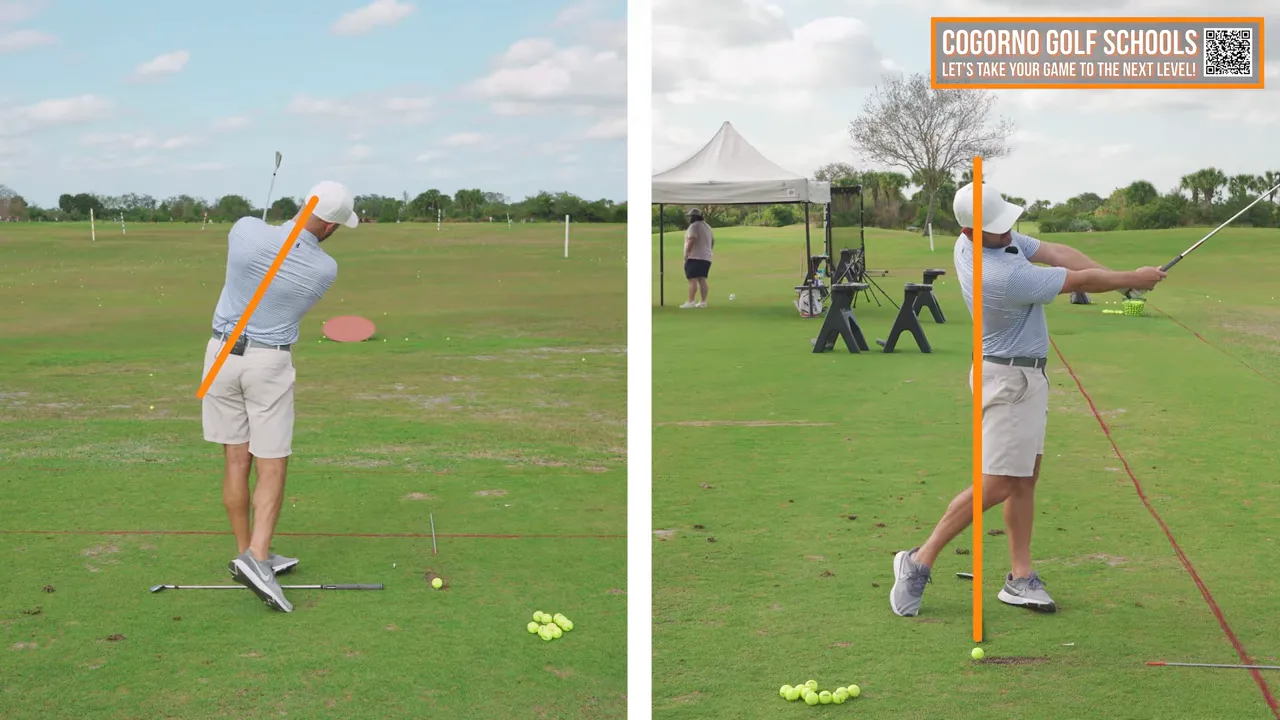
Rotation plus head-back creates a lot of the solution, but the final piece that makes the finish look and feel like tour-level ball striking is extension and side bend. Extension means your hips and belt buckle move forward while your torso extends away from the target, letting the arms push the club out and away. Side bend keeps the trail shoulder lower as the arms pass through, preventing the high, floppy arm finish that leads to a forward-head move.
Practice these three actions together in this order:
- Turn hard toward the target to create the space for the trail hand to reach the lead hand.
- Maintain the head-back guard; imagine a wall over the ball that prevents you from drifting forward.
- Extend your body so the belt buckle moves toward the target while your torso lengthens away from it. Maintain your original shoulder tilt so the trail shoulder stays lower and the arms pass under rather than over.

Visual cues that you are doing this correctly
- At about waist-high on the follow-through the shoulders are nearly 90 degrees rotated to the target.
- Your head remains roughly over where the ball was and is not forward of it.
- Your trail shoulder is lower than your lead shoulder and the arms finish under rather than hanging high.
How to Practice the Drill: A Simple Training Plan
Consistency comes from repetition with the right feel. Here is a practical practice routine you can do at home or on the range to ingrain the movement.
- Warm-up: 5 to 10 slow practice rotations without a ball. Focus on turning the feet, hips, and shoulders. Do three full rehearsals holding the extended lead-arm position and bringing the trail hand to it.
- Drill reps: 20 to 30 one-arm-to-handed reps. Hold the club out, bring the trail hand to the lead hand using full rotation, keep the head back, and feel the extension. No ball required for the first set.
- Half swings with feel: 10 to 15 half swings where you focus on turning to push the butt of the club away while the head stays back. Stop at waist height and check that the belt buckle has moved forward but the head has not.
- Full swings on the range: 20 to 30 swings where your goal is to reproduce the feel from the drill. Prioritize connection and extension over distance or shape at first.
- Reflection: After each session, note one thing that felt better and one thing that still needs work. Over time your note will shift from contact to consistency to ball flight control.
Training frequency: aim for two to three short sessions per week rather than one long session. Repetition plus high-quality focus is the fastest path to a durable change.
Common Mistakes and How to Fix Them
- Too little rotation — The trail hand never reaches the lead hand. Fix it by exaggerating the rotation in rehearsals. Turn your shoelaces and kneecaps toward the target as you bring your trail hand across.
- Head moving forward — The club gets steep and you flip. Fix it with the head-back guard; feel a wall over the ball and anchor your head behind it while your torso rotates.
- Arms go high — You lose side tilt and raise the trail shoulder. Fix it by keeping the trail shoulder down and letting the arms move under the shoulder line so the club finishes out and away.
- No extension — You rotate but collapse forward, reducing power. Fix it by deliberately moving the belt buckle toward the target as you rotate, creating that long, extended finish.
Coaching Cues That Work
- “Push the butt of the club away” — encourages the correct outward path and arm extension.
- “Turn to get there” — reminds you to use body rotation rather than arm strength.
- “Head back guard” — prevents early extension and steep blows.
- “Shoulder down, arm under” — enforces side tilt so the arms finish below the shoulder line.
- “Belt buckle forward” — a simple cue for extension that promotes solid compression.
Sample Range Session: 60 Minutes
- 10 minutes dynamic warm-up and slow rehearsals of the lead-arm drill.
- 10 minutes drill reps (20 to 30 one-arm-to-hand repetitions).
- 15 minutes half swings focusing on head back and extension.
- 20 minutes full swings with attention to rotation and side tilt. Start with mid-irons and move to long clubs as you gain confidence.
- 5 minutes reflection and short game practice to maintain balance in your overall game.
Make sure you record or have someone watch a few swings so you can confirm whether the lead arm is staying extended and if your head is staying back. Visual feedback helps accelerate improvement.

Why This Works: The Physics and Feel
When you rotate fully, extend, and keep your head back, several helpful things happen simultaneously:
- The club approaches and leaves the ball from a shallower, more inside path which promotes cleaner contact.
- Extension allows the arms to lead the clubhead through impact, creating compression and distance.
- Side tilt prevents the arms from flaring up and forces the club to work under the shoulder plane, reducing flips and thin shots.
- Keeping the head back maintains the correct spine angle and prevents the upper body from collapsing forward, which otherwise shortens the radius of the swing and ruins contact.
Together these mechanics create a finish where the butt of the club is pushed as far away from you as possible while your body has fully rotated and your head remains behind the ball line. That finish position is a hallmark of excellent ball strikers across eras.
Progressions and Advanced Variations
- One-arm swings: after mastering the drill, take slow one-arm swings with just the lead arm to reinforce the extension feel.
- Impact tape or foot spray: use these to see whether your strikes become more centered as you adopt the new sequence.
- Video comparison: record swings before and after a training block of two to three weeks to measure improvement in lead arm extension and ball flight.
- On-course adaptation: practice the feel on a short par-3 where ball-strike matters and target confidence over power.

Putting It All Together
To keep lead arm straight you must stop fighting the physics of the swing and instead create the conditions that let the arm extend naturally: full rotation, head back, extension, and maintained side tilt. The drill is simple to perform, but the details matter. Spend focused time rehearsing the movement, check the cues, and apply them in gradual stages from drill to half swing to full swing. Over weeks, those 20-to-30 rep sessions will transform your contact quality and give you a more consistent ball flight.
How many reps and how often should you practice this drill to see real improvement?
Will this drill help eliminate thin and fat iron shots?
Can taller or older golfers use this drill safely without risking injury?
How do I know if I’m keeping the head back correctly?
What are the quickest indicators that the new motion is working?
Practice the sequence; prioritize rotation, head position, extension, and side tilt. Over time you will notice better contact, more power, and a cleaner, more repeatable finish. Keep working the drill and the lead arm will stay straight when it matters most.
0 Comments