



Struggling with your golf swing? Discover how mastering the left shoulder movement can transform your consistency and precision on the course.
Many amateur golfers experience inconsistent shots due to improper shoulder movement during the swing. A common error is standing up or lifting instead of maintaining a stable stance. By focusing on the role of the left shoulder, particularly in a golf swing, you can improve your overall form.
Table of Contents
- Step 1: Learn the Mantra — Left Shoulder in the Golf Swing Goes “Down and In”
- Step 2: Feel the Tilt with a One-Yard Checkpoint — Left Shoulder in the Golf Swing Made Measurable
- Step 3: Understand the Downswing Tilt — Left Shoulder in the Golf Swing and Why the Trail Shoulder Must Tilt More
- Step 4: Rehearse the Opposites — Left Shoulder in the Golf Swing on the Way Back, Right Shoulder on the Way Through
- Step 5: Use Objective Feedback — Left Shoulder in the Golf Swing Plus Modern Tools
- Step 6: Recruit the Whole Lead Side — Left Shoulder in the Golf Swing Is Not Acting Alone
- Step 7: A Simple Practice Routine — Turn the Concept into Consistent Results
- Step 8: Troubleshooting Common Mistakes — Left Shoulder in the Golf Swing Issues and Fixes
- Step 9: How to Transfer This to the Course — Left Shoulder in the Golf Swing Under Pressure
- Step 10: How to Progress — Left Shoulder in the Golf Swing as You Improve
- FAQ
Step 1: Learn the Mantra — Left Shoulder in the Golf Swing Goes “Down and In”
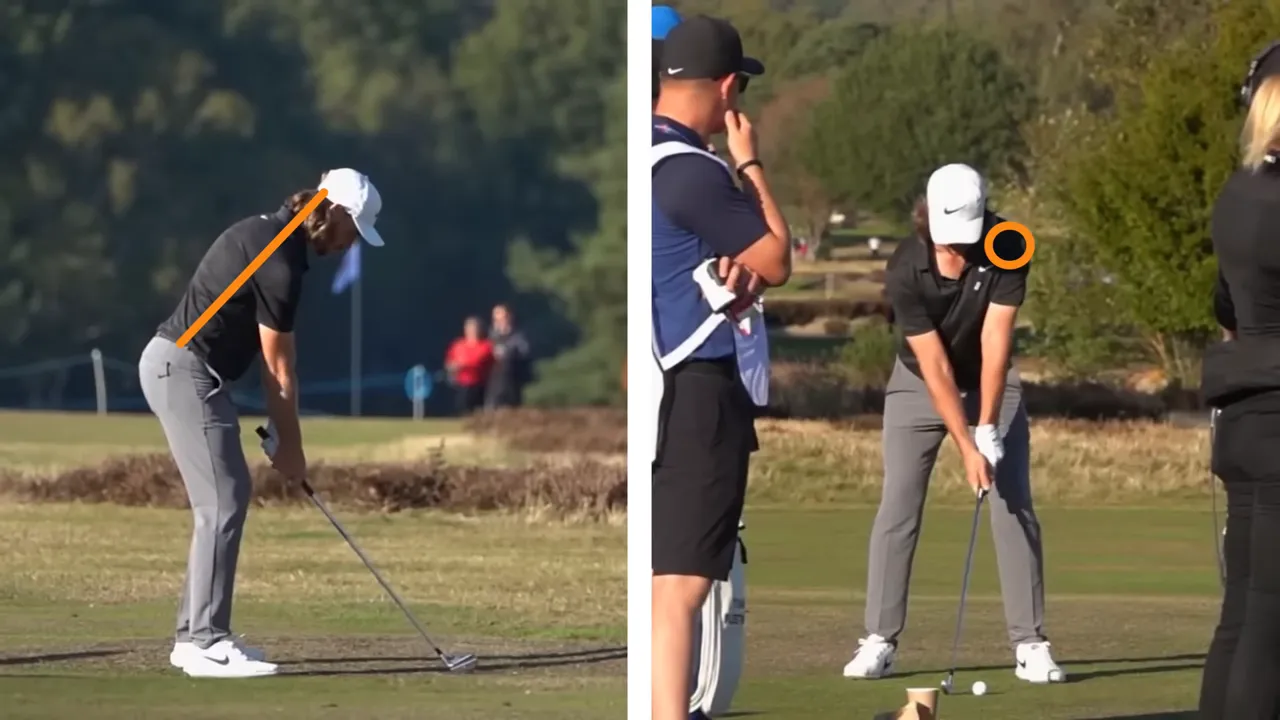
Introducing the mantra, Down and in and under the chin, offers a powerful visualization for how your left shoulder should move in a backswing. This movement helps you maintain a constant distance from the ground and preserves your spine angle for better ball striking.

Step 2: Feel the Tilt with a One-Yard Checkpoint — Left Shoulder in the Golf Swing Made Measurable
Achieving the right shoulder tilt is crucial for a successful swing. This easy drill helps you ace the tilt by using a second ball as a reference point during your backswing. Here’s how:
- Address your normal ball.
- Place a second ball a yard outside and behind the first ball.
- Place the club head on your trail shoulder and the grip on your lead shoulder.
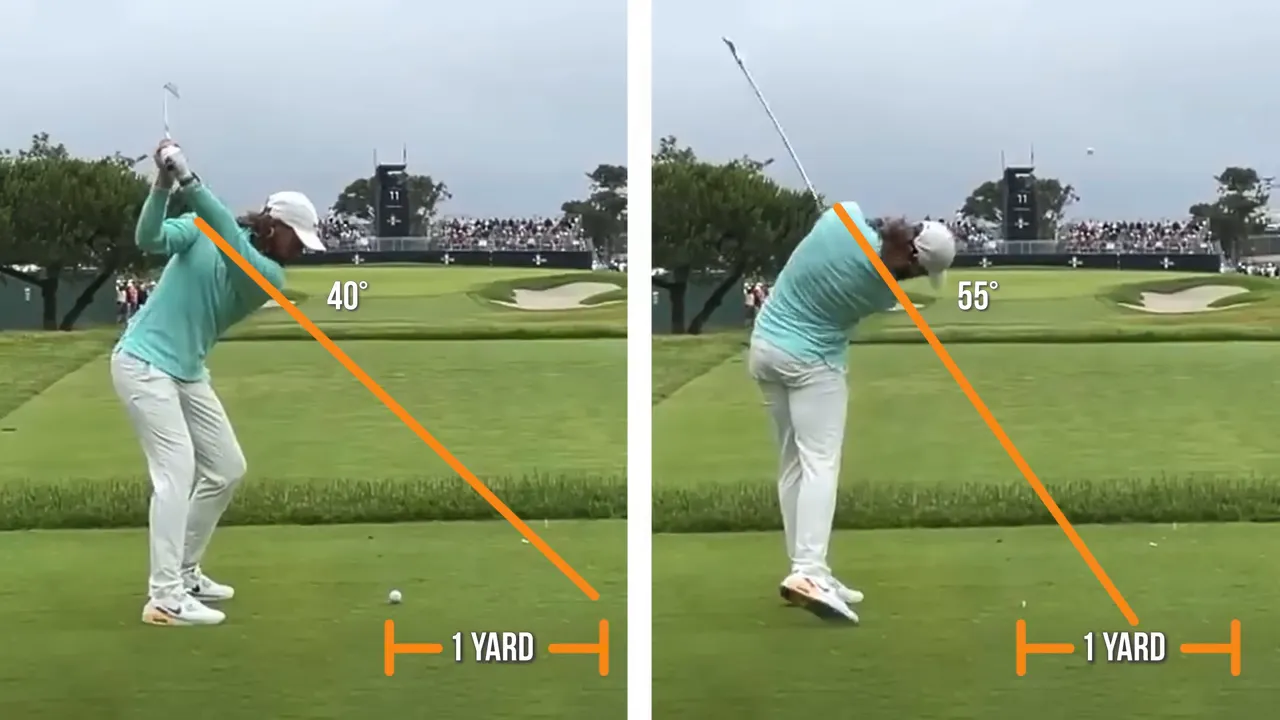
During the backswing, make sure the club points towards the outside ball. This represents the ideal shoulder tilt for most golfers.

Step 3: Understand the Downswing Tilt — Left Shoulder in the Golf Swing and Why the Trail Shoulder Must Tilt More
For a powerful downswing, increase shoulder tilt throughout the motion. While the backswing tilt is around 40 degrees, the downswing tilt can reach 55 degrees. This additional tilt assists in compressing the ball and maintaining consistent contact.

Step 4: Rehearse the Opposites — Left Shoulder in the Golf Swing on the Way Back, Right Shoulder on the Way Through
Train your body through repetition:
- During the backswing, the left shoulder moves down and in under the chin while the right shoulder rises.
- On the downswing, reverse this movement: right shoulder down and in under the chin, left shoulder up and back.
Move slowly at first to engrain these movements into muscle memory.

Step 5: Use Objective Feedback — Left Shoulder in the Golf Swing Plus Modern Tools
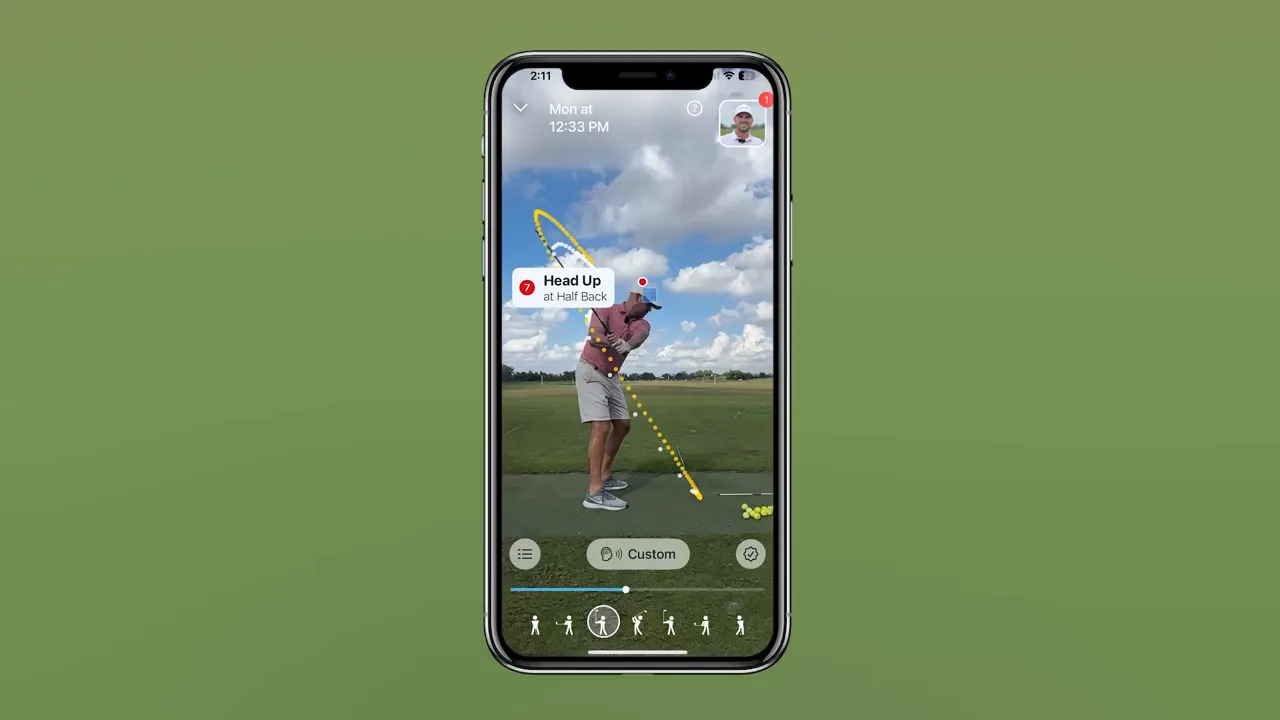
Without objective feedback, it’s hard to gauge improvement. Utilize tools like swing apps to measure changes in head position and shoulder tilt. This helps identify any discrepancy between what you feel and the actual movement.
Step 6: Recruit the Whole Lead Side — Left Shoulder in the Golf Swing Is Not Acting Alone
The left shoulder doesn’t act alone—it works in harmony with the lead knee and hip. This coordinated movement enhances your swing’s fluidity and transferability across different clubs.

Step 7: A Simple Practice Routine — Turn the Concept into Consistent Results
Develop a routine to engrain these movements into your game:
- Warm up with half swings, reciting the mantra: Down and in and under the chin.
- Use your one-yard checkpoint, doing three rehearsal swings before hitting the ball.
- Practice with a mid-iron, focusing on your height control.
- Switch to shorter and longer irons, adjusting your tilt as needed.
- Utilize an app to review your shoulder tilt and adjust as necessary.
Consistency is key, so aim for quality over quantity.
Step 8: Troubleshooting Common Mistakes — Left Shoulder in the Golf Swing Issues and Fixes
Common issues often arise when attempting to change your swing. Here are some typical mistakes and solutions:
- Too flat on the backswing: Practice the downs feel and use a checkpoint for reference.
- Standing up through impact: Focus on the trail shoulder tilt during the downswing.
- Over-tilting: Use video feedback to achieve a balanced tilt.
- Isolating the shoulder: Engage the hip and knee for a combined movement.
Step 9: How to Transfer This to the Course — Left Shoulder in the Golf Swing Under Pressure
Maintain your shoulder swing technique on the course, even under pressure:
- Address the ball, picking a visual reference mark.
- Take a practice swing with your mantra in mind.
- Visualize your tilt and checkpoint.
- Execute your shot trusting the feel rather than overthinking.
Step 10: How to Progress — Left Shoulder in the Golf Swing as You Improve
Once the basics are consistent, start working on shot shaping and speed control. Experiment with draws and fades, ensuring your shoulder tilt remains constant while the clubface angle varies.
Maintain your body’s inclination to the ground on the way back and down. This is the foundation of consistent ball striking.
FAQ
How much tilt should I create with my shoulders?
Why does keeping my left shoulder down improve contact?
Will this feel different with short and long clubs?
How do I know if I am overcorrecting?
How many reps should I do to build the habit?
What immediate swing breakdowns does this fix?
Practice the mantra, use the one-yard checkpoint, rehearse the opposite feels, and get objective feedback. When you get the left shoulder in the golf swing moving exactly “down and in and under the chin,” you will find ball striking becomes simpler and more repeatable. The move is easy to describe yet powerful in its results — give it focused practice and watch your contact tighten up.
0 Comments