
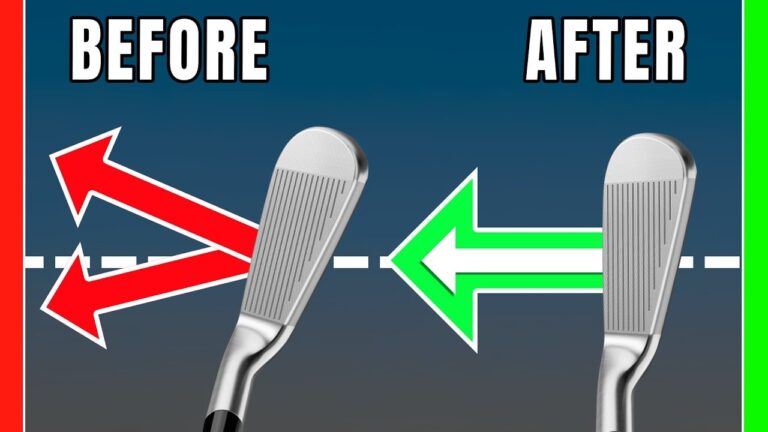

 Unlock the mystery of straight golf shots with these three no-nonsense strategies. Forget the flashy quick fixes and grab hold of tactics that seamlessly blend into your swing.
A consistent, straight golf shot isn’t about perfection. It’s about understanding and controlling a few key elements that govern club path. Let’s simplify your approach with a three-step practice routine guaranteed to enhance your range performance and course experience.
Table of Contents
- Quick Overview
- Step 1: Diagnose the Final Position
- Step 2: Tailor the Rehearsal
- Step 3: Control Forearm Rotation
- Troubleshooting and Common Scenarios
- Practice Checklist
- Quick Practice Plan
- Key Metrics
- Final Takeaways
- FAQs
- Next Steps
Quick Overview
The three factors that determine a straight start for your golf ball are:
- Body rotation
- Arms lowering
- Forearm or arm rotation
Master these elements to foster an on-plane swing and maintain a neutral club path. The following steps will guide you on how to integrate them seamlessly into your swing.
Step 1: Diagnose the Final Position — Where the Club is at Last Parallel
A crucial checkpoint is the club’s position when the shaft is parallel to the ground during the downswing. If your club head appears outside your hands, the swing path is out-to-in, leading to slices or fades. A club head placed inside your hands signifies an in-to-out path, often resulting in hooks or draws.
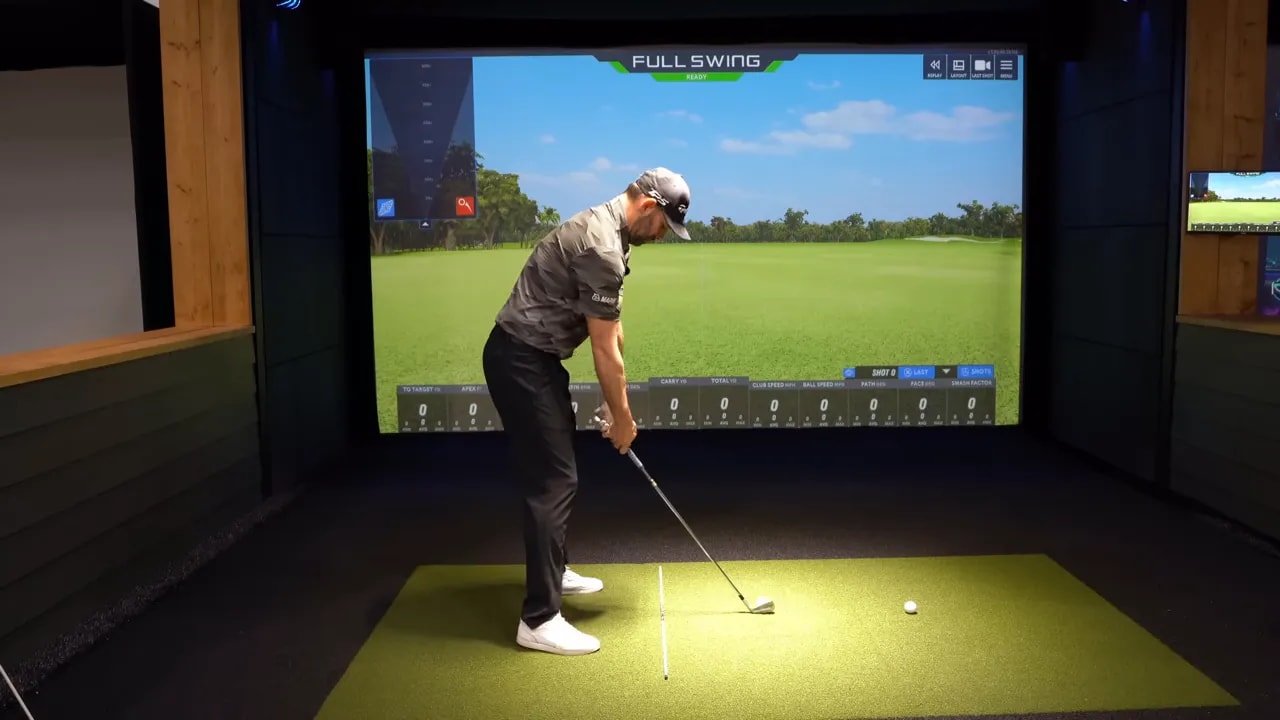
Use an alignment stick on the ground to mark your target line and check if your club’s shaft aligns correctly at this critical point.
Drill: Split-Grip Rehearsal (Arms Down + Body Rotation)
This drill focuses on combining body rotation with arm movements to achieve a balanced and effective swing.
- Align an alignment stick or spare club with your target line on the ground.
- Adopt a split grip: maintain your top hand, and slide your trail hand down the shaft.
- Execute a full backswing. Focus on synchronizing your body rotation with arm lowering, ensuring the club shaft aligns with the stick when it’s parallel to the ground.
Practice this split-grip to refine the balance of body rotation versus arm movement required to achieve a neutral path.
Step 2: Tailor the Rehearsal to Your Swing Tendency
Identify your swing tendency, whether in-to-out or out-to-in, and adjust your practice accordingly. Use the split-grip rehearsal to emphasize more body movement or arm drop, ultimately correcting your default swing path.
How to Fine-Tune Your Feels
- If shots slice or fade, adjust your rehearsal to feel more inside.
- If shots hook or pull, feel the club more outside during practice.
- Practice with small changes and track the ball’s start in relation to your target.
Step 3: Control Forearm Rotation — Keep the Club on Plane
Manage the lead forearm’s rotation approaching impact to maintain a neutral path. Use an alignment stick to visualize and control this movement, ensuring a balanced delivery.
Drill: Trace the Alignment Stick
- Hold an alignment stick with the club extending past your shoulder.
- Simulate the swing, tracing the stick along the ground line.
- Ensure the stick points directly at the ball at impact, confirming precise forearm control.
This drill prevents steep or excessively laid-off swings, fostering a neutral path.
Putting the Three Steps Together
Integrate the split-grip rehearsal, alignment stick trace, and personalized feels. Checkpoints include:
- Executing split-grip rehearsals aligning body and arms.
- Tracing the forearm rotation using the alignment stick.
- Practicing half-speed integrations of both concepts.
- Monitoring ball start and path during full swings.
Troubleshooting and Common Scenarios
1) Ball Still Starting Right (Slice or Fade)
- Focus more on arm movement during rehearsals and keep the stick inside along the ground line.
- Delay forearm rotation toward the target until after tracing to the ball.
2) Ball Starting Left (Hook or Pull)
- Incorporate more body rotation into rehearsals.
- Allow the stick to point slightly inside during the trace before rotating it towards the ball.
3) Good Path But Poor Strike
Focus first on correcting the path. Improved paths will naturally enhance strike quality.
Practice Checklist for Straight Golf Shots
- Utilize alignment sticks as visual aids.
- Practice split-grip rehearsals to perfect body and arm synergy.
- Incorporate alignment-stick tracing to stabilize forearm rotation.
- Adjust strategies based on personal swing tendencies.
- Track improvements by observing shot start and utilizing numbers when possible.
Short Practice Plan (30 Minutes)
- Begin with a 5-minute warm-up using short swings.
- Conduct 10 minutes of split-grip rehearsals, including half-strength strikes.
- Spend another 10 minutes on alignment-stick drills and blend both techniques in strikes.
- Conclude with 5 minutes of full-speed practice, adjusting to ensure improvement.
Key Metrics and Examples
Utilize practice examples to discern a neutral path (1-2 degrees) from extreme variations. Use these metrics for feedback and adjust practice intensity accordingly.
Final Takeaways
- Straighter shots stem from controlling your fundamentals, not reinventing your swing.
- Balance body rotation, arms lowering, and forearm rotation using simple cues.
- Employ split-grip rehearsal and alignment stick trace for clear feedback.
- Customize practice to counter personal swing tendencies and rely on measurable checkpoints.
Frequently Asked Questions
How long will it take to see improvement in my golf ball start line?
Immediate improvements can occur within one session using these drills, with consistency building over 2-6 weeks.
Do I need special equipment to try these drills?
An alignment stick or spare club suffices. High-tech gadgets aren’t necessary for immediate visual feedback.
Can these drills fix a slice or a hook permanently?
Regular practice can eliminate major curves, addressing the root causes of slice or hook.
Should I practice these drills on the range or at home?
Start at home for foundational practice, transitioning to the range for feedback from actual shots.
How do I track progress objectively?
Note the ball’s start direction against a target and employ a launch monitor if available for tracking precise angles.
Next Steps
Start your journey towards mastering straight shots with a session dedicated to split-grip rehearsals. Add alignment stick tracing, note start lines, and iterate your technique in every practice. Simple, effective practice based on the fundamentals of body and club coordination leads to significant improvements in your golf game.
Remember, mastering straight shots lies in refining basic principles—not chasing complex solutions. Focus on pivotal body movements, and watch as your golf game transforms.
0 Comments