
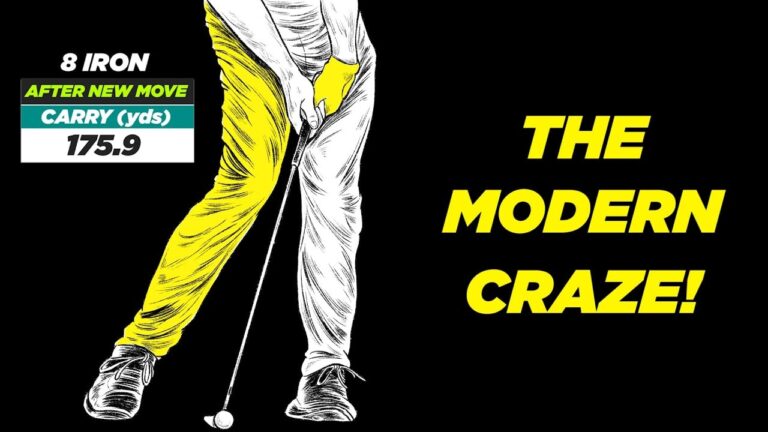

Hitting pure shots in golf comes down to one simple mechanic that most amateurs overlook: shifting your hips laterally while keeping your upper body back. When you learn to lead with your legs, create separation between hips and shoulders, and finish on the outside of your lead foot, you automatically produce better shaft lean, more compression, and far fewer fat or thin shots. The steps below break this down into a practical routine you can use on the range to change your ball striking for good.
Table of Contents
- Step 1: Build the wall — an easy setup cue for golf
- Step 2: Feel the lateral hip shift — finish outside the lead foot
- Step 3: Use the relocation drill — get comfortable with the move
- Step 4: Let the shaft lean happen — why golf compression improves
- Step 5: The 70s drill — lead with your knees and feel separation
- Step 6: Practice progression for reliable golf ball striking
- Common mistakes and how to fix them in golf
- How to check progress — simple impact tests for golf
- Step 7: Putting it into on-course practice for golf
- Why this works — a quick biomechanical summary for golf
- Drill checklist — quick reference for practice sessions
- FAQ
- Final notes — adopting this pattern in your golf game
Step 1: Build the wall — an easy setup cue for golf
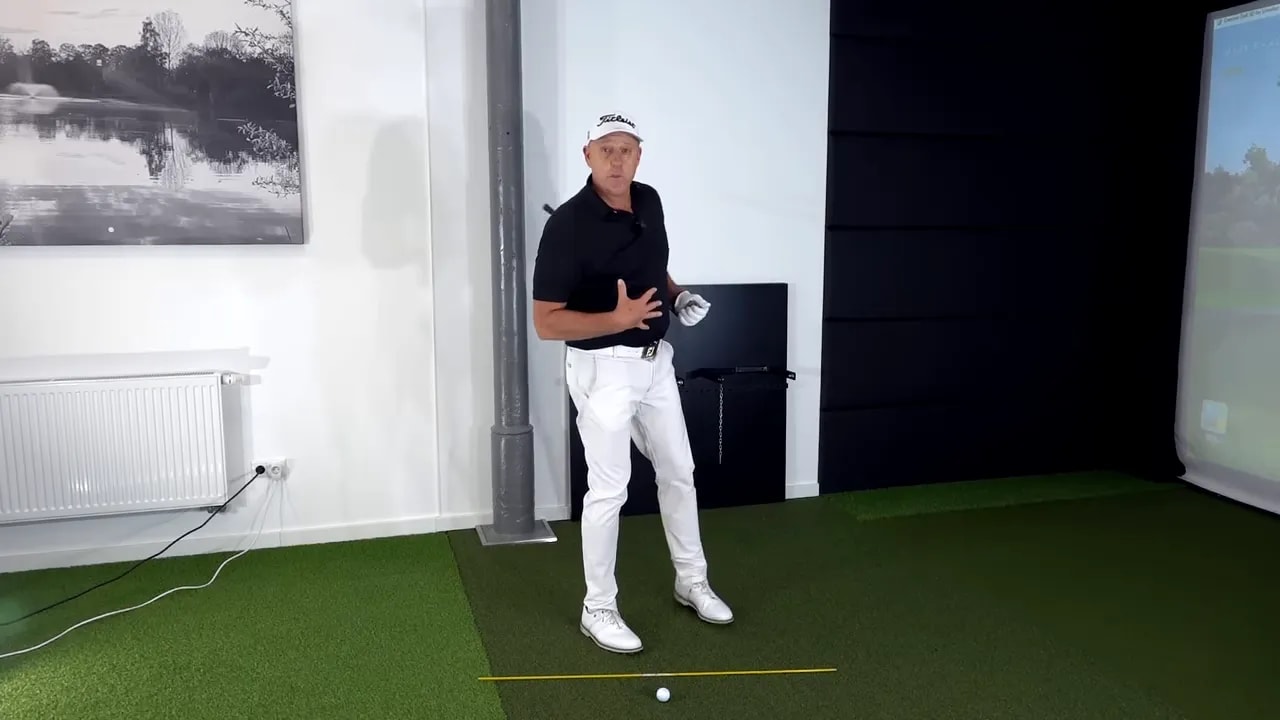
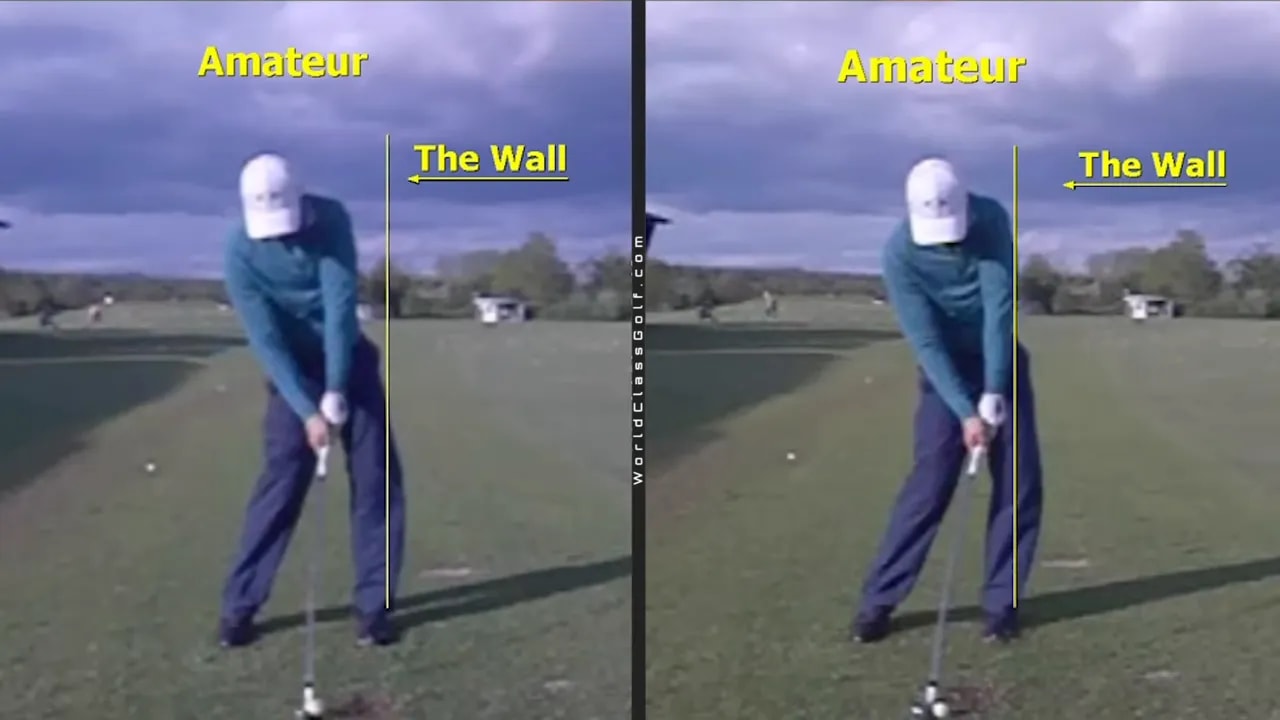
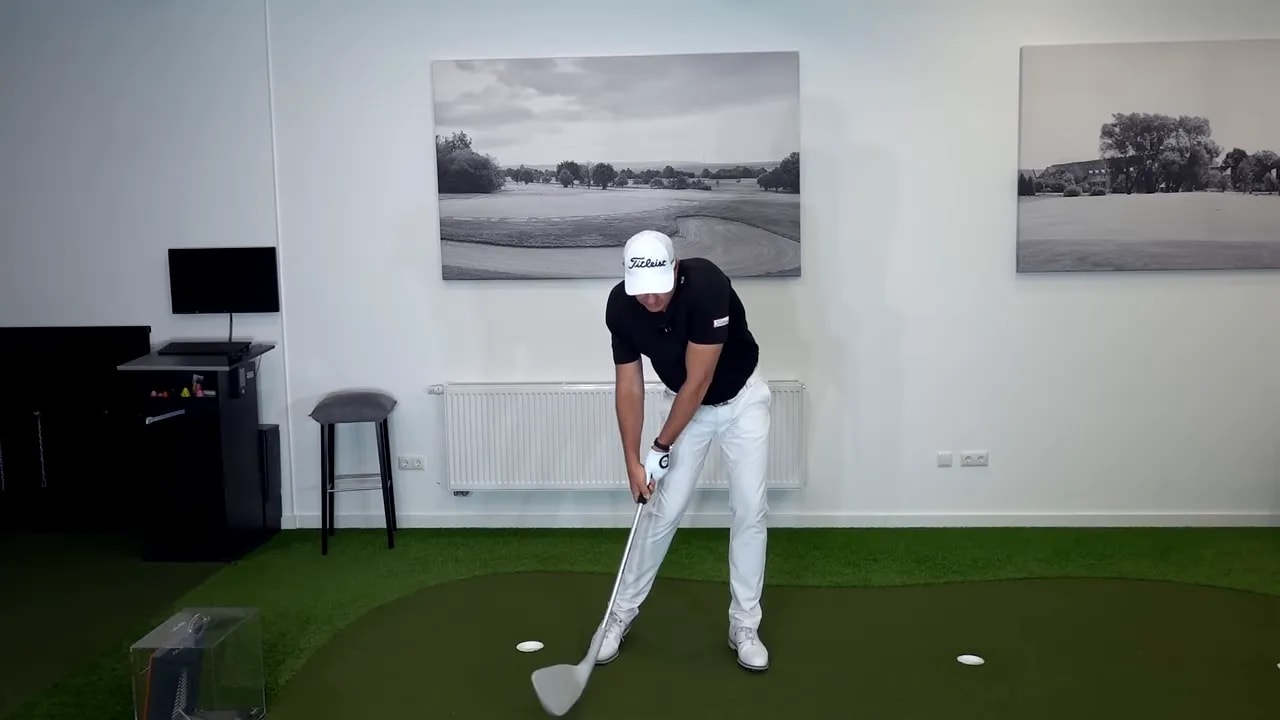
Start with a simple physical cue. Grip the club in your lead hand and place the shaft on the outside of your lead thigh at address. Slide your lead hand up to your belt line or a little higher so the shaft becomes a “wall” against your body.
That wall performs two jobs. First, it prevents your head and upper body from moving forward too early. Second, it gives your lower half something to push against, so you can generate a deliberate lateral shift through impact rather than letting your torso drift forward.
Practice this in front of a mirror: address the ball, create the wall, and make a half swing while focusing on driving the lower body underneath that wall. The upper body should remain behind while your pelvis and right knee drive left.
Step 2: Feel the lateral hip shift — finish outside the lead foot
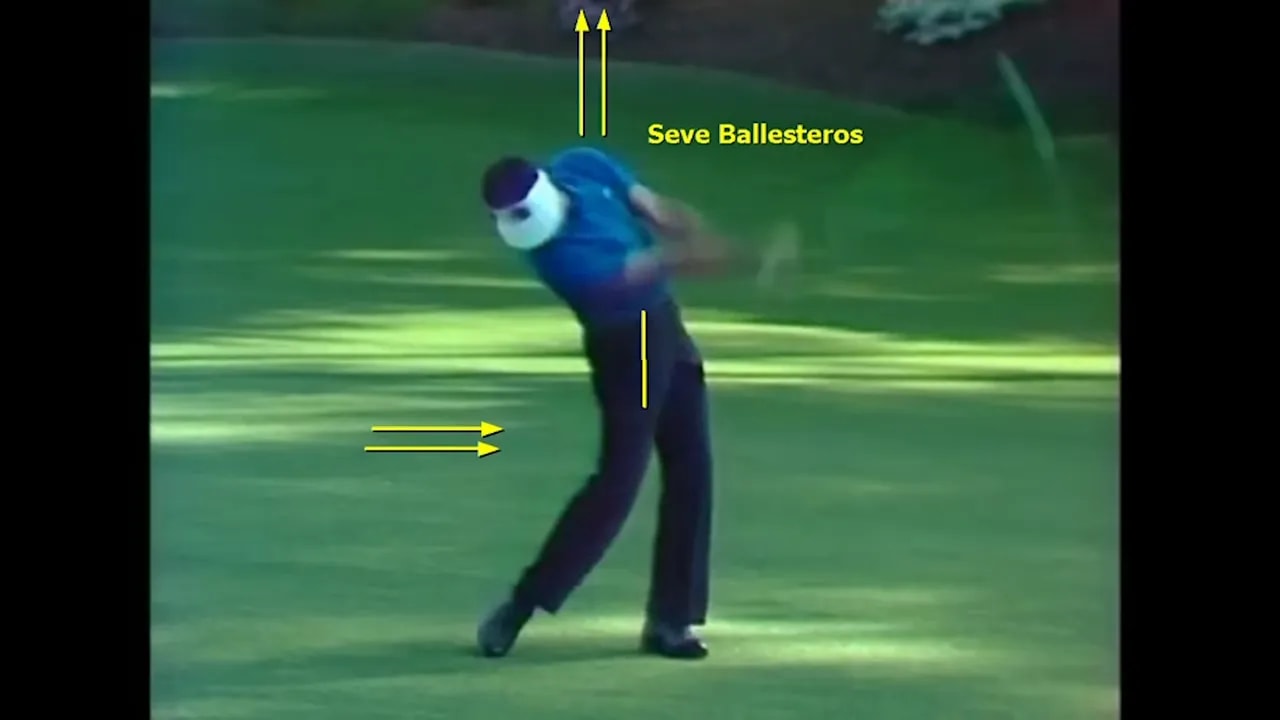
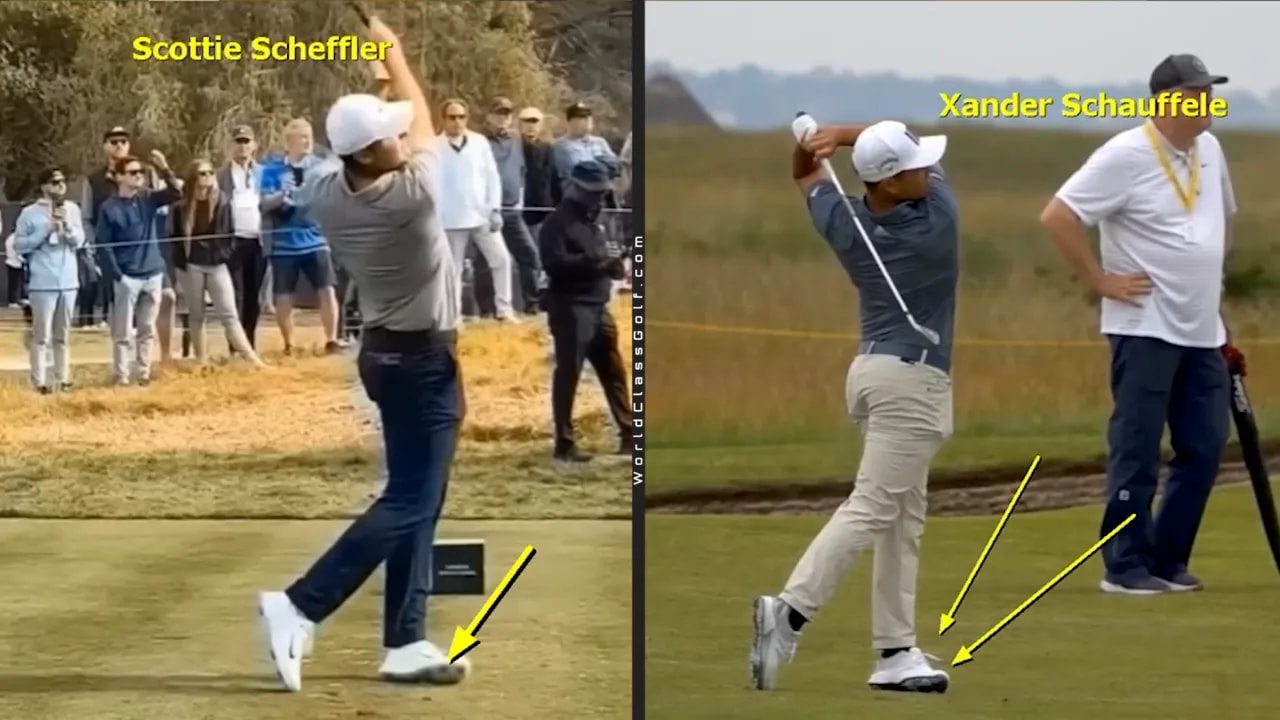
The simplest checkpoint for consistent impact is the finish. Work until your lead hip moves forward enough that it sits on the outside of your lead ankle at the finish. That lateral movement indicates you shifted weight properly and avoided sliding the upper body forward.
Key visual cues to check:
- Lead hip outside the lead ankle at the finish.
- Right knee driven into the left side (right knee moving left).
- Lead shoulder lifted, indicating separation and proper rotation.
These cues are common across the best ball strikers. The lateral shift is not a “forbidden slide.” It is a coordinated drive of the lower body that enables compression and a descending blow into the ball.
Step 3: Use the relocation drill — get comfortable with the move
From the top of your swing, practice relocating to the target until you end with the lead hip on the outside of the lead ankle. This is a slow, exaggerated move designed to build the neural pattern of shifting under the upper body.
- Take your normal address and make your normal takeaway to the top.
- From the top, transfer your weight decisively to the front foot while keeping your head or upper torso from moving forward.
- Finish with the lead hip clearly forward, right knee driven in, and the lead shoulder lifted.
Use a mirror or a front-facing camera to confirm the finish. When you hold this finish, you’ll feel the shaft lean forward and your hands ahead of the ball at impact—exactly what produces compression.
Step 4: Let the shaft lean happen — why golf compression improves
When you shift correctly, a chain reaction happens: the lower body shifts forward, the hands move ahead of the ball, and the shaft leans toward the target. That shaft lean shortens the effective length of the club at impact, creating a steeper, more compressive strike.
Benefits of increased shaft lean:
- More compression and tighter ball strike.
- Fewer fat shots because your low point moves forward.
- Less scooping because the hands lead the club into impact.
- Greater consistency across irons and wedges.
The shaft lean often appears automatically when the hips lead and the head remains behind. Resist the urge to force the hands; instead focus on the lower-body shift and let the shaft position follow.
Step 5: The 70s drill — lead with your knees and feel separation
This classic drill exaggerates the lateral shift and trains you to lead with your legs. It helps reintroduce a powerful, athletic finish used by many great players.
- Grip the club and set your palms to point straight down at address.
- Make a full swing, and as you move through impact, deliberately lead with your knees and legs.
- Keep your knees slightly bent through impact—do not fully straighten the front leg early.
- Maintain a small arch in your lower back so your upper body does not collapse forward.
Visualize the classic 1970s players: they led with a powerful lower-body shift while keeping a stable, slightly arched upper frame. This is not about stiffness; it is about controlled separation between a driven lower half and a restrained upper half.
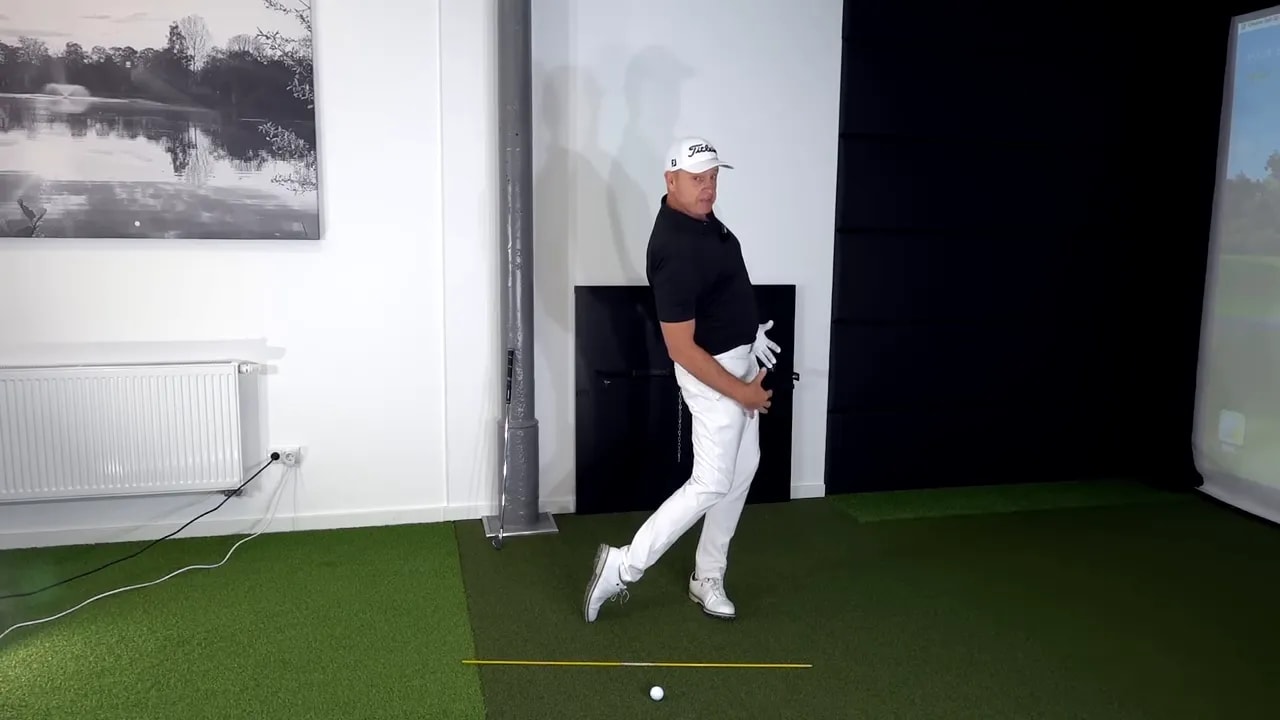
Repeat this drill slowly at first, then add speed while keeping the same sequence: legs lead, hips shift, hands follow. The palms-down cue forces you to rotate around your body and prevents early hand flipping.
Step 6: Practice progression for reliable golf ball striking
To ingrain the feeling, follow a structured progression over several practice sessions:
- Mirror work — 10 minutes: Address, simulate the top, then relocate and hold the finish until the outside-of-lead-foot position feels natural.
- Slow-motion swings — 2 sets of 10: Full swing in slow motion, prioritizing the wall and lateral hip drive.
- 70s drill — 3 sets of 8: Palms down, lead with knees, hold the finish each rep.
- Half swings with impact focus — 50 balls: Shorter swings focusing on hands ahead and a clean descending strike.
- Full swings — 3 sets of 10: Gradually increase speed, keeping the finish and shaft lean consistent.
After each set, assess impact quality. If the ball flight is thin or you are hitting fat shots, return to mirror work and the palms-down 70s drill until the movement pattern is stable.
Common mistakes and how to fix them in golf
Here are frequent errors players make when trying to implement the lateral shift and ways to correct them.
- Early upper-body movement: If your head or chest moves forward at transition, reinforce the wall drill and practice half swings with the wall cue.
- Straightening the lead leg too early: Keep a small bend through impact to maintain lateral drive. Practice the 70s drill to build this habit.
- Over-rolling or twisting the hips: Aim for forward lateral movement rather than a pure rotational roll. Think of the hips moving to the target while the upper body stays behind.
- Trying to force shaft lean with the hands: Let shaft lean be a byproduct of the lower-body shift, not something you manufacture with your wrists.
How to check progress — simple impact tests for golf
Use these quick measures to know whether the new pattern is working:
- Impact tape or spray: Check where you are hitting the clubface. Good compression will center the marks lower and slightly forward on the face.
- Divot shape: The divot should begin just in front of the ball and move forward. No backward or late divot.
- Ball flight: Expect more consistent trajectories, less topped or thinned shots, and cleaner strikes.
Step 7: Putting it into on-course practice for golf
Transfer drills to course play by applying one narrow focus per round. Example progression:
- Range session: 30 minutes focusing on the wall and finish position.
- Short range: 20 balls concentrating on the 70s palms-down drill for wedges and short irons.
- On-course: Play a practice nine focusing only on the start of your swing and the lower-body shift. Remove other swing thoughts.
Keep expectations realistic. The nervous system takes time to adopt a new movement. With regular, focused practice, most players notice cleaner contact and better consistency within a few practice sessions.
Why this works — a quick biomechanical summary for golf
The sequence emphasized here optimizes the low point and club delivery:
- Lateral shift places your center of mass ahead of the ball at impact, moving the low point forward.
- Upper-body restraint prevents early forward pitching that causes scooping or thin shots.
- Leg-led drive uses larger muscle groups to initiate the downswing, producing more stable and repeatable motion.
- Shaft lean results from the correct sequence and yields better compression and control.
The result is a more reliable strike pattern across clubs and swing styles. Many of the best ball strikers, past and present, use a version of this sequence; they simply coordinate the lower body to set the conditions for the hands and arms to deliver the club into a pure impact zone.
Drill checklist — quick reference for practice sessions
- Wall setup at address: shaft on outside of lead thigh.
- Relocate from the top until lead hip is outside the lead ankle.
- Hold the finish and confirm right knee has driven left and lead shoulder is lifted.
- 70s drill: palms down, lead with knees, keep slight arch in back.
- Progress from mirror drills to full swings and on-course practice.
FAQ
Will shifting forward cause me to slide my hips and lose power?
No. The aim is a controlled lateral shift combined with rotation. Sliding the hips without rotation is inefficient. Lead with your legs and then let the hips rotate. That sequence preserves power while improving contact and compression.
Will this change my ability to create lag or wrist angle?
The lower-body shift does not require forcing wrist angles. In many players, proper shifting creates an automatic, effective shaft lean at impact even when wrist lag looks modest. Focus on sequencing; lag often improves as a byproduct of correct body motion.
Is this suitable for senior golfers or those with limited mobility?
Yes. The drill can be scaled by reducing range of motion and emphasizing the feeling rather than the distance of the shift. Leading with knees and keeping the upper body stable often helps seniors produce cleaner strikes without needing added swing speed.
How long before I see results in my golf scores?
Expect better contact and fewer fat or thin shots within a few range sessions. Translating that into scoring gains depends on practice consistency and on-course application. Most players notice measurable improvement in shot quality in weeks rather than months.
What are the top checks to make on the course?
Use three quick checks: is the lead hip outside the lead ankle at the finish, is the right knee driven left, and do you feel shaft lean at impact? If these are present, your low point is more likely to be correct and your shots more consistent.
Final notes — adopting this pattern in your golf game
Shifting the way you move through the ball is one of the most reliable routes to cleaner contact. It is not a flashy tip. It is a structural change that aligns your body to deliver the club in a way that favors compression and control. Use the wall setup, practice the relocation and palms-down 70s drill, and build the movement slowly into your full swing.
Consistent practice with these steps will reduce fat and thin shots, increase shaft lean at impact, and provide a repeatable finish that mirrors many of the best ball strikers in golf history. Keep the focus narrow, measure progress with simple impact checks, and you will notice steadier, more confident ball striking.
0 Comments