

Nail Your Swing: Unveiling the Secrets of the Hip Bump for Irons and Driver
The “hip bump” technique is essential for golfers aiming to refine their swing. Misinterpretations often lead to inconsistent contact and reliance on manipulation instead of smooth rotation. This comprehensive guide will unravel when and how to use the hip bump, especially relevant for both irons and the driver.
What is a Hip Bump?
At its core, a hip bump is a strategic, controlled forward shift of the pelvis as you transition toward impact. This technique ensures efficient rotation without lateral slides, fostering patterns that enable more centered turns, pressure shifts, and optimal ball-first strikes.
- Centered turning: Enhance smooth chest and arm rotations.
- Pressure shifting: Move weight from the trail to the lead side effectively.
- Better body coverage: Maintain torso coverage over legs.
- Ball-first strike: Especially vital with irons.
Step 1: Is the Hip Bump for Irons and Driver the Same?
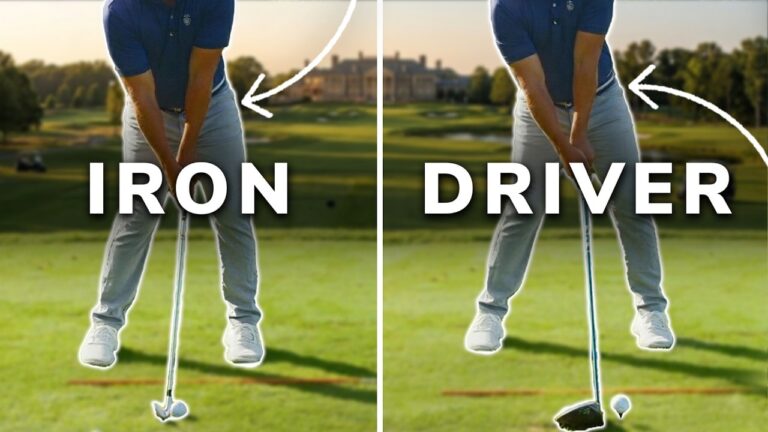
Both irons and drivers benefit from the hip bump, but they require nuanced approaches due to different contact and setup goals. Irons generally demand stability and downward contact, whereas drivers favor upward strikes with slight adjustments to increase club head speed.
Irons: On-top-of-the-ball Pattern
- Rotate without drifting away from the ball.
- Lead-side support for a stable sweep.
- Facilitate ground interaction post-ball contact.
Driver: Enhance Turn for Upward Strikes
- Ball position advances, stance adjusts.
- Strategic pressure load from trail to lead without offline drifting.
- Support upward swing path by aligning posture changes with natural rotation.
Step 2: Implementing the Iron Hip Bump for Better Contact
For iron shots, maintain upper body stability while the pelvis shifts forward to maintain proper alignment. This prevents spinal shifts that disrupt your swing.
Key Iron Hip Bump Checkpoints
- Upper body stability: No “backing up” during the bump.
- Pelvis braced: Create a robust rotation platform.
- No sway: Lead side braced via proper sequencing.
- Trail hip-foot coordination: Utilize ground up for your turn.
Effective Drill Frameworks
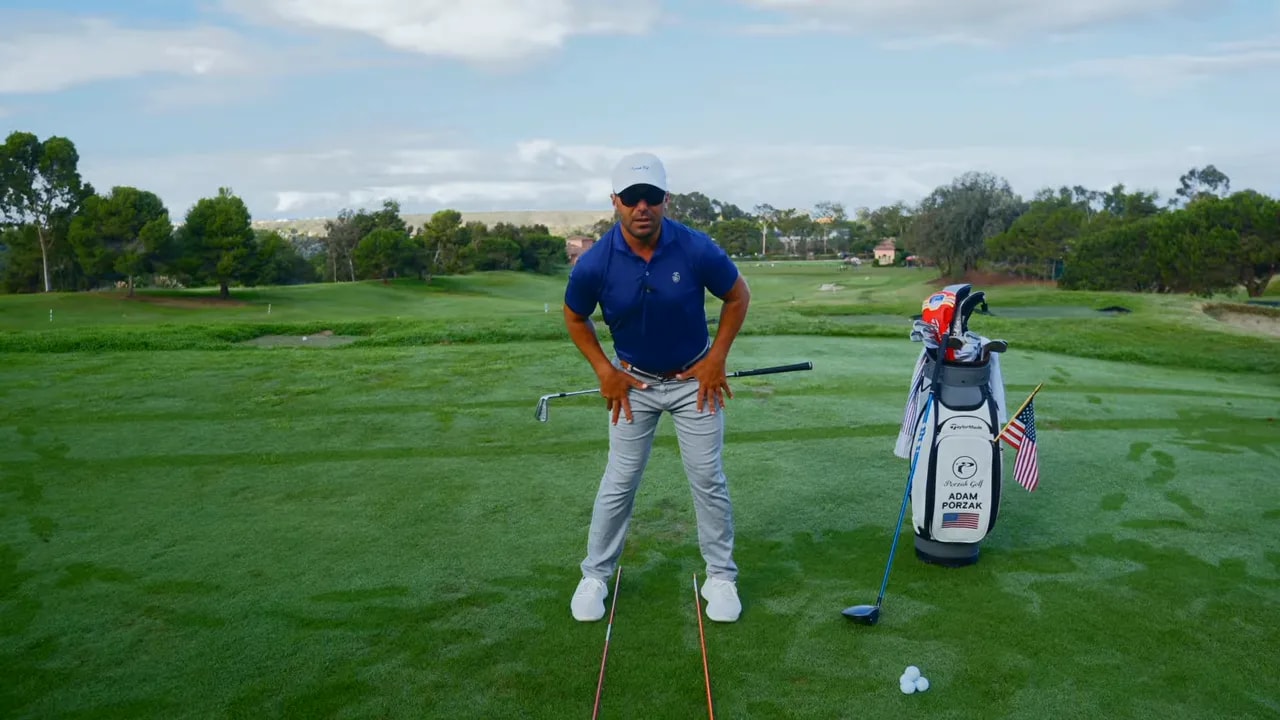
Drill A: Step-to-Step Alignment
- Setup normally with an iron.
- Use a club as your spine angle indicator.
- Execute controlled swings focusing on lead hip’s movement toward impact.
- Keep repeating for consistent torso impact position.
Drill B: Let Rotation Lead
- Begin with a half swing.
- Introduce the hip bump feel without pushing it.
- Integrate rotational pressure shifts naturally.
- Extend swing range upon improved contact.
Step 3: Driver Hip Bump Application with “Bump and Shift” Intent
Differences in driver setup necessitate adaptations. Simply copying the iron hip bump won’t suffice. Embrace a “bump and shift” approach for optimal geometry and alignment.
Driver Setup Adjustments
- Ball position: More forward, aligning with stance changes.
- Stance width: Tailored per driver length, should support a stable pivot.
- Pressure dynamics: Efficient trail-to-lead transition for consistent ball contact.
Driver Hip Bump Nuances
Allow a slight spine angle shift supporting the upward driver impact while reinforcing body rotation stability. Resist sliding movements by building a strong hip brace.
Common Mistakes and How to Practice Effectively
Avoid these errors when honing your hip bump: reverse pivots, sway, improper shoulder plane changes, and uniform application across clubs. A tailored practice regimen can rectify these.
Practicing Hip Bump Without Setbacks
- Focus on a single club with initial practice.
- Refine half swings before extending range.
- Gradually integrate checkpoint cues: quiet upper body and pelvis stability.
- Progress to driver only after mastery with irons.
- Keep track of iron strike quality and driver launch trajectories.
Conclusion
Understanding and separating the hip bump technique for irons and drivers can drastically improve your golf game. Embrace a flexible approach, tailoring your hip movement based on each club’s distinct needs. Ultimately, this strategic utilization allows for seamless rotation, effective bracing, and superior ball-striking precision.
0 Comments