


An inconsistent golf swing often begins before the club has traveled a foot from the ball. If your shots alternate between a push, a hook, a block, or a great strike that you cannot repeat, your golf takeaway fix may be less about your downswing and more about how your hands, wrists, and clubface start moving back.
The takeaway sets the conditions for the rest of the swing. A club that gets too far behind you early can force compensations on the way down. By improving your grip, hand path, and wrist-hinge direction, you can keep the club in front of your body and make impact more direct and repeatable.
Table of Contents
- Step 1: Identify whether your takeaway is causing your inconsistency
- Step 2: Start your golf takeaway fix with the grip
- Step 3: Move your hands along the correct takeaway path
- Step 4: Hinge the wrists up and out as you turn
- Step 5: Keep the club in front of your body
- Step 6: Rotate through your lead side for better compression
- Step 7: Turn technical positions into one athletic feel
- Step 8: Avoid the most common takeaway-fix mistakes
- Step 9: Use this range checklist for a repeatable takeaway
- Step 10: Build your takeaway fix into your next practice session
- Golf Takeaway Fix FAQ
Step 1: Identify whether your takeaway is causing your inconsistency
Your takeaway is the first part of the backswing, beginning at address and continuing until the shaft is roughly parallel to the ground. It may seem small, but it has a major influence on clubface position, swing plane, and how far the club must travel to return to the ball.
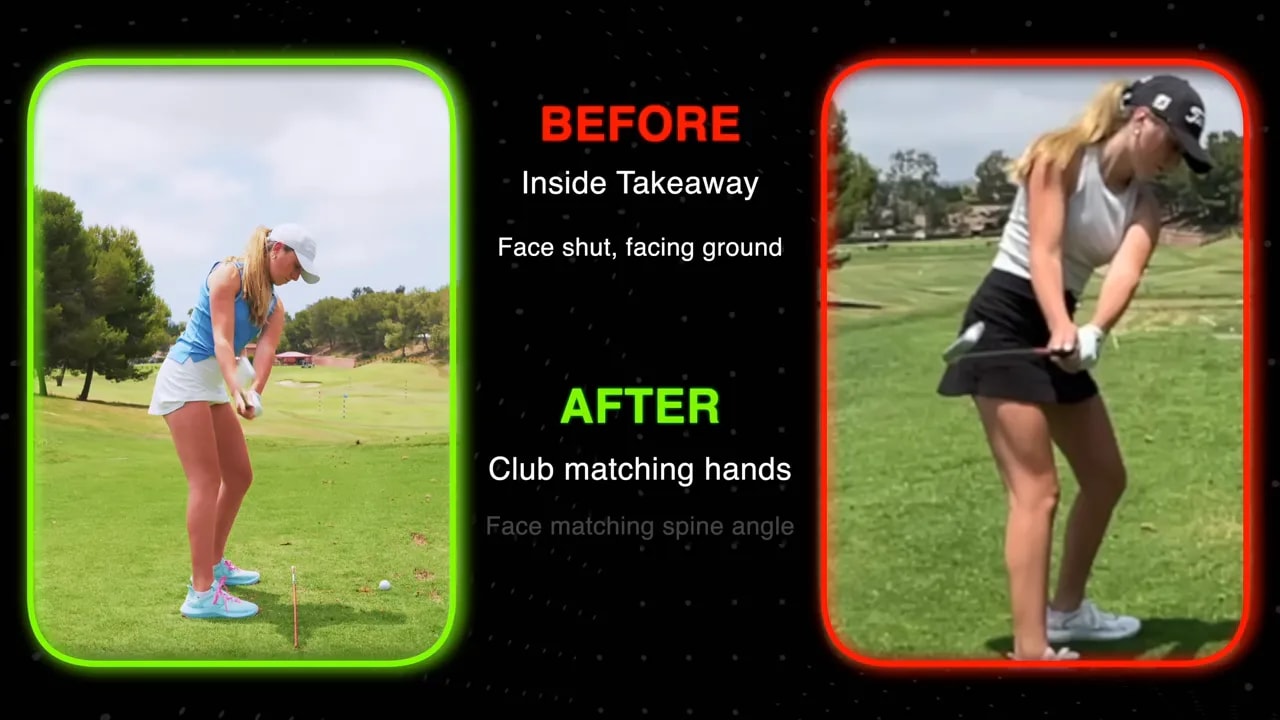
A common problem is an inside takeaway. This happens when the clubhead and hands work excessively behind your body at the start. The club can then become too low, too far inside, and too far behind the trail side during the backswing.
When that occurs, you may feel as though you have to swing too far from the inside on the downswing. That pattern can lead to:
Pushes that start right of the target for a right-handed golfer
Big draws that can turn into hooks
A club that feels stuck behind you
Timing-dependent contact and directional control
An upper body that falls back away from the target through impact
The challenge is that an inside takeaway does not always look dramatically wrong in real time. It can feel natural because the club is moving around your body. However, if the club becomes trapped behind your torso early, it has farther to travel before impact. That increases the need for last-second hand and body adjustments.
Simple checkpoint: During your takeaway, the club should generally remain in front of your chest rather than disappearing quickly behind your trail hip. Your body is turning, but your hands and shoulders should move together.
Step 2: Start your golf takeaway fix with the grip
A takeaway correction is difficult to maintain if your grip encourages the clubface to close too early. In particular, a trail hand positioned too far underneath the handle can make it hard to keep the clubface neutral during the first move back.
For a right-handed golfer, check the crease between your trail thumb and index finger. A useful reference is for that crease to point more upward, toward the space between your forearms, instead of turning underneath your trail forearm.
This adjustment can help prevent a shut clubface in the takeaway. When the face closes early, your swing may need to travel excessively to the right to keep the ball from going left. If the face stays square to that overly in-to-out path, the result can be a push. If it closes relative to the path, the ball can hook.
Grip checklist before you practice
Set your hands on the club before making a takeaway rehearsal.
Avoid placing the trail hand excessively under the handle.
Check that the trail-hand thumb-and-index crease is not pointing far beneath the trail forearm.
Hold the club securely without squeezing so tightly that your wrists cannot hinge naturally.
Use a neutral-looking clubface at address as your starting point.
Do not try to force the face open during the takeaway. The goal is a grip that lets the club move back with less manipulation, not a hand action that creates a new compensation.
Step 3: Move your hands along the correct takeaway path
The central golf takeaway fix is to give your hands a clearer direction. Imagine a line extending along your toe line. As you begin the backswing, allow your hands to travel back along that general line toward your trail pocket while your shoulders turn.
This is not an instruction to drag the club straight backward with only your arms. Your torso must turn with the motion. Think of your hands and shoulders as moving together, with the club remaining in front of your body as it begins to rise.
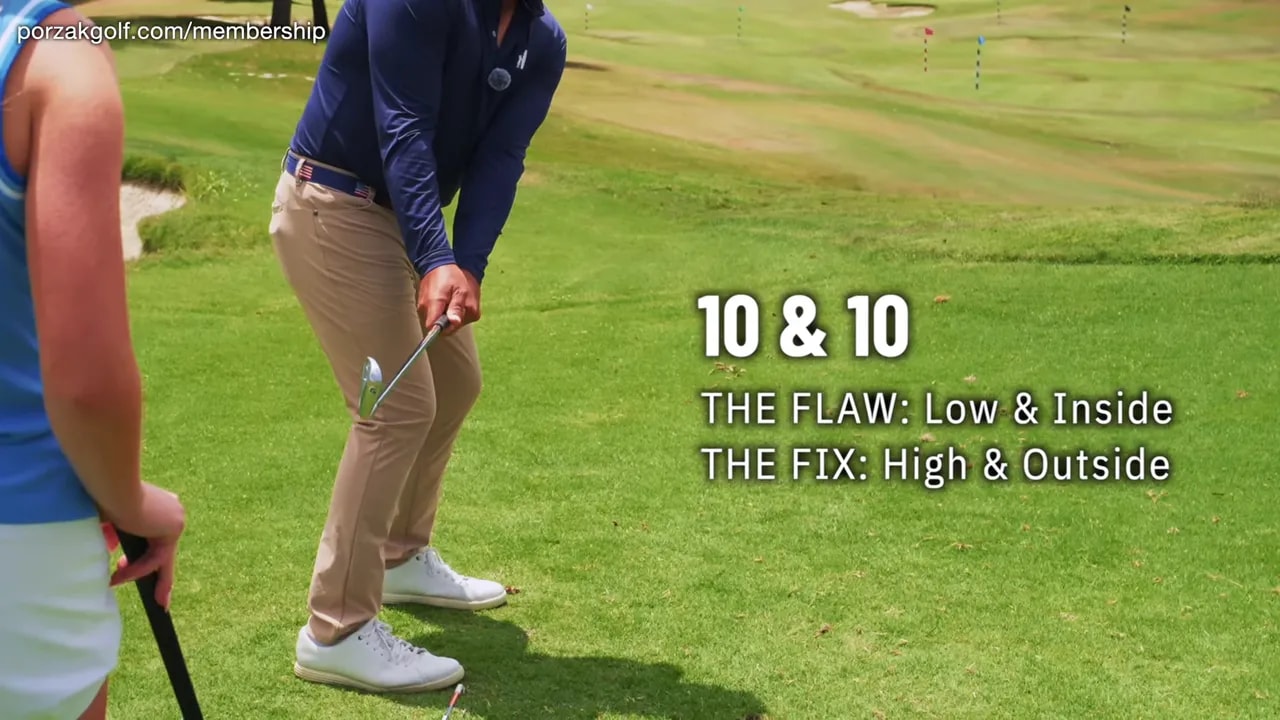
For many golfers who take the club too far inside, the right feeling is that the club moves a little more up and out in the first part of the backswing. That is a feel, not necessarily the exact position you will see on camera. Since your body turns while the club moves, a practice feeling that seems slightly outside may produce a much more neutral takeaway.
Use the 10-and-10 feel for an inside takeaway
If your club is low and behind you at the shaft-parallel checkpoint, use a simple exaggeration: feel as though the club travels about 10 degrees more up and 10 degrees more out during the takeaway. Rehearse this slowly before hitting balls.
The purpose is not to build an over-the-top swing. It is to counter a pattern that is too low and too inside. Once your body turn is added, the club can return to a more functional position along your foot line.
Step 4: Hinge the wrists up and out as you turn
Many golfers focus on whether they are hinging their wrists, but the direction of the hinge matters just as much as the amount. A useful takeaway feel is to hinge the club on roughly a 45-degree angle while turning your shoulders.
Without body rotation, this hinge direction would send the clubhead up and away from the ball. When you blend that wrist action with a proper turn, the shaft can rise into a more on-plane position instead of staying too low and behind you.
At the early takeaway checkpoint, the club should be rising toward hand height rather than remaining close to the ground as it disappears behind your body. This encourages a flatter lead wrist and can prevent the clubface from shutting excessively.
How to create the wrist-hinge feel
For a right-handed golfer, use two opposing sensations:
Lead hand: Feel light downward pressure through the heel pad of the lead hand as you begin turning.
Trail hand: Feel your trail index finger, often called the trigger finger, helping the clubhead move upward.
These opposing pressures can help the club rise naturally without lifting your arms away from your turn. The result should feel organized and connected, not forced.
Practice this first without a ball. Make slow rehearsals to the point where the shaft is about parallel to the ground, stop, check the club position, then return to address. Repetition at slow speed is far more valuable than immediately hitting full shots.
Step 5: Keep the club in front of your body
One of the simplest swing thoughts for a more repeatable motion is: keep the club in front of your body. This does not mean the club never moves around you. A golf swing is rotational. It means the club should not get trapped behind your torso during the first move back.
When the club stays in front, it can work upward on a more appropriate plane. From there, the downswing has less distance to recover and fewer moving parts to coordinate. You are less likely to need a steep reroute, a flip, or a dramatic swing out to the right.
Use this sequence:
Build your normal setup and grip.
Make a half-speed takeaway with your shoulders and hands moving together.
Feel the club hinge up and out as your torso turns.
Pause when the shaft is around parallel to the ground.
Check that the club has not dropped far behind your trail side.
Repeat several rehearsals, then hit a shot with the same single feeling.
It is helpful to record a down-the-line swing occasionally. Compare your club position at the same point in the takeaway instead of judging the swing only by the final ball flight. A better start may feel unfamiliar at first, especially if you have played from an inside position for a long time.
Step 6: Rotate through your lead side for better compression
A stronger takeaway gives you a better chance to rotate through the ball instead of backing away from it. To improve compression, your upper body needs to work more around and over your lead leg through impact.
For right-handed golfers, feel your lead pocket moving back as your trail shoulder moves through toward the target. This is a rotational motion, not a lunge toward the ball. The body turns from the inside of the trail foot in the backswing toward the inside of the lead foot in the downswing.
This movement helps move the low point forward, allowing you to strike the ball before the turf with irons. It also encourages the club to travel down its intended plane rather than getting stuck far behind you.
The club-across-the-chest drill
Place a club across your chest with the clubface roughly matching your spine angle. Make slow body turns without a ball. As your lead pocket moves back, feel your trail shoulder move through toward the target.
This rehearsal teaches the body action without the complication of a swinging club. Once you understand the rotation, return to your normal grip and make short swings while preserving that same through-the-ball feeling.
Step 7: Turn technical positions into one athletic feel
Golfers often struggle after a lesson because they take too many instructions onto the course. Positions are useful for diagnosis and practice, but a shot is easier to play when you use one clear sensation.
For this golf takeaway fix, choose one of these feels:
“Hinge up and out.”
“Keep the club in front.”
“Hands and shoulders move together.”
“Turn around my lead side.”
Use your selected feel during a couple of slow rehearsals before a shot. Then step in and swing with commitment. Trying to consciously manage grip angle, clubface, hand path, wrist hinge, shoulder turn, and impact at once is likely to make you tight and indecisive.
A good practice-to-play progression is:
Make five slow takeaway rehearsals without a ball.
Hit five short shots at roughly half speed.
Hit five normal shots using only one feel.
Finish by changing targets between shots and using your full pre-shot routine.
This approach helps you move from a technical practice motion toward a playable golf swing.
Step 8: Avoid the most common takeaway-fix mistakes
Trying to pull the club straight back
Your hands should have direction, but the takeaway is not a rigid straight-back motion. If you drag the club straight back without turning, the motion can become disconnected. Pair the hand path with a shoulder turn.
Forcing the club too far outside
Golfers correcting an inside takeaway often overdo the “out” feeling. Remember that it is an exaggeration designed to offset a pattern. Use ball flight, comfort, and occasional swing footage to make sure you are not creating a steep or overly outside takeaway.
Rolling the clubface open with the hands
A more neutral clubface does not require an active roll of the forearms. Start with the grip. Then allow the clubface and wrists to respond naturally as the club hinges and your body turns.
Ignoring impact rotation
You can improve the first 12 inches of the swing and still struggle if you remain on your trail side through impact. Pair the takeaway work with a through-swing that rotates around the lead leg.
Changing too many things at once
Start with grip and takeaway. Once those feel more stable, add the lead-side rotation work. A simple plan makes it easier to know what is improving and what still needs attention.
Step 9: Use this range checklist for a repeatable takeaway
Grip: Is the trail hand excessively underneath the handle?
Clubface: Does the face avoid shutting immediately in the takeaway?
Hand path: Do your hands work back with your shoulder turn rather than quickly behind you?
Wrist hinge: Does the club hinge upward and outward as it rises?
Connection: Does the club remain in front of your chest early in the backswing?
Through-swing: Are you rotating around the lead leg rather than falling back?
Feel: Can you describe the motion with one short cue?
Do not expect every ball to be perfect while you are changing a long-standing pattern. Look for improved start direction, more predictable curvature, cleaner contact, and a swing that feels easier to repeat.
Step 10: Build your takeaway fix into your next practice session
Your first goal is not to create a picture-perfect backswing. Your goal is to remove the early movement that causes the rest of the swing to need rescuing. Start with a neutral grip, rehearse a 45-degree up-and-out wrist hinge as you turn, and keep the club in front of your body.
When your takeaway becomes more organized, you give yourself a better chance to swing through the ball with rotation, move the low point forward, and compress your iron shots. Small changes in the first part of the backswing can make the entire motion feel far less complicated.
Golf Takeaway Fix FAQ
Why does my golf club go too far inside on the takeaway?
Your club may move too far inside because the trail hand sits too far under the grip, the clubface closes early, the hands pull behind the body, or the wrists hinge too low. An inside takeaway can also occur when you move your arms back without enough shoulder turn.
What should the clubface look like in the takeaway?
The clubface should not shut dramatically during the first move back. A grip that allows the face to remain more neutral can reduce the need to swing excessively from the inside and make the downswing easier to organize.
How do I keep the club in front of my body in the backswing?
Move your hands and shoulders together during the takeaway. Use the feeling that the club hinges up and out while your torso turns. Practice to shaft-parallel at slow speed, and check that the club has not dropped behind your trail hip.
Should I feel like my takeaway is outside?
If your normal takeaway is low and inside, feeling the club move slightly up and out can be useful. This is an exaggeration feel, not necessarily the exact final position. Your shoulder turn will make the actual club path less extreme than it feels.
Can a takeaway fix help me stop pushing and hooking the ball?
It can help when those misses are caused by a shut face and a club that becomes stuck behind you early. A more neutral grip, takeaway, and hand path can reduce the need for a heavily in-to-out swing. Ball flight also depends on other parts of your swing, so use the change as part of a complete pattern.
0 Comments