


If your golf shots are sometimes high and right, inconsistent, or you struggle to square the club face under speed, you are likely trying to “time” the face with too much rotation. The fix is not more complicated wrist manipulation. The fix is learning what actually squares the club face in the downswing and how the best golfers create both control and speed.
This article breaks down a simple release concept often associated with Bryson DeChambeau: you stall and pull up through impact to get a late, stable face position, and you generate more clubhead speed by pulling the grip upward from a compressing position. In golf, that combination can produce cleaner strikes and straighter ball flights with less conscious face control.
Table of Contents
- Overview: The two problems you are trying to solve in golf
- Step 1: Use a “square to the arc” model to understand why the face cannot square by body rotation alone
- Step 2: Learn the real squaring trigger in golf: stall the hands, then release
- Step 3: Fix your club face fast with a simple drill (delivery position and pull-up on the grip)
- Step 4: Create more golf speed by pulling the grip up (not standing up)
- Step 5: Stop “standing up” and start “compressing” so you can push and pull for face control
- Step 6: Build the full movement sequence for golf (up, compress, grip lower, post and release)
- Common mistakes this golf move helps you avoid
- How to practice this in your next range session
- FAQ about squaring the club face and creating speed in golf
- Final takeaway for golf: build the release through a stall and a grip pull-up
Overview: The two problems you are trying to solve in golf
Most golfers try to solve two separate issues at once:
- Face control: You want the club face square at impact (not open, not closing too fast, not wobbling).
- Clubhead speed: You want more speed without losing strike quality.
The key insight is that these issues are connected through how you apply force and how the club is allowed to release through impact. The body sets up the timing, and the hands release the face.
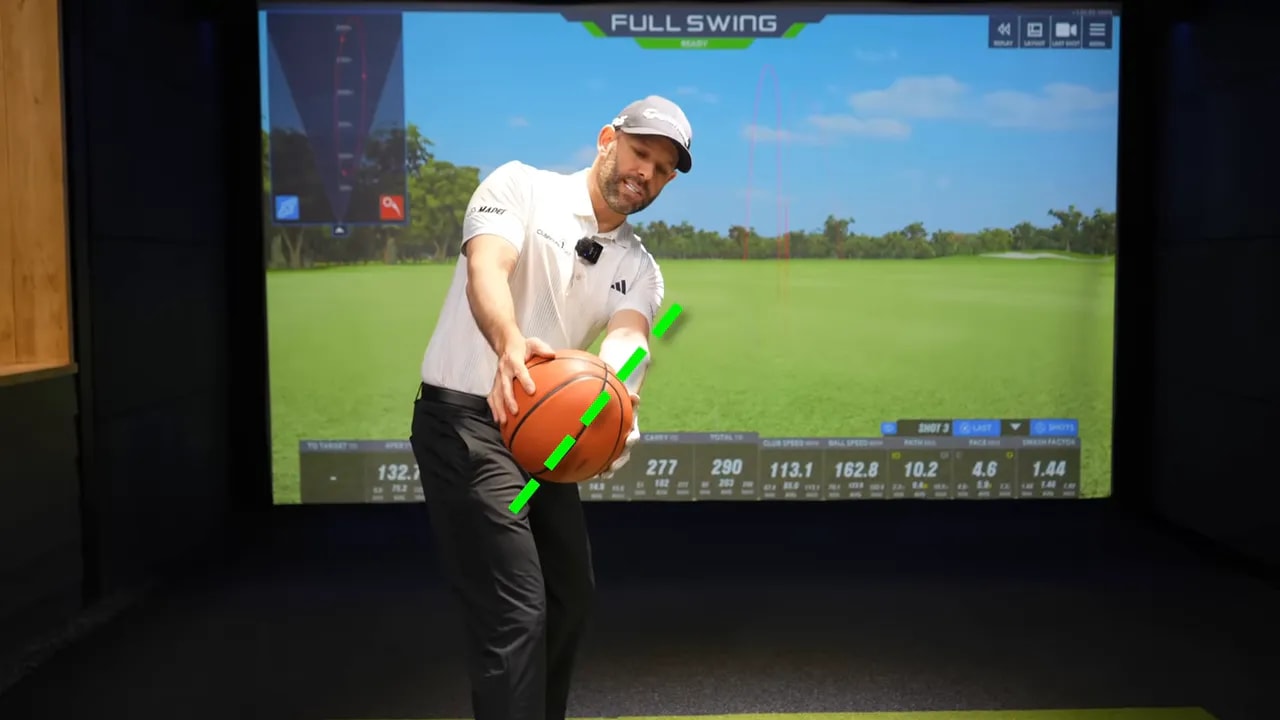
Step 1: Use a “square to the arc” model to understand why the face cannot square by body rotation alone
A helpful way to think about squaring is the idea of keeping something aligned to the swing arc while you rotate. Imagine a small object (the lesson uses a basketball-style reference) positioned where your hands travel. As you rotate in the backswing, that reference stays square to the arc.
The problem shows up when you try to make a full backswing and keep everything square to the arc. Eventually you have to “fold” or rotate the arms. When you do, the reference (the “basketball line”) rotates about 90 degrees because your arm position has changed.
Now consider your downswing: when you rotate your body, that reference is still rotated. So if you rely on body rotation to bring the club face back to square, it will not reliably happen.
The practical takeaway for golf is blunt but useful: you cannot count on the body rotation to square the club face late. Something else must do the job in the final moments.
Step 2: Learn the real squaring trigger in golf: stall the hands, then release
The concept being taught is called a kinematic sequence. In simple terms, your body rotation and the club’s motion have different rotational rates through the swing. Typically:
- The hips rotate and then slow down pre-impact.
- The torso rotation also slows down.
- The arms and clubhead then move through a transition where the clubhead kicks out.
That is why the best golfers are not just “turning as hard as possible” through the ball. They rotate hard early, then apply braking or “stalling” so the club can release.
In this model, squaring happens when the hands release. And how do you get the hands to release? By using a specific action with the grip: a break and pull-up.
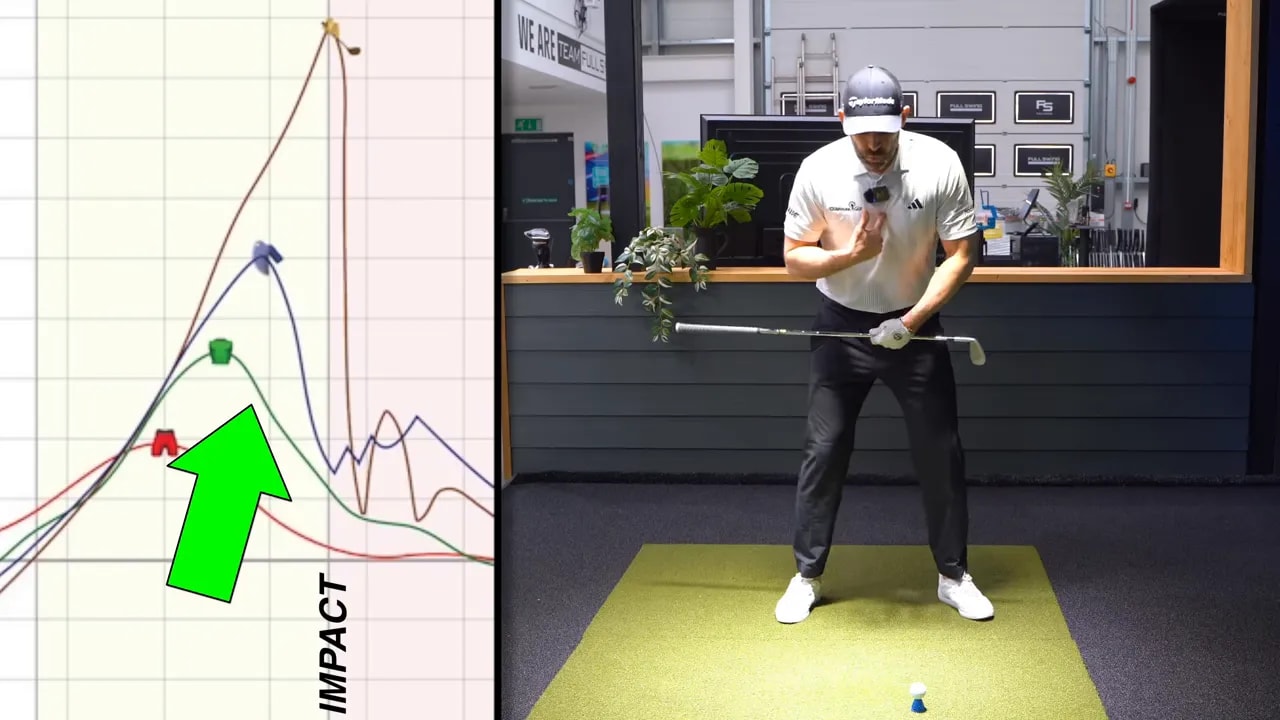
Step 3: Fix your club face fast with a simple drill (delivery position and pull-up on the grip)
This drill is designed to feel the exact moment the face becomes stable without forcing a wrist “roll” for timing.
Setup
- Get into a delivery position where the club face is in a “good spot,” even if it is slightly open.
- Light grip pressure helps you feel the release rather than steer the club.
- Put a bit of pressure into your lead side.
Action
- Feel like you push away from the ground (this helps you post up and firm your lead side).
- Then break and pull up on the grip toward your body.
- Do this progressively at first, even at very slow speed.
The intended result is that the clubhead kicks out toward the ball, and the ball flight becomes more direct. In the teaching example, when this was done with over-slow speed control, the shot went “dead straight” and felt easy because the golfer was not trying to “square the club face” consciously.
If you find your shots are still missing, reassess one thing: Are you still rotating the club and hands through without stalling? The model says the hands must stall and release to square the face.
Step 4: Create more golf speed by pulling the grip up (not standing up)
The second half of the concept is speed. A common speed killer is what many golfers do in the downswing: they stand up, gain height, and then try to “catch up” with the arms.
The drill described here makes the speed mechanism very obvious.
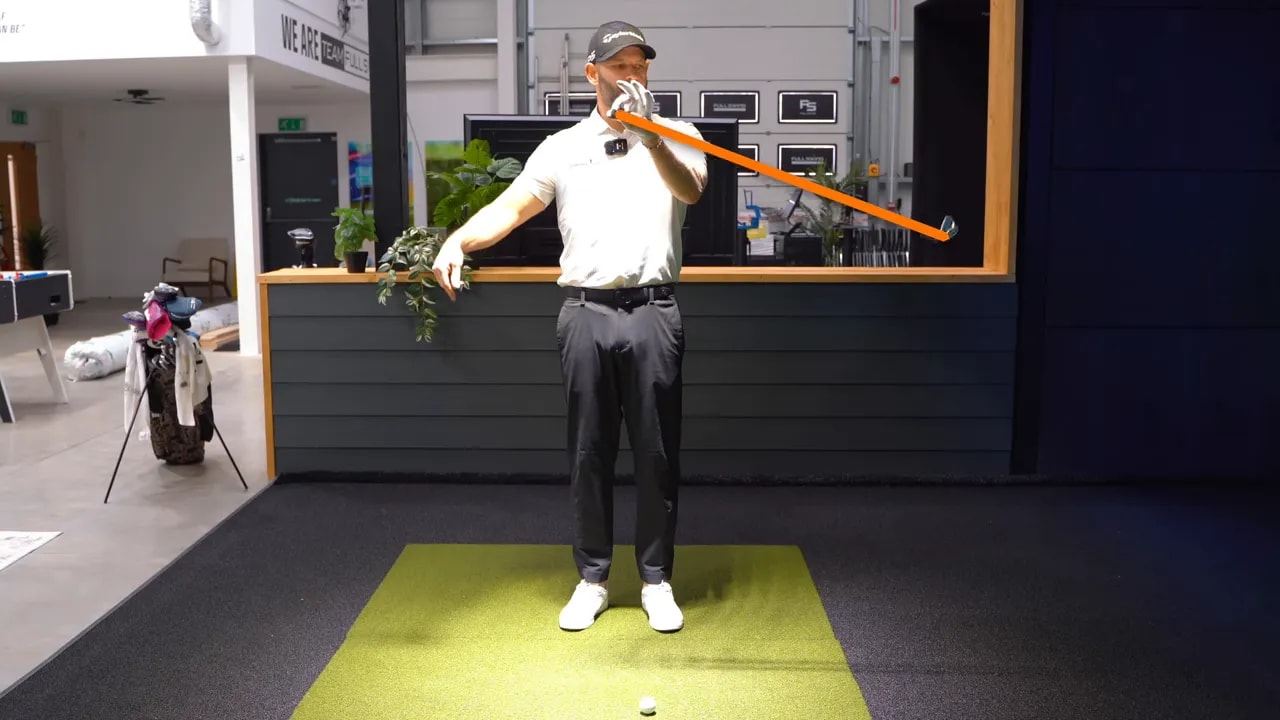
Grip and drop experiment
- Hold the club with only two fingers near the top, so you are supporting it, not controlling it.
- Place the club around horizontal, then let it drop.
- Notice what happens: the club does not reach horizontal on the other side because you are not applying the release-like force.
- Now repeat but pull up on the grip as it drops.
When you pull up, the club travels farther and reaches horizontal. In golf terms, traveling farther generally means you are creating more speed at the bottom of the arc, where it matters.
Step 5: Stop “standing up” and start “compressing” so you can push and pull for face control
The teaching includes an important constraint: if you cannot pull up on the handle, you cannot reach the ball correctly. That leads to a common pattern in golfers who struggle with face control and speed: they stand up and lose their ability to use the pull-up action through the hitting zone.
In contrast, great players, especially with irons, tend to:
- Compress slightly in the downswing (upper body gets slightly closer to the ground).
- Bring the grip lower into the delivery zone.
- Then, when the body can push with force, the club face can square automatically as the clubhead kicks out.
This is why the concept blends body and hands. The body creates the correct position and energy. The grip pull and release then let the club find a squared face.
Step 6: Build the full movement sequence for golf (up, compress, grip lower, post and release)
Use the sequence as a training cue. Train it slowly first, then blend it.
Sequence to practice
- Up (start the downswing conceptually with a stable torso and pressure shift).
- Compress (get your body slightly closer to the ground rather than standing up).
- Grip gets lower (because of compression and your position, the handle is in the right window).
- Post and release (push out with your lead leg and then pull up on the grip so the clubhead kicks out through impact).
A key instruction is not to make this a purely “arm thing.” The arms influence the club, but the core energy comes from how the body applies force into the ground and how the release is timed.
In the example given, an 8-iron flew about 176 yards with strong carry and distance attributed to clubhead speed generated through impact mechanics driven by the body sequence.
Common mistakes this golf move helps you avoid
- Trying to square the face by rotating harder late: the model says body rotation does not square the face automatically.
- Letting the hands keep moving through impact: if the hands do not stall, you lose the “stall and pull-up” moment that supports a square face.
- Standing up in transition: you shorten your ability to pull up on the handle and you often lose compression and face stability.
- Over-manipulating wrists for timing: the goal is to create a release that happens naturally when pressure, compression, and grip pull-up align.
How to practice this in your next range session
Use a simple progression so you feel what matters without building bad timing habits.
- Feel drill (no full swings): go into a delivery position and practice the “push away then pull up on the grip” release at near 20 percent speed.
- Speed drill (controlled release): do half swings focusing on compression and keeping your handle lower through the downswing. Pull up on the grip after you post.
- Ball-flight drill: hit 8-irons or mid-irons aiming at a starting line. Your first target is face control and strike consistency.
- Blend: once your shots are straight enough, then increase swing intensity while keeping the same compress, post, and pull sequence.
If you feel yourself standing up, reset compression first. If the face is still open, check whether your hands are stalling and whether you are actually pulling up on the grip after posting.
FAQ about squaring the club face and creating speed in golf
Is this really about “rolling the wrists” in golf?
Not primarily. The emphasis is on creating a release through a stall and a grip pull-up so the clubhead kicks out. Wrist motion can be a result, but squaring is not treated as a late hand manipulation you force with timing.
What does “stall your hands at impact” mean?
It means the hands and club do not just keep accelerating through the hitting moment from rotational speed alone. Instead, your motion sequence slows or brakes before impact, allowing the release action to square the face.
Why does pulling up on the grip create more speed?
Pulling up helps the club travel farther through the dynamic window near the bottom of the swing. That extra travel translates into greater clubhead speed without requiring you to spin harder through the ball.
How do I prevent standing up during the downswing?
Focus on a slight compressing action so the upper body gets a touch closer to the ground and the grip gets lower into the hitting zone. From there, you can push out with force and execute the pull-up on the handle.
What clubs does this work best with?
The concept is especially highlighted for irons because compression and face control are crucial for consistent ball striking. You can still experiment with it using your wedges and fairway woods, but irons are where the spacing and strike demands are very clear.
Final takeaway for golf: build the release through a stall and a grip pull-up
If you want a faster path to better club face control, stop trying to “square the face” by rotating the body harder late. Instead, use a stall and a pull-up so your hands can release and the clubhead kicks out. Then, generate speed by pulling up on the grip from a compressing, pushing position rather than standing up.
When you can feel this sequence and reproduce your ball flight consistently, you can then blend it into your full swing with confidence.
0 Comments