
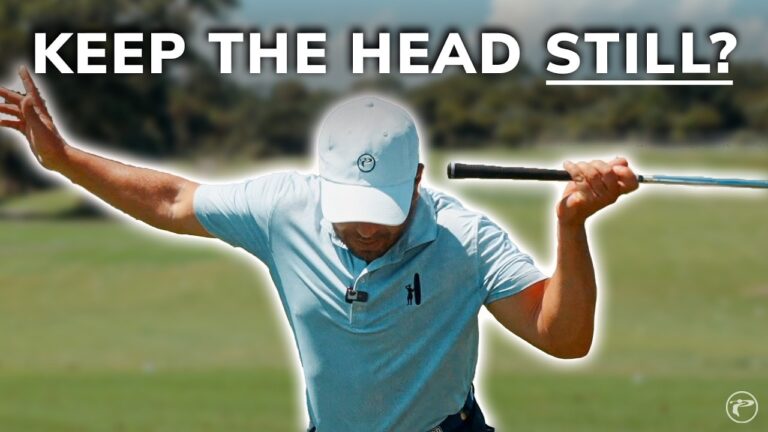

Keeping your head still is one of the most debated cues in golf instruction. Some coaches insist on a rigid head while others promote a controlled, connected movement. The right approach depends on what you want the head to accomplish: maintain connection, support sequencing, and avoid common swing errors. This guide explains when and why to use the “keep your head still” cue, how to practice an effective head position, step-by-step drills, and common mistakes to avoid.
Table of Contents
- Step 1: Why keeping your head still in the golf swing matters
- Step 2: Set up and address for a stable head
- Step 3: The correct “feel” — controlled hanging back, not rigid stillness
- Step 4: Step-by-step movement sequence to practice
- Step 5: Drills to practice keeping your head still in the golf swing
- Common mistakes when trying to keep your head still
- How keeping your head still helps your driver
- Pitfalls and edge cases
- Practice plan: 4-week sequence to stabilize your head and improve impact
- Quick checklist: Are you keeping your head correctly?
- Does keeping your head still reduce power?
- Should my head move at all during the swing?
- What if I still hit fat or thin shots after practicing this?
- How long does it take to make this feel natural?
- Summary and takeaways
Step 1: Why keeping your head still in the golf swing matters
The cue to keep your head still is shorthand for several important swing goals:
- Maintain connection: A stable head helps your upper body and arms stay in sync with your torso.
- Consistent impact: Minimizing excessive head movement reduces early extension and tipping that change attack angle and strike location.
- Better sequencing: When the head is controlled, you are more likely to activate the lower body at the right time, letting the arms drop into the slot correctly.
- Cleaner turf interaction: A balanced head/upper-body position helps the club approach the ball on a shallower, sweeping path rather than digging.
Note that “still” does not mean rigid. The goal is controlled positioning that supports rotation and weight shift rather than resisting the natural motion of your swing.
Step 2: Set up and address for a stable head
Start with a setup that naturally encourages a controlled head position. Small adjustments at address remove compensations later in the swing.
- Distance from the ball: Stand slightly farther back so your shoulders tilt forward over your toes. A practical check: when you tilt forward to the correct amount, you should be able to lift your heels slightly and barely wiggle your toes. If your heels lift too easily, you are too close.
- Stance width: Use a stance roughly from the middle of your feet to the outside of your shoulders. Widening a too-narrow stance gives more room to rotate and prevents starting on top of the ball.
- Spine angle and tilt: Keep a forward tilt that places your shoulders a little ahead of your hips toward the ball. This helps the hands get into a position ahead of the body through impact.
- Weight distribution: Start with balanced weight across the balls of your feet, not your heels. This encourages active lower-body movement rather than sliding back.

Step 3: The correct “feel” — controlled hanging back, not rigid stillness
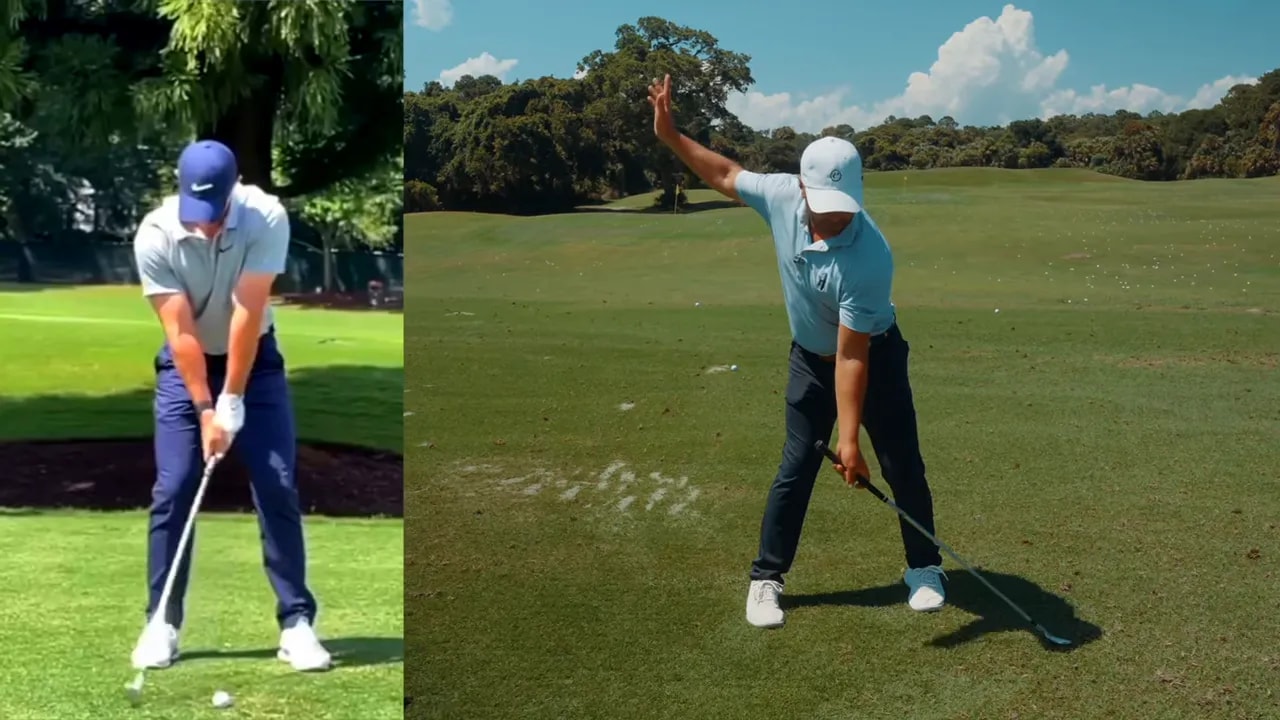
Many players misinterpret “keep your head still” as locking it in place. Instead, learn an athletic feel that keeps your head slightly behind the hands during the downswing while still allowing rotation.
- Feel cue: At the top of the backswing imagine your head is slightly behind an imaginary vertical plane at your temple. This encourages your hands to start down first while your chest follows.
- Head over right knee: As you initiate the downswing, feel as if your head stays over your right knee briefly while your hands accelerate down and away. This creates separation—arms ahead of chest—which often leads to better connection and speed.
- Not a reverse-C position forever: The feeling may give a temporary reverse-C look during transition. That is okay as a sensation but should not become a permanent posture.
Use these feelings to train the correct sequence: lower body initiates, arms follow, chest rotates through impact. That sequencing is easier to achieve when the head is controlled and not flailing backward or forward.

Step 4: Step-by-step movement sequence to practice
Follow this sequence during practice swings to ingrain the correct timing and head control.
- Takeaway: Start the club back with a connected shoulder turn. Keep the head steady, allowing the torso to rotate underneath.
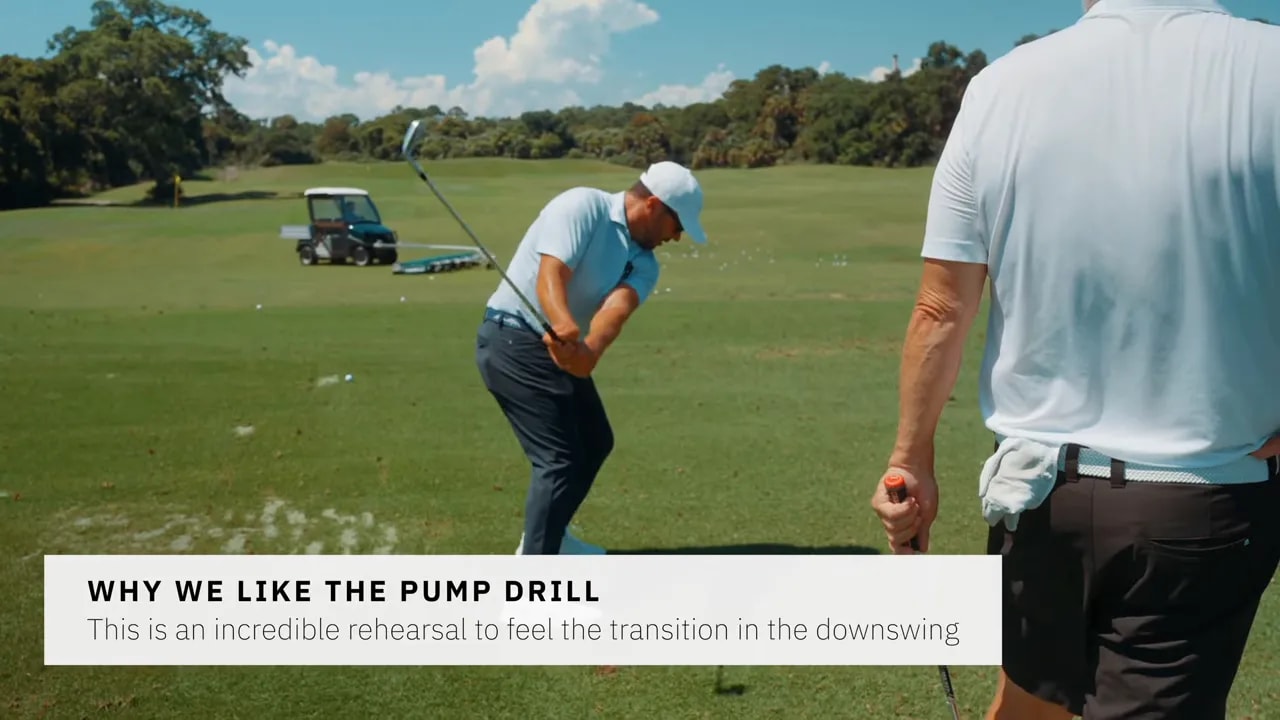
- Top of the swing: Stop at the top and rehearse the feeling of the head slightly behind the hands. Make small pump rehearsals here with no ball—hands drop a bit, chest follows.
- Transition: Initiate with your lower body rotating toward the target. Feel your pelvis shift and “stay on the inside” during the initial move.
- Downswing: Accelerate the hands down into the slot while keeping your head and chest paired. The hands should lead the chest so the club approaches a shallower angle of attack.
- Impact and release: Allow natural rotation through impact. The head will move forward once the club is past the ball—finish on your front foot and chest turned to the target, not as a forced forward lean during the transition.
Step 5: Drills to practice keeping your head still in the golf swing
Use these drills to convert the feeling into repeatable swings.
- Pump drill at the top: Take the club to the top, then rehearse small pumps where the hands drop and the chest follows. Do not hit a ball. This teaches hands-first downswing sequencing.
- Head-behind-temple drill: Place a soft object or imagine a vertical “knife” at your temple. Practice keeping your head slightly behind that plane during transition so the hands lead.
- Opposite motion drill: If you tend to slide and fall back, rehearse exaggerated opposite movements: lower body forward while upper body back, then reverse. This contrast helps you feel the correct rotation and avoid sliding.
- Sweep vs. dig drill: With a mid or long iron, set up slightly farther from the ball and feel the club pass more shallowly through the turf. Compare ball flights and divots—shallower entry should produce cleaner contact and higher launch.
- Slow-motion video feedback: Record swings from face-on and down-the-line. Look for whether the club approaches under the right shoulder through the bicep on the downswing and whether the head stays connected to the torso through transition.

Common mistakes when trying to keep your head still
Many players try to force their head to a position and introduce worse problems. Watch for these errors:
- Overly rigid head: Locking the head into place prevents natural rotation and reduces power. The head should be controlled, not immobilized.
- Too-close setup: Standing too close to the ball often causes early extension and upward head movement at impact. Move back a little and add forward tilt to create space for the swing.
- Narrow stance: A stance that is too narrow leaves no room to create angles and prevents an effective hip bump. Widen appropriately to allow better rotation and a more powerful transition.
- Upper-body lead: Letting the upper body slide or fall back while the lower body slides forward will cause fat or thin shots. Focus on lower-body rotation first with the upper body following.
- Trying to keep head still forever: The correct sequence intentionally keeps the head back a moment during transition, then moves forward through impact as the swing completes. Trying to prevent any forward head motion can hamper the finish.
How keeping your head still helps your driver
Driver swings are longer and more exaggerated, so proper head control and sequencing become even more important for distance and contact quality.
- Hands ahead of the body: Feeling the hands drop ahead of the torso helps shallow the driver path and creates a sweeping attack that maximizes launch and reduces spin.
- Cleaner turf contact: A controlled head and correct spine tilt prevents hitting down too steeply with the driver, which leads to lower launch and excessive spin.
- Increased speed: When the hands lead and the body rotates properly, energy transfers more efficiently into the clubhead, often increasing clubhead speed without extra effort.
Pitfalls and edge cases
Some players will need tailored adjustments:
- Players with limited mobility: If you lack thoracic rotation or hip mobility, the “stay slightly behind” feeling may be hard to achieve. Work on mobility drills, and use smaller swing changes that prioritize balance and sequencing.
- Players who under-rotate: If you over-focus on the head, you may under-rotate your chest through impact. Add drills emphasizing full chest rotation to the finish while retaining the initial head position.
- High-handicappers with overactive arms: If your arms dominate the swing, the head cue alone will not fix sequencing. Combine the head cue with drills that start the downswing from the lower body and practice separated drills (lower body only, then arms only).
Practice plan: 4-week sequence to stabilize your head and improve impact
Follow this progressive plan to build the correct sensation and make it automatic.
- Week 1 — Setup and feels (3 sessions): Work on stance width, distance from the ball, and forward tilt. Practice the head-behind-temple feel with dry swings and pump drills. Record slow-motion video once this week.
- Week 2 — Sequence and shallow path (3 sessions): Add drills that emphasize hands-first downswing and lower-body initiation. Use mid-irons to feel the shallower release. Continue recording to track change.
- Week 3 — Driver transfer (2 sessions): Transition the feeling to the driver. Focus on hands ahead of body through impact and sweeping the ball off the tee. Monitor launch and spin if you have launch monitor data.
- Week 4 — On-course integration (2 sessions + 1 round): Use the new feeling under on-course pressure. Start with three swings before each hole—one rehearsal, one controlled, one normal. Evaluate ball flight and adjust setup if necessary.
Quick checklist: Are you keeping your head correctly?
- At setup: Shoulders tilted forward, weight on balls of feet, comfortable distance from the ball.
- At transition: Hands move down slightly ahead of chest; head feels momentarily behind the hands.
- At impact: Chest has rotated and head moves forward slightly; club path is shallower and contact is cleaner.
- After the shot: Finish on front foot with chest near target, not forcing the head forward during the downswing.
Does keeping your head still reduce power?
No, when applied correctly the feel of keeping your head still improves sequencing and usually increases power. The key is controlled positioning: keeping the head stable during the transition encourages the hands to lead and the body to rotate, which can produce more clubhead speed and cleaner contact. Rigidly locking the head, however, will reduce rotation and power.
Should my head move at all during the swing?
Yes. The head will naturally move forward as you complete the swing. The important part is controlling the head through the transition so it does not tip, slide, or drive the sequence prematurely. Think of a brief hanging-back sensation during transition, not permanent immobilization.
What if I still hit fat or thin shots after practicing this?
Check three things: (1) Are you too close to the ball? Move back slightly and increase forward tilt. (2) Is your stance too narrow? Widen it to allow rotation. (3) Are you sliding your lower body? Practice drills that emphasize lower-body rotation first and avoid lateral slide. Use slow swings to verify improvement before restoring full speed.
How long does it take to make this feel natural?
It varies by player, but with focused practice using the drills and the 4-week plan listed above most golfers can see meaningful improvements in 2 to 4 weeks. Consistent repetition and video feedback accelerate the process.
Summary and takeaways
Keeping your head still can be a powerful cue when used to promote connection, proper sequencing, and cleaner contact. The correct approach is a controlled, slightly hanging-back sensation through the transition that allows the hands to lead and the chest to follow. Use setup adjustments, stance width, and targeted drills like the pump drill, head-behind-temple drill, and opposite-motion drill to train the feeling. Avoid locking the head rigidly, standing too close to the ball, or using an overly narrow stance. With a structured practice plan and video feedback you can make this cue work for drivers and irons alike.
Focus keyphrase: keeping your head still in the golf swing
0 Comments