


Focus keyphrase: easy golf swing
Too many golfers try to fix dozens of positions and mechanics every time they step up to the ball. The result is tension, inconsistency, and a frustrating search for “perfect” positions that rarely stick under pressure. A better approach is to change the large-scale pattern of movement and let the smaller details fall into place. The following step-by-step guide teaches three simple movement patterns that produce cleaner ball striking, more natural accuracy, and greater distance — with minimal practice.
Table of Contents
- Step 1: Feel the counterbalance — the foundation of the easy golf swing
- Step 2: Add vertical opposition for power — legs and arms work against each other
- Step 3: Advanced rotational pattern — controlled twist for compression and face stability
- Step-by-step practice drill summary for the easy golf swing
- Frequently Asked Questions
- Final notes
Step 1: Feel the counterbalance — the foundation of the easy golf swing
The first pattern is the simplest and most important. It is a side-to-side counterbalance: as the club moves one way, the body pushes the opposite way. This creates a trebuchet-style motion that stores and releases energy, keeps you centered over the ball, and prevents the “all-in-one-direction” swing that leads to lunging, sliding, and poor contact.
How to practice the counterbalance pattern:
- Grab a shopping bag or object that weighs around 8 to 10 pounds. Hold it like you would a golf club, with both hands on the handle.
- Stand in your normal golf stance and swing the bag slowly to the right and left without over-rotating. Focus on letting your body push the opposite way to counter the bag’s movement. As the bag swings back, your trail side extends and your trail leg naturally pushes. As the bag swings through, your lead side extends.
- Keep the motion relaxed and rhythmic. Do not try to force turns or hold a fixed position — let the weight create the motion and your body naturally counterbalance it.
Why this works: the counterbalance pattern keeps you more over the ball and creates a smooth transfer of momentum. Instead of trying to “stay over the ball” as a single cue (which often creates a different, rigid motion), you develop a sensory pattern: arms swinging one way, legs and hips gently pushing the other. That oppositional force is where consistent contact and effortless power begin.

Practice tips:
- Start slowly and feel the right leg push when the bag swings back. If you instinctively turn too much, slow the motion and emphasize the side-to-side push.
- Keep sessions short. Ten to fifteen repetitions of slow, deliberate swings are often more productive than hundreds of half-focused reps.
- Use a mirror or record on your phone to ensure you’re not simply turning without the side-to-side push. The hips and shoulders should rotate without forced effort — rotation is a product of the rocking, not the other way around.
Step 2: Add vertical opposition for power — legs and arms work against each other
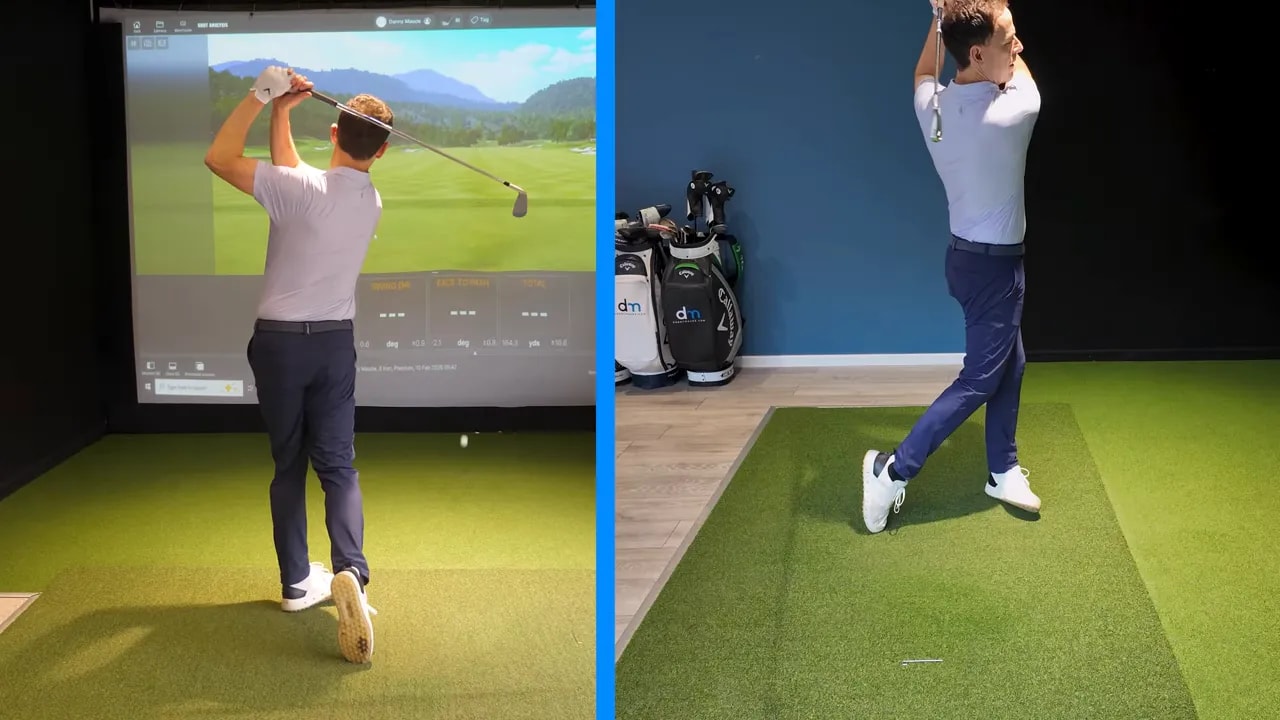
Once the counterbalance rhythm is embedded, introduce the vertical opposition pattern that creates acceleration and power. The idea is simple: as your arms move downward through impact, your legs push upward in opposition. The action is not violent; it is a coordinated push that accelerates the clubhead through the ball.
How to practice vertical opposition:
- Take your normal address position with a club or the bag. Set up with a relaxed posture.
- Imagine your arms being thrown down through the ball. As your arms accelerate downward, actively feel your legs push the opposite way. The push of the legs will be subtle but effective — legs push up as arms move down.
- Work at half speed at first. The goal is to feel the timing and rhythm: arms down, legs push up, then a smooth release.
What this creates: acceleration through impact, better compression, and avoidance of the “rising up” move that kills distance. Many golfers rise on the backswing and then collapse on the downswing, which ruins timing. Training a down-arms/up-legs relationship preserves the angle into impact and produces a cleaner strike.
Practical cues to try on the course:
- “Arms down, legs push” — a short, sensory phrase to remind you of the opposition.
- Imagine you are trying to throw your hands through the ball while your lower body provides the counter force.
- If you catch the ground behind the ball, emphasize a stronger forward push with the lower body to square the arc and promote solid compression.
Step 3: Advanced rotational pattern — controlled twist for compression and face stability
This third pattern is more advanced and not necessary for every player, but it can unlock extra compression, better clubface control, and a rotational path common among top players. The movement is a coordinated rotational push that begins from the feet and transfers through the hips to the hands.
How to practice the rotational pattern:
- Start from your normal stance with a club or the bag.
- On the downswing, push off slightly with your lead foot toward the target and simultaneously allow your trail hand to move forward. This action helps your hips rotate, which encourages the trail arm to “spin down” and the clubface to stabilize through impact.
- The result should be a natural extension of the arms and body as the club accelerates. This is not a forced snap; it is an outcome of pushing off the lead foot and allowing the rotation to sequence correctly.
Why some players resist this: many golfers over-rotate or try to force the hands into a specific position. This pattern emphasizes sequence and opposition rather than isolated positions. The rotational push helps stabilize the face and create compression without becoming overly hands-on.
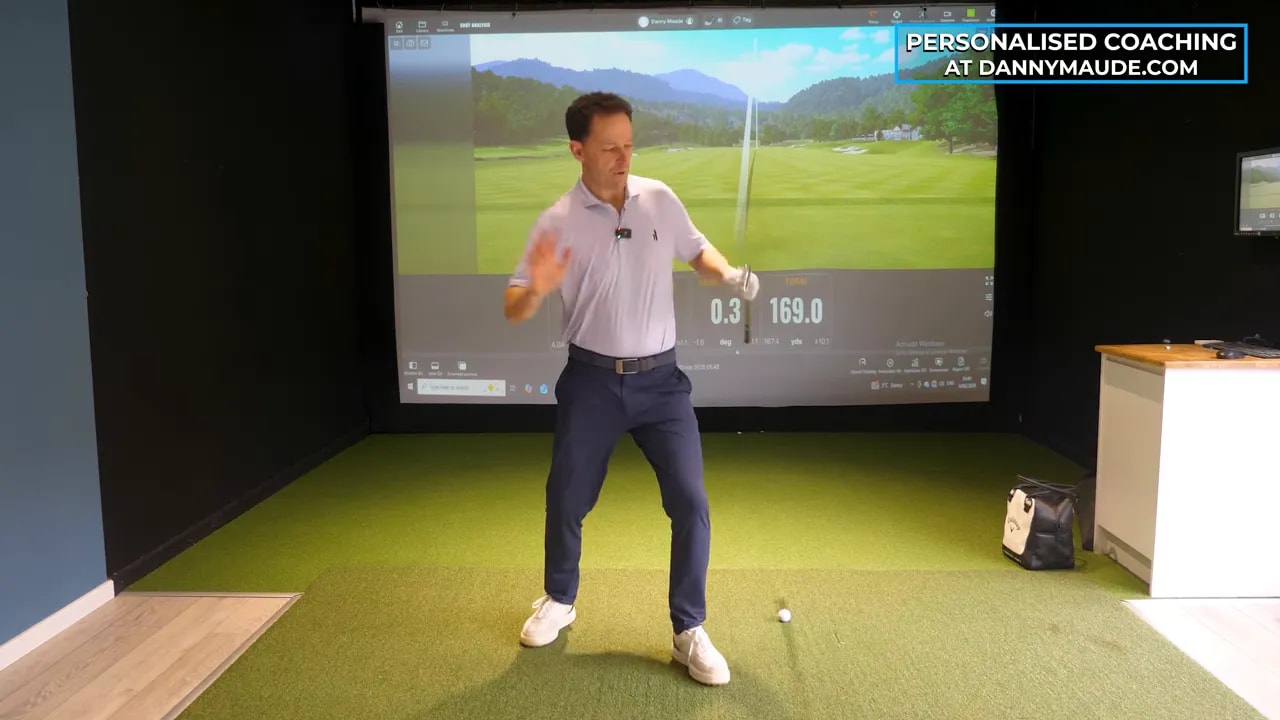
Who should try this pattern: players who already have the first two patterns established and want to add an extra layer of compression and controlled rotation. Senior golfers and players with handsy tendencies often benefit from the more coordinated lower-body initiation of rotation.
Putting the three patterns together
Start with the counterbalance pattern. Master the side-to-side rocking so you can feel hips and shoulders rotate without forcing them. Add the vertical opposition to create acceleration and maintain angles into the ball. Finally, if appropriate, layer in the rotational push that sequences the hips and arms for controlled compression.
Progression plan:
- Week 1: Daily 5–10 minute sessions with the bag. Focus only on the side-to-side counterbalance. Use slow, sensory swings.
- Week 2: Continue the bag drill and add the vertical opposition practice with a club (half-speed). Spend two sessions per week on arms-down/legs-up timing.
- Week 3: Integrate both patterns on the range with short irons. Use half to 3/4 swings and build speed while maintaining the patterns.
- Week 4 and beyond: If ready, add the rotational pattern. Start with slow reps that emphasize the lead-foot push and hip rotation, then increase pace gradually.
Simple on-course cues that work
- Rock, don’t rotate — remind yourself to rock side to side and let rotation happen naturally.
- Push opposite — as the hands go back or forward, your lower body pushes the opposite way.
- Arms down, legs up — use this cue for improved acceleration and compression.
- Lead-foot push — for advanced players, use a slight push of the lead foot to start hip rotation and stabilize the clubface.
Common mistakes and how to fix them
1. Turning too much without counterbalance: If you simply rotate right and left, you lose the oppositional force. Fix this by slowing the bag drill and exaggerating the side-to-side push so the hips and shoulders rotate as a consequence.
2. Rising up on the backswing: Many golfers rise and then fall, which ruins timing. Practice the arms-down/legs-up pattern until the rise-and-fall disappears.
3. Becoming handsy when adding rotation: If the rotational push results in excessive hand action, reduce the speed and focus on initiating rotation from the lead-foot push. The hands should follow, not lead.
How to apply the patterns to driver and irons
Irons: The counterbalance and vertical opposition are crucial for iron striking. The side-to-side rock keeps you centered, while the arms-down/legs-up sequence preserves the angle into impact for crisp ball-first contact.
Driver: The same patterns apply, but the arc is wider. Use the bag drill to feel the rocking and practice a controlled acceleration with the vertical opposition to add distance without sacrificing accuracy. When increasing speed, keep the patterns consistent — start slow and build up.
Step-by-step practice drill summary for the easy golf swing
- Shopping bag drill: 10 swings slow, focusing on counterbalance. Do this daily for a week.
- Vertical opposition drill: 12 reps with a club, half-speed, concentrating on arms down versus legs push up.
- Short-iron integration: 20 balls at the range using the combined patterns at 50 to 75 percent speed.
- Advanced rotational drill (optional): 10–15 reps focusing on lead-foot push and hip rotation, then apply to 7-iron swings.
- On-course application: Use simple cues during rounds — “rock, push opposite, arms down” — and resist overthinking positions.
How to know when the patterns are working
- Cleaner contact — fewer fat or thin shots and more consistent compression.
- Better accuracy — less sliding and less hook or severe slice as the body stays over the ball.
- More effortless distance — the clubhead accelerates naturally without forcing extra effort.
- Less to think about — once embodied, the patterns reduce the number of swing thoughts you need on the course.
Frequently Asked Questions
How heavy should the bag be for the shopping bag drill?
Use an object in the 8 to 10 pound range. The bag should be heavy enough to create a clear counterbalance feeling but light enough to swing comfortably for 10 to 15 reps without strain.
How long will it take to see improvement using this easy golf swing approach?
Many golfers notice better feel and cleaner contact within a week of short, focused sessions. Lasting change depends on consistent practice of the patterns. A four-week progression (outlined above) provides a reliable timeframe to embed the movement patterns into your swing.
Can senior golfers benefit from these patterns?
Yes. The easy golf swing approach emphasizes efficiency and momentum rather than brute force. Seniors often find the counterbalance and vertical opposition patterns reduce strain while improving distance and consistency.
Should I try the rotational pattern right away?
No. Learn the first two patterns first. The rotational pattern is an advanced layer that works best after you have a stable counterbalance and vertical opposition. Adding it too soon can create handsy movements or timing issues.
What if I still feel my club catching the ground behind the ball?
If ground contact occurs, emphasize a slightly stronger forward push during the downswing so the arc moves forward through impact. Reduce the tendency to rise or lunge and repeat the bag drill to reinforce center stability.
What short cues should I use on the course?
Use one or two simple cues only, such as “rock” and “arms down.” These short phrases trigger the movement patterns without cluttering your pre-shot routine.
Final notes
Changing the big patterns of your swing is far more effective than micromanaging positions. The easy golf swing relies on three complementary patterns: counterbalance, vertical opposition, and, for advanced players, a rotational push. Practiced progressively, these patterns produce cleaner strikes, better accuracy, and more distance — with far fewer swing thoughts.
Keep sessions short, focus on feeling the movements, and add speed gradually. Your body will naturally organize the small mechanics once the large-scale patterns are in place. Practice consistently, and you will be able to swing harder without trying harder.
0 Comments