
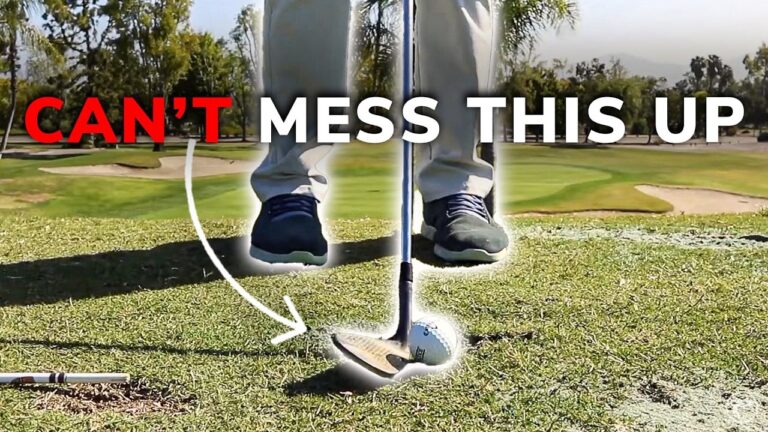

Wedge play is the fastest way to lower your scores. Learning how to master your wedges gives you better distance control, more consistent contact, improved spin and trajectory, and a reliable short-game strategy under pressure. This guide breaks wedge fundamentals into clear, repeatable steps so you can practice with purpose and see immediate improvement on the course.
Table of Contents
- What mastering wedges means and why it matters
- Step 1: Setup for consistent wedge strikes (How To Master Your Wedges)
- Step 2: Face control and path — why direction matters more than face pointing when loft exists
- Step 3: Weight shift and the “door stop” foot cue
- Step 4: Hit down and maintain a compact swing (How To Master Your Wedges)
- Step 5: Rhythm, cadence and the “one-two” practice method
- Drills to accelerate improvement (How To Master Your Wedges)
- Pitfalls and common mistakes to avoid
- How to choose the right wedge and loft for short shots
- Short-game practice routine to master wedges
- How To Master Your Wedges: performance checklist
- How do I control wedge distance consistently?
- When should I open the face on a wedge shot?
- Why does my wedge ball flight go left or right even though I aim the face at the target?
- How important is bounce on wedges?
- How can I stop fat or thin wedge shots?
- Summary and next steps (How To Master Your Wedges)
What mastering wedges means and why it matters
Mastering wedges covers three primary skills: setup and alignment, consistent contact (hitting down and creating a shallow divot), and controlling launch and spin. For most recreational golfers, shots from 70 yards and in account for a large share of scoring opportunities. Improving wedges converts missed pars into saved pars and pars into birdie chances.

Use wedges to manage distance and trajectory first, then spin. When you treat a wedge shot like a shorter version of a full swing and train the correct feel, results become repeatable.
Step 1: Setup for consistent wedge strikes (How To Master Your Wedges)
A consistent setup is the foundation of reliable wedge play. Small changes in stance, ball position and face angle have an outsized effect because your swing is short and has little time to correct flaws.
- Stance width: Narrow your stance compared with a full iron — approximately hip-width or slightly narrower. This makes your lower body more stable and promotes a more downward strike.
- Ball position: Place the ball slightly back of center for lower, controlled flights on most wedge shots. For higher flop shots, move it slightly forward and open the face, but do this with intent.
- Weight distribution: Start with roughly 60 to 90 percent of your weight on the front foot at address for most scoring shots. This helps you hit down into the ball and take a shallow divot in front of it.
- Hands and shaft: Keep your hands slightly ahead of the ball at setup so the shaft leans toward the target. This delofts the club slightly and encourages crisp contact.
- Face angle: Square the club to your intended swing path, not necessarily the target line. You can open the face for higher spin, but keep the toe pointing in line with your feet if you intend to swing that way.

Step 2: Face control and path — why direction matters more than face pointing when loft exists
Many golfers assume that pointing the clubface at the target ensures the ball will go there. With lofted wedges this is often not true. When the club has significant loft the ball tends to launch along the direction of your swing path more than the face orientation at setup. That means you should align the face relative to the path you plan to swing along.
Practical rules:
- Square the body to the swing path: Aim your feet and body to where you intend to swing. This gives a predictable path and lets you open or close the face as needed.
- Open the face for more spin, but keep path control: Opening the face increases loft and spin, but only use it while keeping your swing path in the direction you want the ball to travel.
- Trust the swing: If you open the face but swing down the line of your feet, the ball will go toward that line even if the face points slightly elsewhere. Knowledge first; trust second.

Step 3: Weight shift and the “door stop” foot cue
A deliberate weight shift creates a reliable low-point in front of the ball and prevents thin or fat strikes. Use this simple cue to get the weight forward and trigger the body motion.
- Feet positioning: Cut both feet by half so that your toes point slightly inward and your base feels secure.
- Door stop cue: Imagine sandwiching an invisible door stop beneath the inner edges of both feet so your weight can roll forward easily. This encourages a controlled forward press into the lead foot at impact.
- Hip bump: Initiate a small lateral hip shift toward the target on the downswing. This bump is a reliable trigger to get weight onto the lead foot without hanging back.
- Feel the divot: On properly struck wedge shots the divot should start immediately in front of the ball. If the divot begins behind the ball you are likely hanging back or scooping.
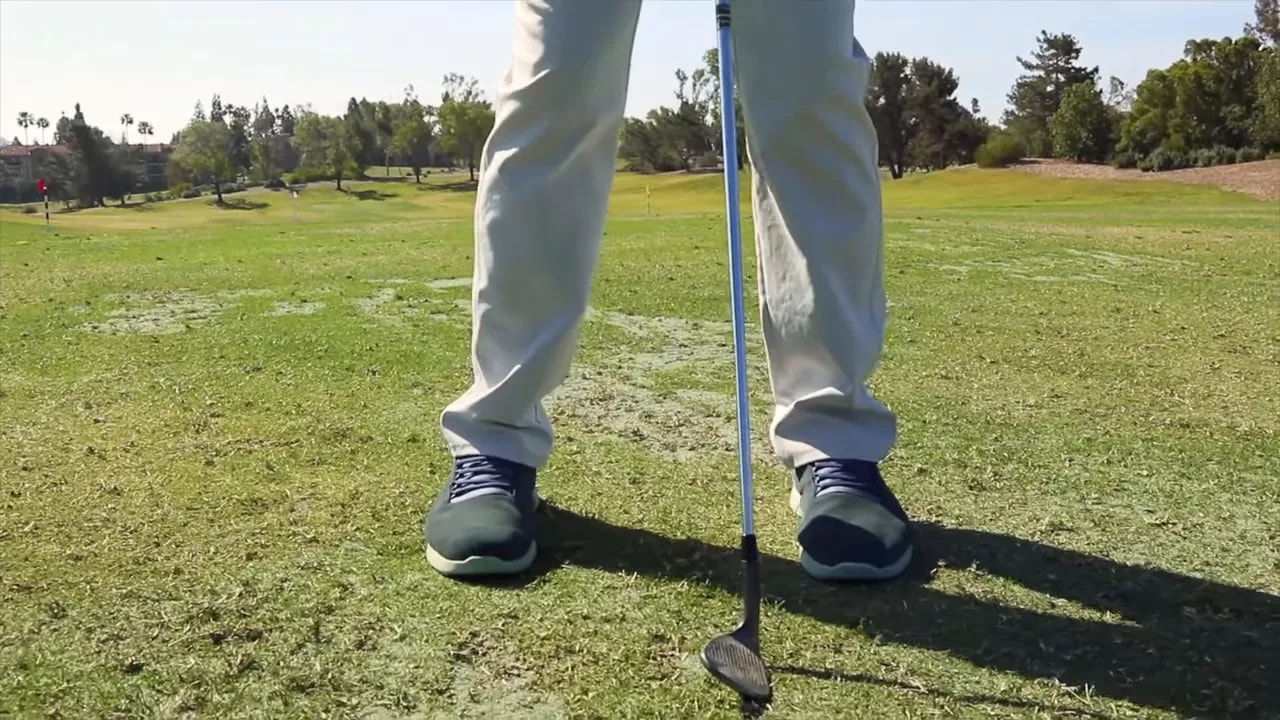
Practicing the weight shift with deliberate half swings will help you feel the correct low point and make the low, tight ball flight that produces spin and control.
Step 4: Hit down and maintain a compact swing (How To Master Your Wedges)
Wedge swings are short. There is not enough room in the swing to correct faults, so the key is to be compact, hit down on the ball and allow the club’s bounce to interact with the turf.
- Compact backswing: Limit the backswing to what produces the required distance. Frequently this is a one- to three-quarter wrist hinge rather than a full shoulder turn.
- Maintain lag: Keep the angle between your lead arm and the shaft through the downswing so the clubhead can accelerate into impact.
- Downward strike: Aim to touch the turf a few inches in front of the ball. This creates a low, tight flight and maximizes spin.
- Minimal face manipulation: Do not flip the hands at impact. Let the body rotation and forward shaft lean control loft and release.
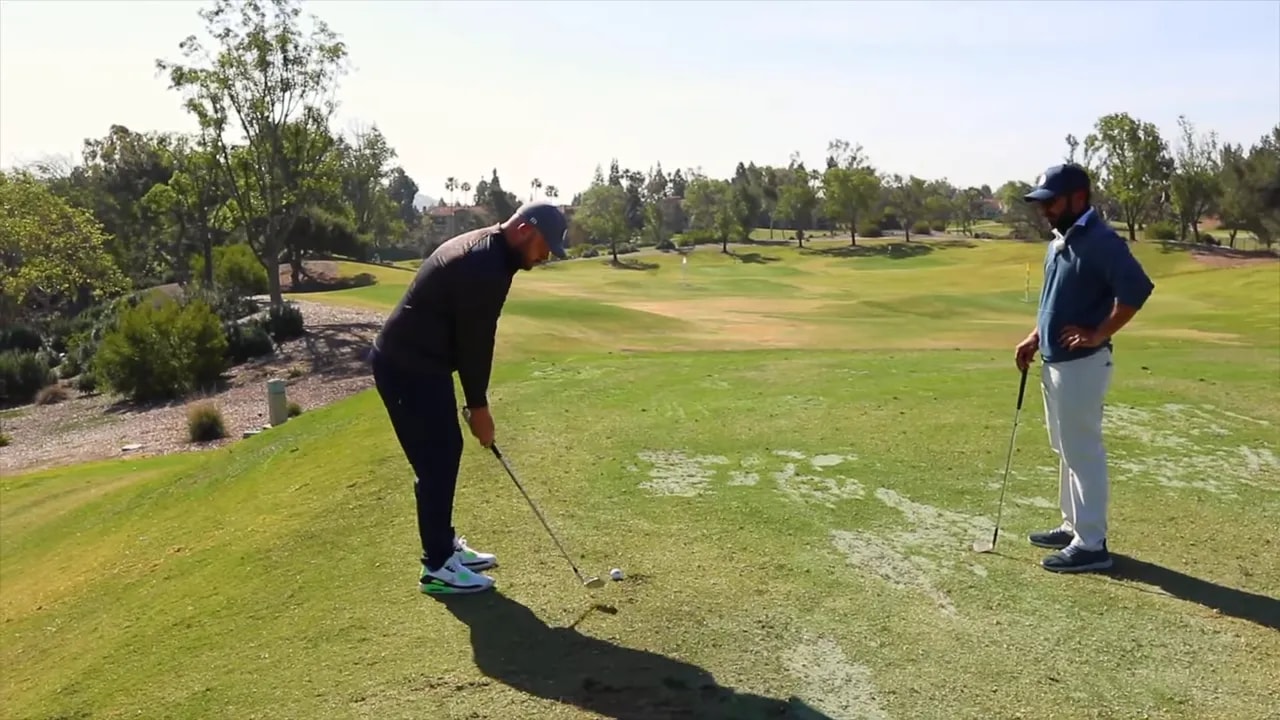
When executed correctly the ball will pop off the face with high spin and a predictable stopping pattern. If the shot is low and shallow, check your ball position and forward shaft lean.
Step 5: Rhythm, cadence and the “one-two” practice method
Rhythm ties setup, weight shift and impact into a repeatable action. Use a simple cadence to stabilize timing and reduce tension.
- Count method: Use a short count such as “one-two” where “one” is the top of your backswing and “two” is impact/through. This keeps the swing compact and in time.
- Feel finish position: Finish left of your left pocket for right-handed players, with your belt buckle facing the target and weight on the lead foot.
- Repeat with purpose: Practice three to five distances with the same rhythm until you can hit each to within a few yards consistently.

Rhythm is the glue that holds the rest of the technique together. Once tempo is stable, small adjustments to loft or face angle produce predictable changes in flight.
Drills to accelerate improvement (How To Master Your Wedges)
Repetition with the right feedback will speed learning. Here are practical drills to embed the technique.
Divot-line drill
- Place a tee or towel a few inches in front of the ball.
- Practice hitting shots where your divot starts just in front of the marker.
- Focus on weight forward and minimal hands flip.
Open-face landing-zone drill
- Open the face by one to three degrees for a high, soft landing shot.
- Aim your feet and body to the landing spot, not the hole, and swing along your feet line.
- Trust that the ball will follow the swing path even when the face is open.

Two-count rhythm drill
- Take a short backswing and count “one” at the top.
- Swing through and count “two” at impact, feeling a full release to the finish.
- Maintain the same tempo for multiple distances to build consistent timing.
Pitfalls and common mistakes to avoid
Recognizing and eliminating these habits will accelerate progress.
- Overopening the face without changing path: Many players open the face and then try to swing at the hole. With lofted clubs that often causes chunked or thin shots. Instead, align your path to the landing zone and swing that way.
- Hanging back: Staying on your rear foot at impact causes thin or fat shots. Use the hip bump and door stop cue to get weight forward.
- Scooping the ball: Attempting to lift the ball with the hands creates inconsistent launch and poor spin. Aim to hit down and let the club’s loft do the work.
- Excessive manipulation: Flicking or flipping the wrists at impact artificially adds loft and reduces control. Keep the hands passive through impact and let the body rotate.
- Ignoring bounce: Exposing too much or too little bounce on tight lies can cause the leading edge to dig. Understand your wedge’s bounce and adjust your setup accordingly.
How to choose the right wedge and loft for short shots
Club selection depends on the distance, desired trajectory and surface conditions.
- Distance chart: Build a personal distance chart for each wedge with a consistent tempo. Know how far each wedge flies with a quarter, half and full wedge swing.
- Loft progression: Maintain 4 to 6 degrees between wedges to cover gaps smoothly.
- Bounce awareness: Higher bounce wedges are better for soft sand or shaggy rough. Low bounce wedges are better for tight lies and firm turf.
- Face condition: Clean grooves produce more spin. Replace wedges when grooves wear down and spin drops noticeably.
Short-game practice routine to master wedges
Build a weekly routine that mixes technique work, distance control and pressure situations.
- Warm-up (10 minutes): Gentle wedge swings from 60 to 30 yards to grooved tempo.
- Technique block (15 minutes): Divot-line drill and two-count rhythm drill focusing on impact position.
- Distance control (20 minutes): Pick 5 target distances and hit 10 balls to each; record results and adjust.
- Pressure game (15 minutes): Play a scoring game where missed targets cost a stroke. Simulate course lies as much as possible.
- Reflection (5 minutes): Note what worked and what didn’t, then repeat the best-feeling swing next session.

How To Master Your Wedges: performance checklist
- Stance — Narrow, stable and balanced.
- Ball position — Slightly back of center for lower shots, forward for higher shots.
- Weight — Majority on lead foot at impact.
- Face alignment — Aligned to swing path, not always the target line.
- Contact — Divot begins in front of the ball; crisp, descending strike.
- Tempo — Consistent “one-two” or equivalent cadence.
- Finish — Weight left, chest open, belt buckle toward target.
How do I control wedge distance consistently?
Control distance by developing fixed swing lengths and a steady tempo. Create a distance chart for each wedge using consistent rhythm: mark the distance for 25, 50, 75 percent swings and full swings. Practice to the point where each swing length reliably produces a narrow yardage band, then use that chart on the course.
When should I open the face on a wedge shot?
Open the face when you need higher launch and more spin, such as when stopping the ball on a tight green or clearing a lip. When opening the face, align your feet and body to the intended swing path and trust that the ball will travel along that path. Avoid opening the face without adjusting your setup or swing path.
Why does my wedge ball flight go left or right even though I aim the face at the target?
With lofted clubs the ball tends to follow your swing path. If your body and feet are aimed left or right of the target, the ball will commonly travel in that direction despite the face pointing at the target. Square your body to the intended path or align your feet to a landing spot and swing along that line.
How important is bounce on wedges?
Bounce is crucial. High-bounce wedges prevent digging in soft sand or thick turf while low-bounce wedges are better for tight lies. Match the wedge bounce to typical course conditions and your attack angle. If you have a steep attack, more bounce helps; a shallow attack can benefit from less bounce.
How can I stop fat or thin wedge shots?
Focus on forward shaft lean at impact, weight on the lead foot, and a compact swing. Use the divot-line drill so the divot starts in front of the ball. Also check ball position; too far forward encourages thin shots while too far back can produce fat shots if you hang back.
Summary and next steps (How To Master Your Wedges)
Improving wedge play is a high-return investment for scoring. Build a consistent setup, control face angle relative to your swing path, shift your weight forward, and maintain a compact, rhythmic swing. Use the drills and practice routine listed here, keep a personal distance chart, and apply the pressure game to simulate course situations.
Start with small changes: one drill per practice session. Track results and repeat what works. With structured practice and the correct technical cues you will master your wedges and lower scores quickly.
0 Comments